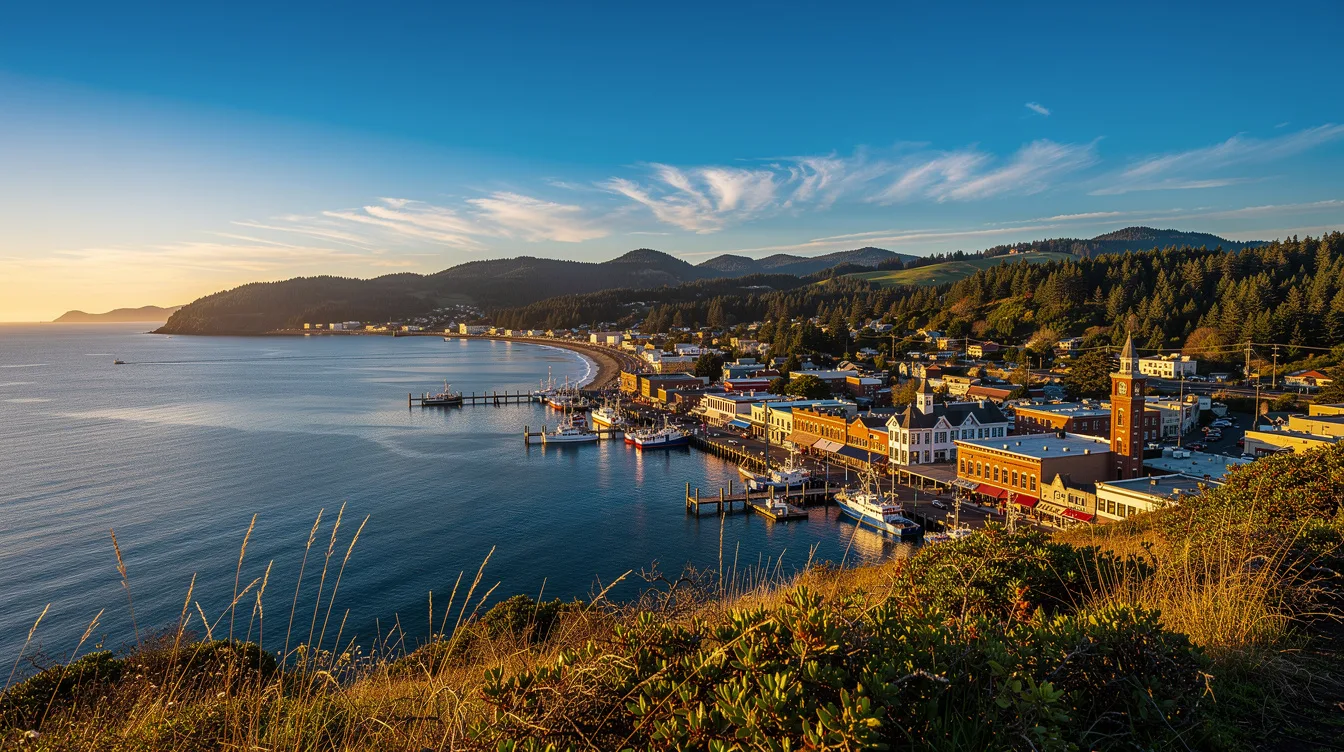
Eureka is presented as the largest coastal city between San Francisco and Portland, a fact that explains its outsized role on California’s far north coast. It has 26,512 residents, according to the 2020 census, yet it feels more like a working port with a long memory than a small city trying to impress you.
And that’s the appeal. On Humboldt Bay, Eureka gives road trippers a real stop between bigger urban names, with redwood country and a Victorian waterfront close at hand.
A coastal city with room to matter
Eureka sits on Humboldt Bay. The route is part of the story: you don’t arrive by accident, and the distance keeps the city from feeling like a weekend extension of the Bay Area.
But remote doesn’t mean empty. Eureka is Humboldt County’s seat and a regional center for services, commerce, arts, fishing, and nature tourism. That mix gives it more daily life than a town built solely around souvenir shops.
The central claim matters because this stretch of coast has long gaps between population centers. Eureka fills that gap with a harbor, storefronts, museums, parks, and enough practical infrastructure to make it a sensible base rather than a brief photo stop.
And you can feel the maritime past in the city’s identity. Its development was tied to the port, redwood logging, and some mining activity, so the local story has sharper edges than California’s usual beach-town script.
Old Town is where the city shows its character
Start in Historic Old Town, where restored Victorian facades meet galleries, restaurants, shops, and the waterfront. It’s tourist-friendly, but it doesn’t read like a stage set. The port remains part of the view.
You’ll want to walk slowly here. The architecture gives the streets their texture, while the bay keeps pulling your attention toward the water. This is the kind of district that makes an unplanned coffee stop turn into an afternoon.
Carson Mansion is one of Eureka’s defining Victorian landmarks. Even if you’re not building a trip around architecture, it gives the city a visual signature that feels distinct from the redwood forests beyond town.
But don’t expect a polished resort mood. Eureka is artistic and a little alternative, with its maritime and forest-industry history still visible. That friction is more interesting than perfection, especially if you’ve had your fill of interchangeable coastal downtowns.
The bay slows the day down
Humboldt Bay is where Eureka’s pace becomes clear. Kayaking, paddleboarding, birdwatching, fishing, and walks on the Waterfront Trail all keep the water in view, and you don’t need a grand itinerary to make the afternoon count.
For you, the best choice may simply be a bay walk before dinner. Coastal fog is frequent, and the air can feel cool even when much of California is warm, so bring a layer instead of assuming the state’s usual summer conditions.
And that cool ocean influence is why summer is the season to consider. Sources describe Eureka’s summers as moderate, with relatively small temperature swings across the year. It’s California, but not the version where midday heat dictates every plan.
That said, fog can soften the scenery rather than deliver a clear postcard view. If you need constant sun, this isn’t your coast. If you like salt air and a quieter horizon, it’s a strong trade.
Redwoods are the reason to stay longer
Eureka is a practical gateway to the Redwood Coast, including Humboldt Redwoods State Park and surrounding redwood forests. The city’s advantage is simple: you can pair a forest day with a restaurant, a museum, or a waterfront walk afterward.
But the trees shouldn’t become background decoration. Sequoia Park brings a redwood forest directly into the city, which makes Eureka unusually easy for travelers who want nature without turning every outing into a major expedition.
Sequoia Park Zoo is also in the park and is identified in the notes as California’s oldest accredited zoo. It’s a useful option for families, though adults may be just as happy lingering among the trees outside.
And the redwoods change the scale of the trip. You arrive for a coastal city, then discover that the forest is close enough to shape the whole day.
A smaller California, with more texture
For indoor time, Eureka has the Morris Graves Museum of Art and the Clarke Historical Museum, along with murals and local cultural events. You can choose history or art depending on the weather, which is a practical advantage when coastal fog rolls through.
The city’s name comes from the Greek exclamation “Eureka!” and is also California’s motto. It’s a small detail, but it fits a place built around arrival, extraction, commerce, and the stubborn pull of the far north.
By evening, the waterfront light fades into Humboldt Bay, and the cool air settles over Old Town. That’s when Eureka feels least like a stop between San Francisco and Portland, and most like its own destination.