Ketchum is an International Dark Sky Community within the Central Idaho Dark Sky Reserve, and that’s the reason to look up after dinner instead of heading straight indoors.
This is a small mountain city beside Sun Valley in central Idaho’s Wood River Valley. At about 5,853 feet, Ketchum sits in the valley.
Its night sky is part of the town, not an afterthought
Ketchum belongs to the reserve because dark skies are part of its identity, not merely a view from somewhere outside town. You can spend the day in its walkable downtown, then notice how much the darkness changes the mood once the storefronts close.
And that contrast matters. Ketchum is polished and busy by mountain-town standards. The stars become part of the evening’s plan.
You won’t find big-city anonymity here. The 2020 U.S. Census counted 3,555 residents, so Ketchum remains small enough that its setting feels close, even when the resort crowd is in town.
But don’t mistake small for cheap. Ketchum and neighboring Sun Valley are a premium resort market, particularly for lodging and dining. You’re paying for a refined base, not a bargain escape.
Bald Mountain explains the daytime pull
Bald Mountain, often called Baldy, anchors the town’s winter rhythm. You come for skiing and snowboarding through the nearby Sun Valley area, then return to a downtown that feels more useful than a resort village.
And you don’t have to choose between a ski trip and a town stay. Ketchum is the practical center for the wider Sun Valley area, which means restaurants, galleries, shops, and cultural events are close when you want a break from the slopes.
The trade-off is obvious in peak winter: this is a destination people plan around. Still, the snowy mountain atmosphere earns the attention, especially when you can step outside at night and see why the reserve designation matters.
Is Ketchum only worth visiting in winter?
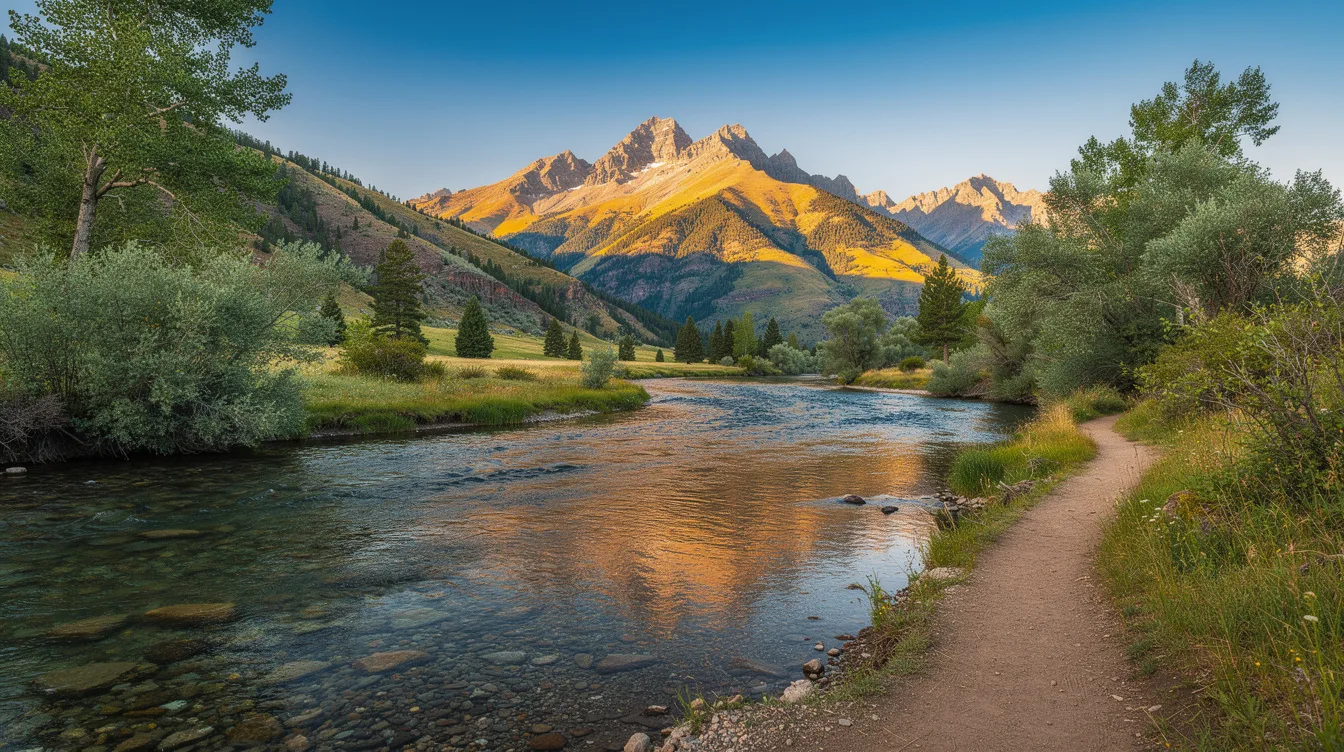
No. Summer in Ketchum shifts the town toward hiking, mountain biking, fly-fishing, and trail riding. You can build a day around movement instead of ski lifts, then head back toward town.
But summer isn’t a secret season. The outdoor appeal is the point, so expect a place that feels active rather than sleepy. That said, the dark sky remains a different kind of reward after a day on the trails.
The Wood River Valley gives it a real center
Ketchum sits in Blaine County, in the Wood River Valley and next to Sun Valley. That placement explains its appeal: you get a historic downtown base with direct access to central Idaho’s outdoor country.
And the town has been here since 1880. It began as a mining and ranching settlement, then became closely tied to the growth of Sun Valley as a ski destination.
You can still feel that older Western thread in events such as Wagon Days and annual sheep-focused celebrations. The town is upscale now, but it hasn’t erased the ranching history that shaped the valley.
There’s a useful tension in that mix. Ketchum has galleries and polished restaurants, yet its strongest appeal is still outdoors. You come here to move through the mountains, not to spend every hour inside.
How to use Ketchum as a year-round base
For arrival, Friedman Memorial Airport near Hailey is the nearest airport listed for Ketchum. From there, the town works best as a base for the broader Sun Valley area rather than as a large city with endless distractions.
And your season should match your appetite. Choose winter for skiing and the snowy mountain mood. Choose summer for biking, hiking, fishing, and long evenings when the sky becomes the final stop.
Ketchum isn’t remote in spirit, but it is intentionally focused. By the time the downtown light softens, you’ll understand why the reserve is more than a designation.