The ferry from Point Judith takes about an hour, and that hour does most of the work. Phones lose interest. The mainland flattens out behind you.
By the time the breakwaters of Old Harbor come into view, you’ve already downshifted.
Here’s the number that matters. Roughly 40 percent of Block Island is protected from development, held that way by conservation groups. That’s not a zoning footnote.
That’s the reason the island looks the way it does.
The Nature Conservancy put it on a list of 12
Block Island sits on The Nature Conservancy’s list of “The Last Great Places,” which names just 12 sites in the entire Western Hemisphere. For an island of 9.7 square miles, that’s a heavy distinction to carry.
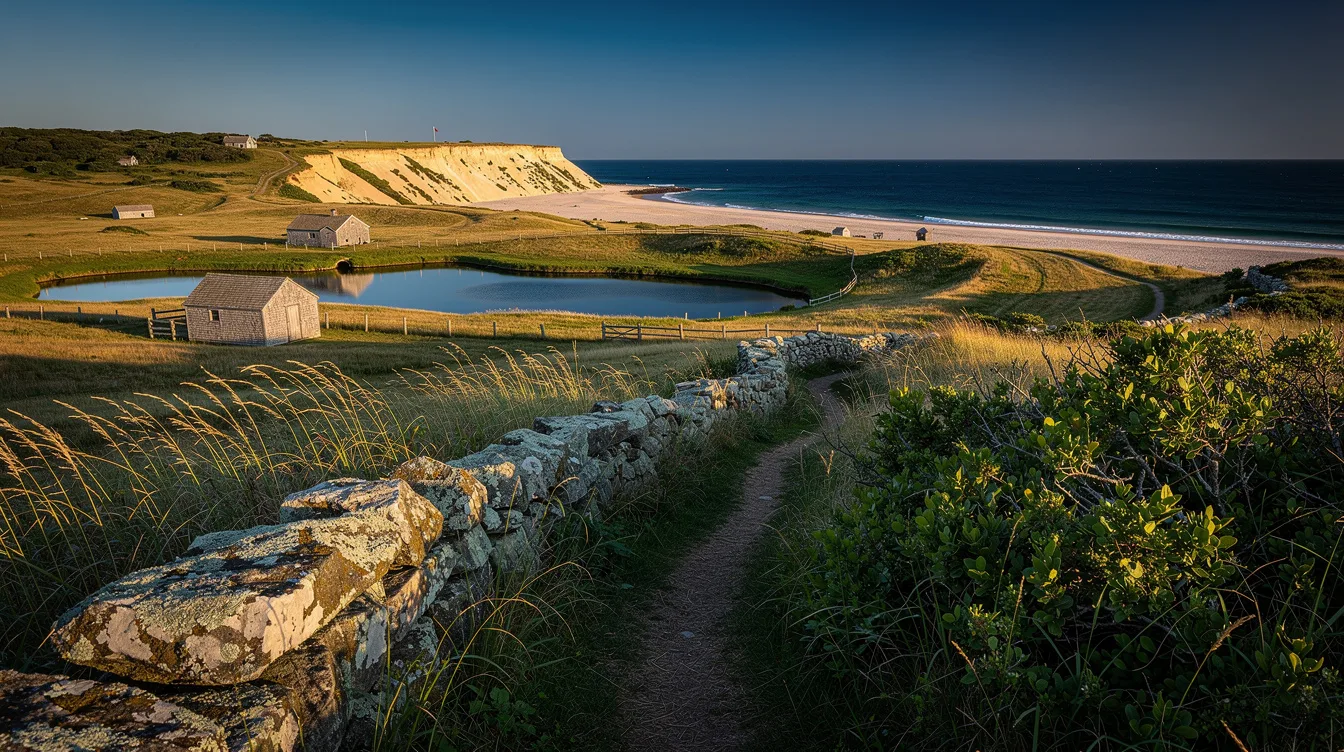
And you feel it in the negative space. Stone walls, ponds, moor grass, and then nothing built for a long stretch. The northwestern tip is undeveloped natural area, a rest stop for birds moving along the Atlantic flyway.
It’s a summer island, and it’s also a conservation project. Both are true at once.
The ocean took two lighthouses before this one held
The original North Lighthouse went up in 1829. The sea took it. The 1836 replacement went the same way.
The one standing today dates to 1867, the third attempt, and it’s worth walking out to just to understand what the water here is capable of.
Construction on the Southeast Lighthouse began in 1873, on the other end of the island, above the Mohegan Bluffs. Two lights, two very different moods.
Can you visit both in a day?
Yes, and a bike is the honest way to do it. The island is small enough that the geography is forgiving. The wind, some days, is not.
Old Harbor is the loud part, and it’s small
Old Harbor is where the ferries land: Victorian hotels, shops, and restaurants. It’s lively without ever getting loud, mostly because there isn’t enough of it to get loud.
Walk ten minutes in any direction and the noise drops off. That’s the trade the island keeps making, and it keeps making it in the visitor’s favor.
1,410 residents, and a summer that triples them
The 2020 Census counted 1,410 people living here. In summer, the population can triple. So the same beach that feels crowded in mid-July belongs to about four people in late September.
June through early September gives you swimming, full restaurant service, and every seasonal boat running. It also gives you the highest prices of the year, and you’ll want lodging booked well ahead.
May, September, and early October are the better bet if you’re here to ride and walk. Fewer people, lower rates, and the light gets long and low over the water.
Getting there without much fuss
The island sits 8.7 miles south of mainland Rhode Island and 14.3 miles east of Montauk Point. Point Judith is the year-round workhorse route, with seasonal service from Newport, New London, and Montauk depending on the season.
You can fly instead. The flight from Westerly runs about 20 minutes into the island’s small airport.
Do you need a car?
No, and most people are happier without one. Cars come over on the ferry, but reserving a vehicle spot far in advance is close to mandatory in high season. Bikes, mopeds, taxis, and your own feet cover the rest.
Where the island stops performing
Rodman’s Hollow is the place to go when you’re done with the harbor. Trails run through grassland and wetland, with ocean showing up between rises. It’s quiet in a way that takes about fifteen minutes to settle into.
Mohegan Bluffs are the other extreme: cliffs on the south coast, with a long staircase down to the sand. The climb back up is the price, and it’s a real one.
Great Salt Pond, on the New Harbor side, became a harbor in 1895 when a channel was cut to the ocean. Now it’s sailboats and halyard noise and dinner with your shoes off.
A name from 1614
Dutch explorer Adriaen Block charted the island in 1614 and named it after himself. The name stuck. The town underneath it is New Shoreham, incorporated in 1672, which is what you’ll see on the road signs and the town hall.
Two to four days is the right length. Longer and you’ll have seen it. Shorter and you’ll spend the whole trip on the ferry schedule.
Come back to Old Harbor on a September evening, after the last boat has gone, and the water in the pond goes still enough to hold the lights.