
Wainscoting and accent walls behind a freestanding tub work best when you treat the tub wall as one deliberate backdrop, not a leftover strip of drywall. I learned that after living with a bare wall that made my white acrylic soaking tub look oddly temporary. Start with the wall height, then build the warmth around it.
- Measure the tub wall before choosing a bathtub wall finish
- Start with the Two-Thirds Wainscoting Rule
- Anchor white and wood bathroom design with one real material
- Paint the upper wall with a color that survives steam
- Build the Three-Height Light Stack behind the tub
- Frame farmhouse bathrooms with shiplap carefully
- Layer tile only where splashes and sightlines matter
- Hang a mirror that reflects light, not clutter
- Mix a floral wallpaper panel with painted wainscoting
- Float a shelf with the Tubside Landing Zone
- Choose vertical boards over busy square grids
- Let a window lead the composition
- Spend where the water and plumbing can’t forgive you
- Can you use a dark accent wall in a small bathroom?
- Finish with rustic bathroom decor you’ll still use
1Measure the tub wall before choosing a bathtub wall finish
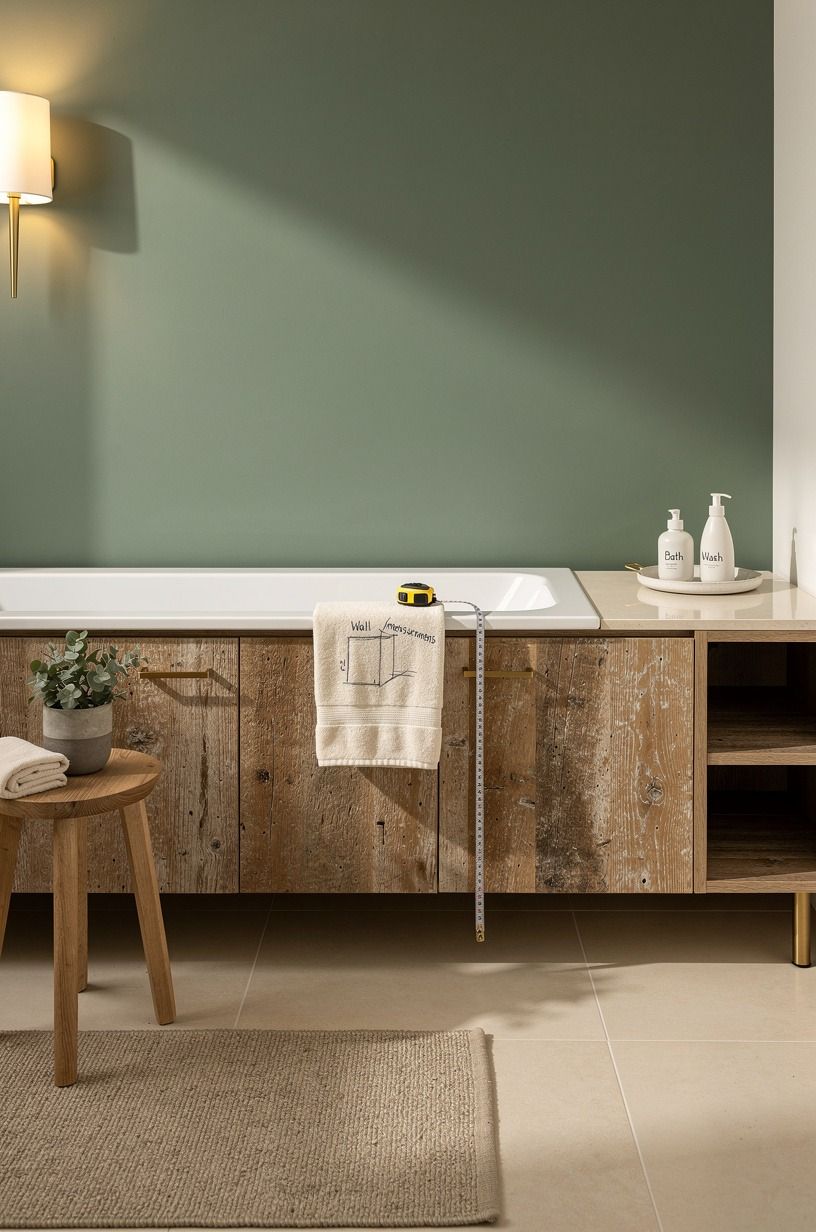
Measure your freestanding tub first, including where the faucet lands, so your wall treatment frames the tub instead of crowding it. A standard tub is often 60×30 inches, but your visual center may shift if the filler sits to one side.
Leave breathing room around the rim. A reclaimed weathered teak finish in sage green, warm cream, and natural wood tones can feel calm and intentional, not like it was squeezed in after the plumbing was done. I’d mark the tub centerline with painter’s tape before you buy one board or tile.
2Start with the Two-Thirds Wainscoting Rule
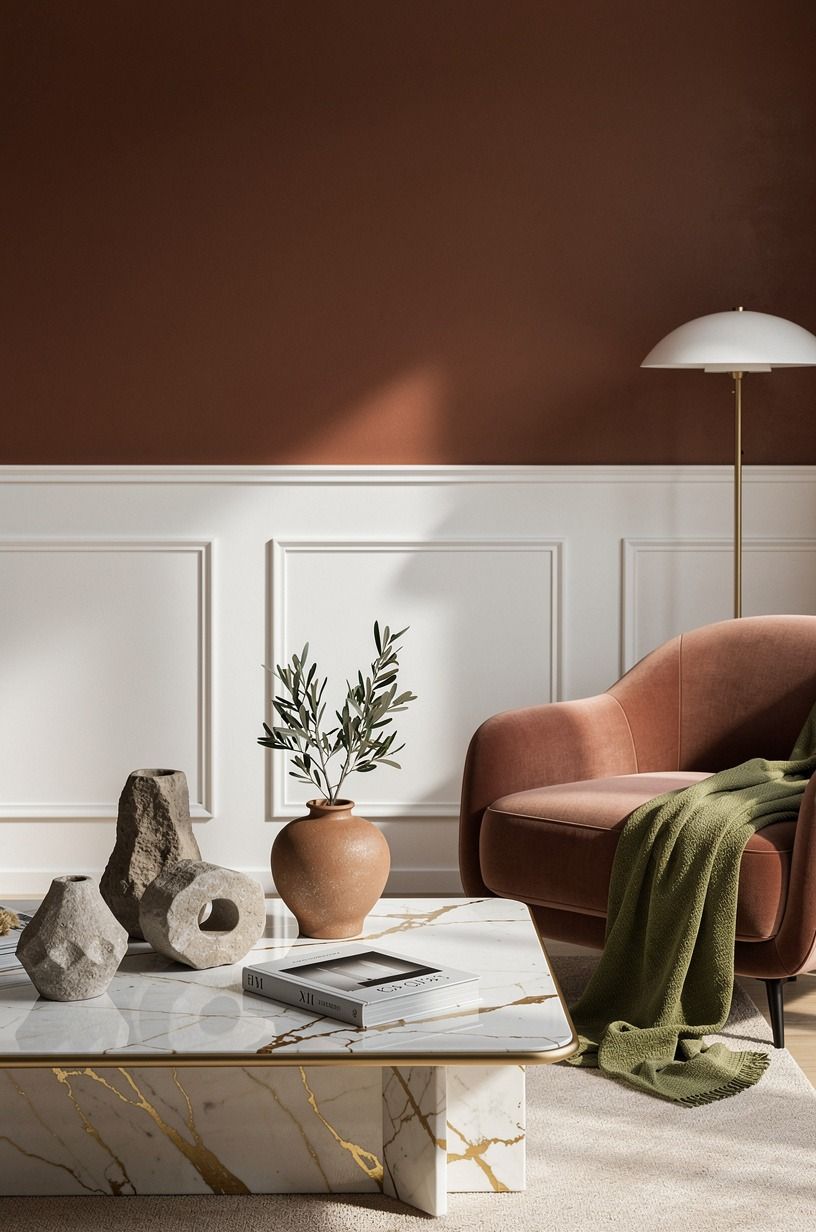
Run Calacatta marble with gold veining to roughly two-thirds of the wall height when you want the tub to feel grounded without making a small bath heavy. For most rooms, that means the chair rail lands above the tub rim, where your eye can still catch a broad painted field.
I prefer this over waist-high paneling behind a tall tub because the shorter version chops the wall in half. Your tub needs a little vertical drama. Paint the upper wall in a muted olive for a soft, earthy glow that works with terracotta and stone without turning yellow at night.
3Anchor white and wood bathroom design with one real material
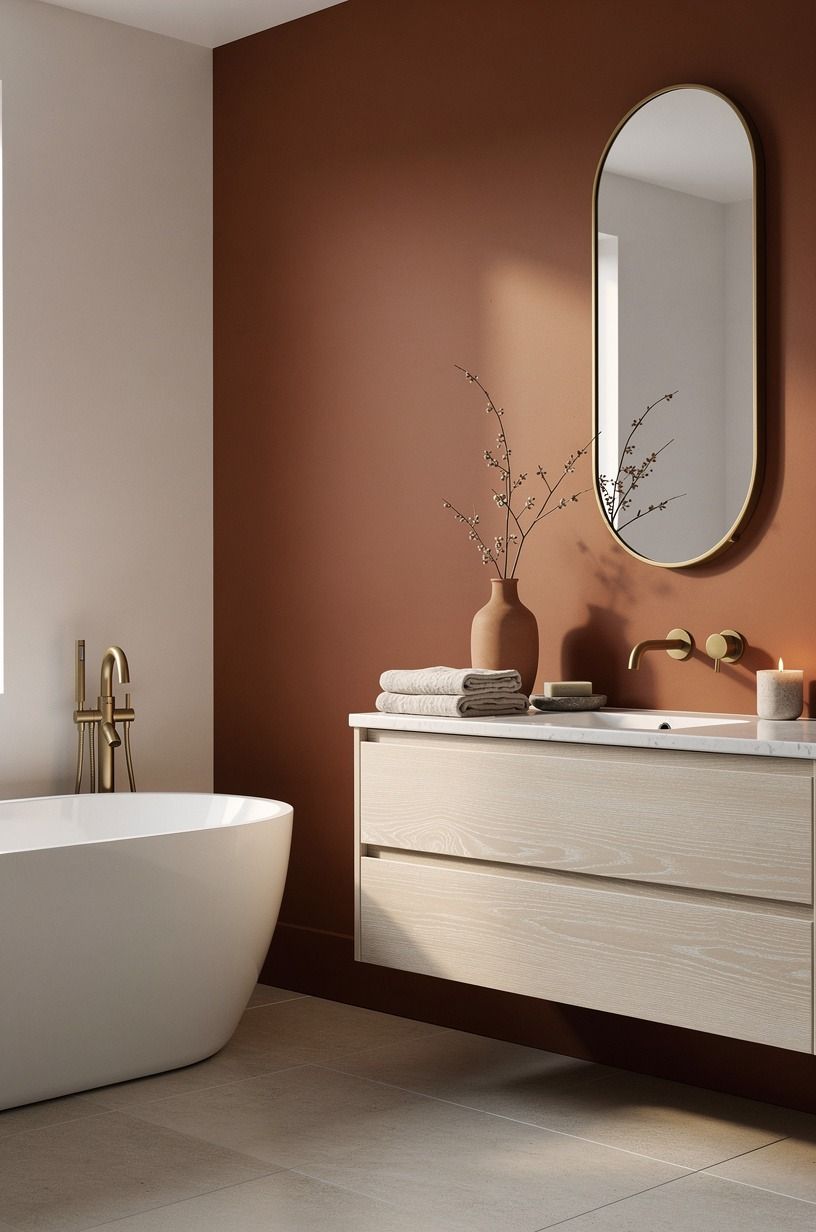
Choose one material that has weight. Cerused white oak on a slim ledge, a framed mirror, or a narrow shelf gives your white-and-wood bathroom design a point of view.
You don’t need oak everywhere. In fact, I’d skip matching oak vanity fronts, shelves, and trim, because your room starts reading like a showroom set. One warm piece against painted paneling is enough, especially when the grain catches the low light from a sconce.
For more proportions that suit a soaking zone, see this guide to a master bath freestanding tub retreat.
4Paint the upper wall with a color that survives steam
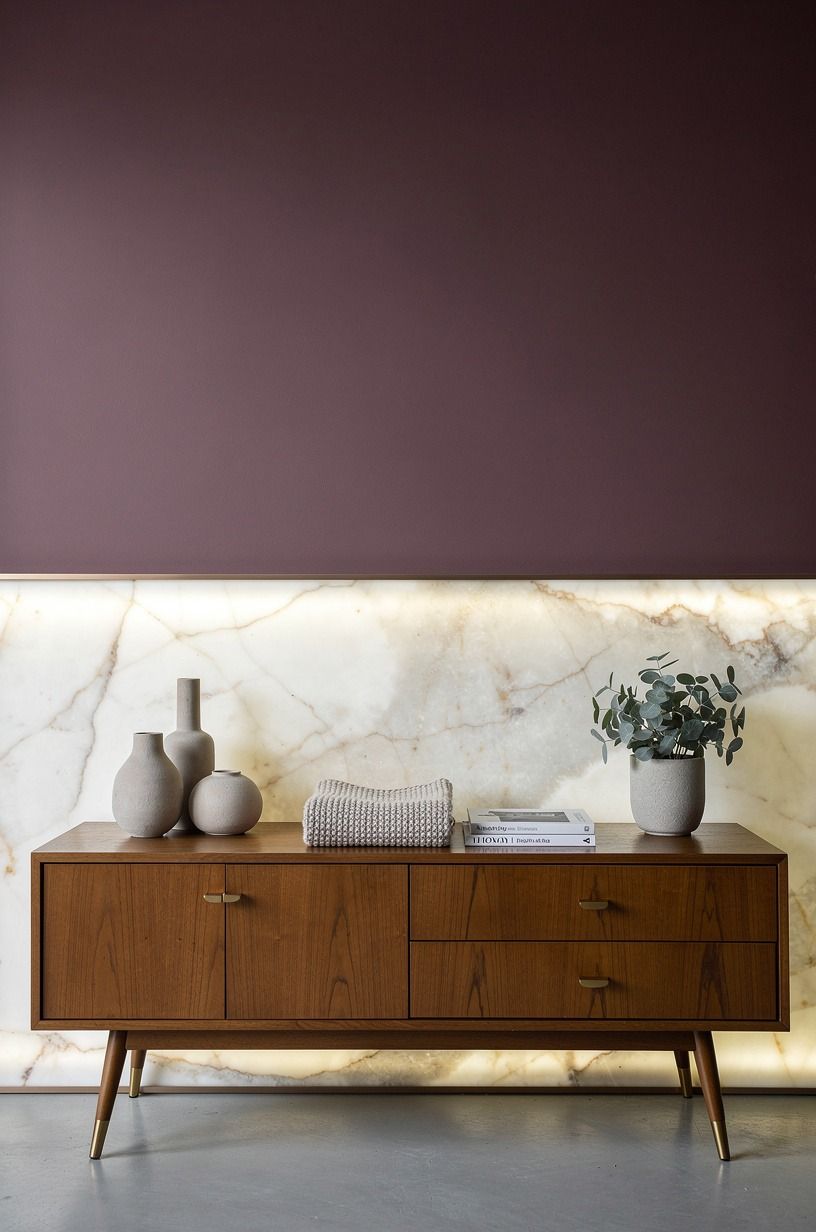
Use a bathroom-rated paint above your wainscoting, and test it in the evening before committing. A deep plum has the moody pull people want, but it can make a windowless room feel pinched if your light is weak.
For a brighter read, keep the surrounding surfaces soft gray and let backlit translucent onyx bring in the rose-gold warmth. Your wall should make candlelight look warmer, not swallow it. And yes, sample boards are annoying.
They’re still cheaper than repainting.
5Build the Three-Height Light Stack behind the tub
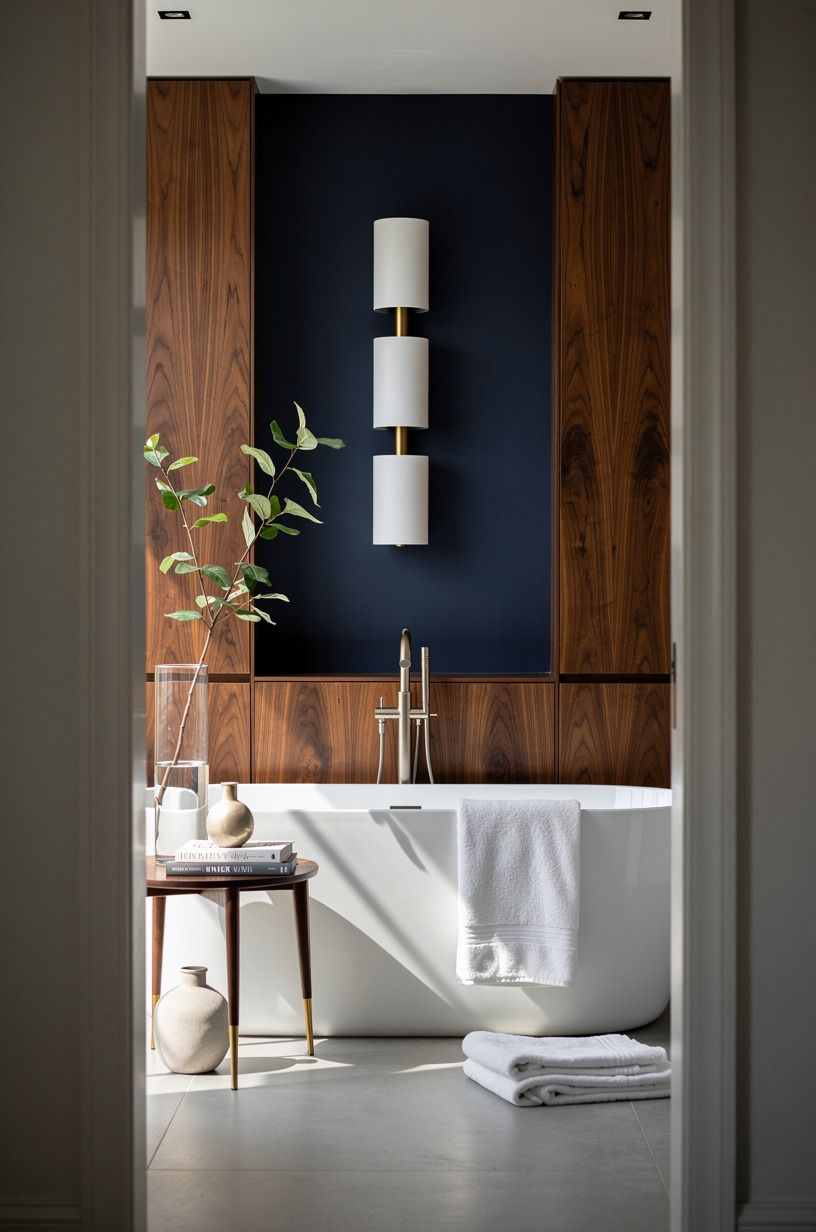
Give your tub wall three levels of light: ceiling light, wall light, and a lower glow from a small lamp or candle. Wall lights against book-matched walnut create the intimate pool of light that overhead fixtures can’t manage.
Keep the bulbs warm and dimmable. You’ll see the grain and panel shadows after dark, and that small bit of depth makes the bath feel more luxurious.
I’ve tried a single bright vanity bar behind a tub. It was clinical, and it made every water spot look louder.
– Dimmable LED bulbs – Book-matched walnut paneling – Belgian flax linen shade
6Frame farmhouse bathrooms with shiplap carefully
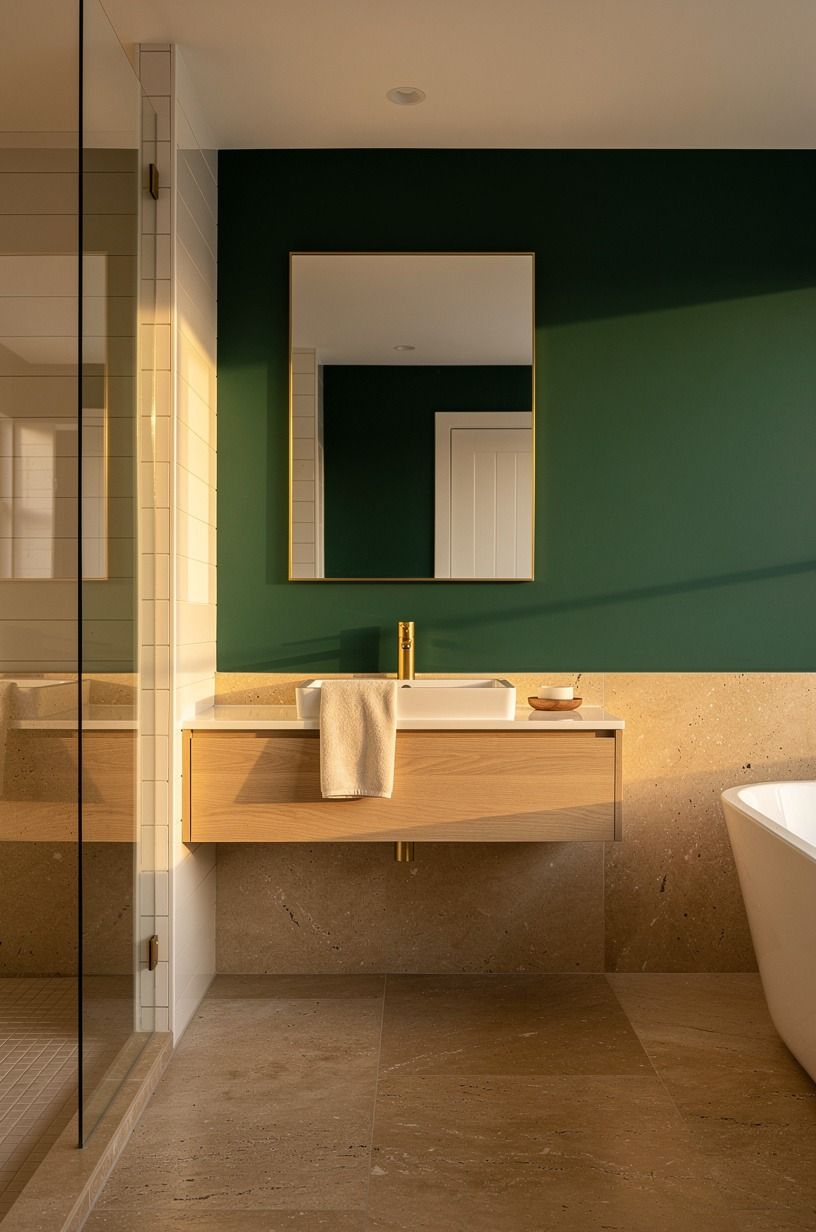
For farmhouse bathrooms with shiplap, use it only when the tub wall has enough width to carry it. A narrow wall covered in thick boards can feel busy fast, especially if you already have patterned floor tile.
Pair simple shiplap with warm travertine for a quieter result. Your eye gets texture without a striped effect.
But don’t use fake distressed gray boards here. They fight the clean curve of a freestanding tub every single time!
If you’re deciding between a wall finish and tile, this look at tile behind a freestanding tub helps you compare the two.
7Layer tile only where splashes and sightlines matter
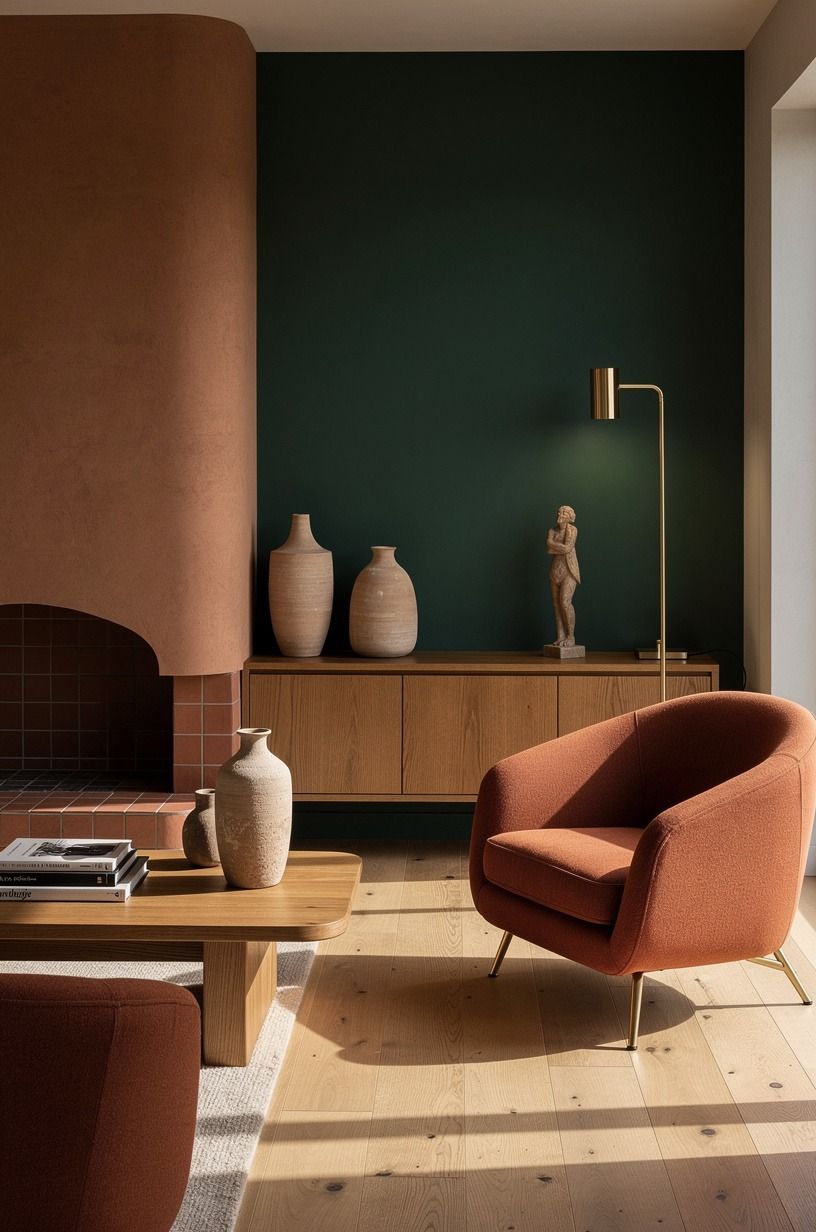
Tile doesn’t need to cover every inch of your wall. Run an unlacquered brass detail behind the tub from baseboard to a clean horizontal line, then paint above it for a more relaxed, lived-in finish.
Your budget can go toward the visible section, where the developing patina brings warmth to forest green, rust, and natural oak. I’d choose this over glossy white subway in a statement bath, because glossy white can look flat once the grout lines multiply.
8Hang a mirror that reflects light, not clutter
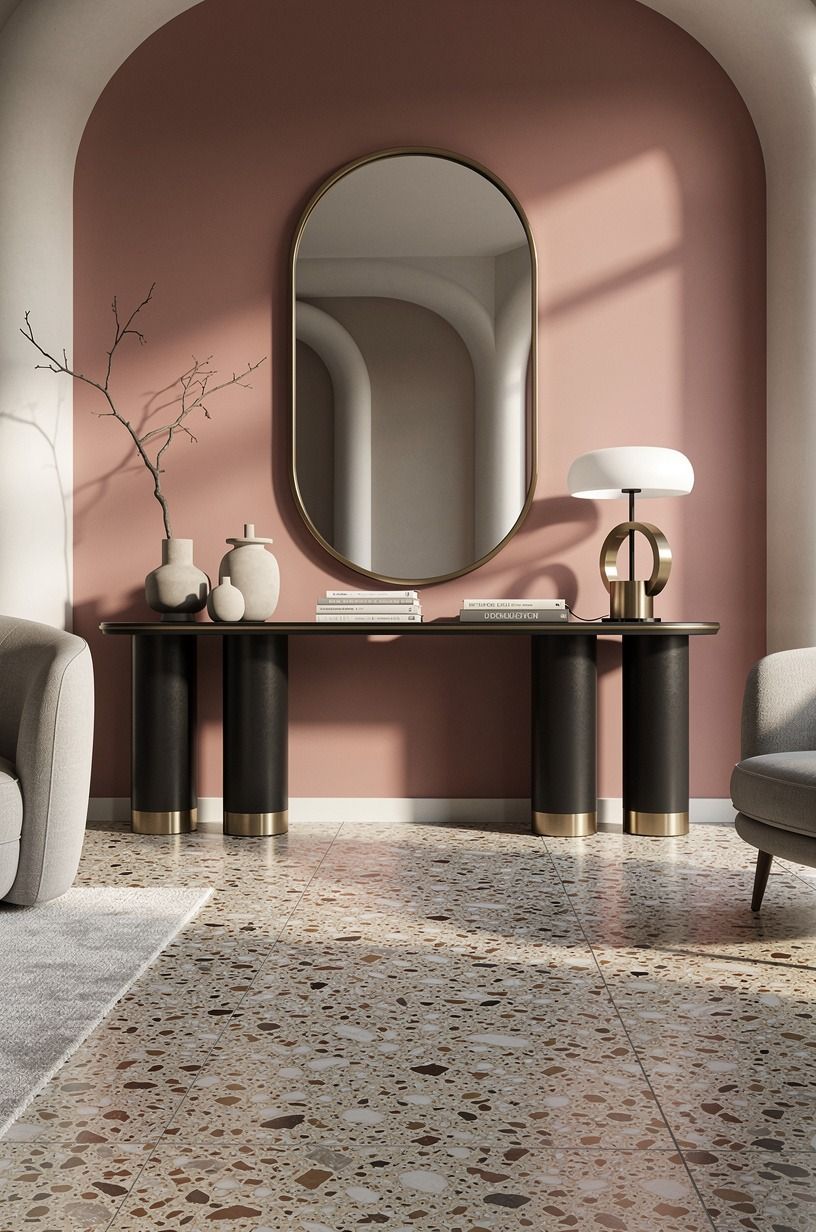
A mirror behind the tub works when it reflects a window, a sconce, or a quiet wall. It doesn’t work when it doubles your toilet or laundry pile. Brutal, but true.
Try a mirror set into oversized-chip terrazzo above paneling, leaving a visible strip of wall around it so it doesn’t look wedged between trim lines. You’ll get a bright, airy lift without another renovation task. And if your bathroom is tight, read how to fit a freestanding tub in a small bathroom before hanging anything permanent.
9Mix a floral wallpaper panel with painted wainscoting
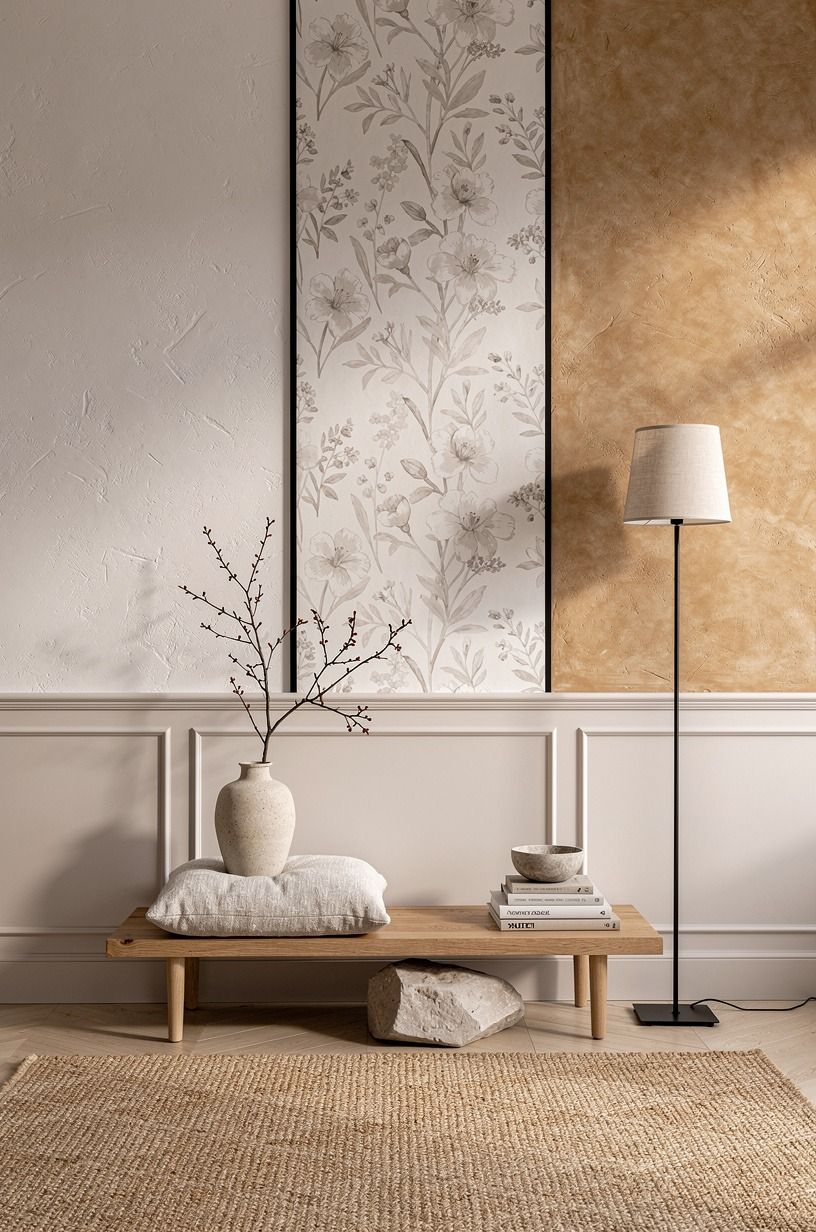
Wallpaper belongs above wainscoting, where it can feel captivating without taking over the whole room. Choose a floral panel with a warm ground, then let hand-applied Venetian plaster hold the lower half steady.
Your bathroom doesn’t need a loud print plus a veined marble floor plus ornate lighting. Pick one show-off. I’d take wallpaper over a second competing tile pattern because it’s easier to change when your taste shifts (and it will).
The one-wall floral wallpaper approach behind a vanity uses the same restraint.
10Float a shelf with the Tubside Landing Zone
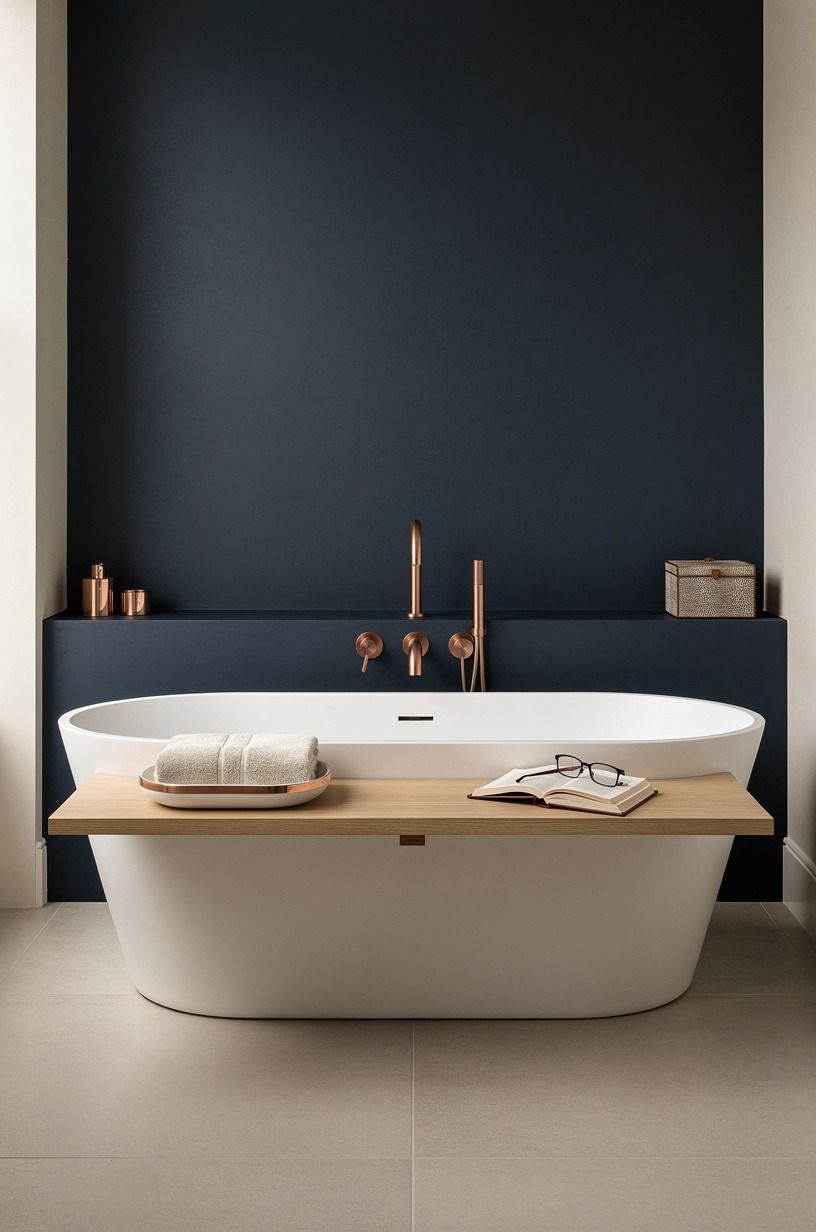
Build a narrow shagreen-accented shelf behind the tub if you need a place for a book, glass, or bath salts. Keep it shallow enough that you can still clean behind the tub, and mount it below the faucet line rather than at shoulder height.
This is the Tubside Landing Zone: one practical surface, not a decorated mantel. Your shelf can hold two things well.
A stack of 600gsm Turkish cotton towels and a small vessel are plenty. More than that, and you’ve created another damp dusting assignment.
For layouts that make the shelf genuinely useful, borrow ideas from these freestanding tub shelf ledges.
11Choose vertical boards over busy square grids
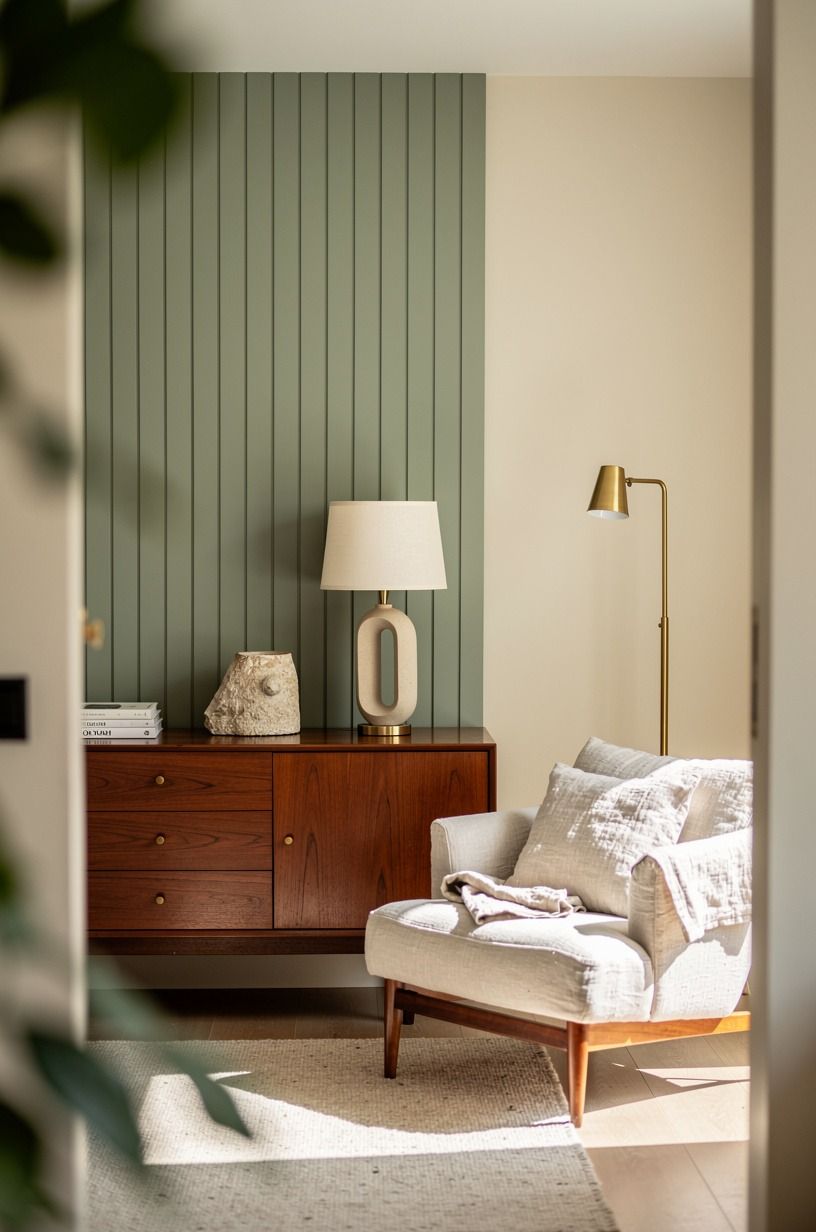
Vertical paneling wrapped in washed Belgian linen makes a low ceiling feel taller because your eye follows the boards upward. Use it behind a rounded tub when you want a refined wall with a little movement.
Avoid an elaborate square-grid molding wall if your tub already has sculptural feet or a dramatic faucet. The grid can be charming in a powder room, but behind a freestanding tub it often feels too fussy. Your bath needs softness, not a geometry lesson.
Paint the boards and trim in the same color. But use a satin finish on the lower wall, since it’s easier to wipe down after bath time.
12Let a window lead the composition
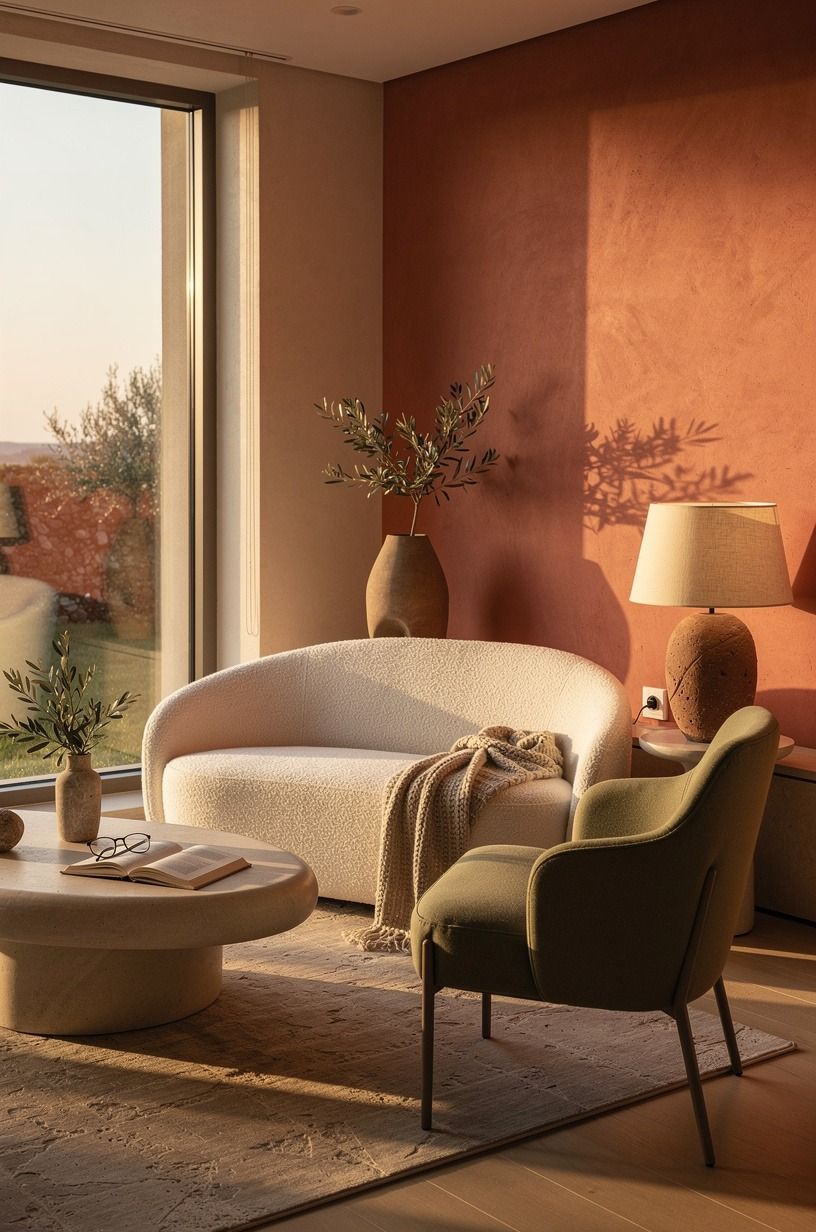
If your tub sits under a window, frame the opening with the same trim profile as the wainscoting.
13Spend where the water and plumbing can’t forgive you
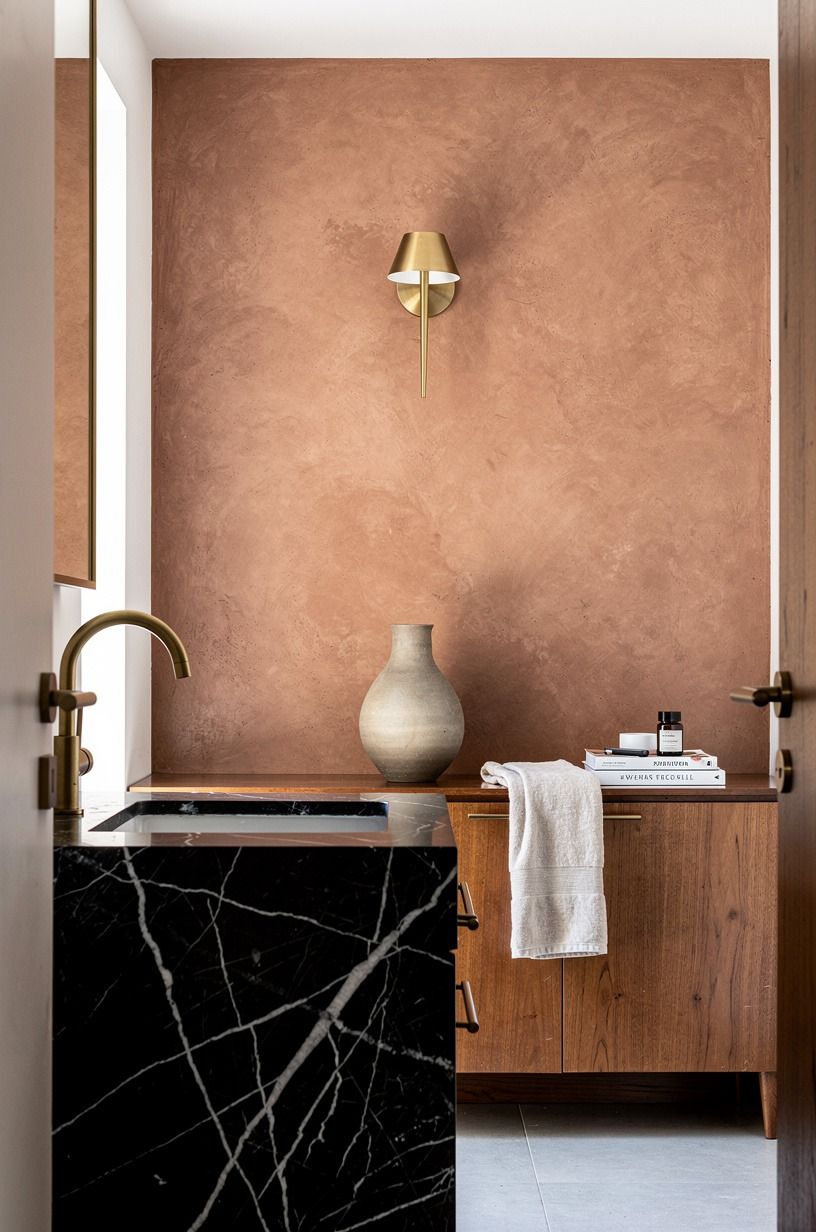
A bathroom wall can look budget-friendly while the underlying project isn’t. Spend on waterproofing, proper caulk, and qualified plumbing first. Save on paint color, ready-made paneling, and a simple mirror.
A brushed brass faucet typically costs $120-$450, while Nero Marquina black marble with white veins typically runs $50-$100 per square foot. You can paint paneling twice.
You can’t casually redo a leaky valve behind a finished wall. That’s where your money should go.
14Can you use a dark accent wall in a small bathroom?
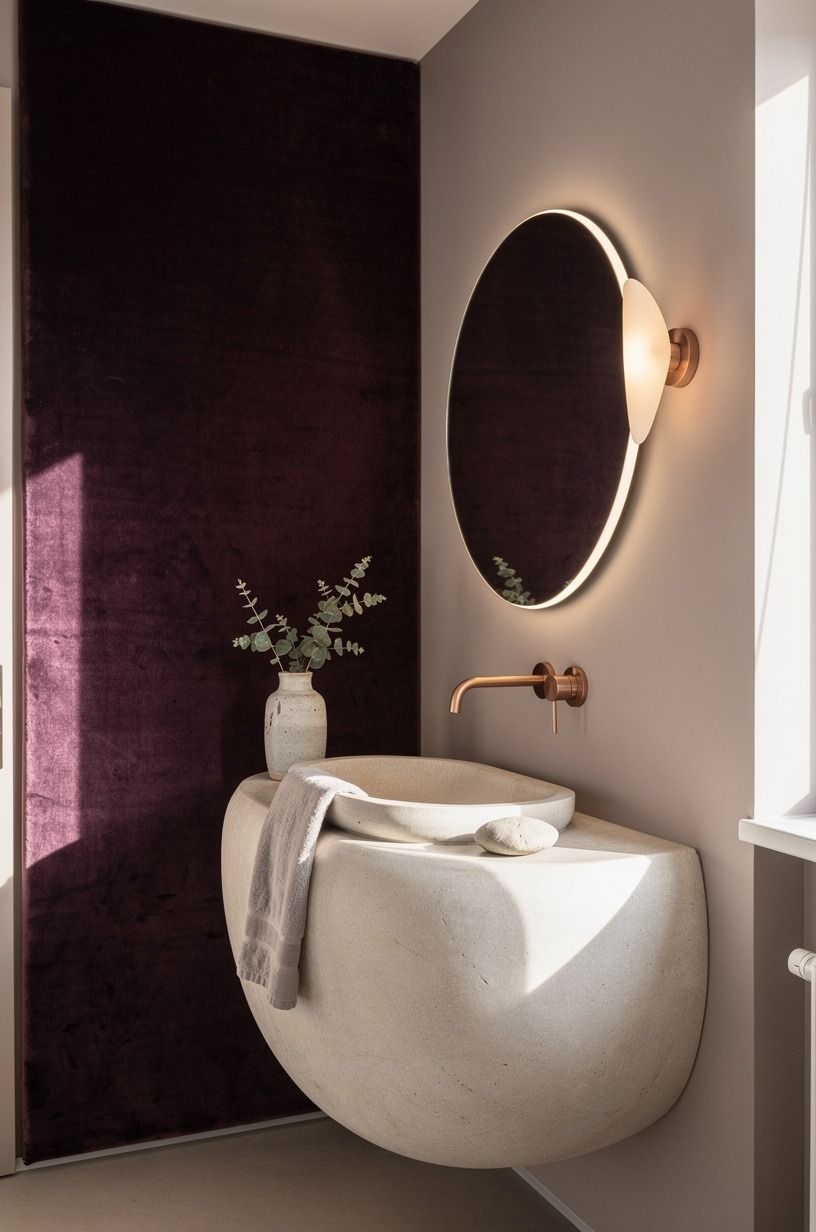
Yes, if you keep the lower half light and give the room enough reflected light.
15Finish with rustic bathroom decor you’ll still use
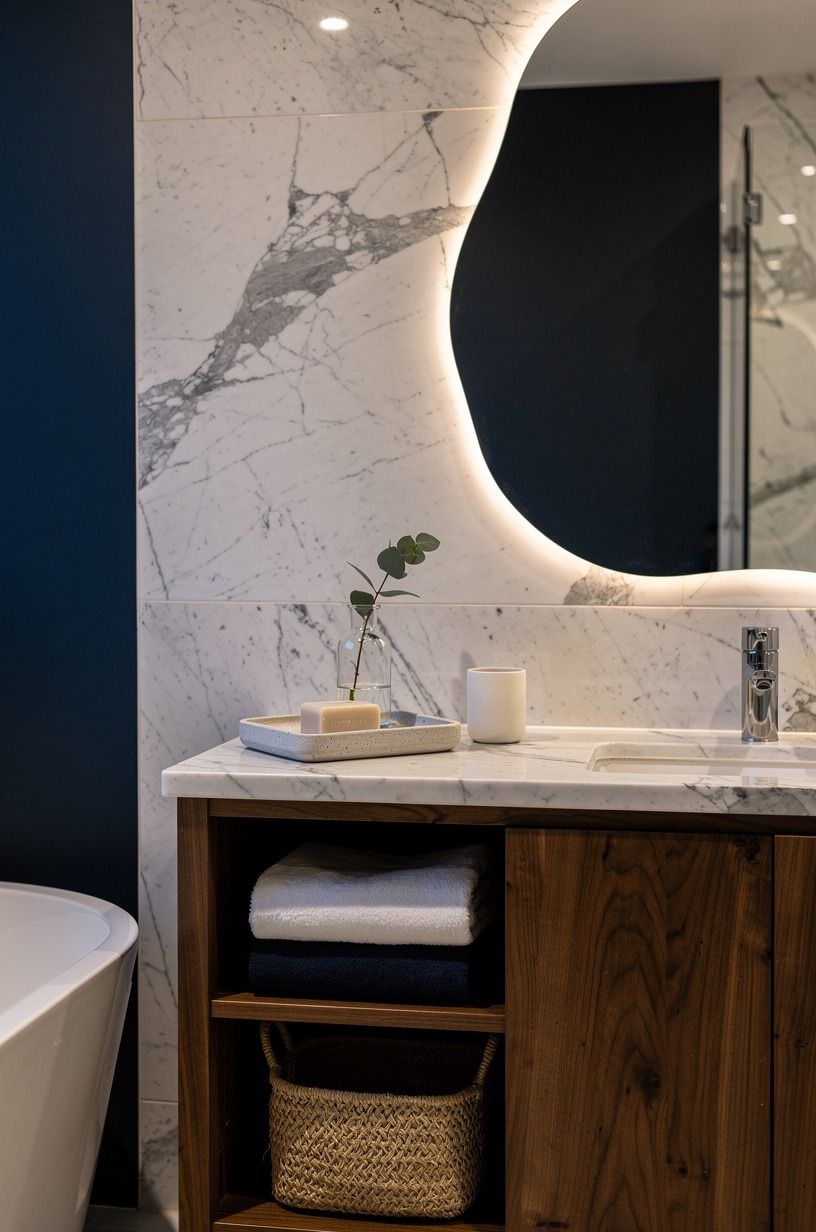
Finish your wall with objects that earn their place: a Carrara marble tray, a lidded jar of salts, and a stool that can hold a towel. Rustic bathroom decor works best when it feels useful, not staged for display.
I made the mistake of putting a delicate stack of books beside a tub once. Steam curled the covers within a month.
Use a sealed tray, washable textiles, and one organic branch in a glazed vessel instead. Your room will feel welcoming, and you won’t have to babysit it.
Why I think the tub wall deserves more attention
I used to think the freestanding tub was the star and the wall behind it was just support staff. That’s wrong.
The tub has a lovely silhouette, sure, but it’s mostly empty space until the wall gives it scale, color, and a reason to be there. A well-designed backdrop changes the whole experience of stepping into the room.
You don’t just see a fixture. You see a place to pause.
My first attempt was too polite. White wall, white tub, white tile, a little chrome. It was clean, but it had no pulse.
I kept buying small accessories to fix it, which is how people end up with six candles, three trays, and a bathroom that still feels unfinished. The problem wasn’t the accessories.
It was that the big surface behind the tub had nothing to say.
Now I start with one decision: paneling, tile, or paint. Then I ask what the wall should do for the tub. Make it feel warmer?
Taller? More private?
A dark blue panel wall makes a white tub feel crisp and sculptural. Pale beadboard makes it feel relaxed and familiar. Zellige gives it movement, especially when the water is still and the room is quiet.
You don’t need every upgrade. In fact, please don’t do every upgrade.
A tub wall with tile, wallpaper, a gallery wall, ornate molding, and floating shelves is trying too hard. Pick the material that feels most like your house, then let the rest of the room exhale.
That restraint is what makes the result feel timeless.
A Few Things Worth Answering
What is the best wainscoting and accent wall behind a freestanding tub for a small bathroom?
Painted vertical tongue-and-groove paneling is my first pick because it adds height without stealing floor space. Pair it with a simple IKEA HEMNES mirror and pale paint so your small bathroom stays bright and calm.
Where can I buy wainscoting and accent wall pieces on a budget?
Start with IKEA, Target Threshold, and Wayfair for mirrors, shelves, and lighting. Facebook Marketplace is useful for a solid wood stool or vintage frame. Your best budget move is often paint plus one second-hand piece with real character.
How much does a wainscoting and accent wall behind a freestanding tub makeover cost?
A paint-and-panel refresh typically costs about $200 to $1,200, depending on trim, lighting, and the faucet. Painted MDF panels are the lower-cost route. Reusing your mirror or stool keeps more money available for moisture-safe materials.
Can I create a wainscoting and accent wall behind a freestanding tub on a budget?
Yes, and you don’t need a full tile job. Peel-and-stick wallpaper, leftover paint, and a thrifted mirror can change the focal wall. Your free move: declutter the tub edge and let one material take the visual lead.
Is a wainscoting and accent wall behind a freestanding tub worth it in a small space?
Yes, it’s worth it because a small room lets one strong wall read clearly. Vertical paneling pulls the eye upward while a large mirror bounces light back. Keep your floor open around the tub so the wall stays the main event.
Is wainscoting and accent wall design a good idea for a rental?
Yes, if you use removable layers. Peel-and-stick wallpaper, tension-mounted shades, and leaning mirrors give you warmth without permanent damage. Skip glued trim unless your landlord approves it, because patching walls later isn’t the relaxing part.
Where I’d Start First
If I had to pick one step, I’d start with painted wainscoting. It gives a freestanding tub a real backdrop without committing you to wet-area tile. Pin the panel height you love, then compare freestanding tub placements before cutting trim.