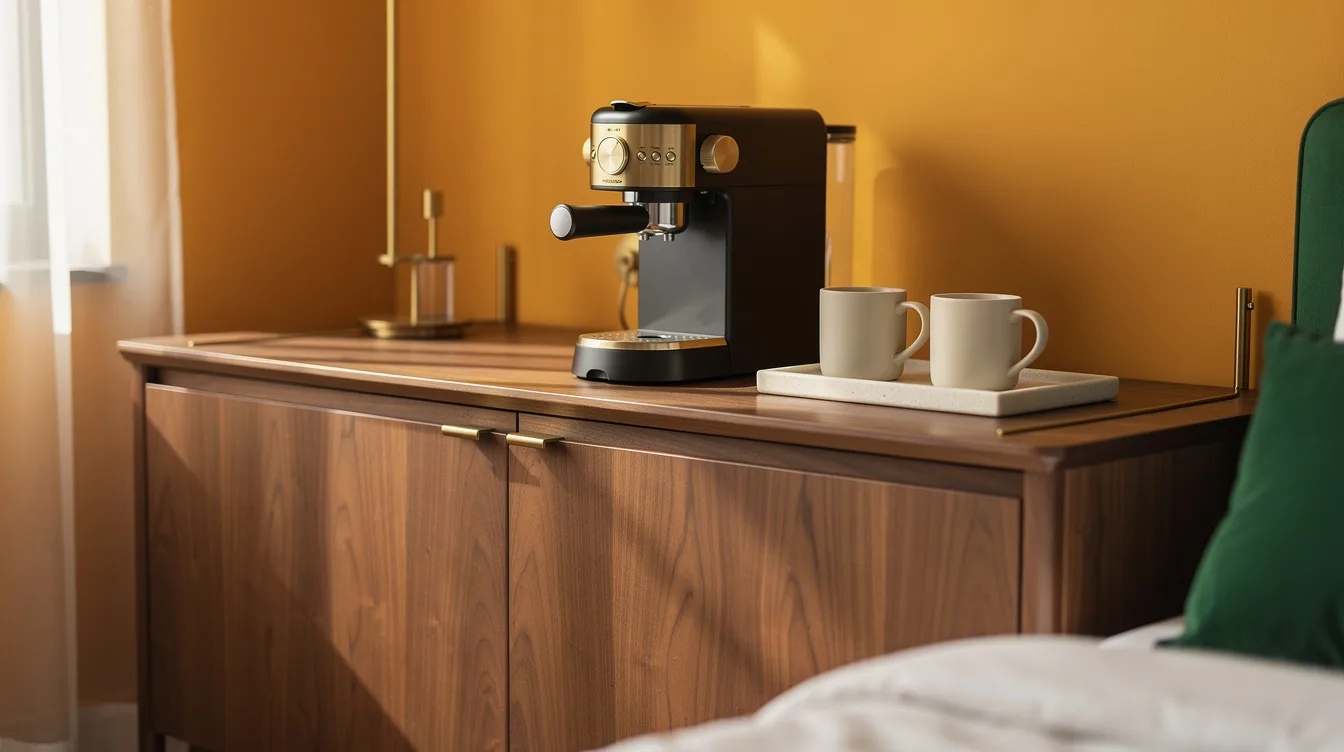
I resisted putting coffee in the bedroom until a 54-inch sideboard kept sending me downstairs for one mug before daylight. A compact coffee bar earns its place when it behaves like a small hospitality station, not a second kitchen.
The useful target is roughly 30 to 36 inches wide, 14 to 18 inches deep, and 34 to 36 inches high. That footprint holds a brewer and two cups while leaving the room unmistakably a bedroom.
Start With a Shallow Closed Cabinet
Choose a cabinet with doors first, then let one open shelf carry the visual weight. Oak veneer, ash, walnut, and warm matte ivory all suit an organic-modern room because they read as furniture after the lights go down.
A narrow bedside-style station, typically 24 to 30 inches wide and 12 to 16 inches deep, works beside an ensuite entry or on the wall opposite the bed. It should hide pods, tea, spoons, and napkins, because packets on display make the setup feel like a break room.
Match the Counter Depth to the Machine
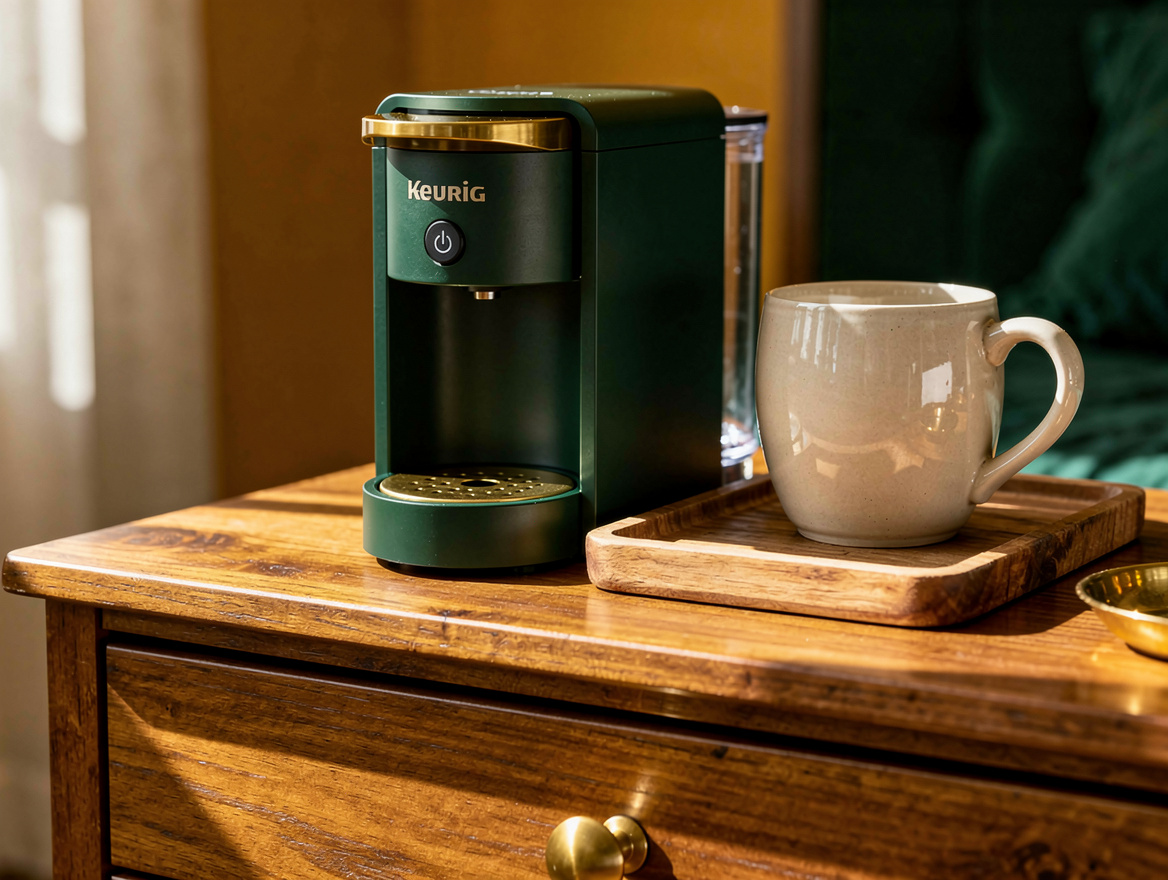
Depth is the decision that separates a serene cabinet from an appliance perched at the edge. A Keurig K-Mini measures 4.5 inches wide, 11.3 inches deep, and 12.1 inches high, yet it needs at least a 14-inch-deep top for its cord, drip tray, and pod loading.
Typical pricing for that compact brewer is about $70 to $98, making it a sensible fit for a small room. A Nespresso Vertuo Pop+ is 14 inches deep, so give it a 16-to-18-inch surface; the bundle with an Aeroccino3 is listed at about $199.99.
Use a Low Sideboard on a Long Wall
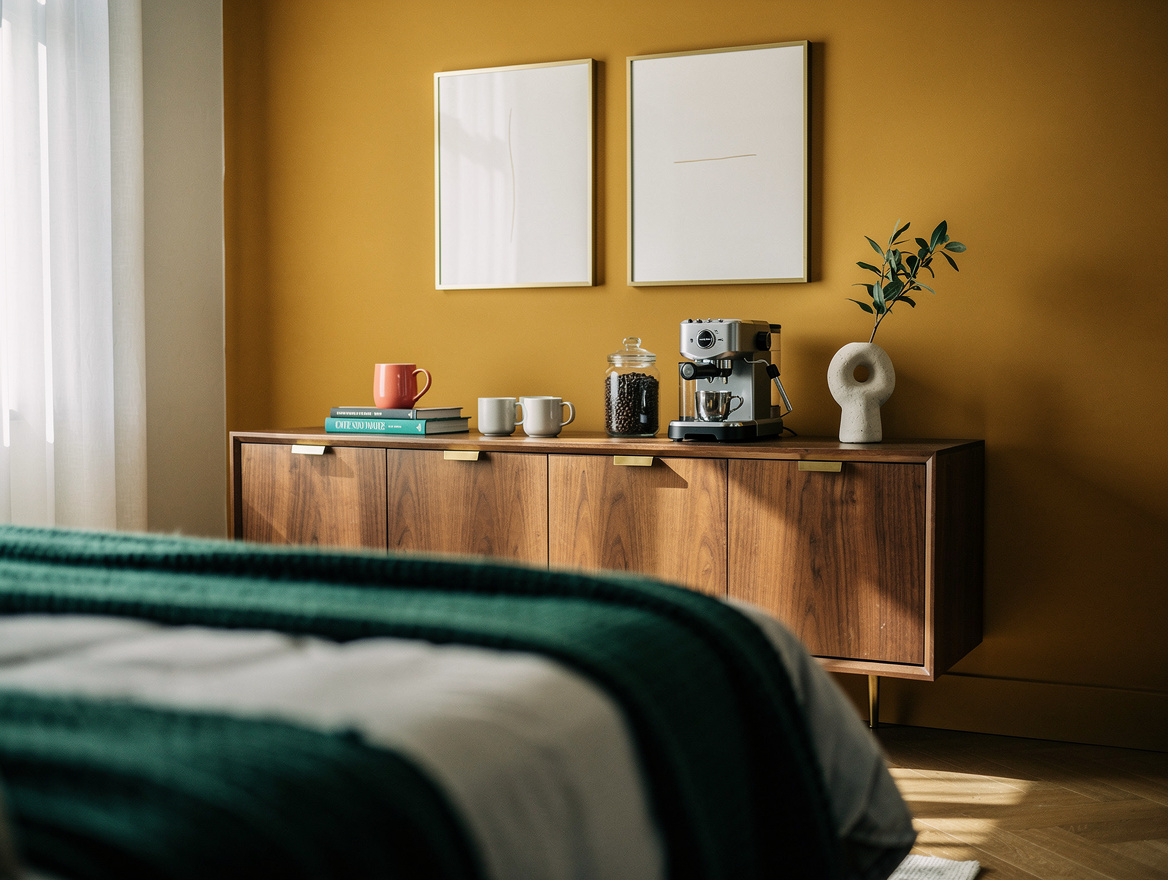
A low sideboard is the most convincing option in a larger primary bedroom, especially below a mirror or oversized art. Look for roughly 39 to 54 inches wide, 18 to 21 inches deep, and 32 to 39 inches high, then keep the top nearly bare.
A walnut sideboard from Wayfair or Target can hold the machine, a water carafe, and a concealed serving tray without crowding the sleep zone. Typical costs run about $170 to $1,000, and I would spend more on sturdy doors than on decorative hardware.
Turn a Tall Cabinet Into a Quiet Niche
A shallow tall cabinet solves the awkward bedroom corner near a wardrobe. A unit around 28 to 32 inches wide, 11 to 15 inches deep, and 40 to 54 inches high gives the brewer a counter-height landing while the lower compartment hides supplies.
The IKEA EKET cabinet with two doors is about 27.6 inches wide and 13.8 inches deep, so it is better for a K-Mini, pour-over set, or tea tray than for a full-depth Nespresso. Its brown-walnut-effect finish looks more grown-up with a simple wood top and no visible pod rack.
Keep the IVAR for Tea and Manual Coffee
The IKEA IVAR cabinet is about 31.5 inches wide, 11.8 inches deep, and 32.7 inches high, with unfinished solid pine doors. That shallow profile is charming, but it does not offer enough working depth for a full automatic brewer.
Use it for a kettle, a compact pour-over dripper, loose tea, and a removable stone-look tray. A pale oak stain or warm matte clear finish softens the pine, while an ivory ceramic mug collection gives the cabinet a deliberate, spare look.
Treat the Built-In Like Bedroom Furniture
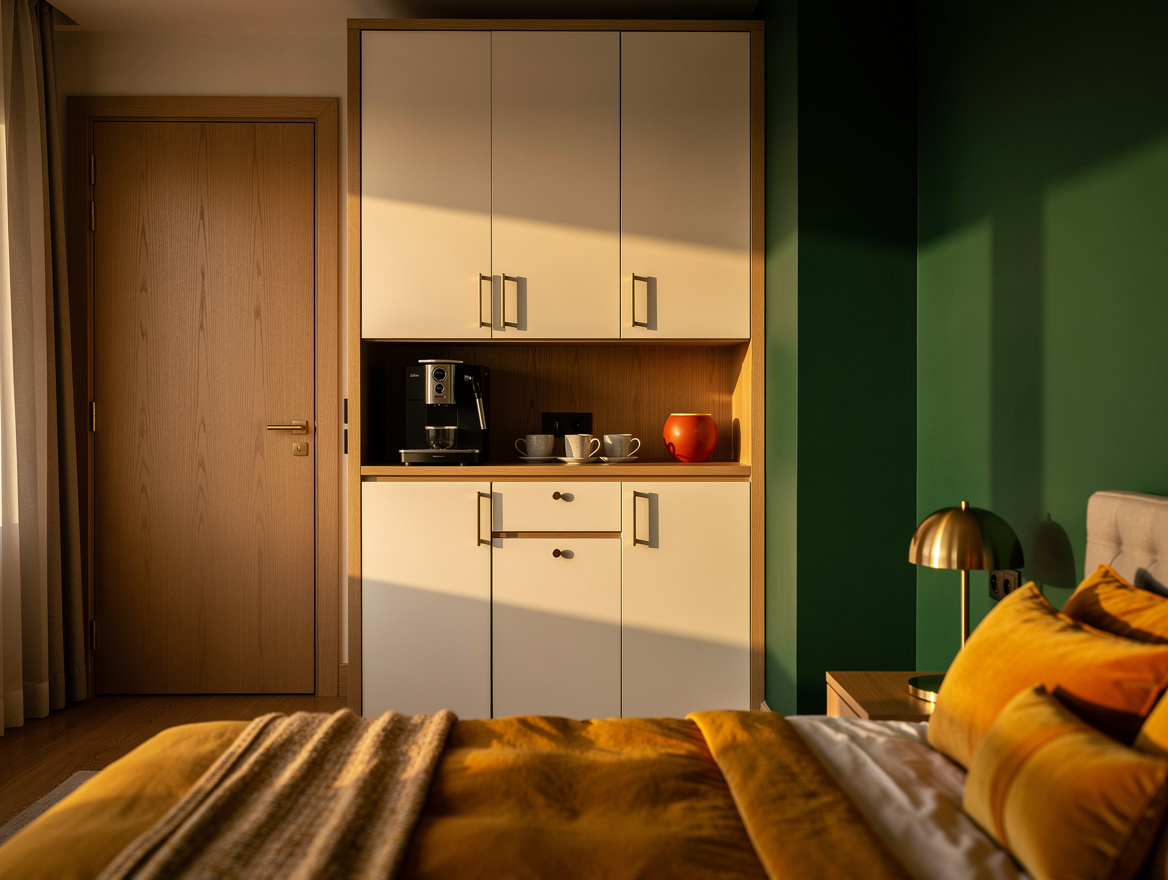
A wardrobe niche is the polished answer when the coffee bar belongs inside a dressing wall or near the bedroom door. A built-in around 30 to 42 inches wide, 18 to 24 inches deep, and 36 to 42 inches high can include an appliance garage, drawers, and a small beverage fridge.
Installed work typically lands around $2,500 to $8,000 or more, so the design must earn it. Specify a matte-lacquer cabinet, a wipeable quartz or stone-look surface, and doors that close over every appliance before bedtime.
Begin with the machine you actually use, then measure its depth with room for the cord and your hand. Keep food waste and strong-smelling snacks out of the cabinet, and the morning ritual will stay calm instead of creeping into the whole room.
Mia Carter writes about small-space living and budget home makeovers. She has restyled three rentals and tests most ideas in her own 45 sqm flat.