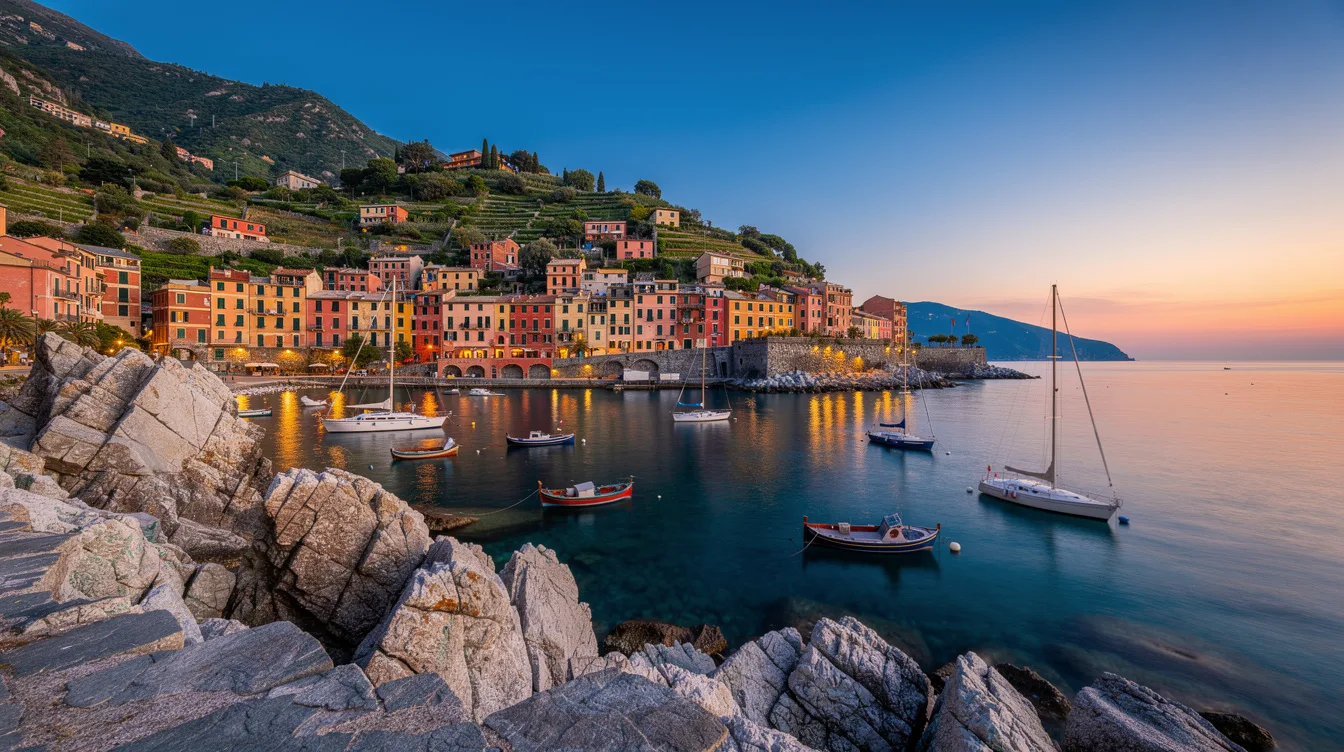
Camogli once sent hundreds of tall ships across the water, earning the nickname “city of a thousand white sails.” That history still gives this Ligurian harbor more pull than its modest size suggests.
You arrive to colored houses stacked above a pebble beach, with the Golfo Paradiso opening ahead. It feels lived-in, not staged. And that’s precisely why Camogli works when Portofino and the Cinque Terre feel like they’re asking you to keep moving.
Why Camogli became the city of white sails
In its maritime heyday, Camogli’s fleet included hundreds of tall ships. The nickname “city of a thousand white sails” wasn’t about a single spectacle. It described a harbor shaped by vessels leaving, returning, and filling the horizon with canvas.
By 1880, 500 Camogli residents were registered as ship captains, within a population of 12,000. That’s an astonishing concentration of seafaring life. But the town’s old fishing-village identity wasn’t erased by those larger ambitions.
The narrow painted facades along the beach had a practical purpose too. Their colors helped fishermen recognize their port from the sea, which makes the waterfront feel less like decoration and more like a working memory.
You can still walk the shape of that memory from the station toward the marina. The sea is always nearby, and the passage from rail platform to harbor takes only a few minutes. Salt hangs in the air when the water is moving.
The waterfront is compact, but it holds your afternoon
Start at Camogli, San Fruttuoso station, then head downhill to the port and follow the lungomare beside the beach. The center and waterfront are about a five-minute walk from the station, so there’s no need to rent a car just to understand the place.
At the end of the bay, the Basilica di Santa Maria Assunta sits beside the water with the Castello della Dragonara nearby. This is the view that makes you slow down. And it’s more satisfying in person than as another hurried phone photo.
The beach is pebbly, not soft sand, so bring shoes you don’t mind getting wet. Still, swimming directly in town is wonderfully simple. You can leave the café table, cross the promenade, and be in the water without planning a whole beach day.
Camogli is lively in summer, but it doesn’t have Portofino’s polished, pass-through mood. I’d choose it for a couple of nights over a rushed day trip. The harbor asks for lingering, especially after the brightest part of the afternoon fades.
Can you reach San Fruttuoso from Camogli?
Yes. Seasonal boats run toward San Fruttuoso, where an old abbey sits in a cove, and service generally operates from April through October. It’s the easy choice if you want the coast without committing to a strenuous walk.
You can also reach San Fruttuoso on foot through the Portofino regional natural park. But take the warning seriously: routes can be steep, hot, and exposed. Good shoes matter, and you’ll enjoy the trail more if you accept that it isn’t a casual promenade.
Camogli also gives you access to the Portofino Marine Protected Area. That connection is the town’s real advantage. You get coastal paths and boat options close by, without sleeping in the more expensive center of Portofino.
And don’t treat the boat as transportation you merely endure. Leaving the harbor by water restores the old perspective, with those tight rows of houses behind you and the peninsula ahead. The engine noise fades, then the coast becomes the whole conversation.
Take the train, then eat like you have nowhere else to be
From Genoa, the regional train to Camogli, San Fruttuoso takes about 20-25 minutes. That short ride changes the trip entirely, because you can use Camogli as a coastal base without wrestling with high-season parking.
Driving is possible via the A12 and the Recco exit, but parking is limited and often frustrating in peak season. Take the train if you can. You’ll arrive closer to the part of town you actually came to see.
For food, look for Genoese focaccia, pesto pasta, anchovies, and seafood. Camogli also has a large fish-focused food festival traditionally held on the second Sunday of May. But don’t build the trip around a single event when the waterfront itself is the better reason.
The best windows are April through June and September through October. Those months suit walking and time by the sea. July and August bring better swimming weather, but also more heat, bigger crowds, and the parking problem everyone wishes away.
Camogli is better when you don’t over-plan it
Stay two or three nights if your itinerary allows it. Camogli is often less expensive and more restful than Portofino, while remaining connected to Genoa, Santa Margherita Ligure, Portofino, and San Fruttuoso.
You’ll find a place that is tourist-friendly without becoming only tourist-facing. The beach stones click underfoot. Boats settle in the marina.
And by evening, the painted houses reflect a softer light across the harbor where all those white sails once gathered.