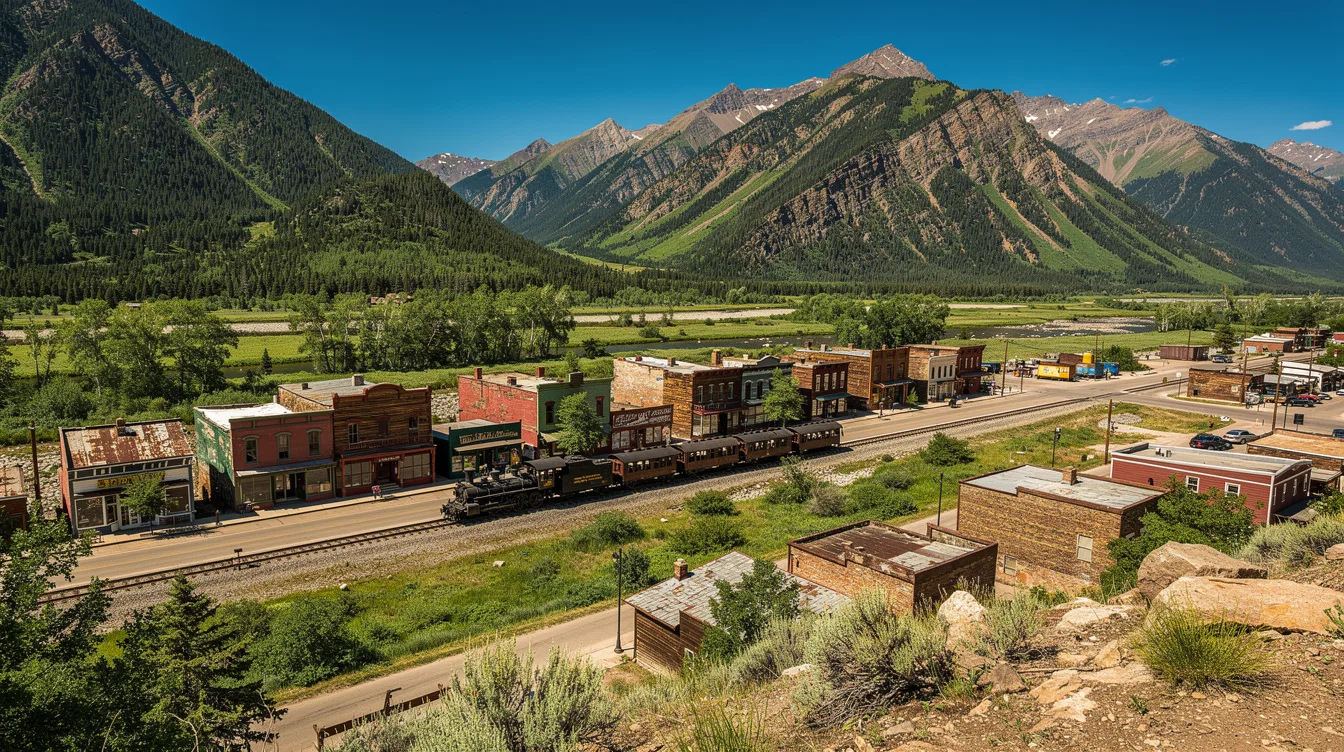
Silverton gets about 150,000 passengers a year at the end of the Durango & Silverton Narrow Gauge Railroad. That number explains the first impression: a tiny Colorado town suddenly fills with people who have spent hours watching the San Juan Mountains slide past a historic train window.
But the arrival is more than transportation. The train lets you enter a former mining town at its natural pace, with coal smoke in the air and old storefronts waiting beyond the tracks.
The train is the reason to come, not just the way in
The historic railroad runs between Durango and Silverton, where the line ends. You ride because the route turns the journey into the event, then step off close to Greene Street with the town immediately in view.
And that’s why so many passengers choose it. A car can reach Silverton, but it can’t give you the slow buildup of mountain walls, narrow valleys, and the sense that this place is deliberately hard to hurry.
Durango & Silverton Narrow Gauge Railroad traffic also gives Silverton an unusual rhythm. It’s touristy when passengers arrive, but the town still feels small once the platform clears and footsteps replace the train’s noise.
Greene Street makes the mining past feel close
Silverton was founded in 1874 after prospectors entered the area. Gold came first, silver followed, and mining shaped the town until the last local mine closed in the early 1990s.
You don’t need a museum label to notice the past. The historic district and Greene Street hold onto the proportions of an old mining settlement, with a Western-movie look that could feel gimmicky elsewhere but lands differently here.
And Silverton is a National Historic Landmark, which helps explain why so much of that character remains. Visit the Old Hundred Gold Mine or the Mayflower Gold Mill if you want more than a walk past old facades.
But don’t expect a polished resort version of Colorado. Silverton is the county seat and the only incorporated municipality in San Juan County, yet it has only about 700 permanent residents.
Mountain access comes with real limits
The town sits in San Juan County about 50 miles north of Durango. That distance is manageable on paper, though the road is part of the decision, especially if weather moves in.
US 550, known as the Million Dollar Highway, links Durango, Silverton, and Ouray through high passes and tight curves. The views pull your eyes outward, so this isn’t the road for anyone who hates exposure or wants an easy mountain drive.
But summer is the better bet for mountain activities and more favorable road access. Afternoon storms and cool nights still belong in the plan, which means a sunny morning doesn’t promise a dry afternoon.
Winter changes the calculation. Snow can heavily affect access and activities, while Silverton Mountain is aimed mainly at advanced and expert skiers and Kendall Mountain is more family-friendly.
Can you explore beyond town without a train ticket?
Yes, but choose the outing for your vehicle and confidence. The Alpine Loop draws 4×4 drivers, while Animas Forks gives visitors a former mining town to explore beyond Silverton itself.
And hikers, mountain bikers, campers, anglers, rafters, and backcountry travelers all find a reason to stay longer in summer. The surrounding peaks rise above 13,000 feet, so the setting feels enormous even when town life stays quiet.
Give your body time before asking much of it
Silverton’s high elevation is the practical detail that deserves respect. Drink water, take an acclimation day, and don’t make your first afternoon an all-out hike just because the sky looks inviting.
But that restraint pays off. You’ll notice more when you slow down: cold evening air, boots on wooden sidewalks, and a thin plume from the arriving train against the mountains.
This isn’t Colorado for a packed checklist. It’s for travelers who want historic rail travel, rough-edged mountain access, and a town that doesn’t pretend winter or altitude are minor details.
By the time the last train leaves Silverton, the platform quiets, the storefronts dim, and the mountain air feels sharper than it did that morning.