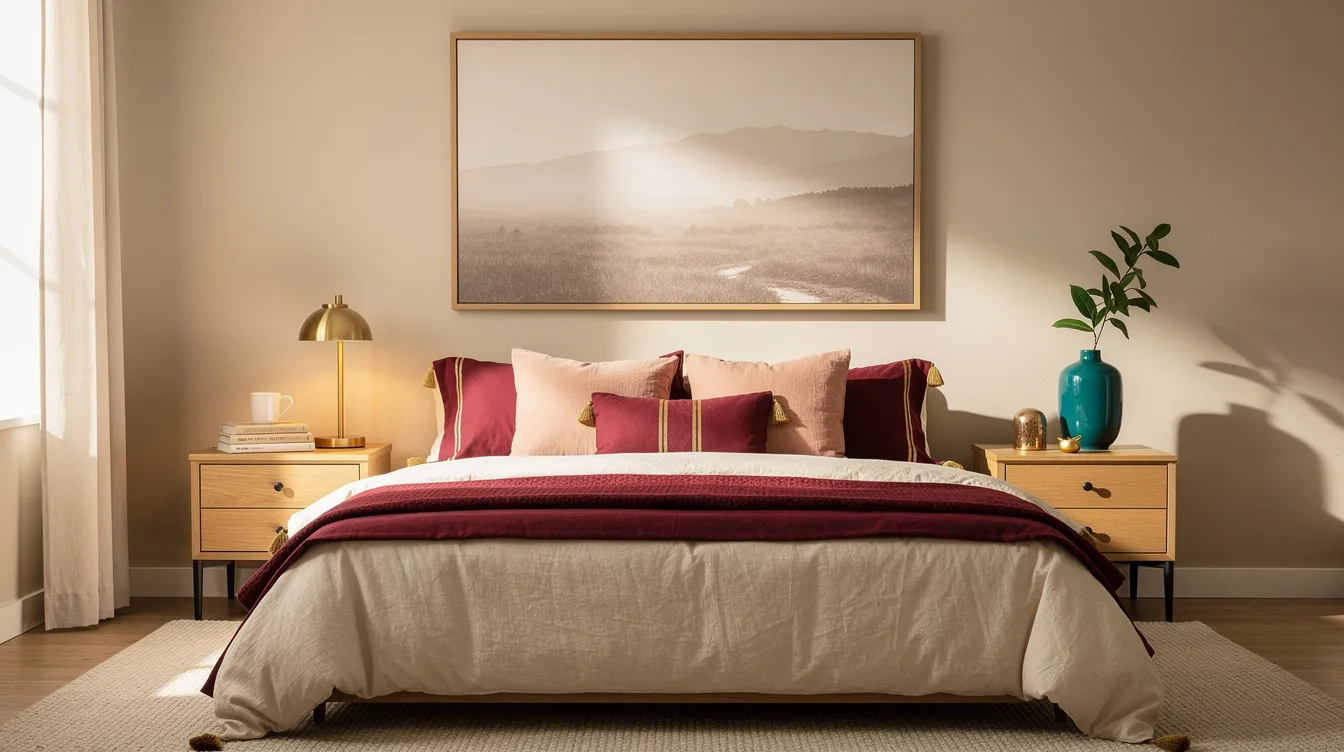
I used to think a small bedroom needed several little frames to feel personal. Then I saw how a single 40-by-60-inch statement print on the largest clear wall could quiet an approximately 90-square-foot room far better than a crowded gallery wall.
The appeal is simple: one focal point gives the eye somewhere to land while the bed, closet, drapery, and storage do their practical work. Oversized means generous for the room, not a canvas squeezed into every available inch.
Measure the Bed Wall Before Buying Anything
Start with the full width of the bed or headboard, then aim for artwork that is roughly 60 to 75 percent as wide. Above a typical 54-inch full bed, a finished piece about 32 to 40 inches wide usually looks assured instead of timid.
For a typical 60-inch queen bed, around 36 to 45 inches of visual width is a reliable target. A 40-by-28-inch horizontal print often lands in the sweet spot, provided the wall still has air at either side.
Measure the frame too. People fall for the image size online, then forget that a wide oak frame and mat can add several inches, which changes the whole composition.
Hang a Quiet Landscape Above the Headboard
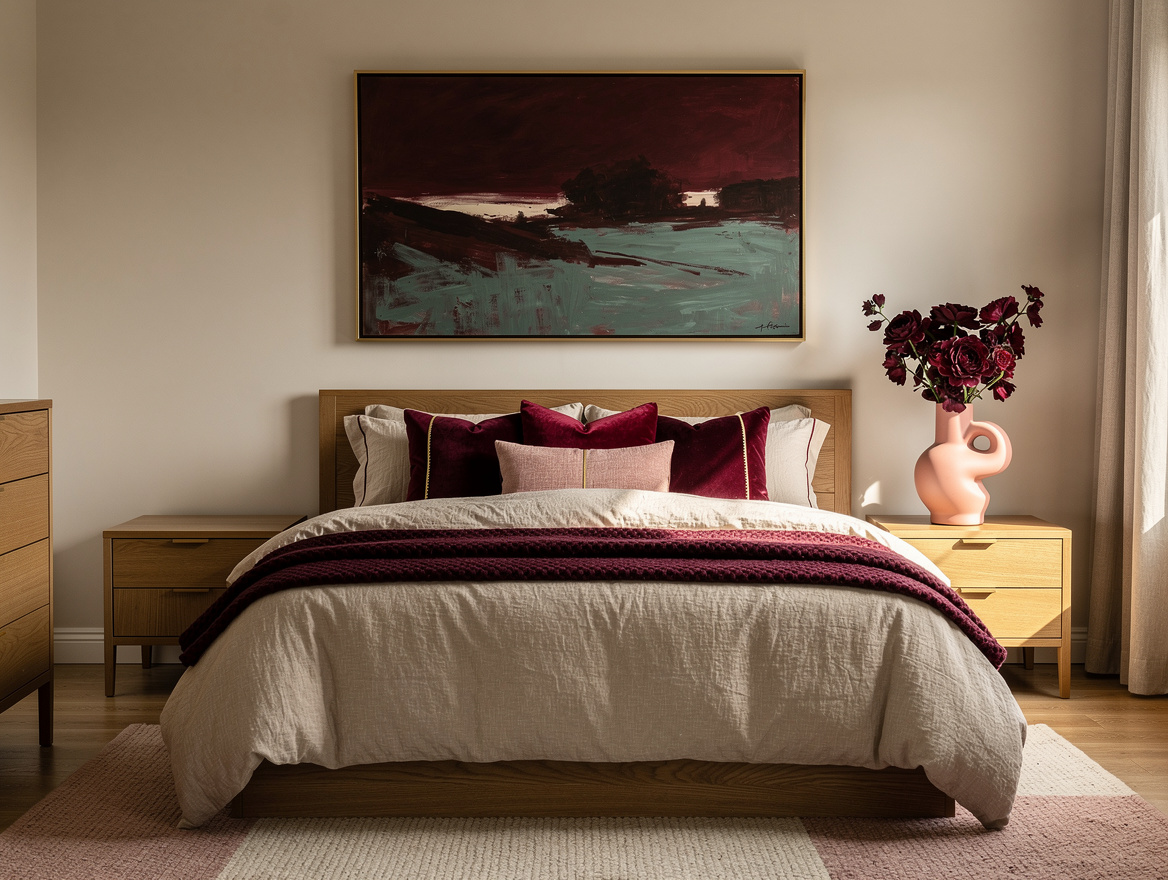
A horizontal landscape is the most dependable choice for the bed wall because its shape gently repeats the bed below it. Choose a broad horizon, distant hills, a faded shoreline, or a soft abstract field in colors already used in the bedding.
A matte giclée print in mushroom, dusty blue, tobacco, or warm ivory has more staying power than a high-contrast novelty image. The room already contains enough hard edges, so the art should bring relief rather than another demand for attention.
Leave roughly 6 to 10 inches between the lower edge of the frame and the headboard. That small gap keeps the pair connected without making the art look pinned to the furniture.
Use a Vertical Piece to Lift a Tight Side Wall
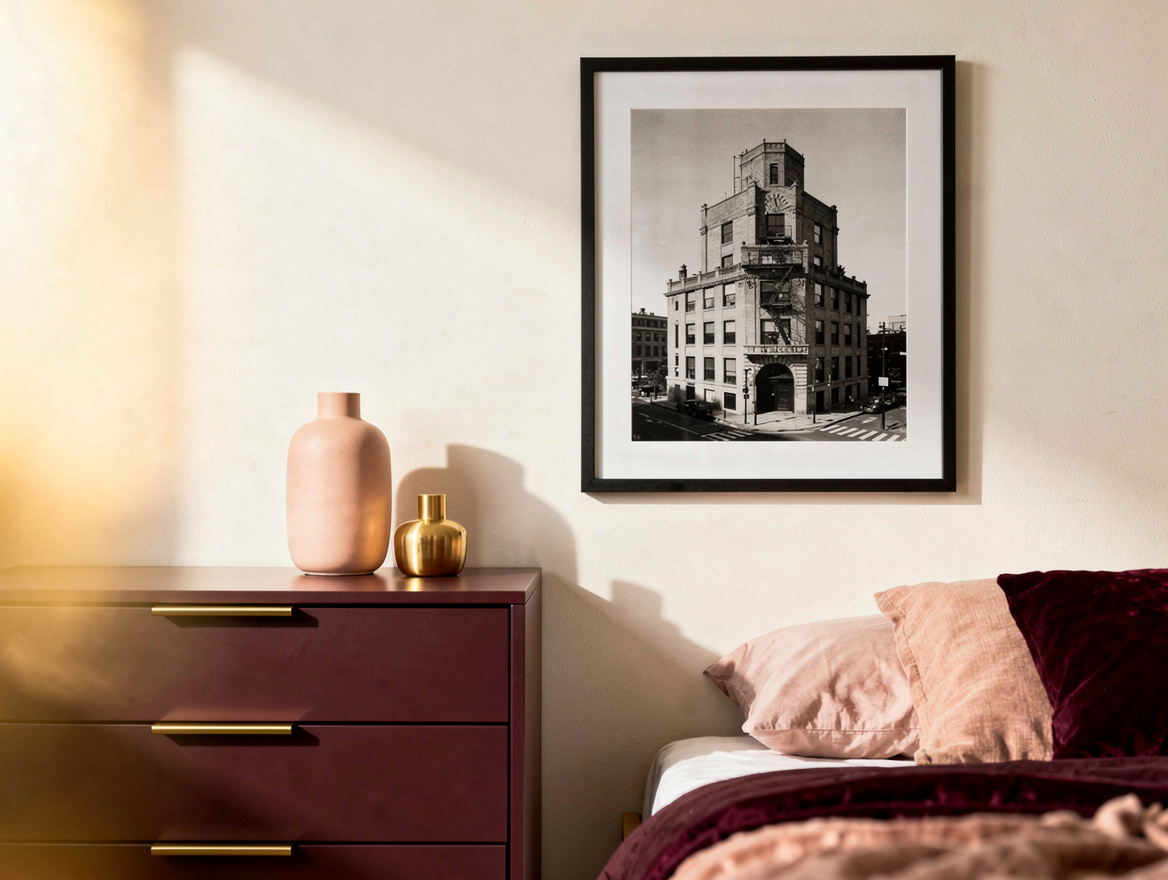
A narrow strip of wall beside a bed, dresser, or wardrobe is where a vertical artwork earns its keep. A piece around 28 by 40 inches pulls attention upward and makes a low ceiling feel less dominant.
I prefer a slim black metal frame for architectural photography or a restrained graphic print. Its crisp edge gives the image authority, but it does not add the bulky silhouette of a deep, ornate frame.
A typical vertical canvas from Wayfair or Amazon may cost around $40 to $190, depending on scale and framing. Skip the urge to stack two or three smaller pieces there, since that turns a useful breathing zone into visual static.
Give the Largest Blank Wall One Clear Job
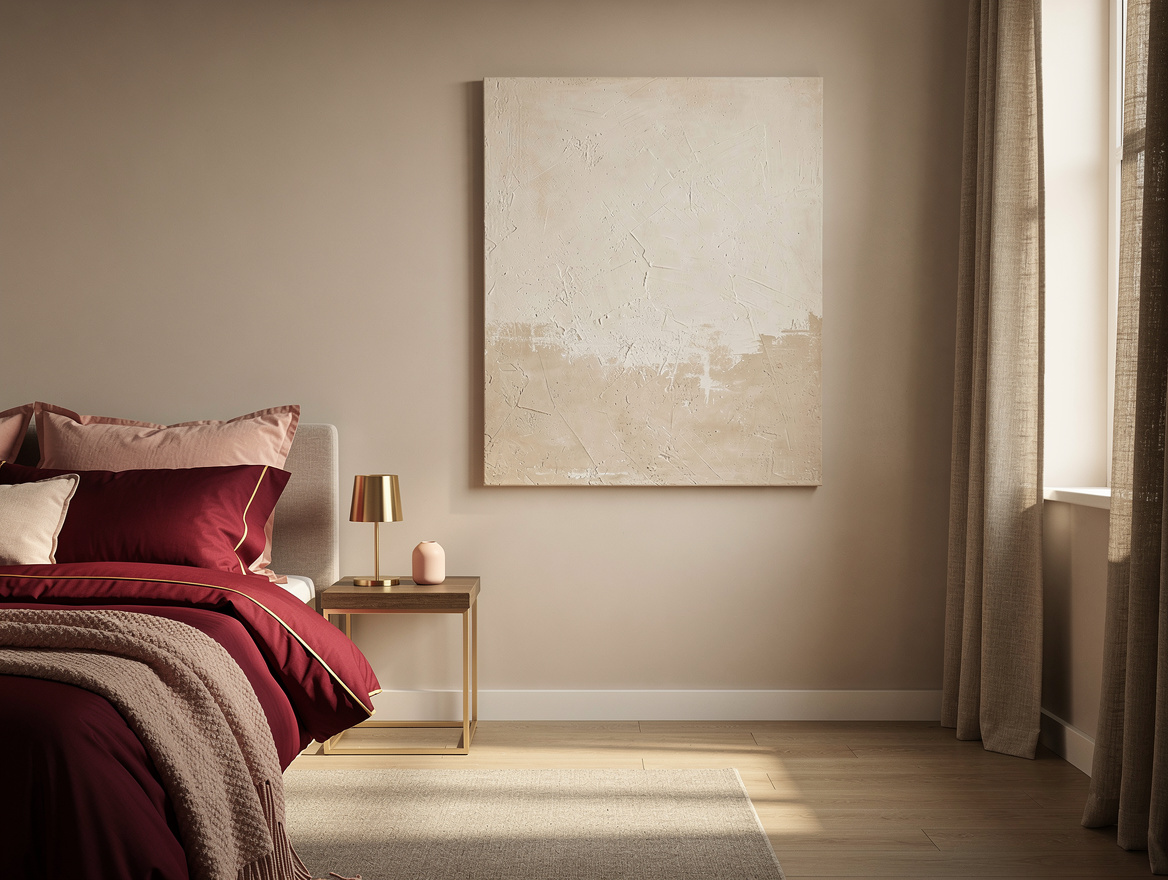
The wall opposite the bed can handle the boldest move in the room: one large neutral canvas, roughly 40 by 55 inches or 40 by 60 inches. It makes a compact bedroom feel planned, especially when the wall is otherwise uninterrupted.
Choose a stretched cotton canvas with soft texture and low contrast, such as a sand-toned abstract or an enlarged cloud study. Glass can create glare in a bedroom, while canvas has a quieter surface and less visual weight.
A typical oversized canvas from Target, Walmart, or Wayfair runs around $130 to $400. Spend on scale and a finish you can live with, then keep the surrounding wall almost empty.
Trade Glossy Prints for a Framed Textile
If the bedroom has hard flooring, sleek nightstands, or lots of painted drywall, a textile can soften the entire picture. A single woven panel about 36 to 48 inches wide adds warmth without the glare of framed paper behind glass.
Look for linen, cotton, or a wool-blend wall hanging on a simple timber rail. Its texture reads as intentional in a small room, while a busy macramé design can quickly become the loudest thing in it.
A natural wood hanging rail works best when it echoes the bedside table, curtain rod, or flooring. Keep the palette limited to a few muted tones so the piece feels like part of the room rather than a souvenir tacked onto it.
Frame a Black-and-White Photograph With Restraint
A large black-and-white architectural photograph gives a small bedroom depth and order, particularly when the furniture is simple. A roughly 24-by-36-inch or 28-by-40-inch image can make a plain side wall feel deliberate without introducing another color story.
Choose a matte photo print with a generous white border and a natural-oak frame or black frame. Avoid shiny city skylines and overly detailed street scenes, which can feel restless when you are trying to wind down.
Hang standalone art so its center sits roughly 57 to 61 inches from the floor, adjusting for a tall dresser or low bench beneath it. The image should relate to the furniture, not float at an awkward museum height.
Begin with the wall you see first from the doorway, then choose one piece that fills it with calm purpose. Get the width right before chasing a subject, because proportion is what makes oversized art feel expensive in a small bedroom.
Mia Carter writes about small-space living and budget home makeovers. She has restyled three rentals and tests most ideas in her own 45 sqm flat.