Cooktown exists because a damaged ship needed shelter. In 1770, the HMS Endeavour struck the Great Barrier Reef, then its crew spent seven weeks repairing the vessel near the mouth of the Endeavour River.
That delay changed more than a voyage. While the hull was being patched, expedition scientists documented more than 200 new plant species, turning an emergency stop into a major record of Australian botany.
A forced stop on the Endeavour River
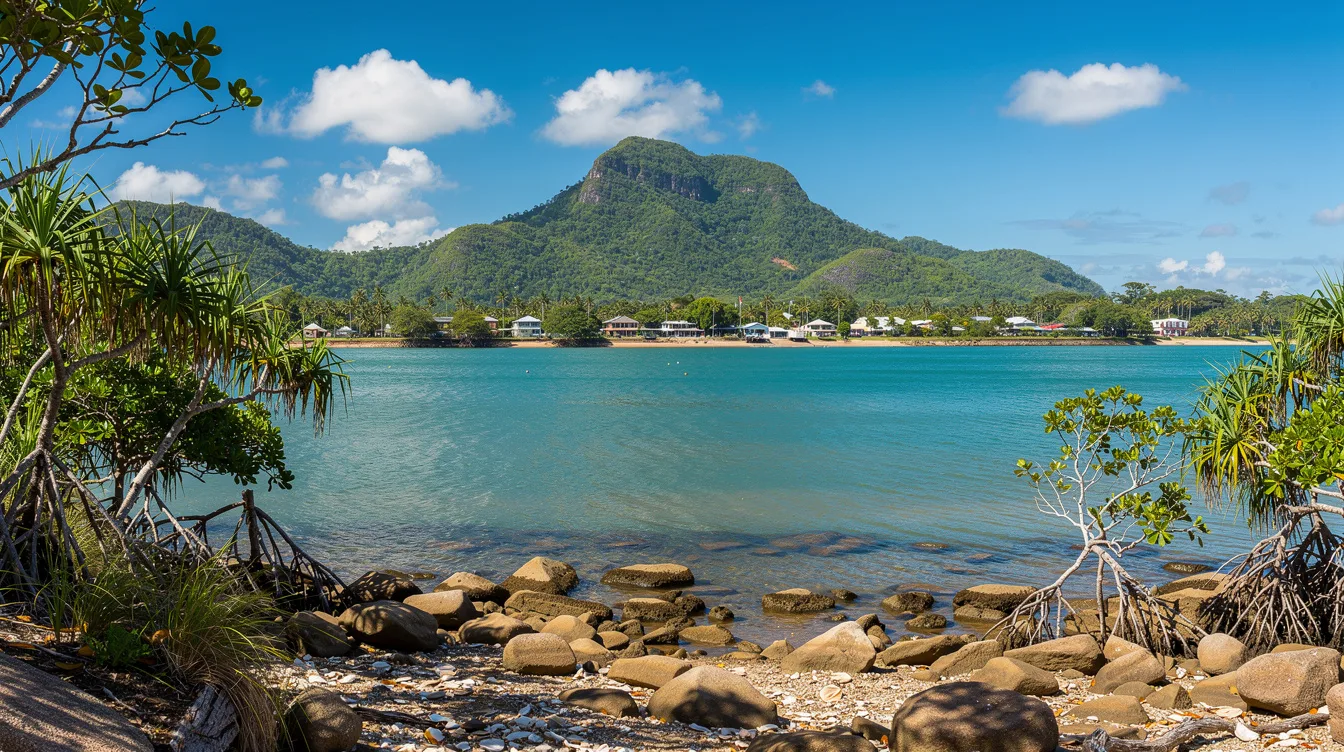
The ship arrived crippled, so the calm water near today’s town mattered enormously. You can still stand above Cooktown and understand the logic: river, coast, and reef all meet here, with Mount Cook rising behind town at 1,414 feet.
But this is not a tidy monument town. Cooktown feels remote because it sits on Cape York Peninsula’s east coast, where the tropical north begins to feel less polished and more exposed.
The crew repaired their ship, gathered food and water, and cared for sick people during the stay. That history is compelling, though it should not flatten the deeper story of the Guugu Yimithirr people, whose country was already home long before the ship arrived.
Why the repair story still lands
The seven-week stay was the longest single stop of that Australian voyage. And that fact gives Cooktown a tension many historic ports lack: this was not a planned landing, but a moment when survival depended on finding refuge.
You don’t need much imagination here. The river has a broad, slow presence, and the surrounding coast makes the damaged ship’s predicament feel immediate rather than distant.
Grassy Hill is the place to take in the geography. It was used to assess a safe route through the reefs, and today it looks over Cooktown, the river, nearby mountains, and the Coral Sea.
Can you understand the reef from town?
Yes, in the practical sense that Cooktown is among the Australian towns closest to the Great Barrier Reef. But the reef is not a backdrop you simply admire from a sidewalk, so a marine trip or dive outing is the better way to put the history in context.
That proximity is Cooktown’s strongest draw for travelers who want more than beach-town ease. It is quieter than Cairns, but it also asks you to plan around weather, road conditions, and the limits of a small town.
The museum gives the story its needed context
The James Cook Museum, housed in the former Sisters of Mercy convent, is the clearest first stop if you want the maritime and regional story before heading outdoors. Go early, then let the town itself fill in the atmosphere.
But don’t treat the history as a one-sided adventure tale. Cooktown is tied to early contact between European arrivals and local Indigenous communities, including the Guugu Yimithirr people, and that complexity is part of what makes the place worth taking seriously.
The modern town was founded in 1873 as a supply port for the Palmer River goldfields. Its gold-rush period brought rapid growth, followed by decline when that activity slowed, leaving a town with an unusually layered past for its size.
Today, the local population was 2,746 people in the 2021 census. That scale is the point. You come for a base with history and access, not resort crowds or a late-night scene.
The road from Cairns is part of the decision
Cooktown is about 205.1 miles from Cairns by the paved Mulligan Highway. The drive takes around four hours depending on conditions, so it works well as a deliberate road-trip stop rather than a casual afternoon detour.
And there are regular flights to the regional airport if you would rather skip the drive. Still, driving makes the distance feel real, which is useful preparation for a town whose appeal rests partly on being far from Australia’s more built-up coast.
The dry season, from May to October, is generally the easier window because road conditions are usually better. Wet-season rain can affect travel, so don’t assume the route will feel identical year-round.
Can you swim near Cooktown?
Do not swim in rivers, estuaries, or beaches unless they are explicitly identified as safe. This is tropical North Queensland, where marine conditions, heat, mosquitoes, and saltwater crocodiles demand more caution than a quick coastal photo suggests.
Cooktown rewards a slower kind of traveler
You can fish for barramundi, coral trout, or black marlin, explore mangroves and tropical forest, or use town as a launching point toward Lower Cape York. But the best plan is not to overfill the day.
Cooktown is lively enough to feel inhabited, yet never urban. By the time the light drops over the Endeavour River, the road noise thins out, the water goes dark, and the old repair stop makes more sense than it does on any map.