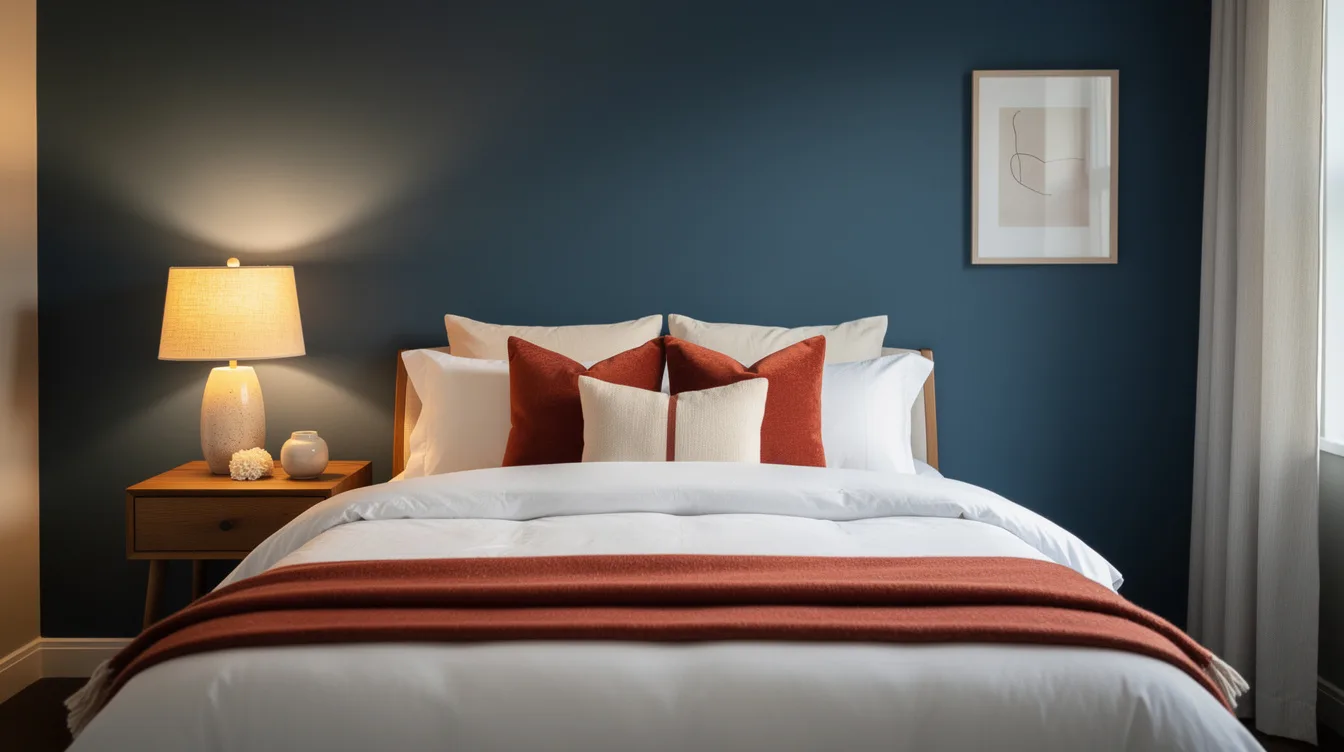
A guest should not have to get into a made bed, reach across a typical 24-inch nightstand, and hunt for a switch in the dark. A bedside lamp is the room’s first small promise: you can read, charge a phone, and settle in without asking where anything is.
The most inviting setups use around 2700 to 3000 K light, which gives linen, wood, and painted walls a calm evening glow. The goal is simple, personal control at each side of the bed.
Give Each Sleeper a Switch They Can Reach
One lamp controlled only from the door feels like an afterthought. Put a dimmable table lamp within easy reach of each sleeping position, with a rotary switch or button a guest can find without sitting up.
Designers favor separate controls because one person may be reading while the other is ready for sleep. A lamp with a dimmer earns its place even in a modest room, since the low setting works as a late-night path light and the higher setting handles a paperback.
Choose Warm Bulbs Before Choosing a Dramatic Fixture
A harsh cool-white bulb can make a thoughtful guest room feel like a spare office. Start with a warm 2700 K LED bulb, or go slightly brighter toward 3000 K when the room has deep wall color or dark wood.
Keep the bulb hidden behind an opaque or lightly diffusing shade whenever possible. Clear exposed bulbs throw glare across pillows and make nighttime reading less pleasant, especially when the lamp sits at eye level from the mattress.
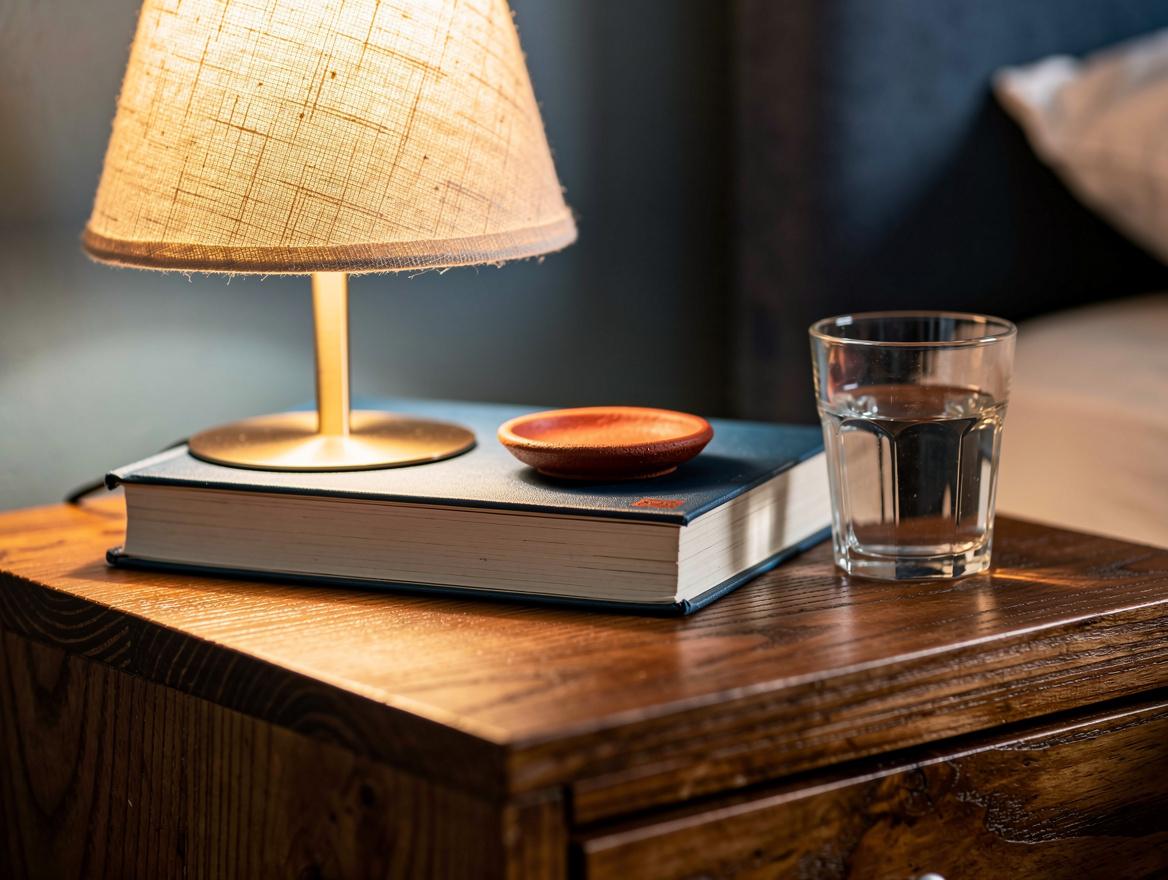
Keep the Lamp Proportional to the Nightstand
A tiny lamp on a broad chest looks temporary, while an oversized base steals the surface guests need for glasses and a water bottle. On a typical 18- to 24-inch nightstand, a compact IKEA DEJSA lamp, at around 11 inches high, gives a soft glow without taking over.
For a larger table, the roughly 20-inch IKEA BLIDVÄDER lamp has enough height to feel intentional beside a taller headboard. Leave visible tabletop around the base. A phone, book, and drinking glass should fit without becoming a balancing act.
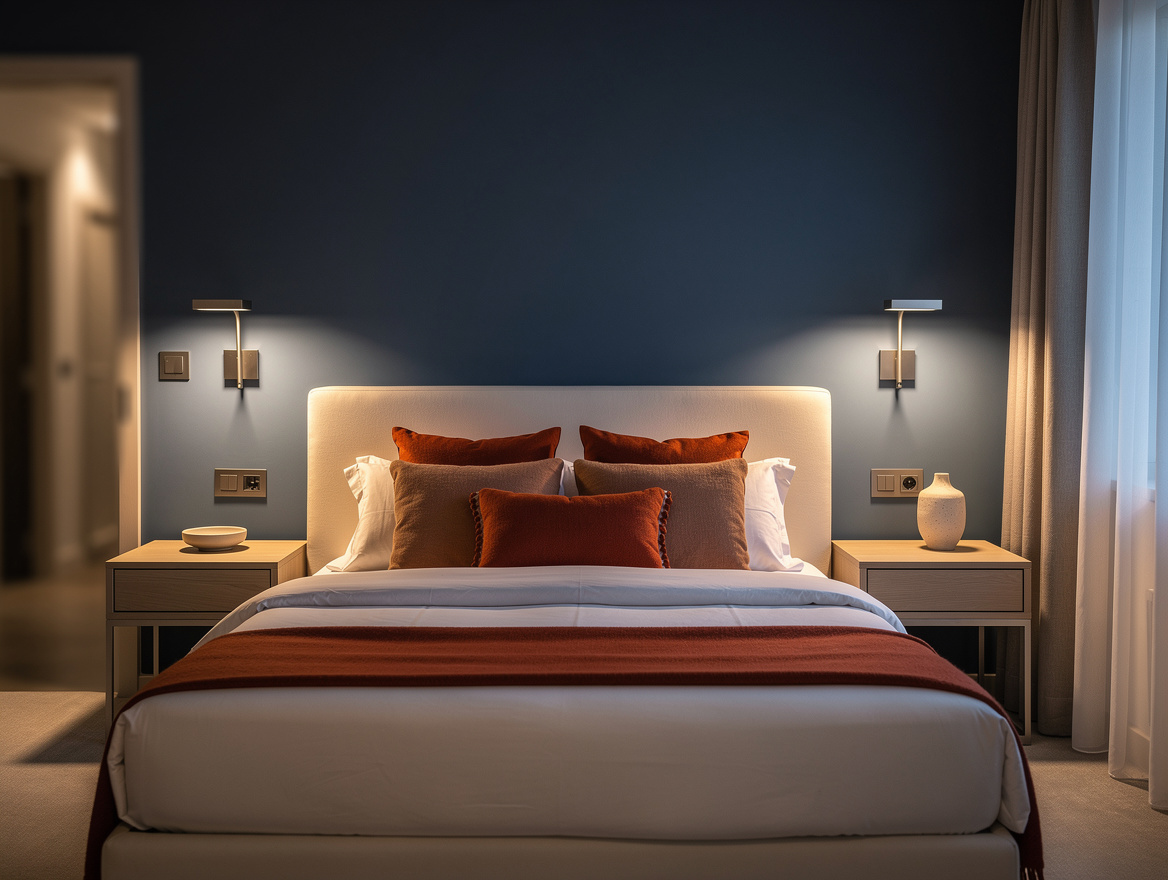
Clear the Tabletop With a Wall-Mounted Light
Small guest rooms do not need smaller hospitality. A plug-in brass wall sconce frees the nightstand for useful things, and its shade directs light where a guest expects it instead of flooding the whole wall.
Mount the fixture so its switch is reachable from the pillow, then check its projection before buying. A sconce that extends roughly 8 inches can work beautifully; a long arm beside a narrow bed can turn into a shoulder-level obstacle.
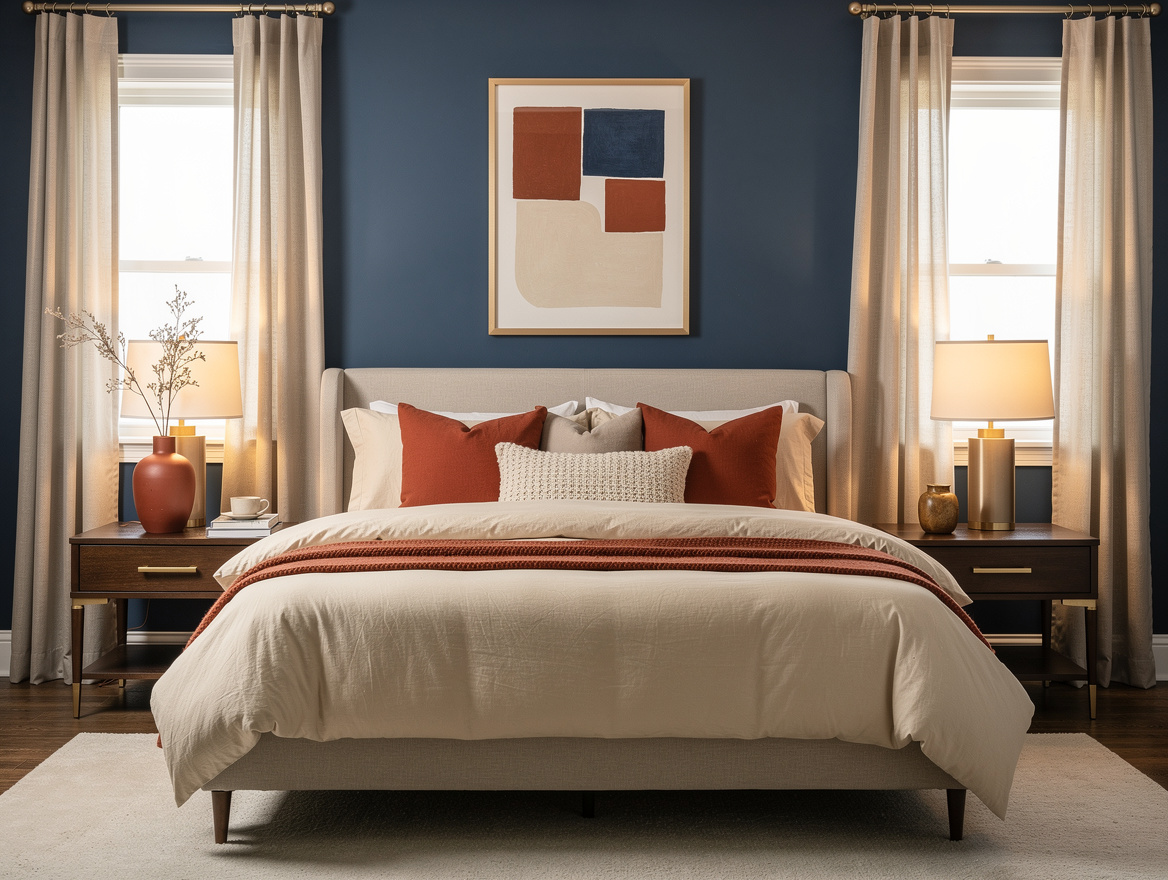
Aim Reading Light Away From the Other Pillow
A bedside lamp should support a reader without lighting the entire bed like a stage. An adjustable swing-arm sconce gives the guest a focused beam for a novel while keeping the other side dim and restful.
Skip fixed, upward-facing fixtures as the only bedside source. They can look polished in daylight, but they create shadows on pages and glare on a headboard after dark. A shaded ambient lamp plus a directed reading head is the most comfortable pairing for couples.
Add a Portable Lamp Where Outlets Fall Short
Awkward outlet placement is common in guest rooms, particularly in rentals and older homes. A rechargeable IKEA PS portable LED lamp, at roughly 9 inches high, can move from bedside to desk without a cord crossing the floor.
Use portable lighting as a flexible second layer, not as the room’s only serious reading light. It is especially useful for guests who wake early, want a soft bathroom-route glow, or need light near a luggage stand that has no outlet nearby.
Begin with the bulb and the switch: install a warm dimmable light at the side of the bed your guest will actually use. That small decision makes the room feel ready before they unpack a single bag.
Mia Carter writes about small-space living and budget home makeovers. She has restyled three rentals and tests most ideas in her own 45 sqm flat.