A bedroom craft corner can go from useful to sleep-disrupting in one unfinished project. In a small home, I’d reserve roughly 35 to 60 cm of depth and protect a 75 to 90 cm walking lane, because a chair squeezed into the route to bed gets old fast.
The goal is a compact project station that shuts down visually at night. One work surface, vertical storage, and a quick cover beat a tiny room packed with supplies.
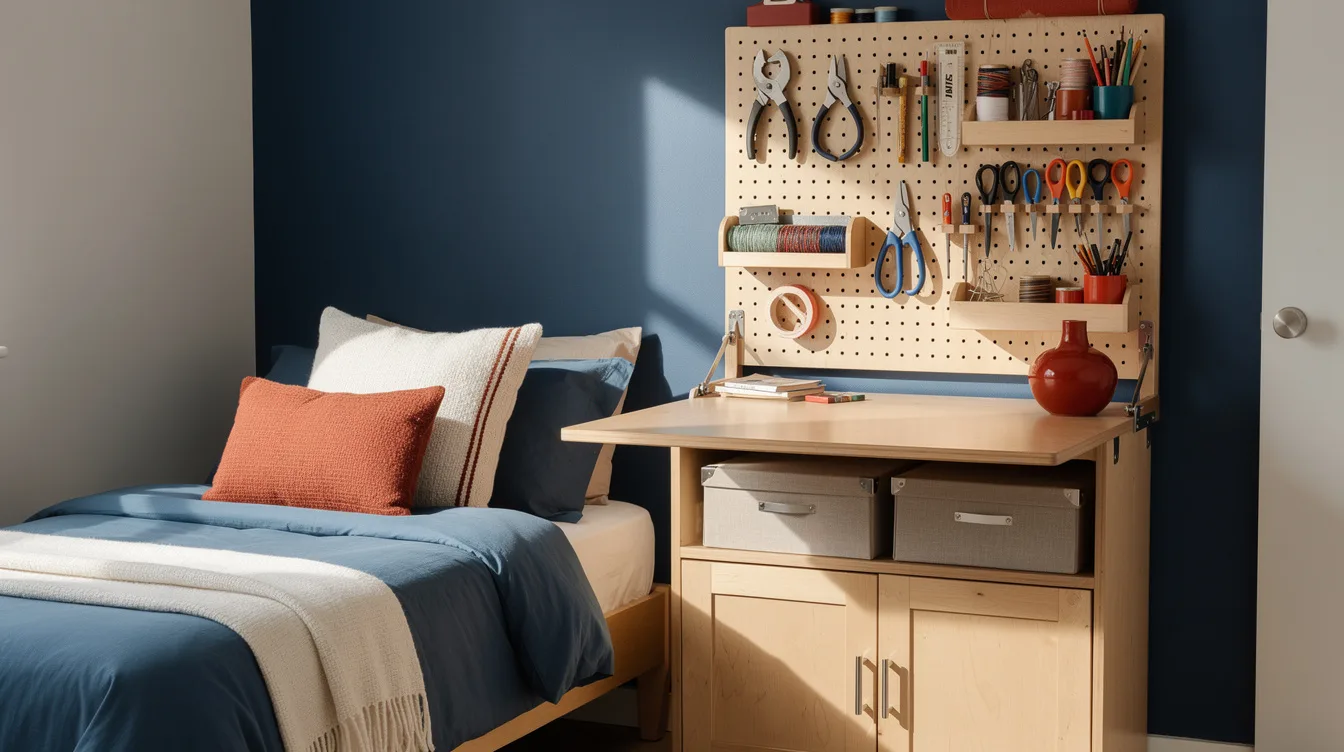
Mount a Fold-Down Surface Beside the Bed
Don’t place a worktop directly behind the headboard, where scissors, cords, and half-finished paper projects become the last thing you see at night. Put a fold-down desk on the wall beside the bed, using birch plywood, solid pine, or a wipeable laminate top.
A surface roughly 80 to 100 cm wide and 40 to 50 cm deep works for mending, journaling, and small cutting tasks. Generic fold-down desks typically run about €70 to €180, while cabinet-style stations with sturdier hardware can cost roughly €200 to €500.
Install load-rated brackets and fixings appropriate for studs, masonry, or plasterboard. Light-duty anchors are a bad bet for a sewing machine, a cutting machine, or a stack of art books.
Build Upward With a Pegboard System
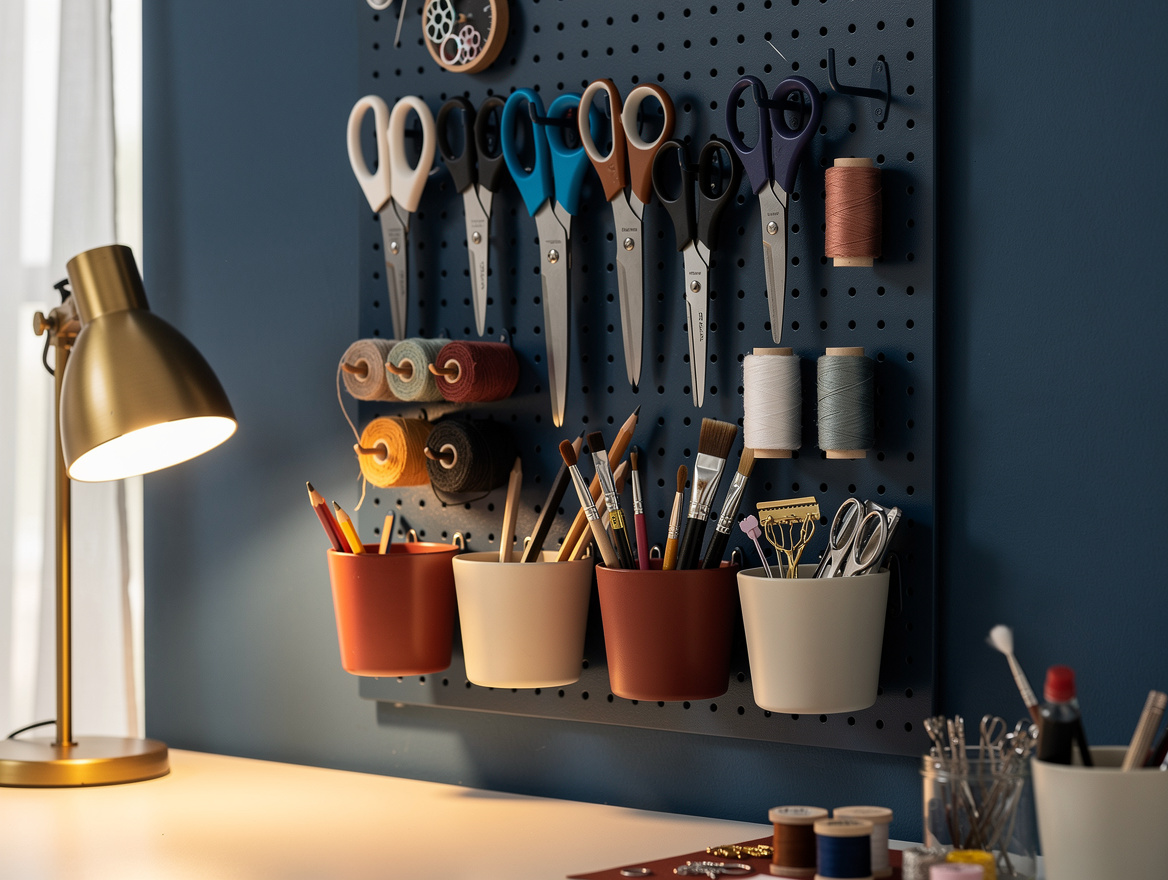
Horizontal surfaces collect visual noise, especially in a bedroom. Use a IKEA SKÅDIS pegboard above the desk for the tools you reach for every week: shears, rulers, tape, bobbins, and a small task light.
The 76 by 56 cm board gives a compact station enough vertical order without taking over the wall. A board and accessories typically cost roughly €30 to €90, depending on the mix of cups, hooks, shelves, clips, and elastic cords.
Keep only active tools in view. Opaque plastic bins belong on shelves or in drawers, while the pegboard should read like a working tool wall, not a craft-store aisle.
Give the Cart a Job, Then Park It
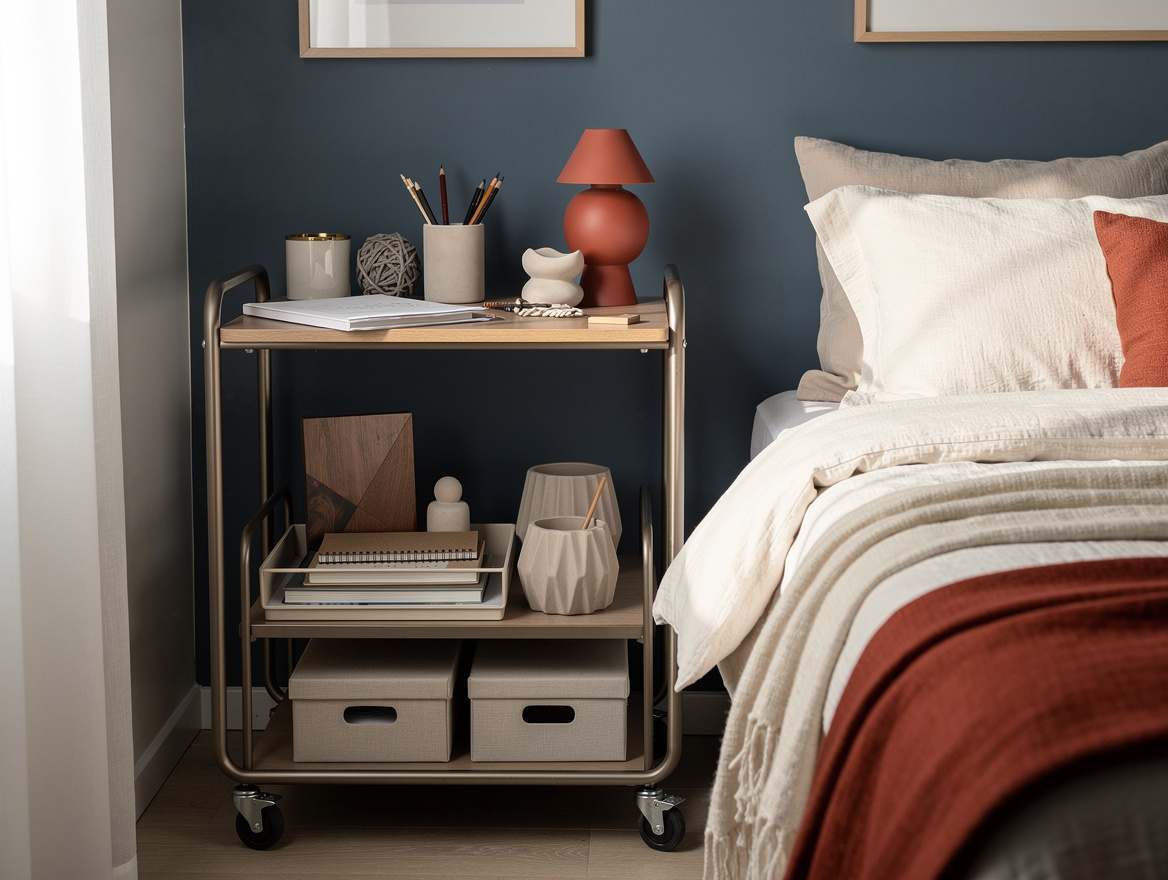
A narrow permanent desk is often more comfortable than a folding one for anyone who makes things daily. Choose a desk roughly 100 to 120 cm wide and 45 to 55 cm deep, with a finished height around 72 to 75 cm.
Pair it with a rolling steel cart that is roughly 30 to 45 cm wide, then assign each level one category. Fabric offcuts. Adhesives.
Current project supplies. That limit keeps the cart from becoming a roaming pile.
When you’re done, roll it under the desk, into a closet, or against a wall. This layout typically costs about €150 to €500, and it earns its footprint because the supply volume can disappear from the sleep zone.
Close an Alcove Like a Cabinet
An alcove or wardrobe works best when the bedroom needs to feel calm the moment you walk in. A craft closet with roughly 60 to 100 cm of width and 55 to 60 cm of depth can hold a compact desk, shallow shelves, and a chair that tucks away.
Use painted MDF shelving or a simple laminated interior, then add doors, a sliding panel, or a fabric curtain. The covering matters more than fancy organizers because it hides unfinished work in about 20 seconds.
A closet-based setup typically lands around €250 to €1,000 or more, depending on cabinetry and lighting. Spend first on the door action and wall-mounted lighting, since both determine whether you’ll actually close the station each night.
Treat a Cube Unit as a Tool Base
Low storage can support larger gear without making a bedroom feel like a workshop. A cube unit roughly 80 to 150 cm wide and 39 to 45 cm deep can hold yarn, albums, children’s art supplies, or a compact cutting machine beneath a lift-off bamboo-laminated top.
Use matching boxes on the visible face and label the backs or insides, not every front panel. Bright labels and transparent containers make sense in a dedicated studio; beside a bed, they can keep your eye busy after the lamp is off.
This approach typically costs roughly €150 to €650. It is particularly useful for supplies that need a broader worktop occasionally but don’t deserve a full-time desk.
Start by marking out a 90 cm-wide wall section with painter’s tape, then sit in the proposed chair position before buying anything. If the route to bed stays clear and the project can vanish behind a panel, the corner is ready to earn its place.
Mia Carter writes about small-space living and budget home makeovers. She has restyled three rentals and tests most ideas in her own 45 sqm flat.