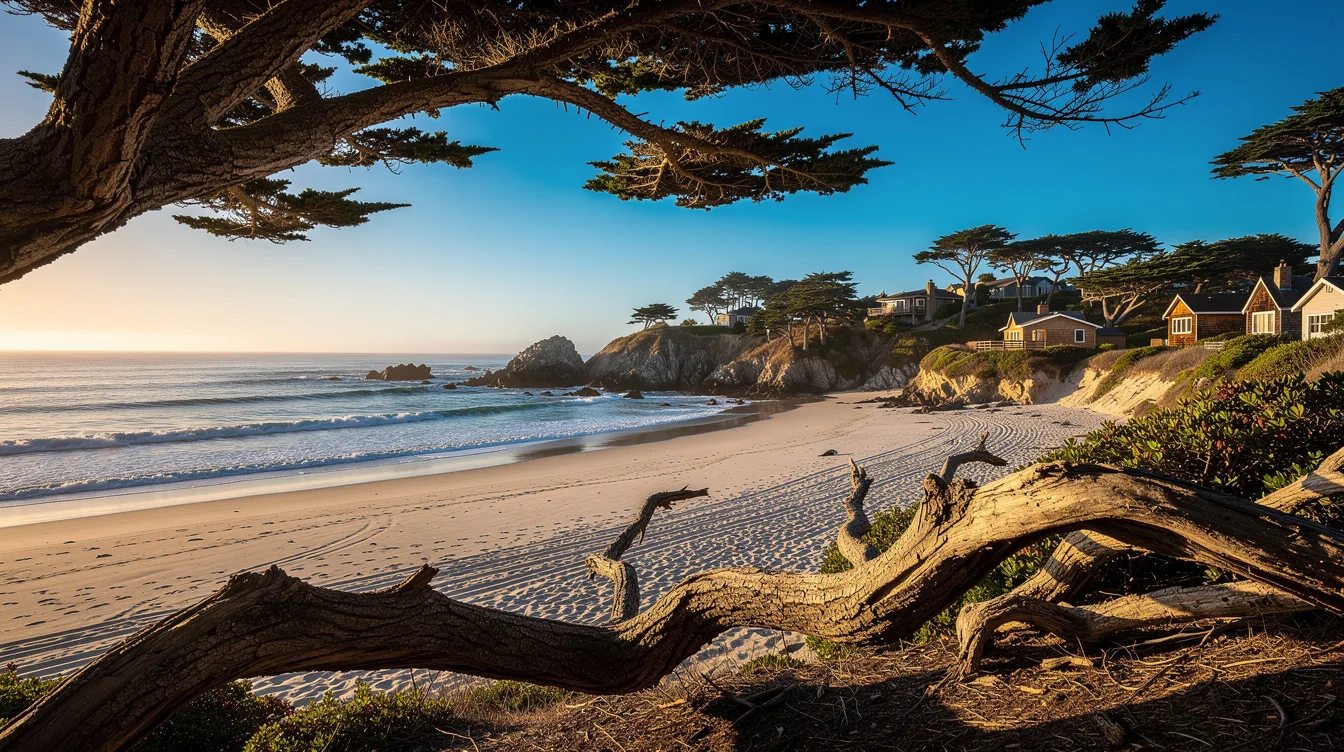
Carmel-by-the-Sea became an artists’ colony and seaside resort in 1902, a turn that still explains its oddly theatrical streets. This is a town where a beach walk can follow a gallery visit without needing much of a plan. But its appeal is quieter than its polished reputation suggests.
On California’s Monterey Peninsula, Carmel sits about 119.9 miles south of San Francisco. You come for the coast, certainly. And you stay because the village makes wandering feel like a reasonable use of an entire afternoon.
A one-square-mile town that resists the usual rules
One square mile sounds tiny, and it is. That compact size means you can leave the car near your hotel and move between Ocean Avenue, the side streets, galleries, and Carmel Beach on foot.
But Carmel has long made a point of avoiding ordinary visual clutter. It historically has no streetlights, no parking meters, and no street numbers, so the streets feel less programmed than most California resort towns.
You notice the effect at dusk. Storefront light falls onto flowered streets and irregular cottage roofs, while the town skips the hard glare of poles and meters. It is upscale, but never especially frantic.
The lack of street numbers has a practical wrinkle. Don’t assume a navigation app will make every arrival elegant, especially if you are meeting someone at a cottage or small business. Give yourself a few extra minutes and enjoy the detour.
Why the art colony story still matters
The Carmel Development Company formed in 1902, and the village became an art colony and seaside resort that year. That origin wasn’t a marketing afterthought. It set the tone for a place built around creative work, small-scale streets, and a beach close enough to shape the day.
And the story deepened after the 1906 San Francisco earthquake, when artists, writers, musicians, and other creative people came to Carmel. Home lots were offered with a ten-dollar down payment, little or no interest, and monthly payments people could manage.
The Carmel Arts and Crafts Club formed in 1905. By 1914, it had national recognition after holding exhibitions, lectures, dances, plays, and recitals. You can still feel that bias toward browsing rather than rushing in the galleries and independent shops around the village.
Carmel Arts and Crafts Club history also helps explain why the town’s charm has teeth. This isn’t a place with one designated arts district. Art is threaded through the core, which makes a casual walk more rewarding than a checklist of attractions.
Ocean Avenue leads you to the water
Start on Ocean Avenue, then slip toward Mission Street, San Carlos Street, and Dolores Street. Courtyards and carefully worked facades break up the route, so you are rarely staring down a long commercial block.
But don’t spend the whole visit indoors. Carmel Beach is the natural payoff, with pale sand and room for a barefoot walk when the weather cooperates. The sound of the surf changes the pace immediately.
From there, Scenic Road runs above the beach with ocean views and cypresses. You can watch the light fade from the sand without committing to an elaborate outing. That’s why Carmel works best when you leave margin in the schedule.
The town’s dining, wine tasting rooms, and galleries are all close together. Still, Carmel is a premium stop, and hotels, meals, and parking can cost more on weekends. It is easy to walk, but it is not a bargain destination.
Use Carmel as a base, not a cage
Carmel is near Monterey and about 26.1 miles north of Big Sur. A car is useful beyond the village, especially for Point Lobos State Natural Reserve, Monterey, 17-Mile Drive, Pebble Beach, Carmel Valley, and any attempt to continue south.
And check Highway 1 conditions before planning Big Sur. Closures from landslides or construction can change a coastal itinerary fast, which means Carmel may be your beautiful endpoint rather than your convenient launching point.
Point Lobos adds coastal cliffs, coves, sea lions, and trails. Monterey and Cannery Row offer a busier counterpoint. But return to Carmel afterward, because its smaller scale feels especially good after a day of driving.
When should you go?
September and October are generally the strongest months, with average highs near 72°F. Summer can bring long days, but coastal fog often lingers in the morning or part of the day.
November through February is quieter, though rain is more likely. And the shoulder-season trade-off is fair: you may need a jacket, but the village has more space around it.
Carmel incorporated in 1916, yet it still feels designed for slow arrival. By the time the last light leaves Carmel Beach, the sand turns cool underfoot.