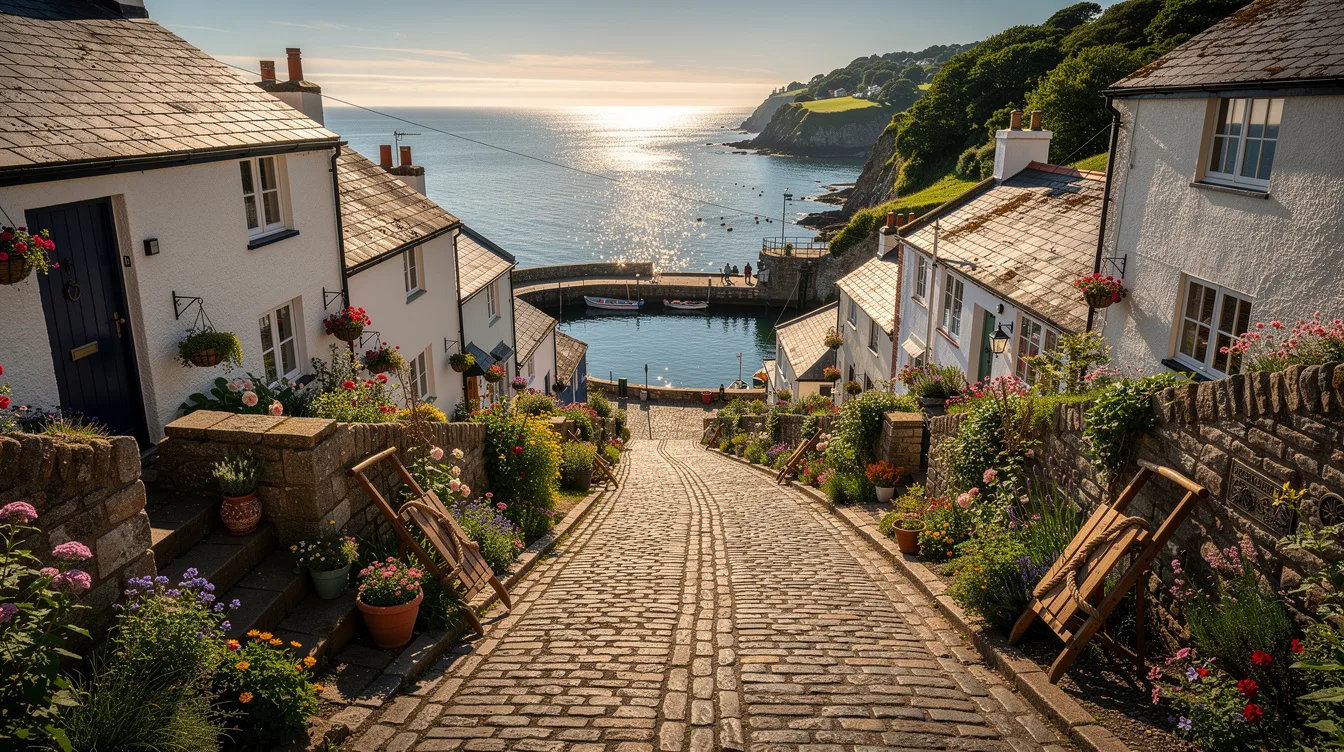
Clovelly makes its case immediately. This private harbor village on England’s north Devon coast has no cars, and its cobbled main street falls about 400 feet from the top of the village to the water. You walk down.
Everything else gets hauled by sledge.
That sounds quaint until your knees meet the slope. But the absence of traffic changes the whole place: no engine noise, no hunt for parking, just footsteps on stone and the pull of the harbor below.
A 400-foot walk that earns the harbor
The route begins at the Clovelly Visitor Centre near the A39, about 9.9 miles west of Bideford. Cars stop there, which means you enter on foot with the same choice everyone faces: descend now, then climb back later.
And it is a real descent, not a gentle village stroll. The cobbles can be steep and slippery, so wear shoes with grip and take your time. You’ll pass white houses set along a narrow ravine as the view opens toward Clovelly Bay.
The payoff is the harbor. Fishing boats, the old quay, and salt-heavy air give the bottom of the hill its own rhythm. It’s touristy at busy times, but never noisy in the way car-bound waterfronts often are.
Can you avoid the climb back up?
Not entirely, unless you pay extra for the Land Rover service between the upper village and harbor. The main street isn’t suitable for wheelchairs, and the climb is the main trade-off here. If you can manage it, though, the walk is the point.
Goods still move through Clovelly by sledge because vehicles cannot use the main street. That’s practical, not theater. Watching a delivery follow the same steep line you just walked makes the village’s logistics feel surprisingly immediate.
The private-village detail matters
The Hamlyn family has managed Clovelly since 1738, and the village remains privately owned. That history explains both its unusually preserved appearance and its paid visitor entry, which includes parking, village access, museums, Clovelly Court Gardens, and an audiovisual history guide.
But don’t arrive expecting a free public promenade. The fee supports maintenance, and that’s part of what you’re seeing. It can feel curated, especially when the street fills with day visitors, yet the car-free setting keeps the experience from becoming purely staged.
You can pause at the Fisherman’s Cottage and Kingsley Museum, then head toward the water. The harbor’s working identity still turns around crab and lobster, so it feels more grounded than a row of souvenir shops would.
Where to stop before the uphill return
The Red Lion Hotel sits on the quay, making it the sensible place to rest before the climb. The New Inn is another option up in the village. A meal or cream tea isn’t just pleasant here, it gives your legs a reason to delay the inevitable.
And give yourself 2 to 3 hours for the visit. That leaves room to walk down slowly, linger at the harbor, and see the gardens or museums without treating the return uphill like a race.
If you have more energy, paths lead out along the North Devon coast toward Mouthmill Beach or Hartland Quay. The coastal setting is dramatic, but conditions and your fitness should decide the plan. The village itself already asks plenty of most visitors.
When should you visit Clovelly?
Go outside school holidays, and arrive early or toward late afternoon. You’ll have more space on the narrow cobbled street, and the harbor feels less like a scheduled stop. Light catches the white cottages differently when the crowds thin.
The village holds an annual Lobster and Crab Festival, plus a herring festival in November. Check current dates before planning around either one. Events bring extra energy, but they also bring exactly the crowds that make Clovelly less appealing.
Why the no-car rule changes everything
Clovelly isn’t effortless, and that’s why it stays with you. The steep street demands attention. The entrance is paid.
The uphill return can be tough. But because cars remain above the village, the harbor arrives without the usual racket and clutter.
By late afternoon, the cobbles quiet down, sledges wait along the slope, and the harbor holds the last of the coastal light.