
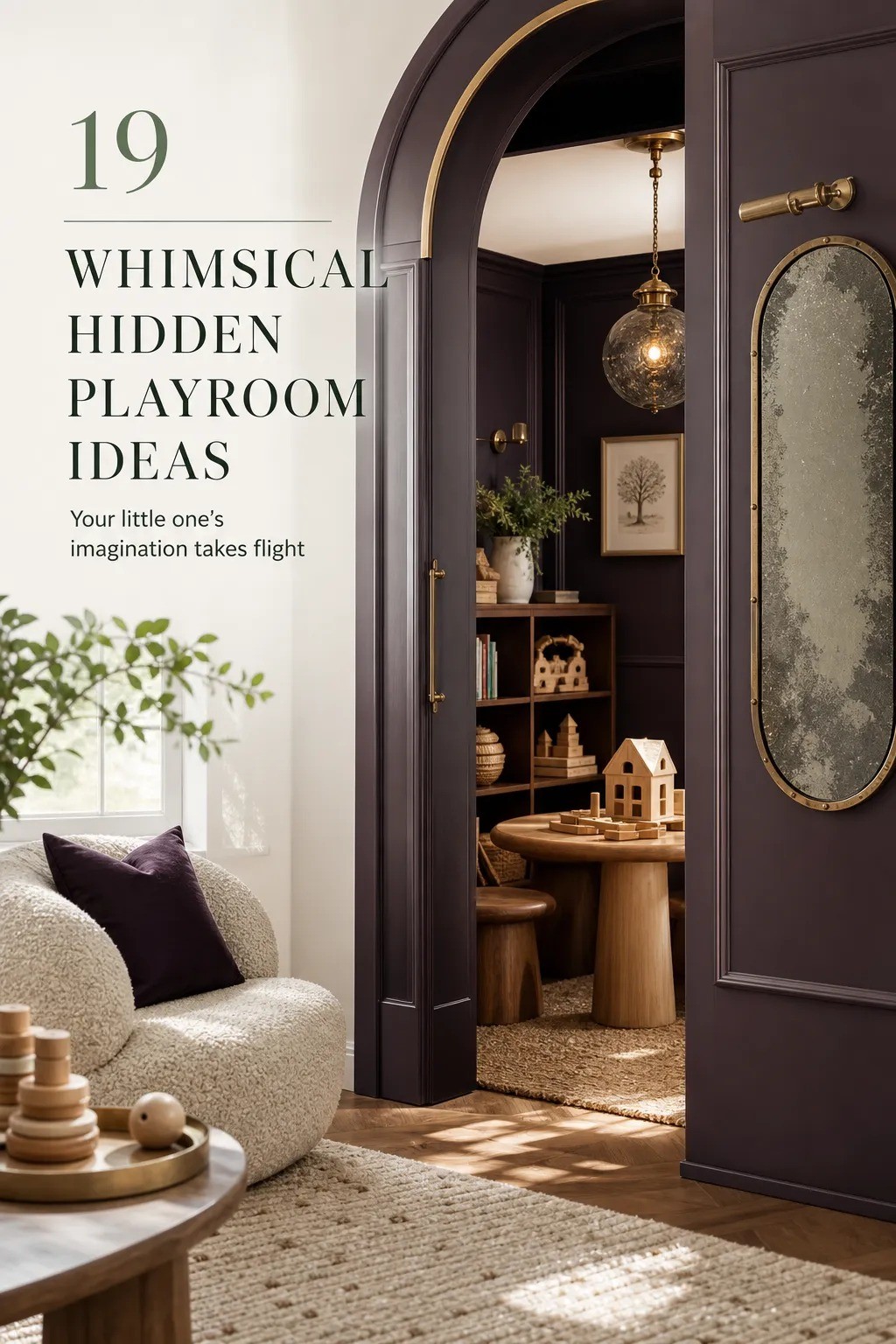
A whimsical hidden playroom works when your child can reach, choose, and put away what they use without the room spilling into your whole house. I’ve watched too many cute play corners become plastic avalanches by lunch. Start with access, then make the hiding part feel a little magical.
- Start by choosing the room’s disappearing act
- Measure child-height zones before arranging furniture
- Build the Two-Wood Rule for a warmer hideaway
- Start by choosing the room’s disappearing act
- Measure child-height zones before arranging furniture
- Build the Two-Wood Rule for a warmer hideaway
- Paint the entry so it feels like a destination
- Anchor the floor with a play rug that can take crumbs
- Hang a curtain with the Storybook Threshold Method
- Float the low shelf instead of filling the wall
- Rotate toys with the Four-Choice Shelf Rule
- Mix open baskets with closed clutter control
- Frame a reading nest with one grown-up chair
- Add the Three-Height Light Stack after sunset
- Can a small closet become a girls playroom?
- Layer a vintage playroom aesthetic without buying antiques
- Build a display rail for the art your child makes
- Create a quiet corner before you add more toys
- Use the Visible-Work Tray System for art supplies
- Budget the magic before you build it
- Hide the exit clutter with a reset basket
- Finish with one detail your child can recognize as theirs
1Start by choosing the room’s disappearing act
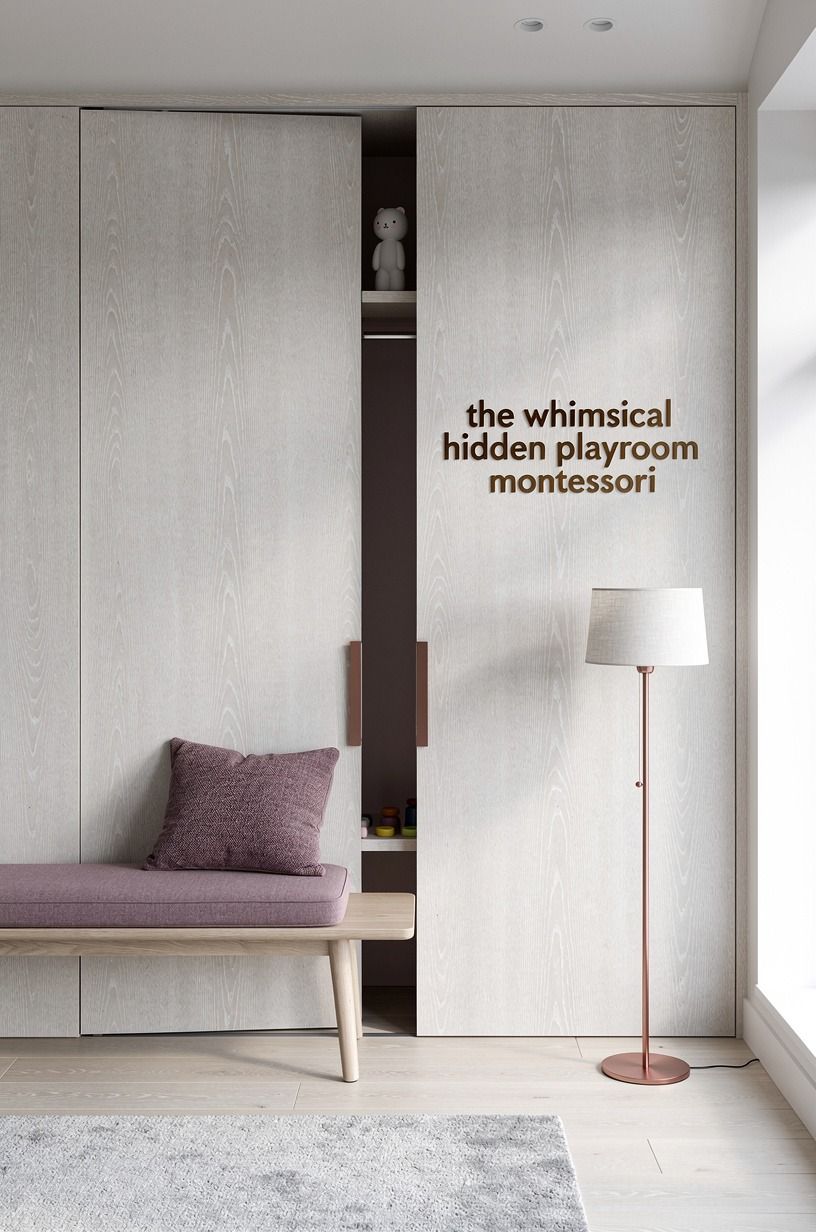
Pick the boundary before you buy a single bin. You might be hiding play behind a bookcase, inside a living-room alcove, or beyond a curtain, but your child still needs a clear route in and out.
A cerused white oak bookcase doorway gives you the strongest storybook feeling, especially against plum walls with soft gray and rose-gold details in a small montessori playroom. I’d skip a heavy decorative door for toddlers because little fingers and rushing feet don’t mix well.
Leave the play rug visible from the entrance so your child knows where their body belongs. A 5×7 ft rug is a useful anchor in a compact room, and it keeps the floor feeling soft and inviting!
Typical cost by tier (US averages):
2Measure child-height zones before arranging furniture
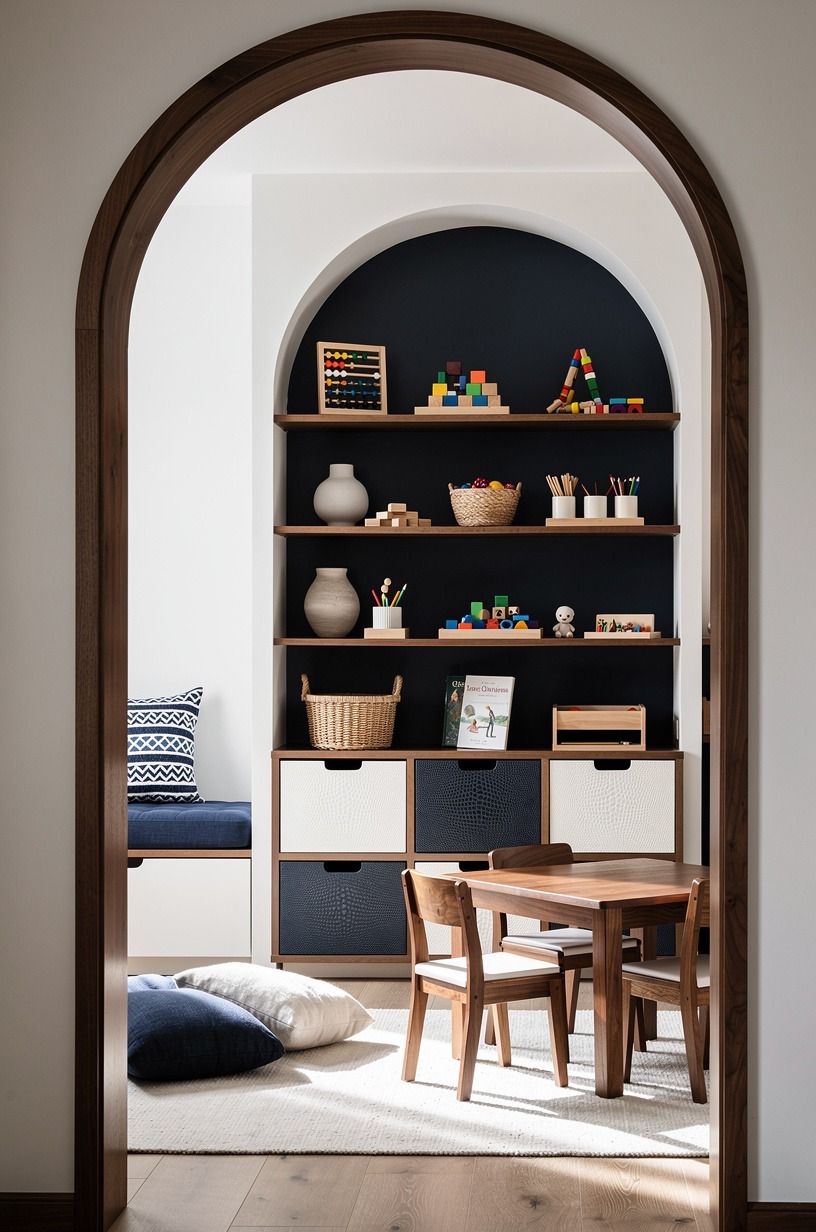
Get down on the floor first. Really. You’ll notice what your child can grab, what they can’t see, and which shelf corners will become forehead-level problems.
Open walnut shelves placed 36 to 48 in high let your child choose materials without needing you every ten minutes. Navy, white, and a few shagreen-accented storage pieces make the low zone feel composed without turning it into a grown-up study.
Keep the top shelf for adult-only rotation pieces. You want your child’s daily choices low, calming, and obvious, not piled into a high cabinet they can’t open.
3Build the Two-Wood Rule for a warmer hideaway
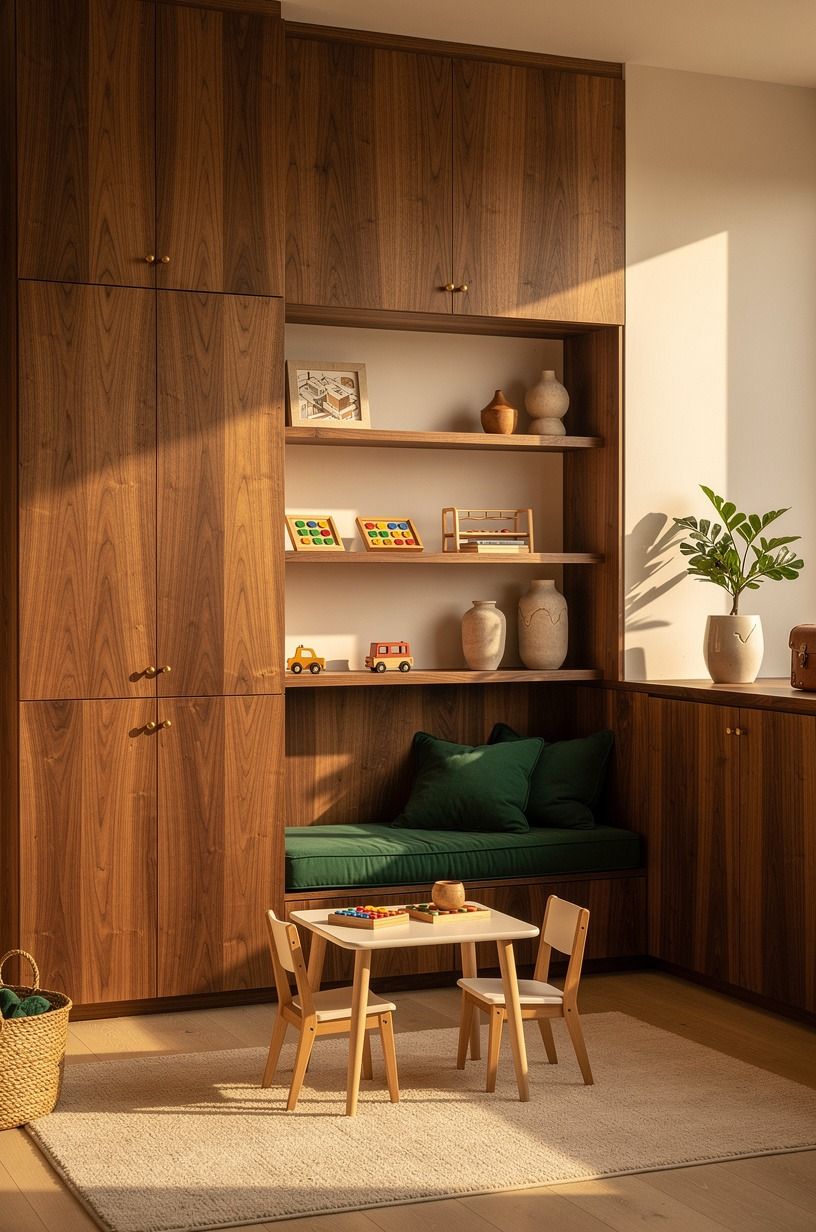
Choose two wood finishes, then stop. A hidden playroom gets messy-looking fast when pine, gray laminate, dark walnut, and orange oak all compete for attention.
Try IKEA TROFAST pine storage with a book-matched walnut ledge or small bench. Emerald, gold, and cream keep the richer wood from feeling heavy, even if you’re working with a windowless nook.
I made the mistake of adding a third finish once, a glossy espresso toy chest. It looked like it had wandered in from another house. Two woods give your child visual calm without making the room feel precious.
4Paint the entry so it feels like a destination
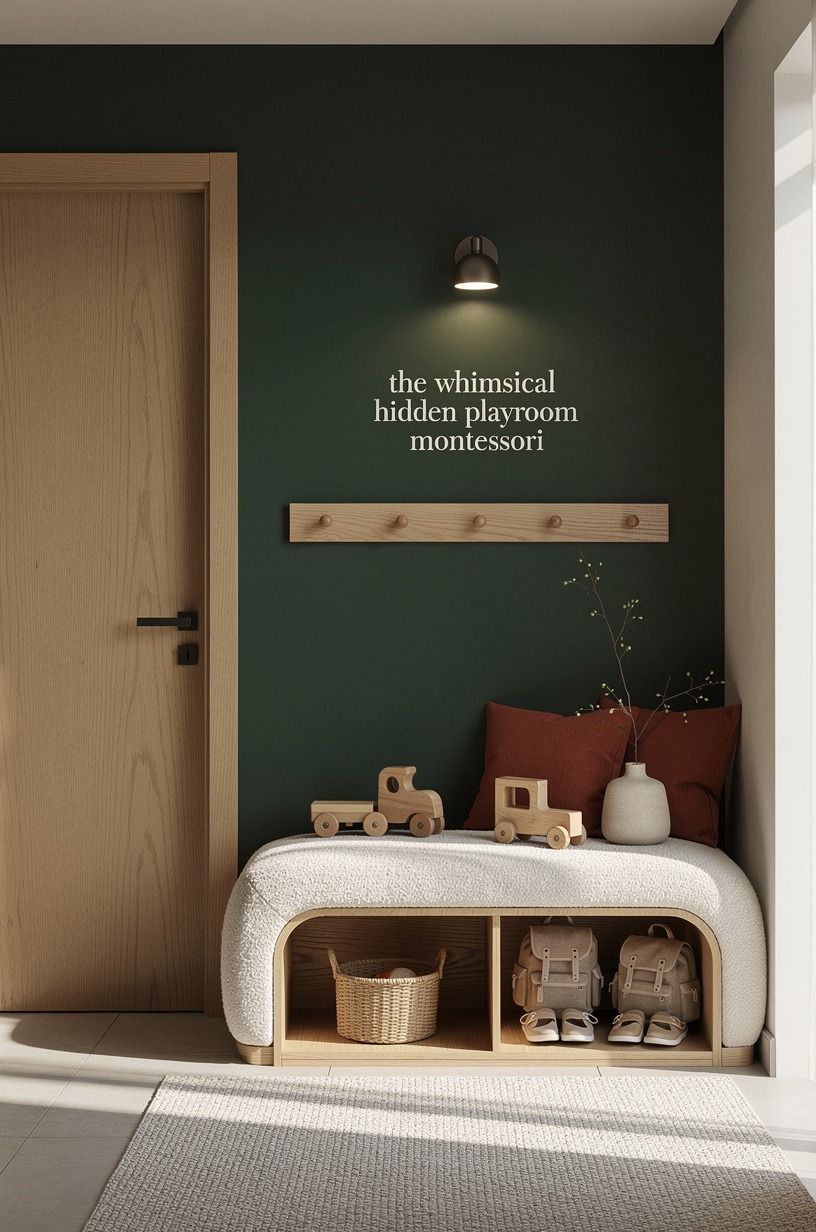
The hidden entrance deserves a color shift. You don’t need a mural everywhere; you need one clear moment that tells your child, “this is your place.”
Use Farrow & Ball Studio Green No. 93 inside a closet playroom or behind an arch. It works beautifully with rust-colored details and natural oak, making the entry feel warm rather than overly themed.
For a shared family room, I’d choose Benjamin Moore Saybrook Sage HC-114 instead. The softer green gives you a calm backdrop for brighter books and art while still making the entrance feel distinct from the rest of the room.
5Anchor the floor with a play rug that can take crumbs
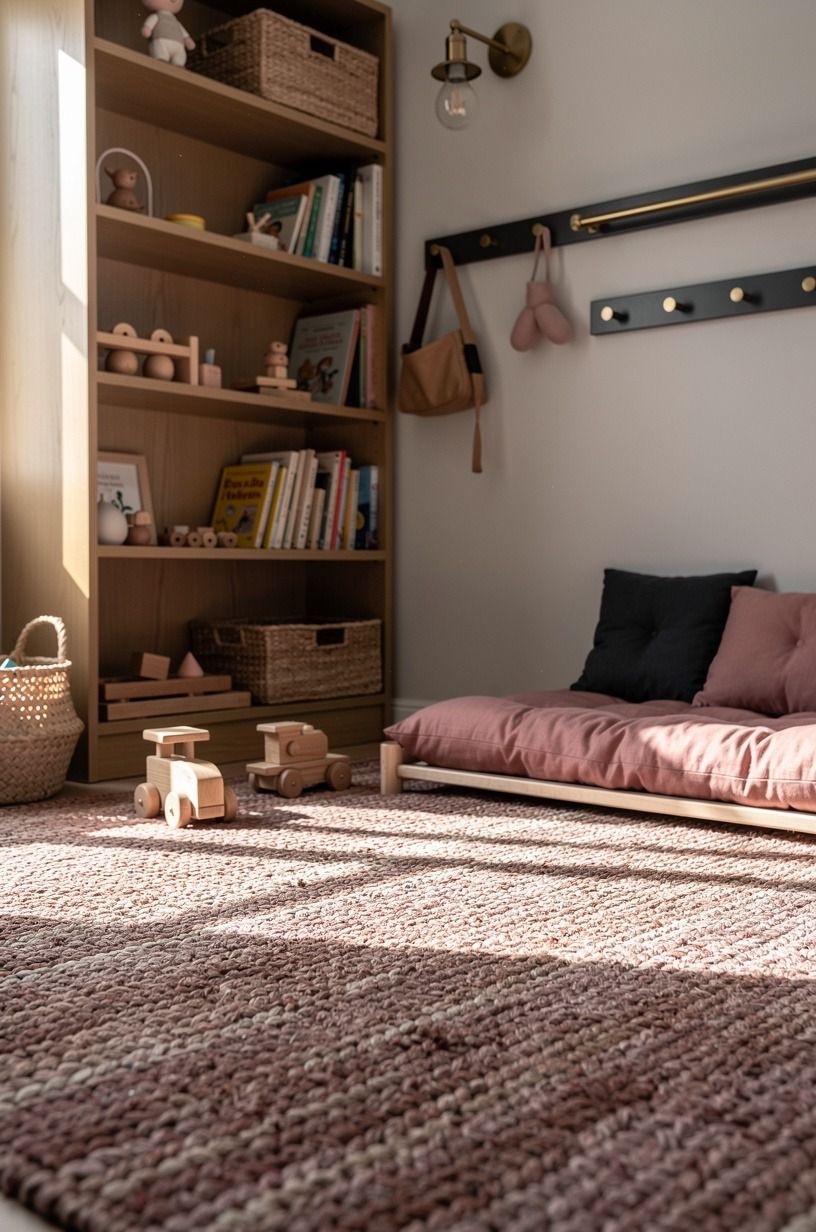
Your play rug needs to be more hardworking than fancy. Kids sit, spill, build, and drag chair legs across it, so choose texture with a little forgiveness.
A dusty-rose and charcoal flatweave in a 5×7 ft size gives you a defined work zone without swallowing a small hidden room. A few unlacquered brass details can warm the palette as they develop their own patina over time.
Skip a shag rug here. It’s charming in photos, but tiny puzzle pieces disappear in it and you’ll spend your evening digging through fibers.
Flat, warm, washable. That’s the move.
6Hang a curtain with the Storybook Threshold Method
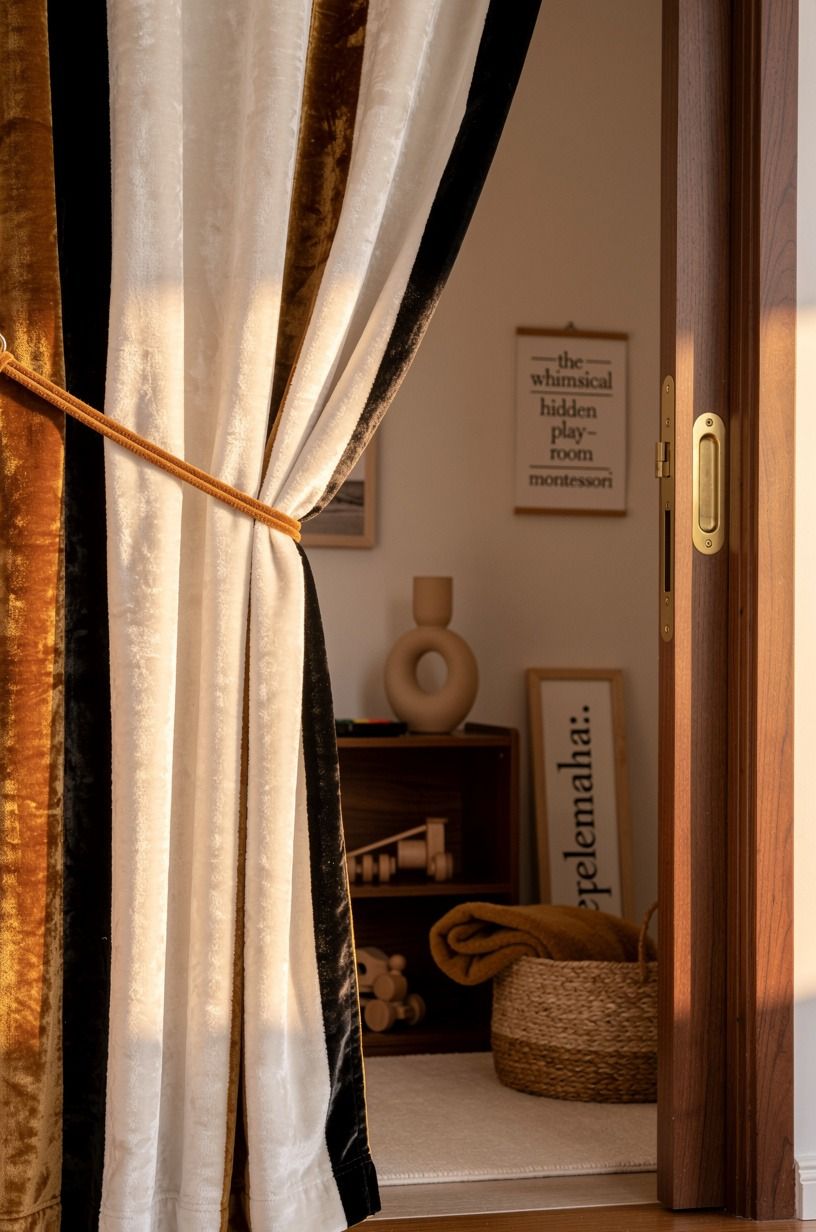
A curtain can hide a playroom without asking a renter to drill into anything permanent. And it gives your child a tiny ritual: pull it back, enter, begin.
Use a tension rod with deep-pile mohair velvet curtains in warm white or camel, with restrained black hardware. The fabric softens the room’s edges, and your child can manage it more easily than a stiff closet door.
Keep the hem about one inch above the floor so it doesn’t sweep up crayons. If you’re creating play in a common area, these hidden playroom ideas for the living room show why a simple textile divider often beats a full renovation.
7Float the low shelf instead of filling the wall
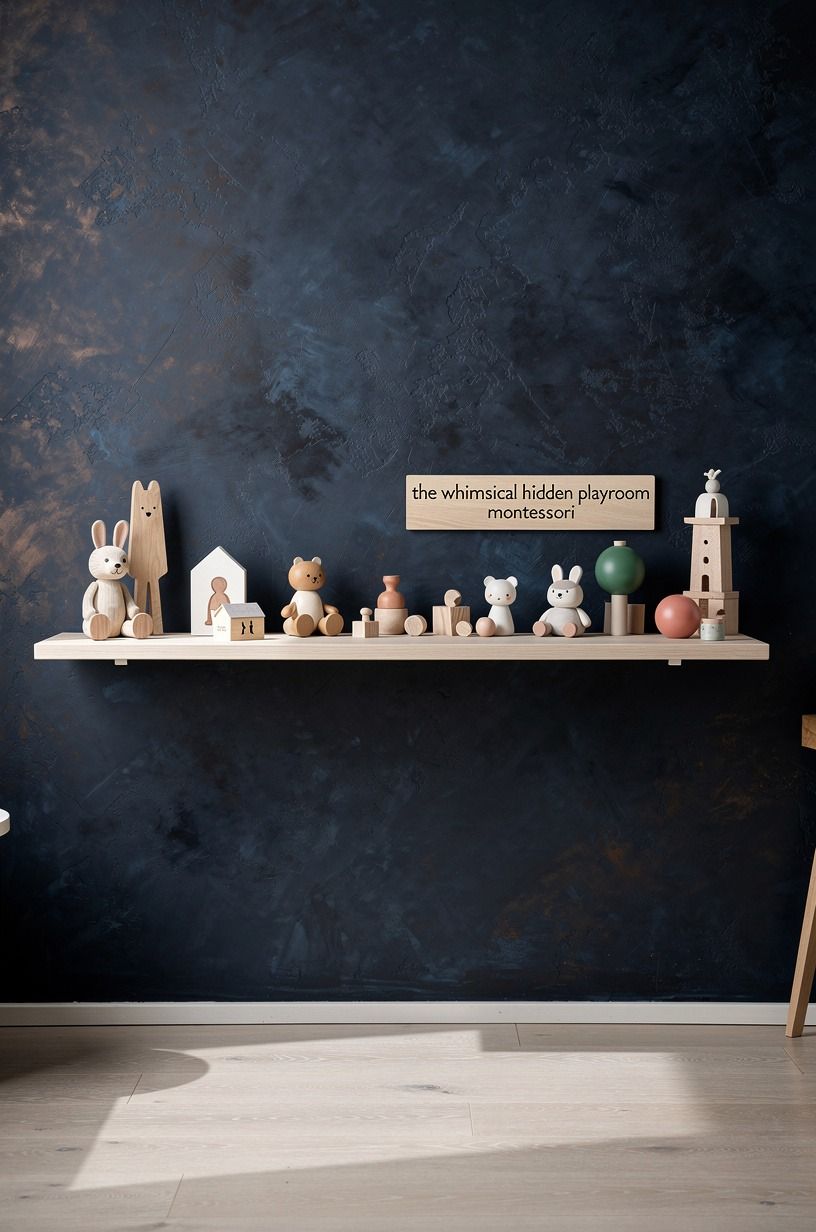
A full wall of storage sounds sensible, yet it can make a little room feel like a supply closet. Give your child one low shelf and let some wall breathe.
The IKEA KALLAX birch-effect unit works best turned sideways, especially against midnight-blue walls finished with hand-applied Venetian plaster. You can put a few books face-out on top, then leave the rest of the wall for taped-up paintings.
But don’t line every cube with matching bins. Your child needs to see some materials to remember they exist. One open basket of blocks, one tray of animals, one closed bin for the loud visual clutter.
8Rotate toys with the Four-Choice Shelf Rule
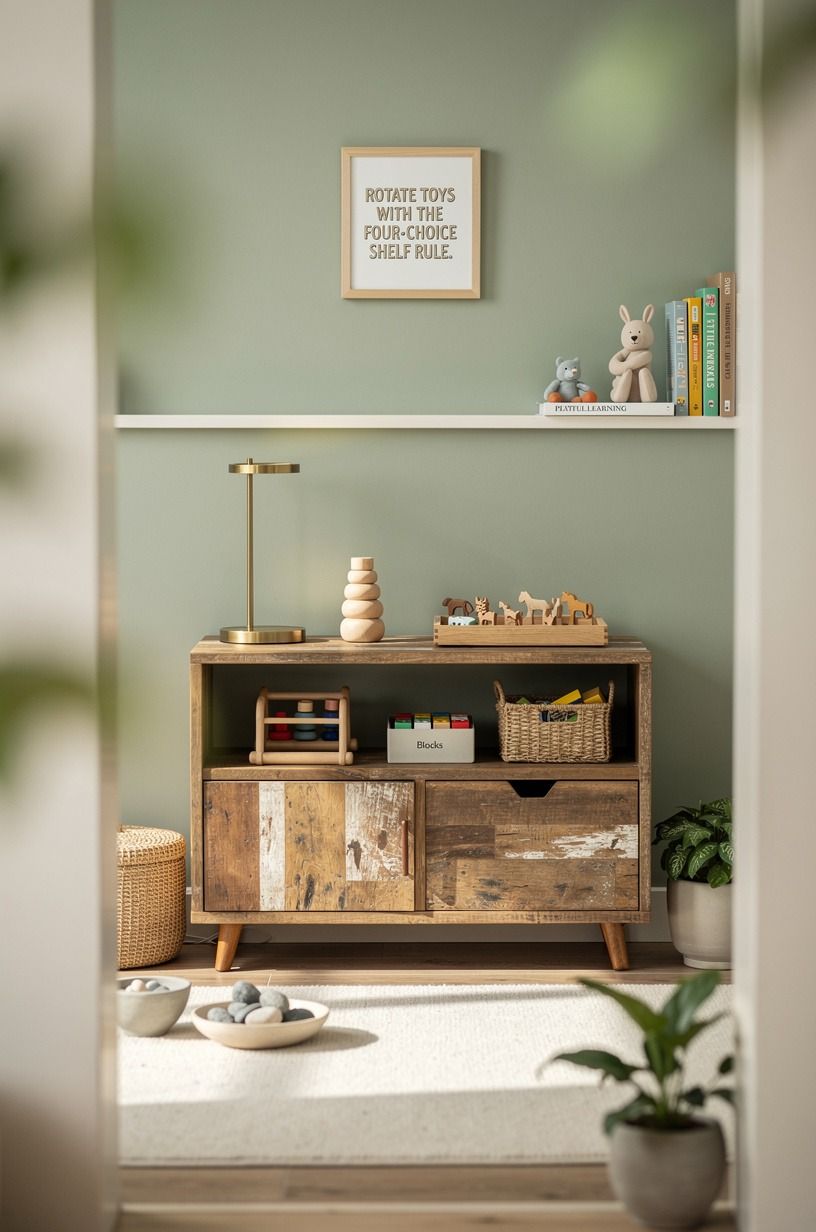
Put out four activity choices at a time. That’s enough for a full morning, and it prevents your child from dumping eighteen categories onto the rug just to find one wooden horse.
Use beechwood stacking blocks, a small puzzle, a basket of felt food, and one art tray on a reclaimed, weathered teak shelf. Sage green, warm cream, and natural wood keep the choices calm and easy to recognize.
I’ve found that fewer choices create a more peaceful room, not a boring one. Your child goes deeper when they aren’t scanning a wall of options like they’re in a toy store.
9Mix open baskets with closed clutter control
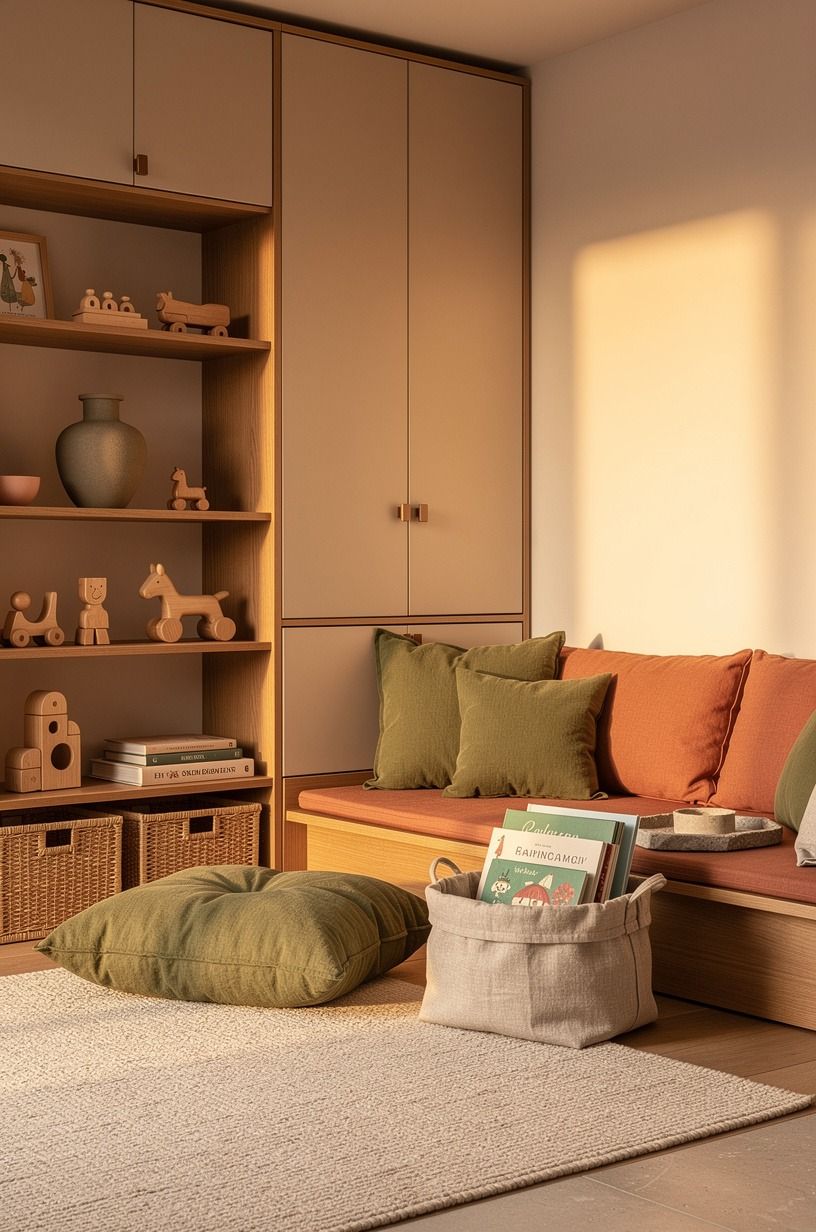
Open storage is wonderful until it becomes a display case for broken crayons, costume scraps, and seventeen mismatched cars. You need both kinds of containment.
Keep daily materials in soft washed Belgian linen baskets with a wide opening. Terracotta, stone, and olive give the storage area enough warmth without making every container compete.
Then use closed cabinets for battery toys, building sets with tiny parts, and gifts that arrived without a home. Your child can still help with cleanup if the labels are visual and simple. For more ways to hide the messy categories, use these hidden toy storage cabinet ideas as your cabinet plan.
10Frame a reading nest with one grown-up chair
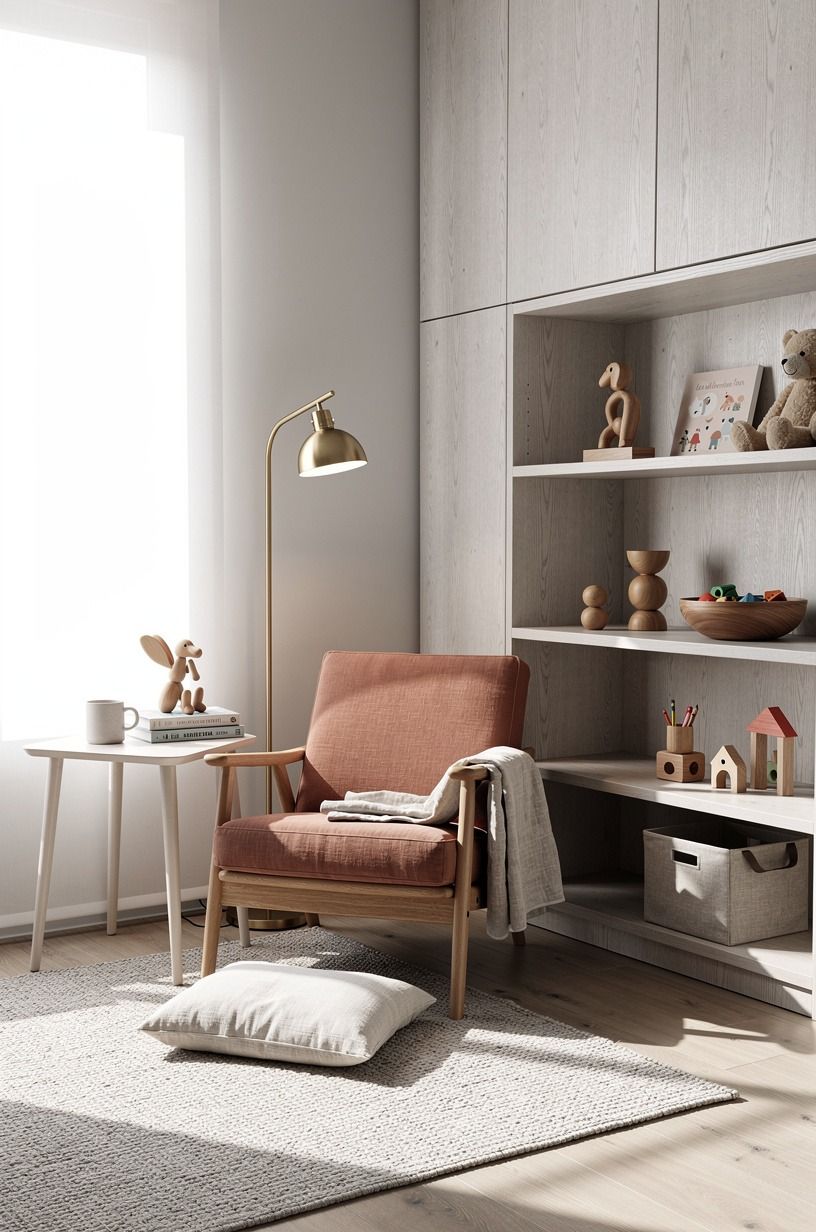
Every hidden playroom needs a place where you can sit without perching on a child-size stool. You’ll read longer, linger more, and notice what’s working.
A Target Threshold boucle accent chair beside a cerused white oak book ledge makes the nook feel comforting rather than staged. Clay, linen, and aged-brass details add warmth without asking the room to become too precious.
Don’t buy a giant beanbag unless your room is generous. It’s soft, sure, but it eats the floor where your child could build. A real chair gives you comfort and keeps the room functional.
11Add the Three-Height Light Stack after sunset
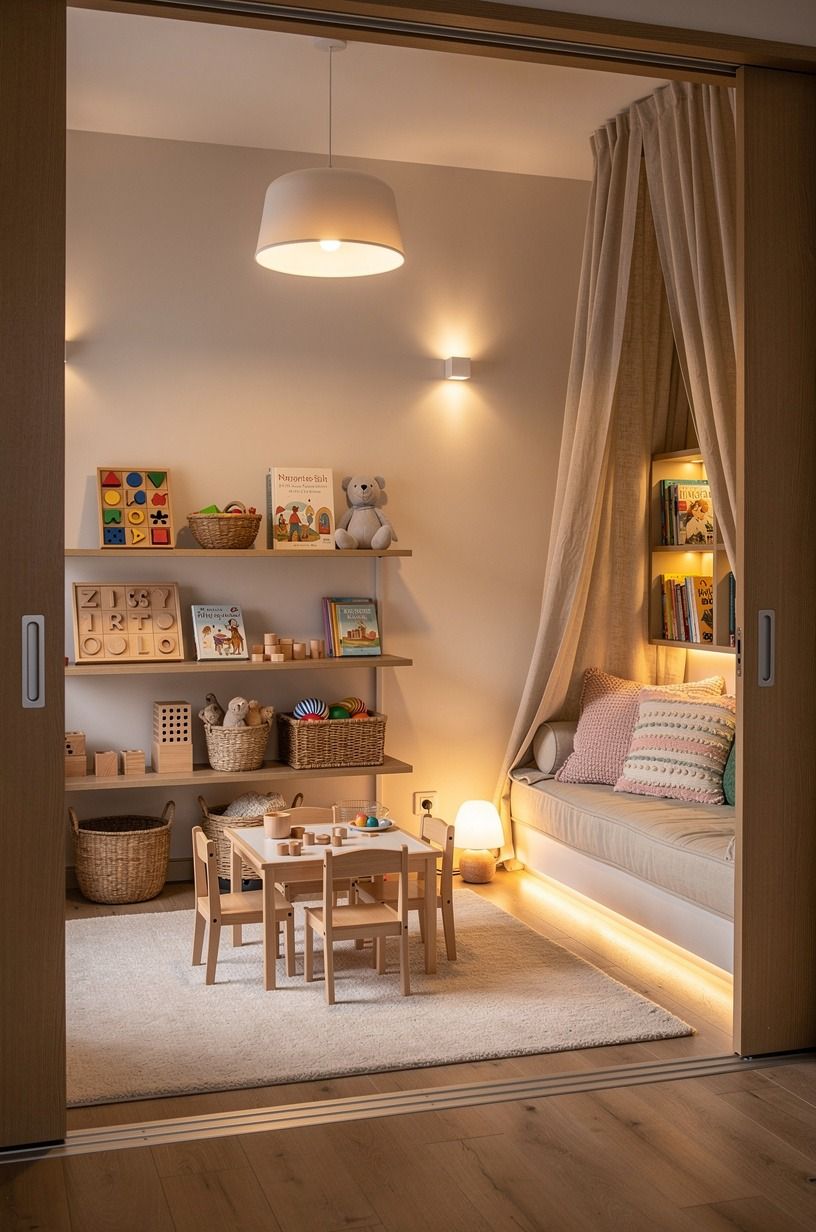
Overhead lighting alone makes most playrooms look a bit clinical. Add a low lamp, a wall light, and one small rose-gold-toned reading light so the room can shift into a gentler evening routine.
Plum and gray work especially well with shagreen accents because they make the practical pieces feel considered. Keep cords secured and switches within adult reach.
12Can a small closet become a girls playroom?
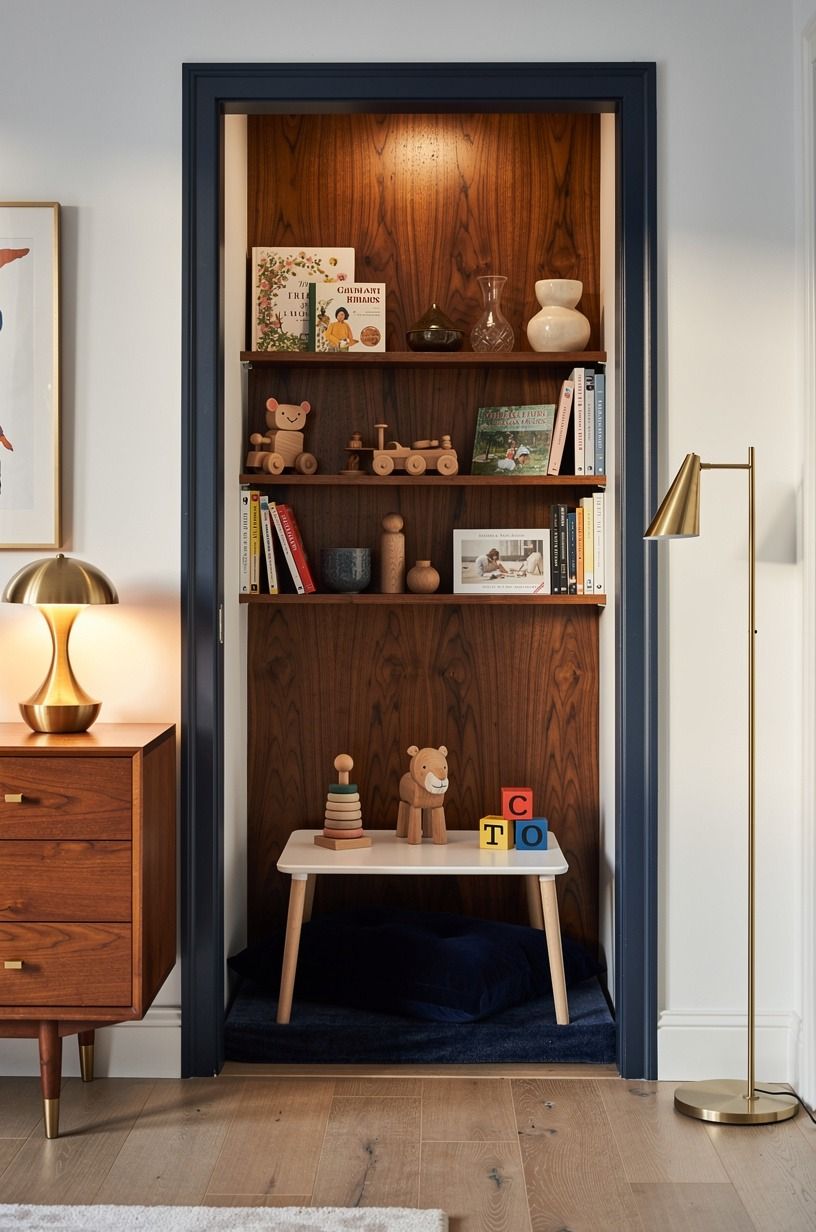
Yes, if you treat the closet like a room rather than a storage problem. Your child doesn’t need a huge footprint; they need room to sit, reach, and turn around comfortably.
Start with a twin-size floor cushion rather than a bed frame, since a standard twin bed is 38×75 in and can consume the whole closet. Add one book-matched walnut wall shelf, one low basket, and navy-and-white paper art inside the door.
I’d avoid bunk-style structures in a closet. Top bunks need 33 in of ceiling clearance, and squeezing one into a tiny hideaway can feel dramatic in the wrong way.
13Layer a vintage playroom aesthetic without buying antiques
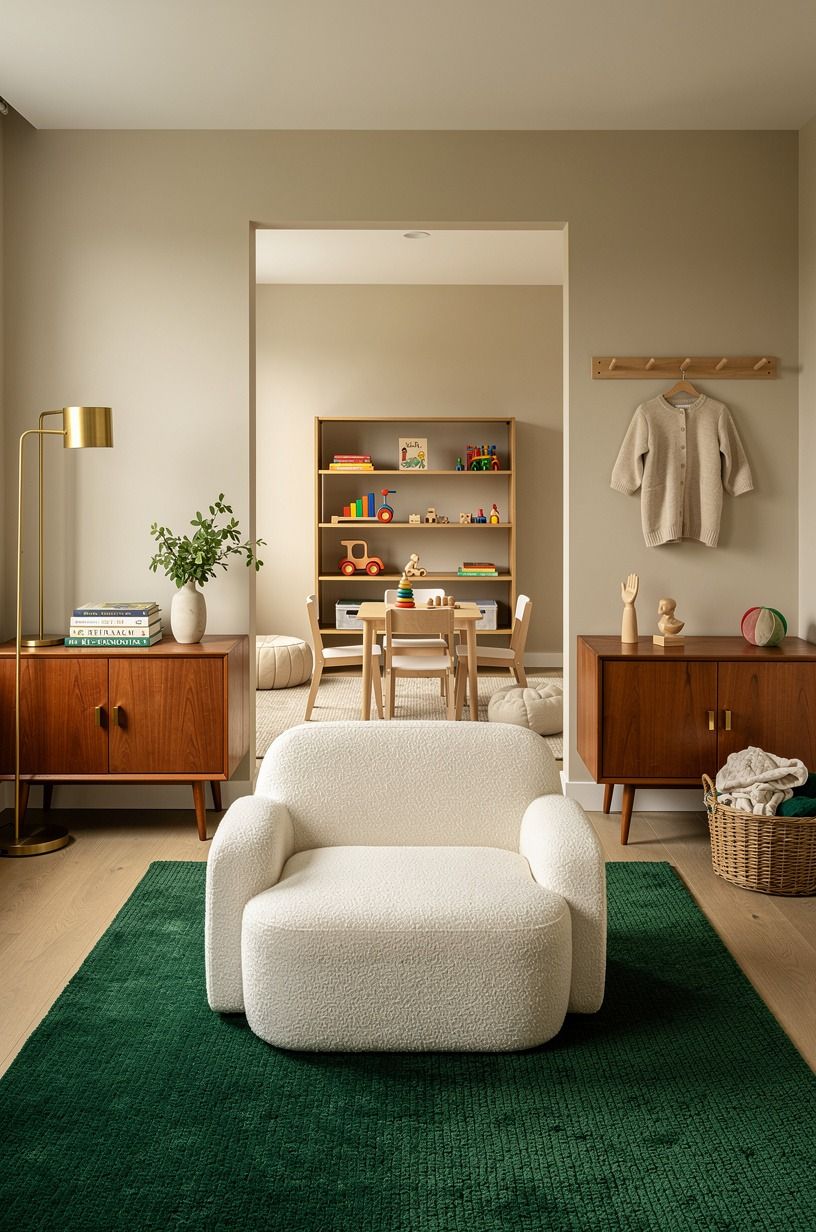
You don’t need a flea-market haul to create a vintage playroom aesthetic. A few tactile details go further than a room full of fake nostalgia.
Try organic bouclé on a low seat, a framed botanical print, and an emerald-and-cream floor pillow with a small gold detail. Your child gets a charming setting, while you avoid anything too breakable or museum-like.
Look for one secondhand wooden stool or small picture frame instead of chasing a matching collection. These kid-friendly living room ideas are useful if you want the playful pieces to blend with the rest of your home.
14Build a display rail for the art your child makes
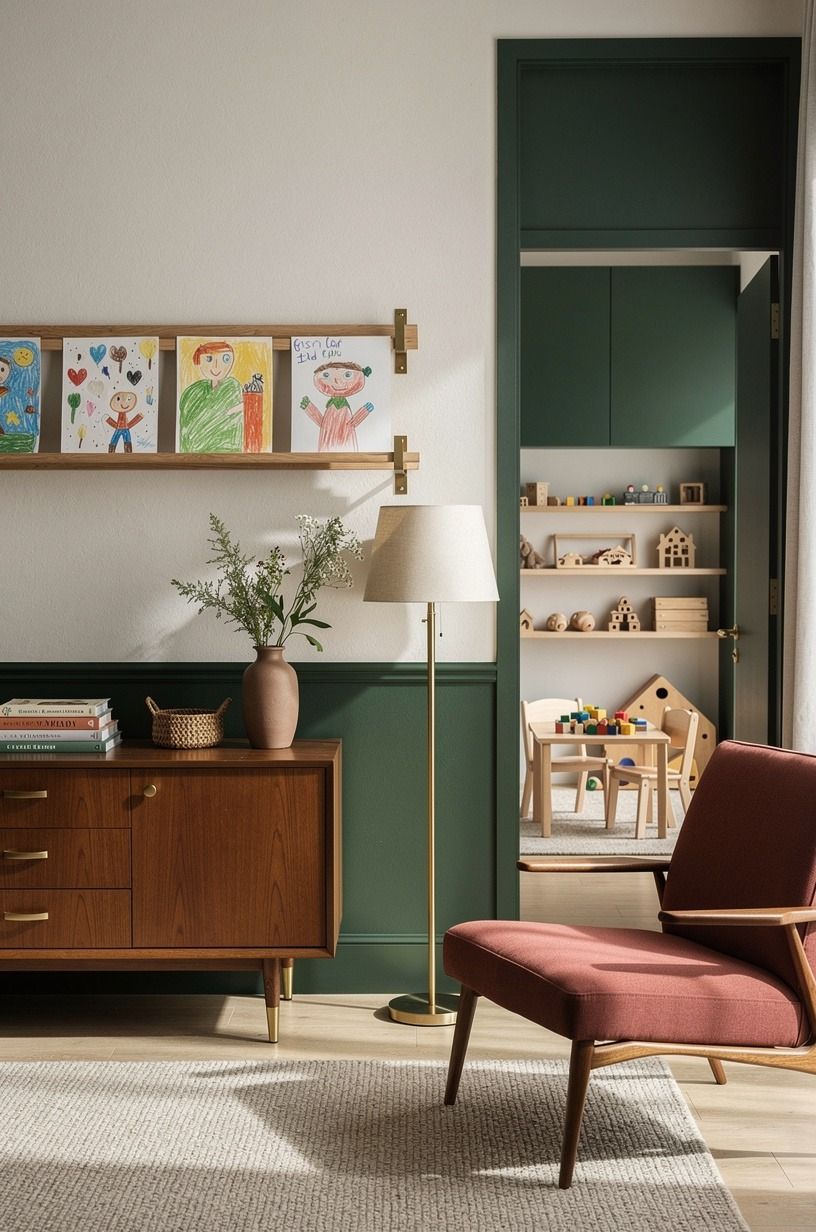
Give artwork a place to land before it covers your refrigerator. A simple rail tells your child their work matters, and it lets you change the room without buying new decor.
Mount a natural oak picture ledge above the activity table, then use unlacquered brass clips for three or four pieces at a time. Forest green, rust, and natural oak make the changing display feel warm and collected.
Keep the frames mismatched if that’s what you have. A too-perfect gallery wall feels adult-owned. Slightly crooked paintings and tape marks are part of the room’s honest charm.
15Create a quiet corner before you add more toys
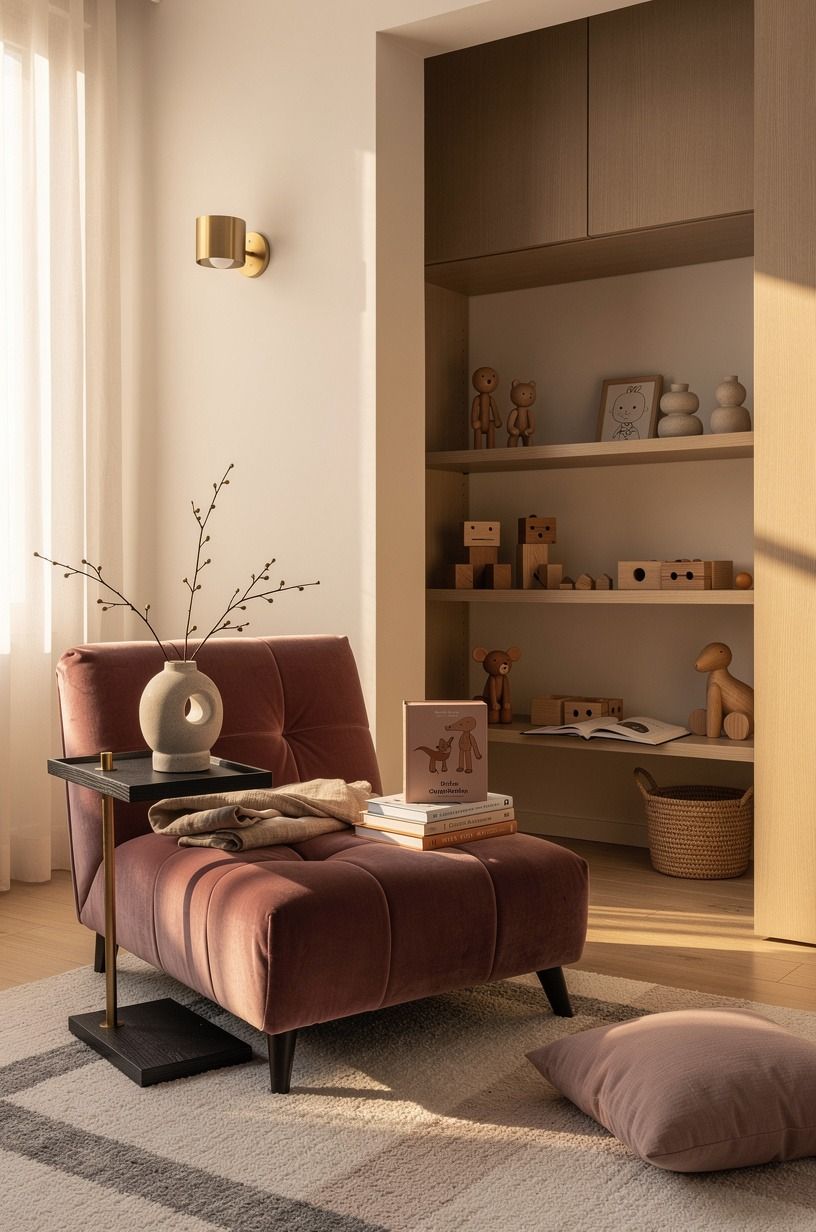
Make a spot where your child can step away from the action. A dusty-rose floor cushion, charcoal basket, and deep-pile mohair velvet curtain can make a small pause feel genuinely separate from the busier parts of the room.
16Use the Visible-Work Tray System for art supplies
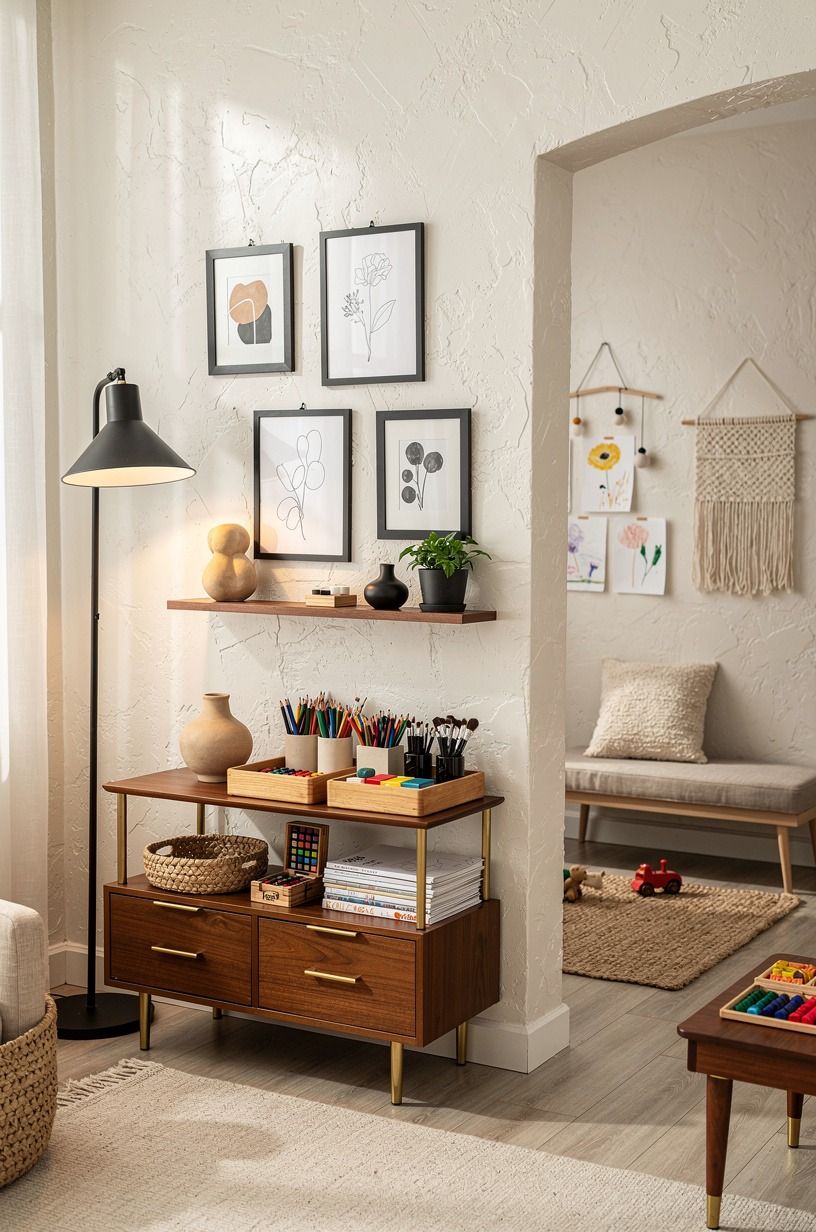
Loose art supplies create instant chaos. Trays make the work feel contained, and they show your child exactly where things return after painting or cutting.
Use shallow trays for crayons, paper, glue sticks, and watercolor pans against warm-white walls with hand-applied Venetian plaster. Camel storage and small black accents keep the system clear without making it look overly school-like.
I prefer trays over giant craft carts because your child can carry one focused project without rolling an entire store behind them. Small systems are easier to keep tidy, especially on tired weekdays.
17Budget the magic before you build it
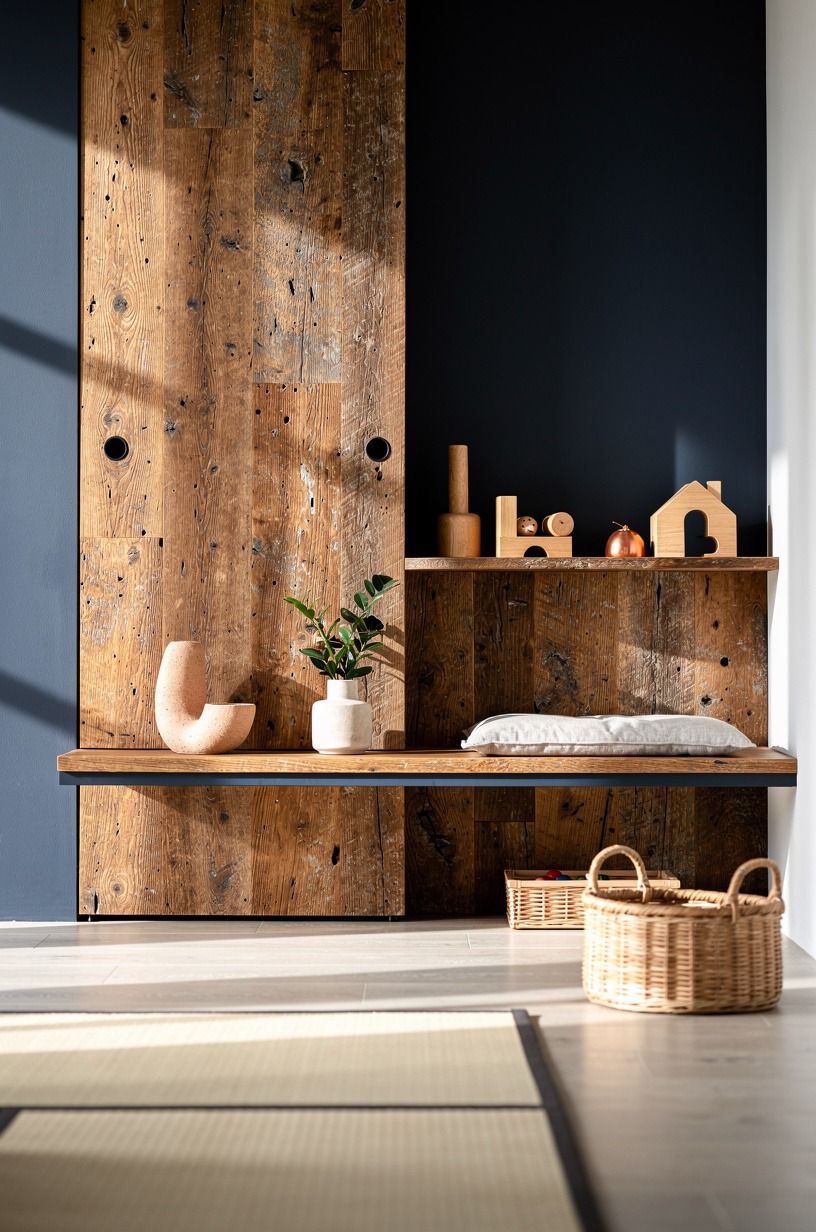
A hidden playroom can cost little or a lot, depending on whether you’re changing paint and storage or building a full wall of joinery. Reclaimed weathered teak, midnight blue, copper, and ivory can make a modest setup feel intentional without requiring a renovation.
18Hide the exit clutter with a reset basket
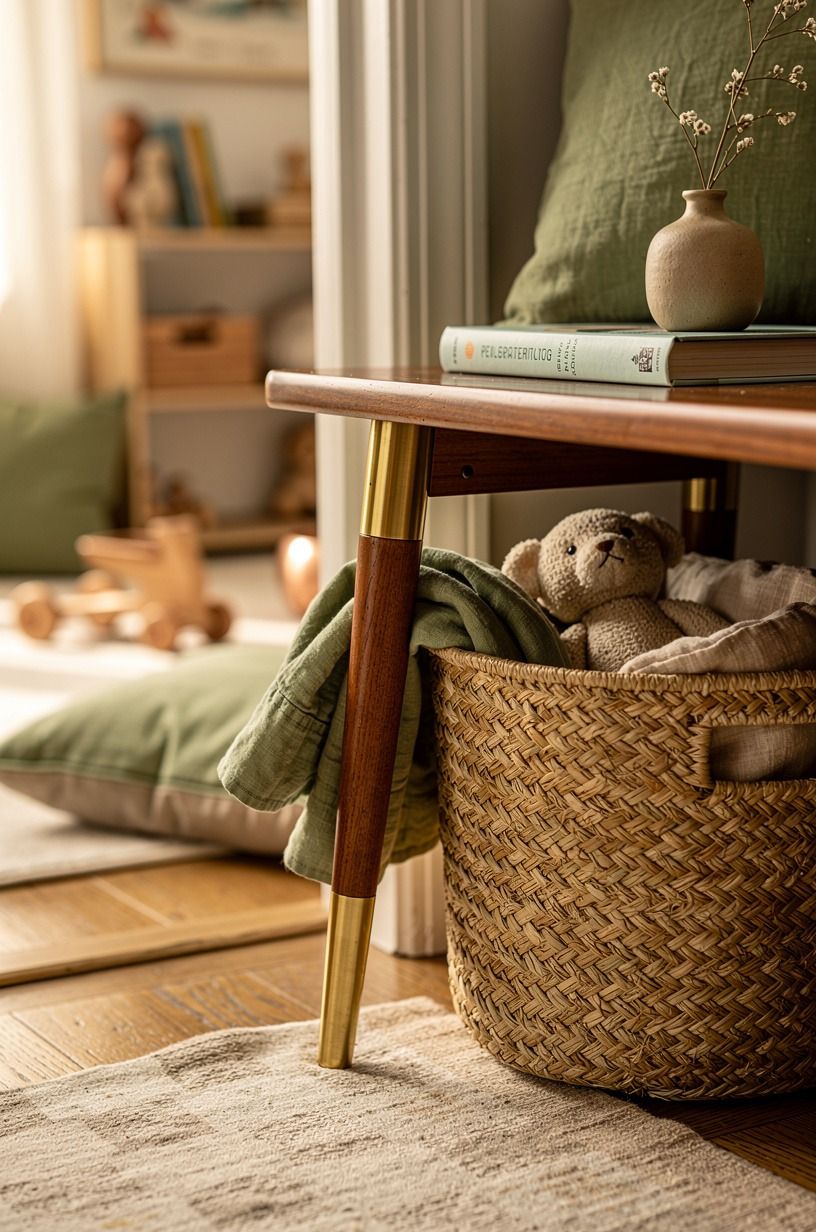
Put one basket near the door for the stuff that migrates: library books, socks, tiny figurines, and the random spoon that somehow appears during play. It sounds mundane. It saves the room.
Choose a lidded basket lined in washed Belgian linen, wide enough for a fast five-minute reset. Sage green, warm cream, and natural wood help it blend into the room while still being easy for your child to find.
And make the reset visible, not punishing. Put on music, race the timer, laugh when a dinosaur turns up in the wrong basket. These hidden playroom storage ideas can help when the reset basket starts overflowing.
19Finish with one detail your child can recognize as theirs
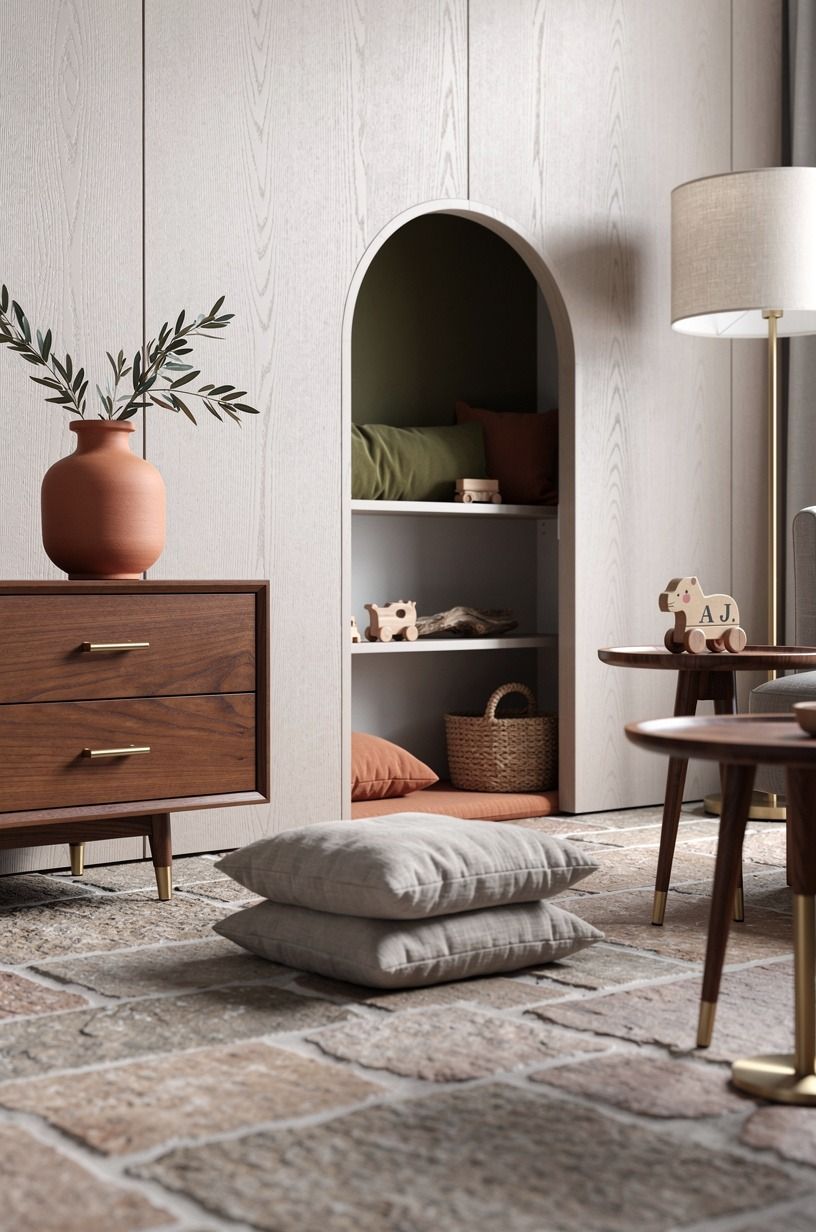
The final layer should belong to your child, not your Pinterest board. A terracotta name card, an olive drawing hook, or one small cerused white oak box for their favorite treasures gives the room a personal finish without adding clutter.
Why I’d protect the empty space
I’ve made playrooms that looked great for one photograph and felt exhausting by the end of the day. Every shelf was styled, every wall had something on it, and every toy was technically organized.
Technically. The kids still pulled everything out because the room gave them no place to pause.
Now I start with the floor. I want enough open space for a train track, a pile of blankets, a spontaneous dance, or a child lying flat and staring at the ceiling for no reason.
That empty patch is not wasted square footage. It’s where the play happens.
I also think adults overvalue matching storage. Matching bins photograph well, but children don’t care whether six baskets are the same oat color.
They care whether they can find the animals, whether the puzzle tray stays together, and whether they’re allowed to move things around. A little visual looseness is healthy.
It means the room is being used.
If you’re deciding between built-ins and simpler pieces, I’d begin with movable furniture. Built-ins can be refined and useful, but they lock in your assumptions about how your child will play.
Children change fast. The kid who wanted dress-up at four may want a drawing table at six, then a reading den at eight.
My rule is simple: make the entrance magical, make the storage forgiving, and protect the empty floor. You can always add another basket. You can’t easily recover room once every inch has been assigned a job.
The Questions Worth Answering First
What is the best hidden playroom idea for a small Montessori playroom?
A curtain-fronted closet nook is often the best choice because it uses space you already have. Child-height shelves and a floor cushion make it useful without crowding the room. Try IKEA TROFAST storage and keep only four activity choices visible.
Where can I buy hidden playroom pieces on a budget?
Start with IKEA, Target, and Wayfair for bins, shelves, and basic lighting. Secondhand wood furniture can add warmth for less. Facebook Marketplace and thrift stores are especially good for stools, picture ledges, and small bookcases.
How much does a whimsical hidden playroom makeover cost?
A simple makeover usually costs about $150 to $600. Paint, bins, and a rug make the biggest visible change at the lower end. Rearranging furniture, rotating toys, and using what you own are free.
Can I create a hidden playroom on a budget?
Yes, and you don’t need built-ins to make it feel special. A tension rod, a basket system, and taped-up art can do plenty. Use a closet, rotate existing toys, and repaint one wall before buying furniture.
Is a hidden playroom worth it in a small space?
Yes, because a small boundary helps your child focus and helps you contain the spread. Defined play zones make cleanup less overwhelming. Put the rug and lowest shelf closest to the entrance so the room feels open.
Is a hidden playroom a good idea for a rental?
Yes, if you choose removable layers. Peel-and-stick decals, tension rods, and freestanding shelves give you the effect without damaging walls. A curtain is especially useful when you want to hide toys in a living room.
Where I’d Start First
If I had to pick one step, I’d start with the low open shelf. Your child can’t independently use a room when every good thing is behind a cabinet door. Get their daily choices within reach, then let the rest of the magic build around that.