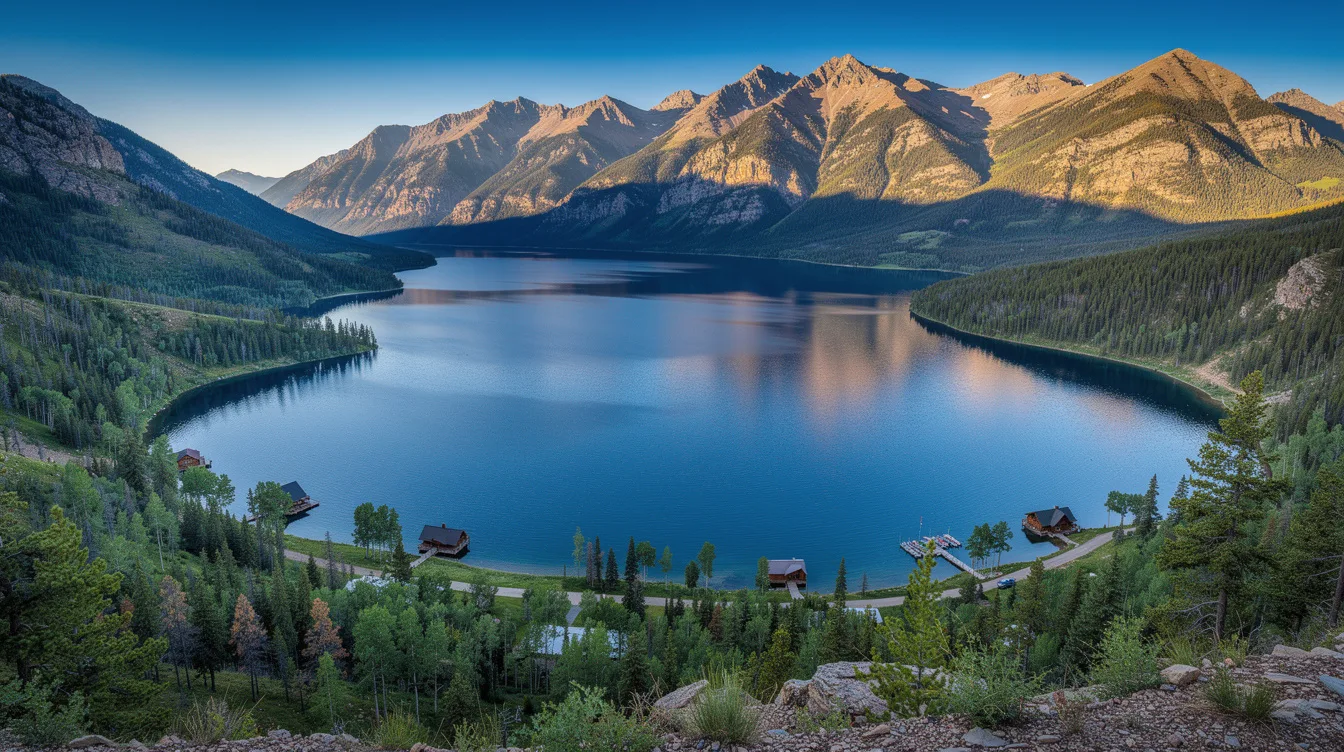
Grand Lake sits at Rocky Mountain National Park’s west entrance, where a small Colorado town meets a lake that drops 265 feet deep. That depth changes the mood. The water gives this place a quieter pull than a drive-through park stop.
It’s just over two hours by car from Denver, depending on traffic and route. But the arrival still feels like a proper change of scene, with mountain air, wooden walkways, and the lake holding the edge of town.
A lake that makes the west entrance linger
Grand Lake itself is described as Colorado’s largest and deepest natural lake. It covers more than 500 acres and has about 4.5 miles of shoreline, so you can spend a full day near the water without treating it as a quick photo stop.
And that’s the appeal: you don’t need to choose between lake time and the national park. Boats, fishing, paddleboarding, swimming when conditions allow, and shoreline walks all begin close to the same historic main street.
The town is touristy in summer, and that’s no surprise. But it doesn’t have the rushed feeling of a place built solely around a parking lot, because the lake keeps drawing people away from the storefronts.
Rocky Mountain National Park begins just beyond town
Rocky Mountain National Park lies immediately east of Grand Lake, making town a sensible base for the park’s western side. East Inlet and North Inlet are nearby hiking areas, with conifer forest, waterfalls, alpine lakes, and views toward the Continental Divide.
And if you’re arriving from lower elevation, give yourself a little grace before setting out. The town is high in the mountains, so the smart first day is a lakeside stroll or an easy outing, not your biggest hike.
Afternoon thunderstorms are common at altitude, even in summer. But that also gives mornings a useful purpose: get outside early, then return when the light hardens and the weather starts making decisions for you.
Can you pair a lake day with a park day?
Yes, and you should. Start with a hike in the park, then spend the later hours on or beside the lake, when a cold drink and a quieter pace feel earned rather than planned.
Summer is short, which makes it count
Summer is the season for hiking and water activities, though mornings and evenings can still feel cold. You’ll want layers, because sunshine around the lake doesn’t guarantee warmth once the day begins to fade.
And Grand Lake’s center is compact enough to wander after an outing. Wooden boardwalks, small shops, cafes, restaurants, and mountain lodging give you somewhere to land when boots are dusty and the weather turns.
There’s a real trade-off here. The summer window is brief, while crowds are part of the package, so visitors who need solitude should expect to find it earlier in the day or farther out on the trail.
Winter belongs to snowmobiles and quiet streets
Winter shifts Grand Lake toward snowmobiling, with cross-country skiing, snowshoeing, and ice fishing also in the mix. The lake-and-park setting doesn’t disappear under snow. It simply asks you to approach it differently.
But road access needs attention. Trail Ridge Road is usually closed in winter, and its spring opening depends on snow, so don’t build a trip around crossing the park by car without checking current conditions.
The town is surrounded by the park on three sides and connected visually and hydrologically with Shadow Mountain Lake and Lake Granby. That makes the western approach feel broad and watery, even when the mountains are doing most of the talking.
Grand Lake works best when you stay awhile
Founded in 1879, Grand Lake has the scale of a small mountain town rather than a major resort. Its 2020 census population was about 410 residents, which explains why the place can feel intimate even during its busy season.
And that smallness is the point. You come for the park, but the lake gives you a reason not to rush back to Denver after one hike.
By evening, the water goes dark beneath the mountain edges, the boardwalks quiet down, and Grand Lake feels less like an entrance than a place worth stopping for.