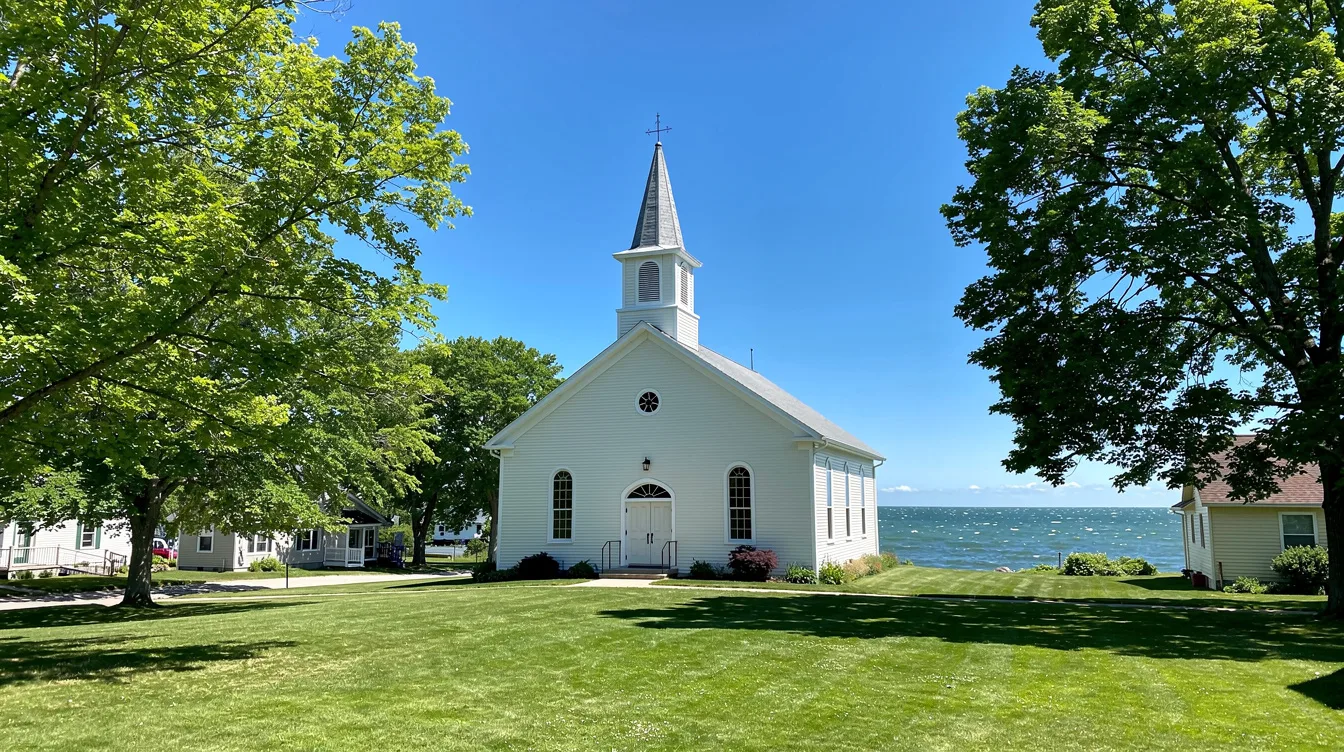
Ephraim began in 1853 as a Moravian religious community with strong Norwegian roots. Its white buildings and quiet waterfront still make that founding feel close, even when summer visitors fill the village.
And the promise is real: the village preserves a Moravian church from 1858, one of several 19th-century buildings still in use. You can come for the harbor, but the church gives the place its spine.
A small village with its first chapter intact
Ephraim sits in Door County, Wisconsin, on the Green Bay side of the peninsula between Green Bay and Lake Michigan. It has about 345 residents, which is why even a busy afternoon can feel more like a waterfront stroll than a city outing.
But this isn’t a museum village sealed behind ropes. The former religious community remains a living place, with historic buildings woven into a seasonal rhythm of lodging, galleries, meals, and boats on the water.
The 1858 church matters because it connects the village directly to its earliest Moravian days. Its survival also makes Ephraim more compelling than a quick photo stop: you’re looking at a community that kept a physical link to why it was founded.
And the white wooden facades reinforce that feeling. They can seem almost formal in bright daylight, but Eagle Harbor and the changing weather keep the village from feeling staged.
Walk Water Street, then slow down at Eagle Harbor
Start along Water Street and the bayfront, where the road gives you the village’s essential contrast: historic white buildings on one side, open water on the other. It’s tidy, but never fussy.
Eagle Harbor is sheltered, so it has the calm visual pull that makes you postpone the next stop. The water, dock lines, and distant shore do most of the work. You don’t need a packed itinerary here.
Anderson Dock is another stop worth making. The Anderson Dock building and pier give the waterfront a tougher texture than the village’s neat houses, a useful reminder that this was never only a place to admire from a bench.
But don’t expect solitude at the height of summer. Door County gets crowded then, and Ephraim’s small scale means the busiest stretches feel it quickly.
Peninsula State Park is across the bay
Peninsula State Park sits across Eagle Harbor, and its presence changes the view from Ephraim. The park offers hiking, biking, beaches, and overlooks, so you can pair village history with a longer day outdoors.
From the harbor, you may see cliffs, Horseshoe Island, and Eagle Bluff Lighthouse. That broad view is the payoff for staying near the water instead of treating Ephraim as a drive-through stop.
And if you want time on the bay, kayaking, paddleboarding, and sailing are part of the local mix. The setting is peaceful, but conditions and seasonal availability still matter, so keep plans flexible.
The village also works well with nearby Fish Creek and Sister Bay, reached via WI-42. Ephraim feels quieter than those broader Door County stops, though it has fewer reasons to rush from one storefront to the next.
Come from late spring through early fall
Ephraim is best approached from late spring into early fall, when the village’s seasonal businesses and waterfront activities are most available. You’ll find it about 74.6 miles from Green Bay, which makes it an easy Door County base or detour.
But outside that season, some restaurants and accommodations may close or run reduced hours. That’s a genuine limitation, especially if you prefer a spontaneous trip with lots of dining choices.
The Ephraim Historical Foundation’s sites help fill in the village story, alongside the old church, Anderson Store, and Pioneer Schoolhouse. You don’t need deep knowledge of Moravian history to appreciate the continuity. You just need to notice what remained.
The appeal is quieter than the postcard
Ephraim has a New England and Scandinavian flavor on the Great Lakes, but the better reason to visit is more specific. Its early religious history still has an address, a building, and a place in the daily village scene.
And that’s what makes the church more than a historic marker. By evening, when the harbor light softens against the white facades, the old structure feels less like a relic than part of the village’s ongoing weather.