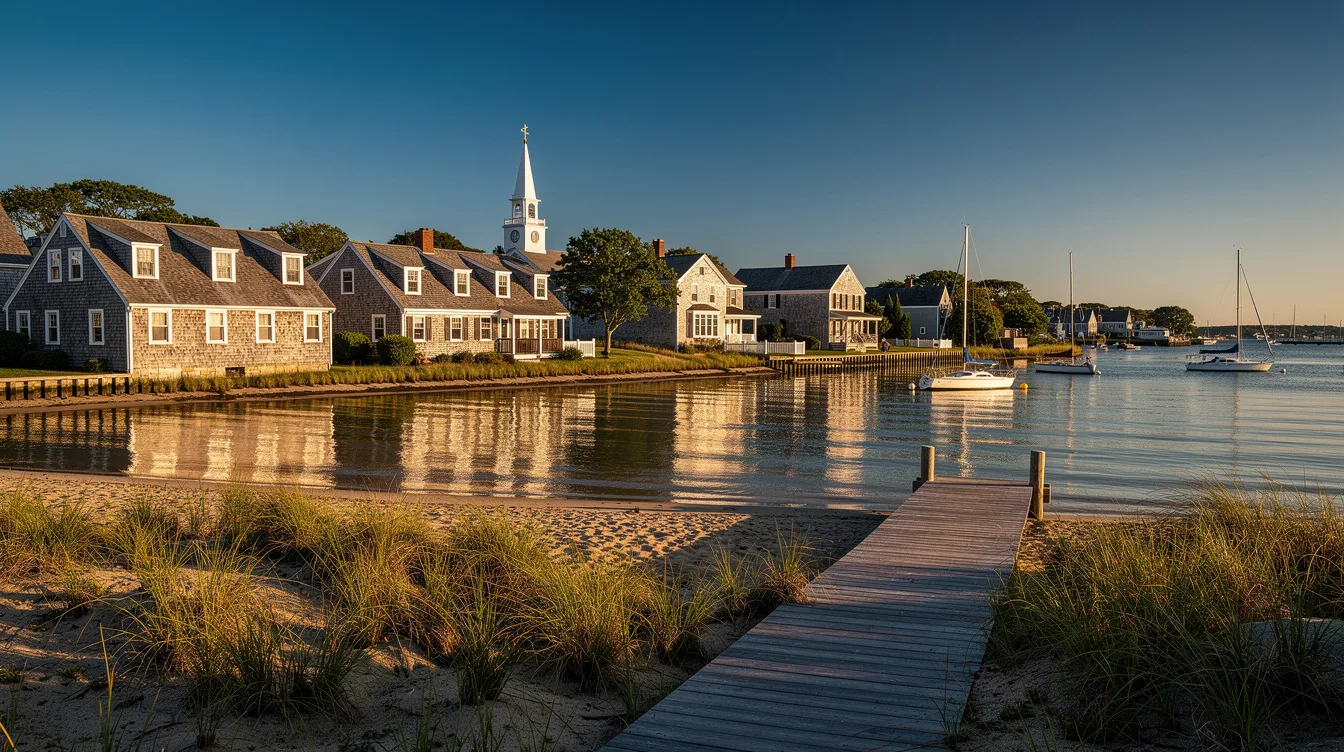
Nantucket earned National Historic Landmark District status in 1966 for a reason you can still read at street level. The National Park Service calls it the finest surviving architectural and environmental example of a late 18th- and early 19th-century New England seaport town. That’s a formidable claim, and downtown makes it feel surprisingly concrete.
On this Massachusetts island, the story isn’t tucked behind museum glass. It sits in the gray-shingled houses, the cobbled stretch of Main Street, and the working harbor. You can arrive for the beach, but the town’s old seaport form is what explains why the island feels so distinct.
Why 1966 still matters on Main Street
The designation covers a historic district, not one isolated landmark. That matters because Nantucket Town still reads as a place shaped by maritime commerce, with its harbor, former whaling captains’ houses, shops, and compact streets close together.
And the National Park Service’s wording is unusually specific: this is an example of a New England seaport town from the late 18th and early 19th centuries. You don’t need an architecture degree to grasp the point. Walk Main Street slowly, because the cobbles demand it anyway.
But this is no silent historic set. Summer visitors fill the center, and the island’s population rises to about 80,000 people during peak July and August. The old town is lively, but the crowds can make a casual afternoon feel like an errand.
The whaling past gives the harbor its weight
Nantucket was one of the world’s major whaling centers during the 18th and 19th centuries. That maritime past is the backbone of the landmark designation, and the Nantucket Whaling Museum is the clearest first stop if you want the streets outside to make sense.
And the island’s history has more than one thread. Wampanoag people lived on Nantucket for thousands of years before English settlement began in earnest in 1659. The early settlement also brought enslaved African Americans, while Wampanoag men worked aboard Nantucket whaling ships.
You should give this history time rather than treating it as background decoration. The harbor view is handsome, yes, but the museum and town streets carry harder stories about labor, trade, displacement, and wealth.
Can you see the landmark district without planning a whole day?
Yes. Start in Nantucket Town, then move between Main Street, the harbor, and Brant Point Lighthouse, which sits close to both the center and waterfront. It’s an easy sequence, and it gives you houses, cobbles, boats, and a lighthouse without turning the visit into a checklist.
But don’t confuse convenience with quiet. In high summer, reserve your ferry and lodging far ahead. Nantucket is famously expensive, and a 2026 report cited a median home value of about $1.6 million, a useful clue to the island’s price pressure.
Getting there is simple, staying flexible is harder
Nantucket lies 29.8 miles south of Cape Cod. The fast ferry from Hyannis takes about one hour, while the conventional vehicle ferry takes about two hours and 15 minutes. Regional flights also reach Nantucket Memorial Airport, known as ACK, including service from Boston.
And that water crossing helps set the mood before you arrive. The mainland drops away, the air turns salty, and the harbor approach makes the town appear in layers of low roofs and masts. It’s remote enough to feel like a break, but not hard to reach.
Once there, you don’t necessarily need a car. The island has bike paths, and The Wave bus network reaches several areas. A bicycle is often the better choice when town traffic thickens, though wind and summer heat can make the ride less charming than it sounds.
Choose the season that matches your patience
Go in May or June if you want long days before the peak crush. September through early October brings a calmer feel and often better availability. You’ll still get the island’s shingled streets and ocean air, without quite as much competition for every table and room.
But July and August are for people who prioritize beaches and summer social life. Surfside Beach has a more ocean-facing feel, while Jetties Beach is easier from town. Those are useful distinctions when you have limited time and don’t want to spend it negotiating logistics.
Beyond town, Siasconset has cottages and the Bluff Walk, while Great Point Light and Coskata-Coatue Wildlife Refuge offer dunes and open beach. More than half the island is protected or dedicated to conservation, so Nantucket isn’t only a historic streetscape.
The landmark status explains the town’s enduring pull. By the time the ferry heads back toward Hyannis, gray shingles fade behind the harbor, and the cobbles are left to the evening air.