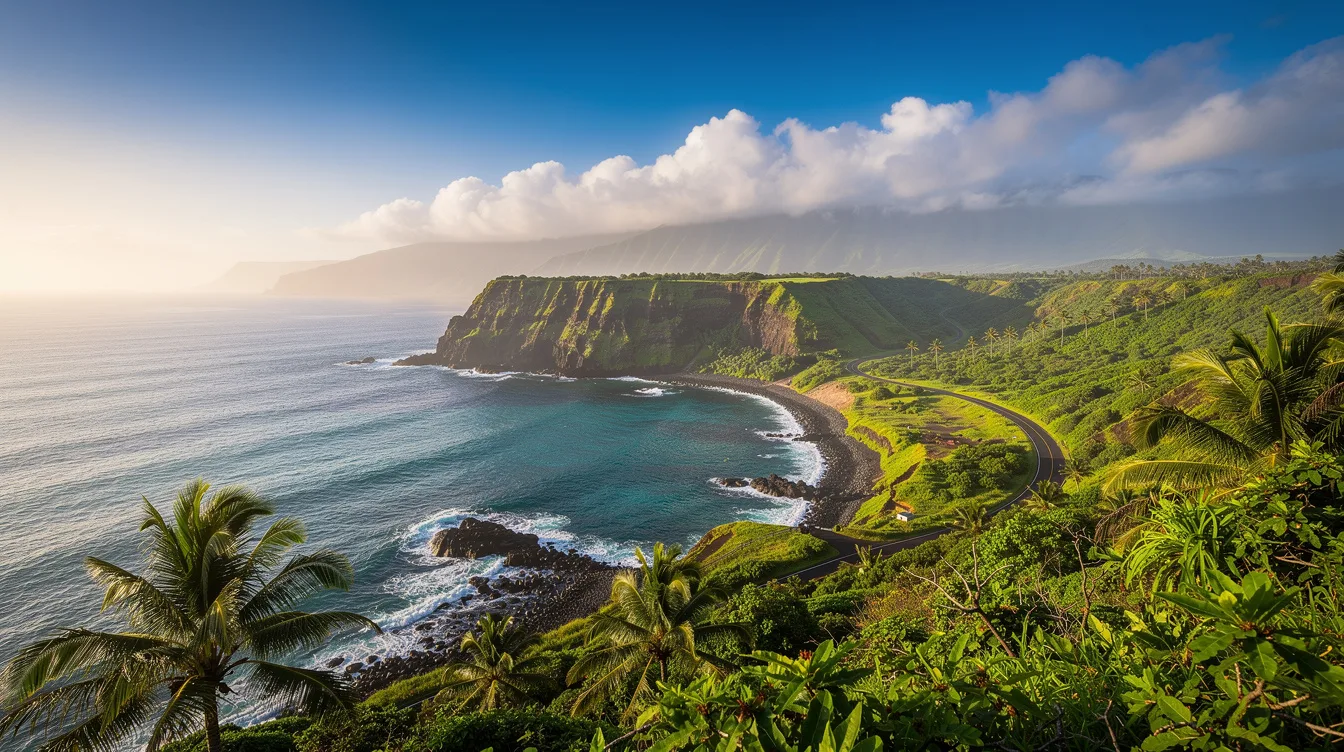
Hāna feels far away because getting there asks something of you. From Kahului, the Road to Hāna packs 620 curves and 59 narrow bridges into a route of about 52.2 miles.
That distance sounds manageable until the road starts folding through East Maui. Many bridges are one lane, so you slow down, wait your turn, and let the trip set its own pace.
The drive is the reason Hāna still feels separate
The Road to Hāna commonly takes 2 to 4 hours without stops, and that is the point. You can’t treat it like a quick transfer from Kahului, because every bend resets your view and every bridge interrupts your momentum.
And the route passes through wet forest, waterfalls, natural pools, ocean outlooks, and thick tropical vegetation. The air can feel damp and green after rain, while the road ahead disappears around another curve.
But this is not a drive for rushing. Heavy rain and landslides can affect roads and trails, so check conditions before leaving and accept that a planned stop may not work out.
Bring water, snacks, and fuel before you go. Services are limited in East Maui, which makes a little preparation feel less like logistics and more like good judgment.
Can you do Hāna as a day trip?
You can, but an out-and-back drive from West Maui in one day is tiring. If Hāna is the destination rather than a photo stop, staying overnight changes the experience, because you aren’t watching the clock through all those turns.
And that slower plan makes sense here. The road itself is part of the visit, but the town is where the constant motion finally gives way to a quieter coastal rhythm.
A small town after a very long approach
At the 2020 census, Hāna had 1,526 residents. It is a small community on Maui’s east coast, and its remoteness is practical rather than theatrical: the route in takes time.
That isolation gives Hāna a different feel from the busier parts of the island. It is rural, but not empty, and you should remember that people live here long after day-trippers turn back toward Kahului.
Respect private property, parking rules, and Hawaiian cultural sites. Those basics matter more in a small place, where one careless stop can make a road or access point harder for everyone else.
But don’t mistake quiet for a lack of things to do. Hāna Bay and Hāna Beach Park put you near the water, while the Hāna Cultural Center & Museum offers a more grounded way to spend part of the day.
Black sand and places that ask for time
Waiʻānapanapa State Park is known for its black-sand beach. The dark shore against the bright water is an immediate visual jolt, especially after hours of wet forest and narrow pavement.
And you should give the park room in your itinerary instead of squeezing it between hurried roadside stops. The stronger choice is fewer places, more time, and enough daylight to drive carefully afterward.
Kahanu Garden and the nearby Piʻilanihale Heiau bring another dimension to the area. The heiau is an important ancient Hawaiian temple, so this is not a backdrop for a rushed visit.
Farther south, Kīpahulu is known for tropical scenery and hiking. Trails can be affected by weather, though, and the honest approach is to treat access as conditional rather than guaranteed.
How to make the road feel worth it
Start early, drive slowly, and leave margin for pauses. You will not conquer this road by collecting every viewpoint, and I think travelers enjoy Hāna more when they stop trying to win the itinerary.
And keep your expectations realistic. The drive may take longer than you hoped, rain may change the plan, and narrow bridges demand patience, but those limits are exactly why the destination still feels removed.
By the time you reach Hāna, the road noise has fallen away. The last curve opens toward the coast, and the humid air feels still for a moment.