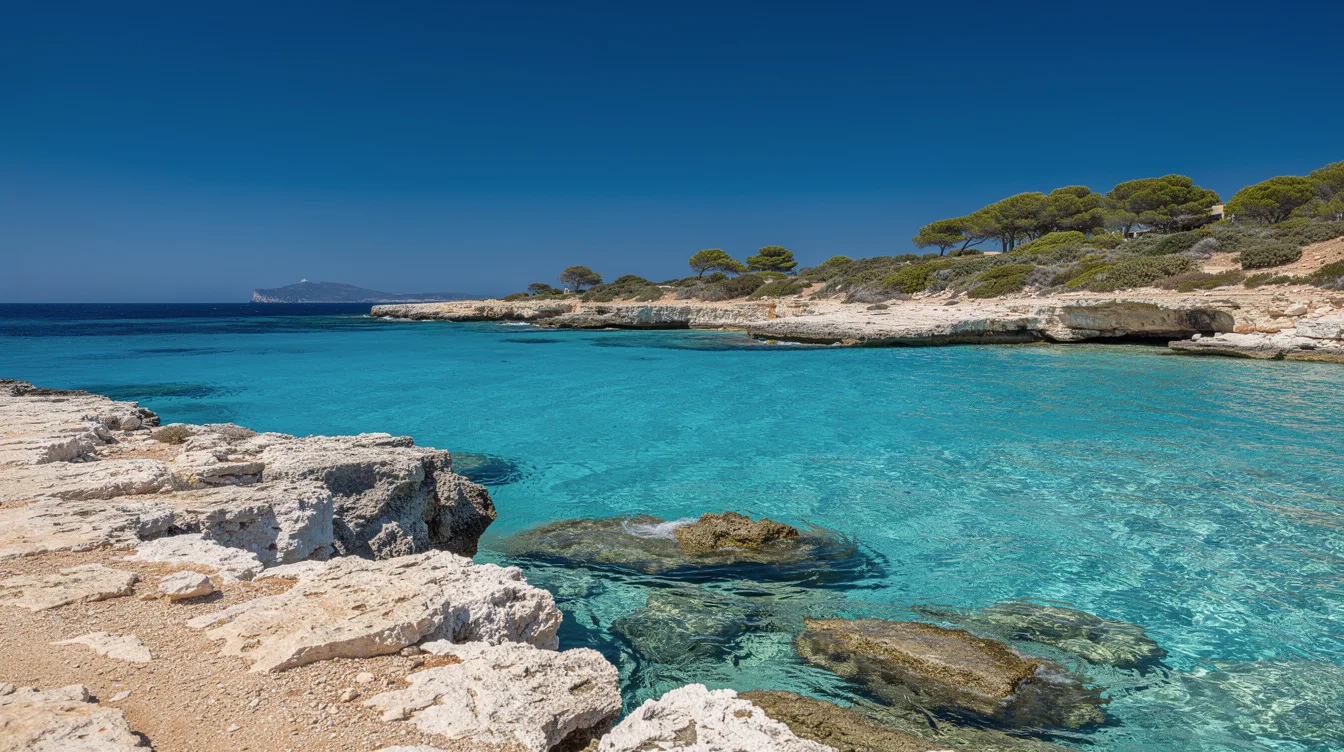
Formentera is the smallest of Spain’s four inhabited Balearic islands, and it has no airport. That absence changes the trip immediately: you arrive by ferry from Ibiza, then step into La Savina with the sea still in your ears.
The crossing takes about 30 minutes, yet it creates a useful break from Ibiza’s faster pace. You can see why people come for water that looks pale turquoise beside white sand, but this isn’t an empty island waiting to be discovered.
It’s popular, particularly with visitors coming over from Ibiza. But the ferry is also the filter, and that makes Formentera feel quieter once the day starts to thin out.
The ferry is part of the point
Formentera sits about 3.7 miles south of Ibiza, in Spain’s Balearic Islands. You reach the port of La Savina by boat, which means there’s no airport transfer, no runway noise, and no pretending this is a quick stop before somewhere else.
And that arrival has a small but real drama. The boat passes toward the narrow water near Espalmador, then La Savina appears low against the bright horizon.
You can book ferry tickets ahead, especially when demand rises. The island may be close to Ibiza, but relying on a last-minute plan is less charming when you’re standing at the port with luggage.
Can you visit as a day trip?
You can, because the crossing from Ibiza is short. But a day trip gives you only a glimpse of an island that is 11.8 miles long, and it tends to place you alongside the same excursion crowds you may have hoped to avoid.
Four or five days is a better first visit if you want beaches, villages, lighthouses, and time on the water without rushing. That’s the opinionated answer: Formentera rewards lingering more than checking off stops.
Its beaches have different moods
Ses Illetes is the name most visitors know, on the northern tongue of land with clear water and views toward Espalmador. It’s an easy place to understand at first sight, which is exactly why it can feel busy.
But walk toward Platja de Llevant on the other side of that same peninsula and the mood shifts. It feels wilder, with more open water and less of the see-and-be-seen atmosphere.
Cala Saona is a smaller bay for swimming and sunset, while Migjorn’s long sandy coast gives you more room to look for your own patch of shore. You won’t need every beach to be empty for the contrast to register.
The island is known for white sand and turquoise water, and those descriptions are accurate. Still, July and August are the expensive, crowded months, so even the clearest water comes with a trade-off.
Move slowly, because the island lets you
Formentera covers about 32.14 square miles, so its scale encourages bicycles, e-bikes, and scooters. Most of the island is flat, and dedicated cycle tracks make two wheels a sensible choice rather than a fitness project.
And you’ll notice more from a bike: salt flats, junipers, and pine woods away from the shore. The air can smell dry and resinous inland, then turn salty again when the road opens toward the coast.
Cars are available at the port, but vehicle access and numbers are regulated in high season. Don’t assume you can bring a rental car from Ibiza, because compact islands still have limits.
Sant Francesc Xavier, Sant Ferran, Es Pujols, Es Caló, and El Pilar de la Mola give the island its lived-in rhythm. Tourism is central here, but Catalan and Spanish remain the official languages, with English common in visitor businesses.
La Mola and Cap de Barbaria earn the detour
At the eastern end, La Mola brings a plateau, a lighthouse, panoramic roads, and an artisan market. You should go for the change in terrain as much as the view, since the island’s broad beaches can make its interior easy to overlook.
Cap de Barbaria lies to the southwest, where a lighthouse meets cliffs and dry ground. It’s spare rather than soft, and the wind can make the place feel more exposed than the sheltered swimming coves.
But don’t turn either lighthouse into a race against the clock. The pleasure is in reaching them after the beaches, when the light is lower and the island feels less like an extension of Ibiza.
Choose the shoulder season if you can
May and June, or September and October, are the recommended windows for swimming weather with fewer visitors. You’ll still want to reserve lodging, ferries, and a vehicle early, because Formentera is often priced at or above Ibiza.
And there are firm boundaries beneath the relaxed reputation. Wild camping, sleeping in a vehicle, and beach bivouacs are prohibited, so plan for proper accommodation instead of improvising.
The island isn’t cheap, and it isn’t anonymous in peak summer. By the time the last ferry pulls away from La Savina, though, the water goes quiet around the harbor and the slower version of Formentera returns.