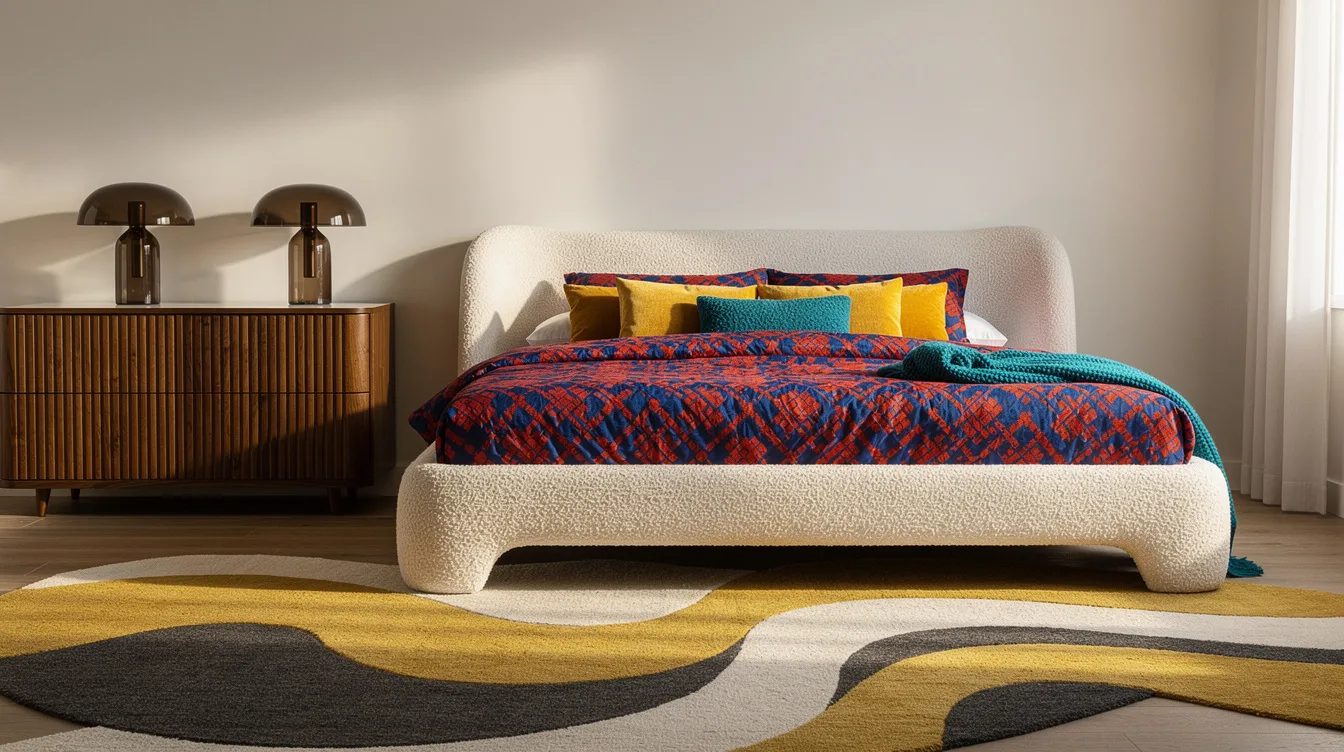
It seems straightforward: buy a curved bed, add a bright duvet, and call it retro. But a queen bed that stretches about 86 inches long can make a small bedroom feel crowded before the rug, dresser, and lighting even enter the picture.
The best retro bedrooms keep their largest shapes quiet and sculptural, then place the fun in surfaces you can swap when your taste changes. Think soft arches, fluting, and warm wood, with checks, florals, or waves doing the talking.
Choose One Sculptural Bed
A rounded bed should set the mood, then let the rest of the room breathe. A typical queen frame around 66 inches wide already takes up serious visual space, especially when its headboard is wrapped in bouclé or velvet.
Skip the matching curved bench, puffed chair, and cloud-shaped nightstand. One low arch or pebble-like bed, plus leaner wood pieces, gives the room that soft 1970s feeling without making it look inflated.
Keep Big Pieces Calm
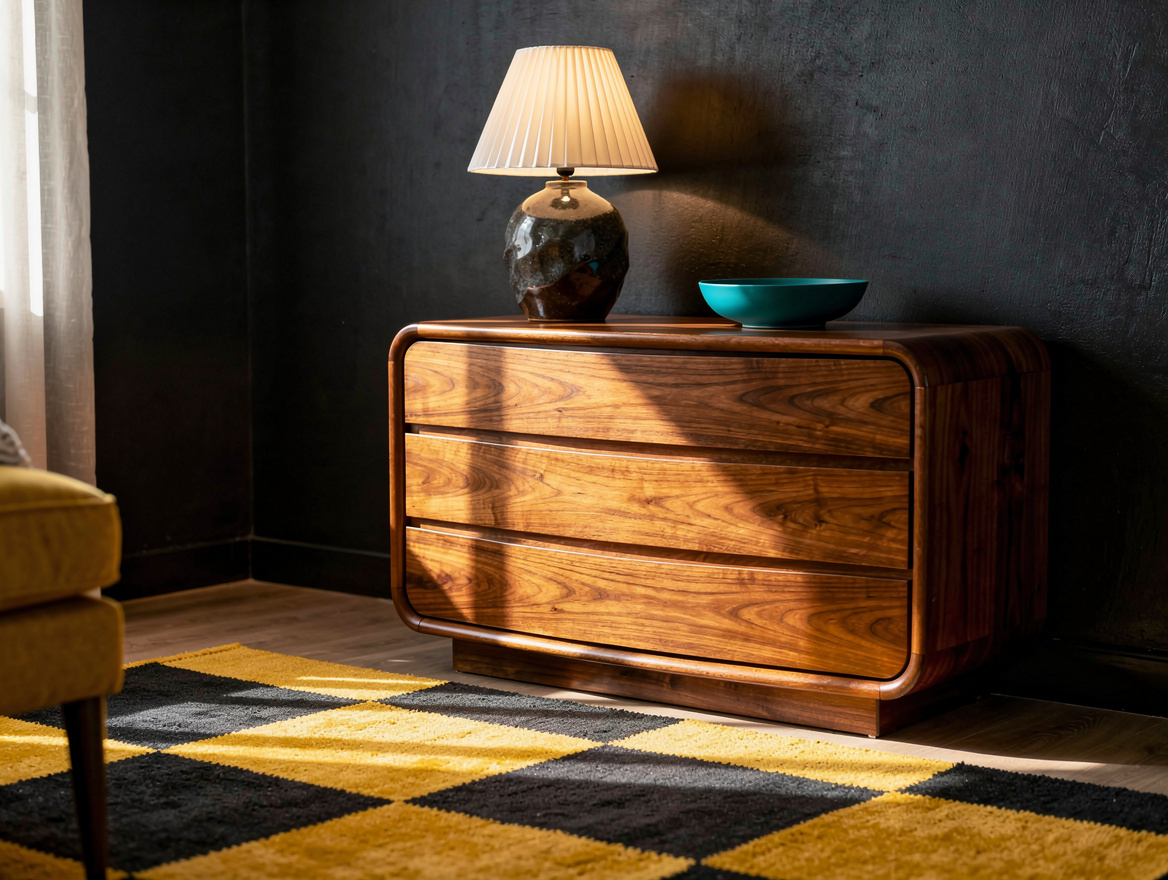
Put the drama where it can be changed cheaply: bedding, a shade, or one wall. A walnut dresser with a gently bowed front is far easier to live with than a room filled with novelty-shaped furniture.
Look for a slim curved-front storage piece at Wayfair or Amazon, and check depth before falling for the silhouette. Around 16 to 18 inches deep is often more forgiving beside a bed than a bulky dresser that narrows the walking path.
Build Pattern in Three Scales
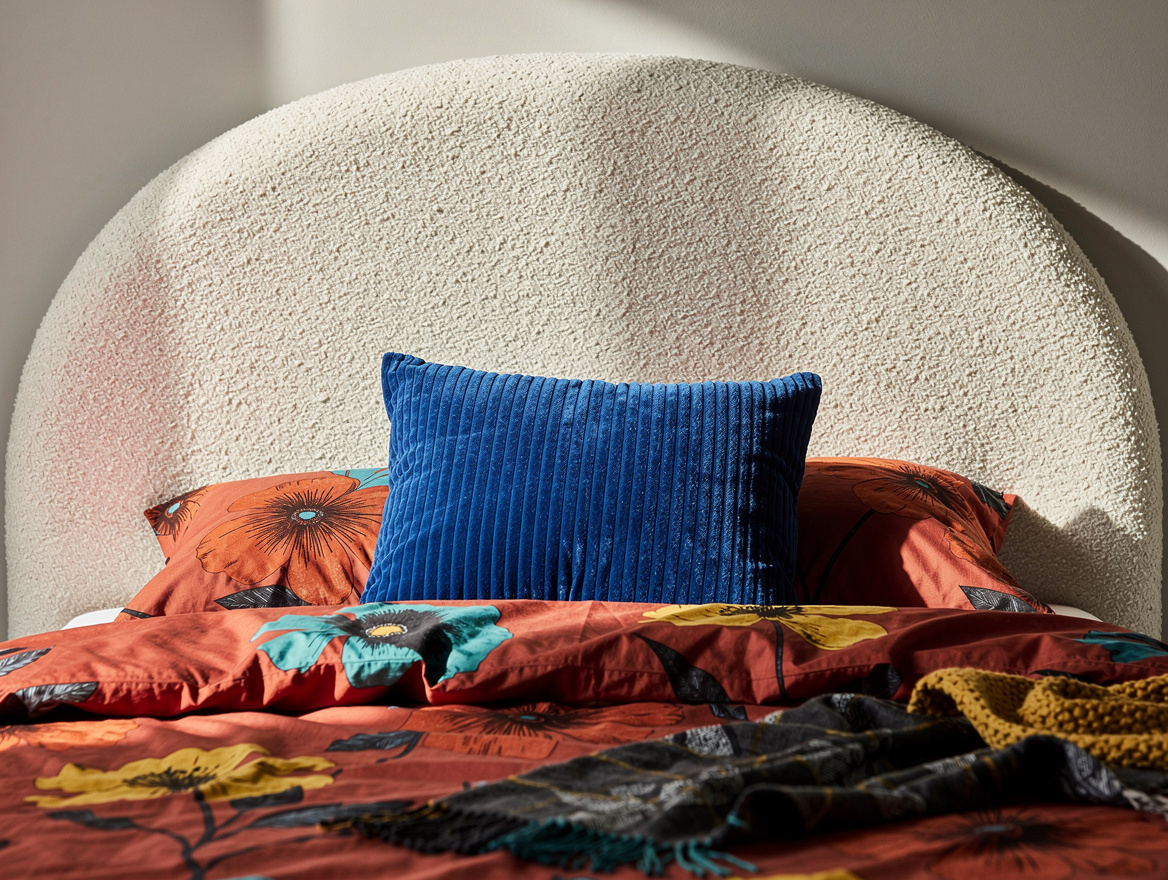
Playful pattern needs hierarchy. Start with one large-scale move, such as a wavy wool-blend rug or broad stripe, then add a medium-print duvet and a tiny repeat on a cushion or lampshade.
Don’t scatter five equal-sized prints across the room. An oversized floral, a checked cotton duvet cover, and one small striped shade have enough tension to feel lively while the eye still knows where to land.
Limit the Color Story
Retro rooms turn costume-y when every color gets invited. Choose roughly three or four tones, then repeat them with intention: cream, walnut, tomato red, and cobalt make a crisp, warm mix.
For a quieter version, try chocolate, butter yellow, olive, and lilac. A cobalt ceramic lamp can carry the brightest note, while cream linen curtains keep daylight from competing with the pattern.
Mix Eras With Restraint
A retro bedroom works best when it feels collected over time. Pair a curvy 1970s-inspired bed with a simpler mid-century-style wood nightstand and current floral bedding from Target.
Avoid buying a full themed suite in one finish and one decade. The tension between a fluted dresser, a plain metal reading lamp, and contemporary print bedding makes the room feel personal instead of stage-set.
Warm Up the Lighting
Cool overhead light flattens every good curve in the room. Use two bedside lamps with warm bulbs, and let one material add a little period character, such as smoked glass, pleated fabric, or a mushroom-shaped shade.
An approximately $39 IKEA SINNERLIG lantern can add texture near a reading chair or low dresser, but don’t rely on it as task lighting. Your bed needs focused light for reading, while the lantern earns its keep as atmosphere.
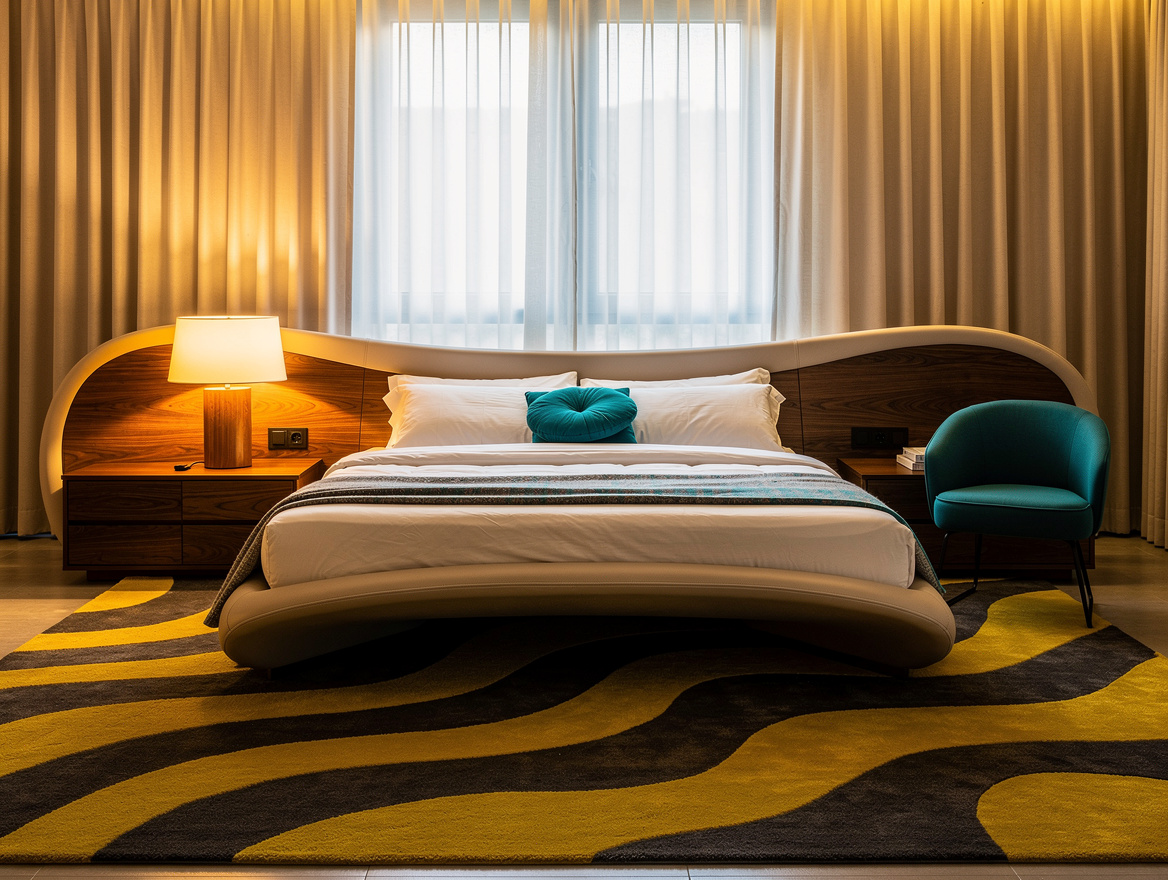
Start with the bed and measure the clear path around it before buying a single patterned accessory. Once the largest curve has room to read, add one bold textile and stop there for a week, the room will tell you what it still needs.
Mia Carter writes about small-space living and budget home makeovers. She has restyled three rentals and tests most ideas in her own 45 sqm flat.