
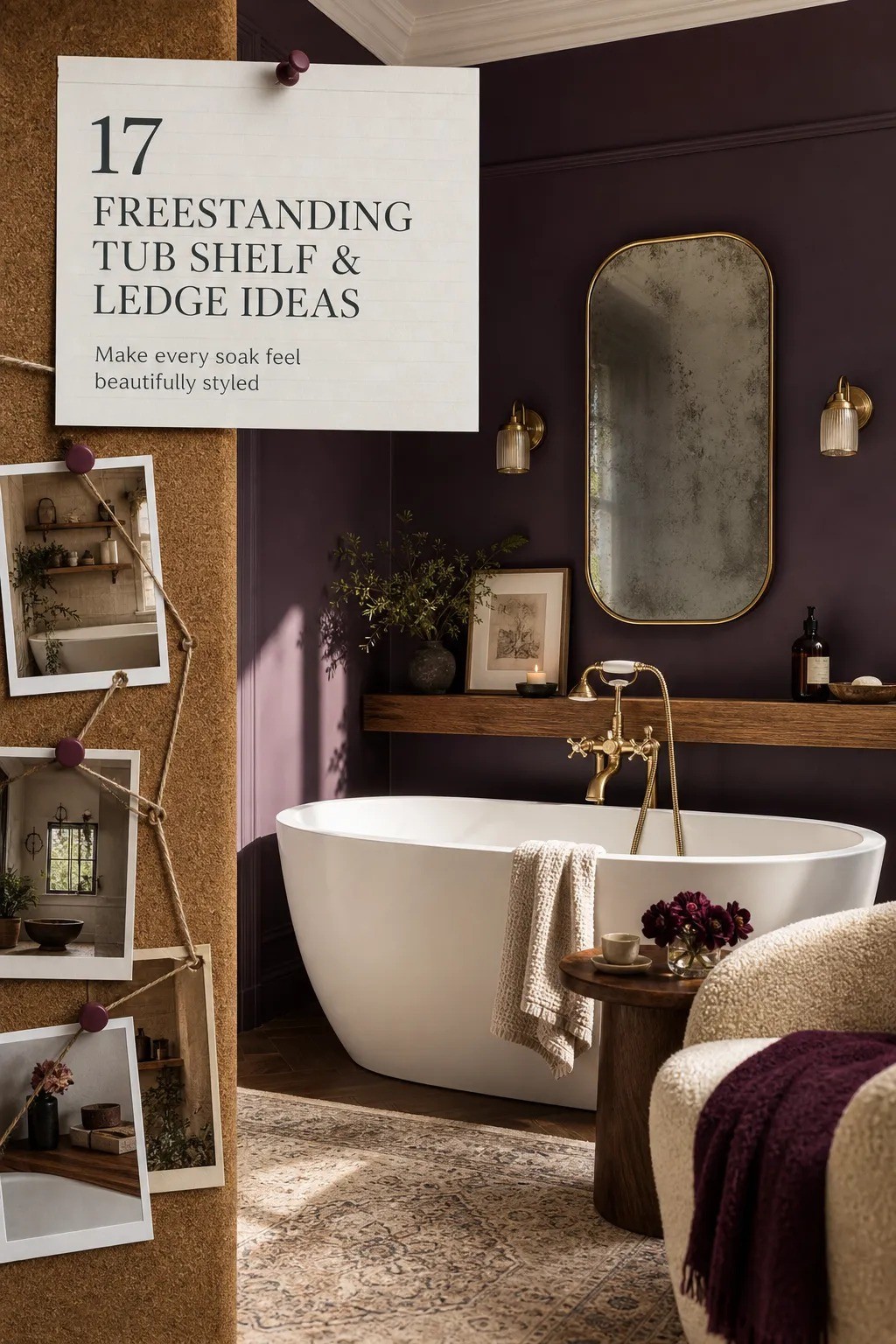
Freestanding tub shelf and ledge ideas work best when they hold the few things you reach for every bath: a towel, water, soap, and a book. I once treated mine like a tiny showroom, then knocked a candle into the tub. Less styling theater, more useful comfort. That’s the whole point!
- Float a slim oak board behind the tub (The Reach-Back Rule)
- Layer a tray across the rim for an easy bath-night setup
- Build The Two-Wood Rule beside a white tub
- Can a rolling cart beat bathroom tub shelves?
- Hang a picture ledge where splashes can’t reach
- Skip the built-in niche and use a stone pedestal
- Paint the shelf wall instead of adding more objects
- Use a ladder shelf only where your floor plan has breathing room
- Make The Three-Height Light Stack earn its place
- Frame the tub with a ledge and one oversized art piece
- Choose linen bins over exposed product rows
- Try a wall-to-wall ledge in a narrow alcove
- Put a vintage stool to work, not on display
- Why choose brass over matte black near the bath?
- Mix closed storage with one visible shelf (The Quiet Utility Method)
- Let a painted stool carry the color near your tub
- Budget the room before you buy another bath accessory
1Float a slim oak board behind the tub (The Reach-Back Rule)
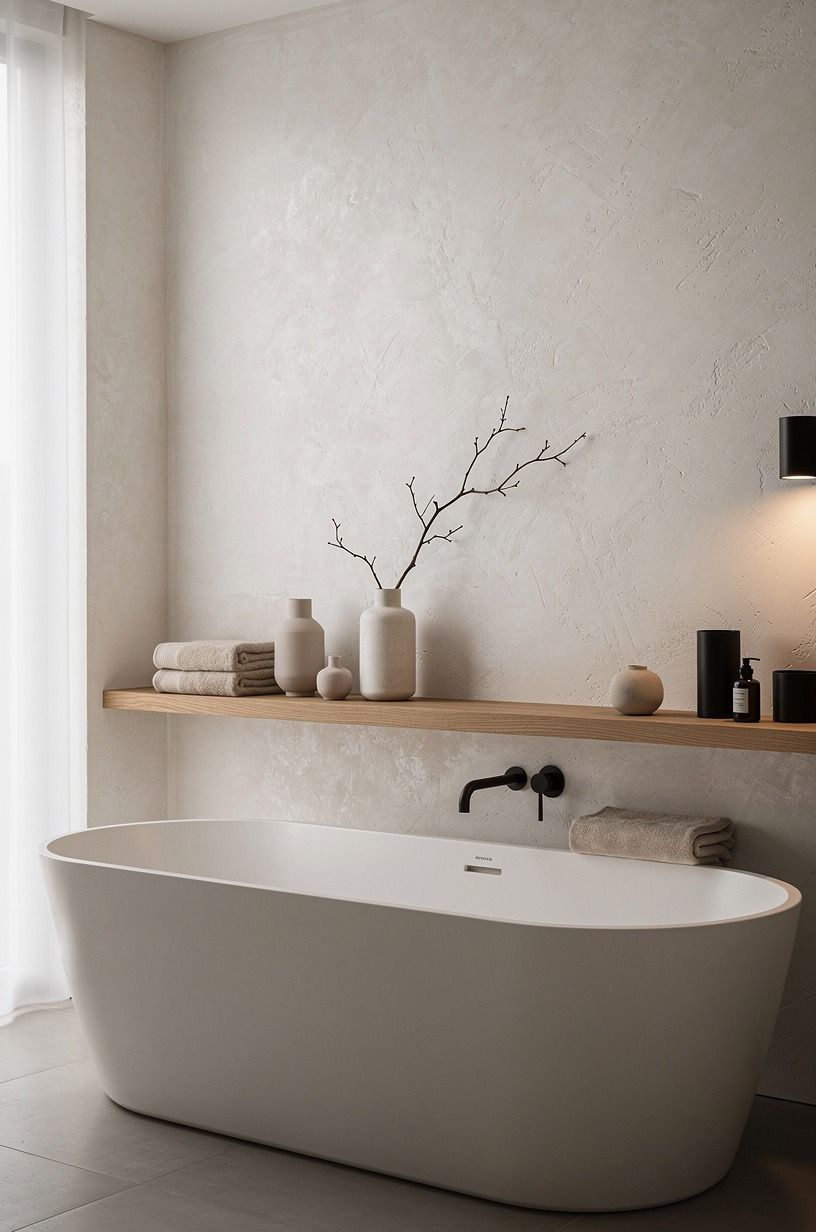
Set a 3/4-inch solid white oak board on the wall behind your tub, high enough that you can reach it without twisting. You’ll get a quiet landing zone for a glass, bath salts, and the one candle you’ll use, while your floor stays open and easy to clean.
I’d skip a deep shelf here. It collects clutter fast, and your freestanding tub with shelf starts looking like a pharmacy counter.
A narrow board feels warm, calm, and intentional against hand-applied Venetian plaster with warm white, camel, and black accents. If your bathroom is tight, borrow spacing ideas from this small-room layout guide.
2Layer a tray across the rim for an easy bath-night setup
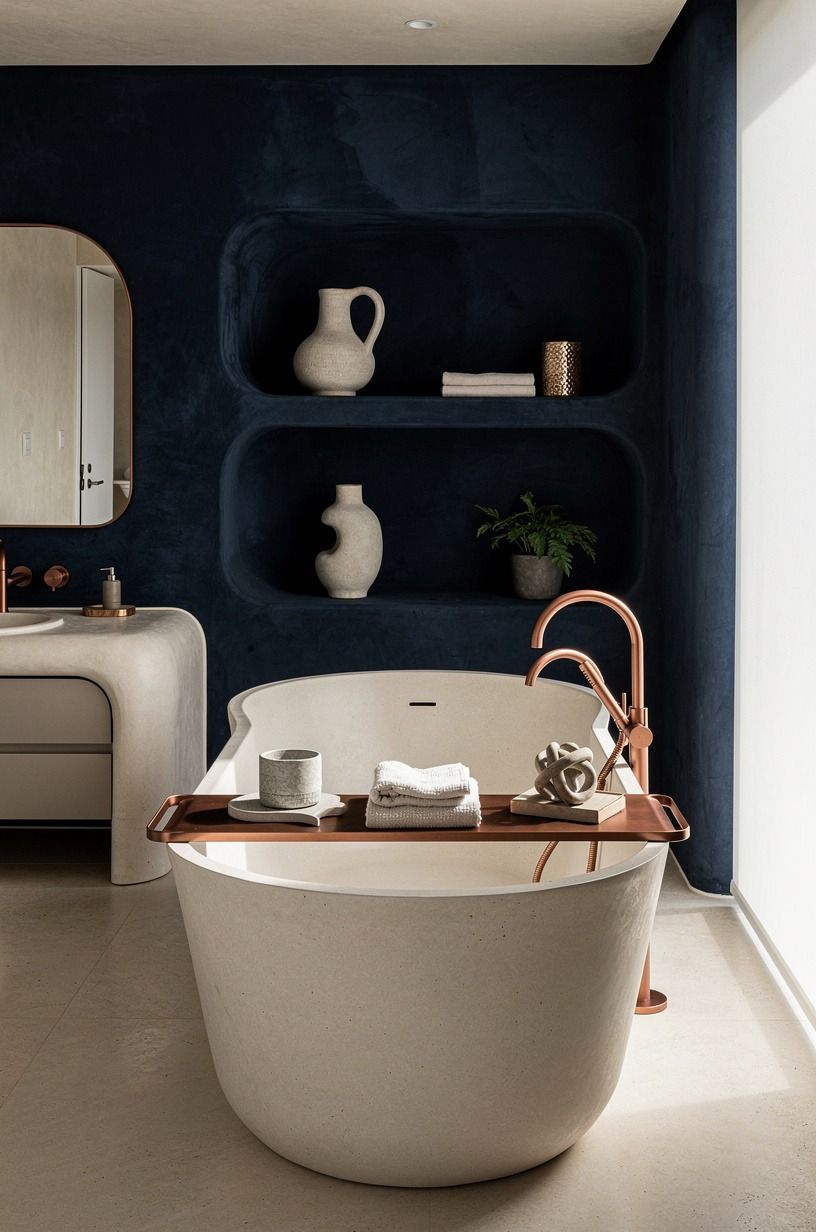
A teak bathtub caddy gives your hands a place to put what matters without committing to built-ins. Let midnight blue, copper, and ivory guide the few things you leave out, and add a small shagreen tray for a little texture.
3Build The Two-Wood Rule beside a white tub
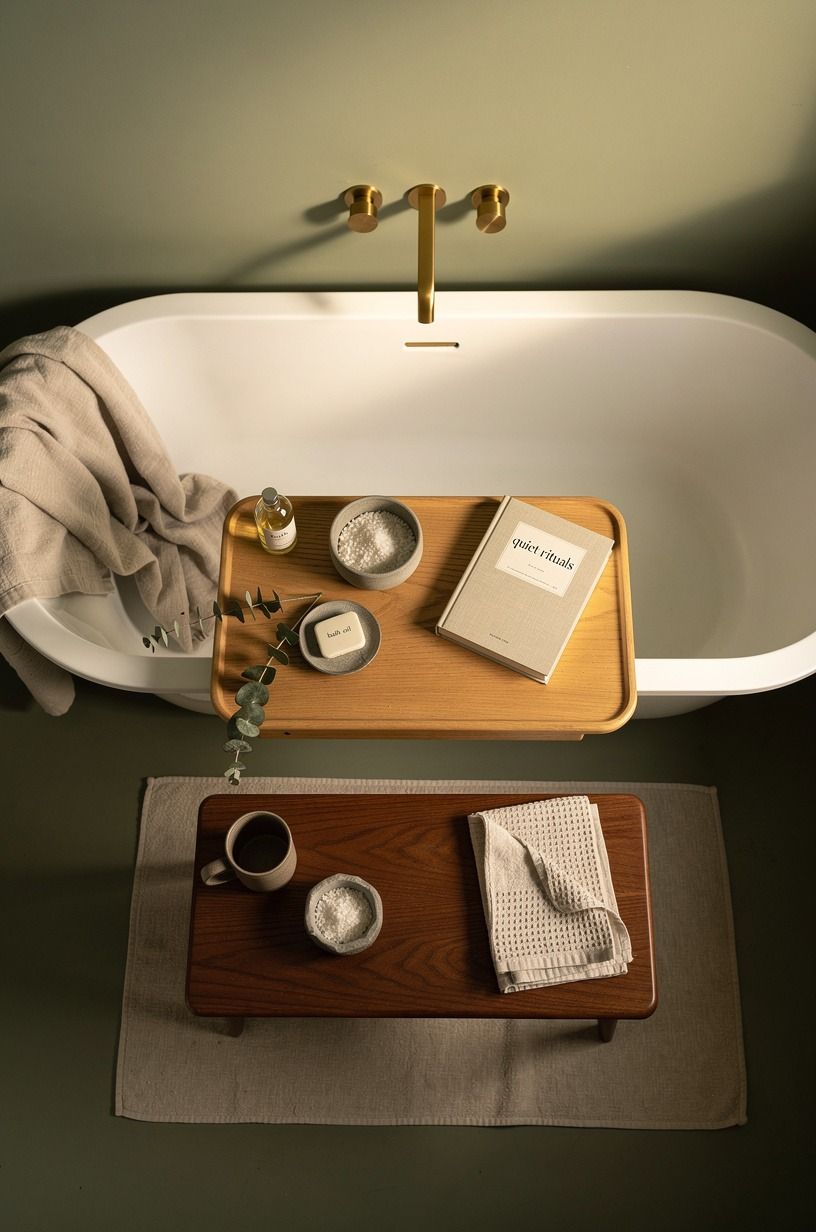
Use two wood tones only: one for the shelf and one for a stool. A West Elm Anton solid mango wood stool beside a pale oak ledge gives your bathroom texture without turning it rustic by accident.
You’ll want the woods to share an undertone. Pale ash and orange honey oak fight each other, especially under bright vanity lights.
I’d choose a sage-green wall, warm cream textiles, and washed Belgian linen over glossy walnut here because the mix feels soft without looking heavy. Small change. Big relief!
4Can a rolling cart beat bathroom tub shelves?
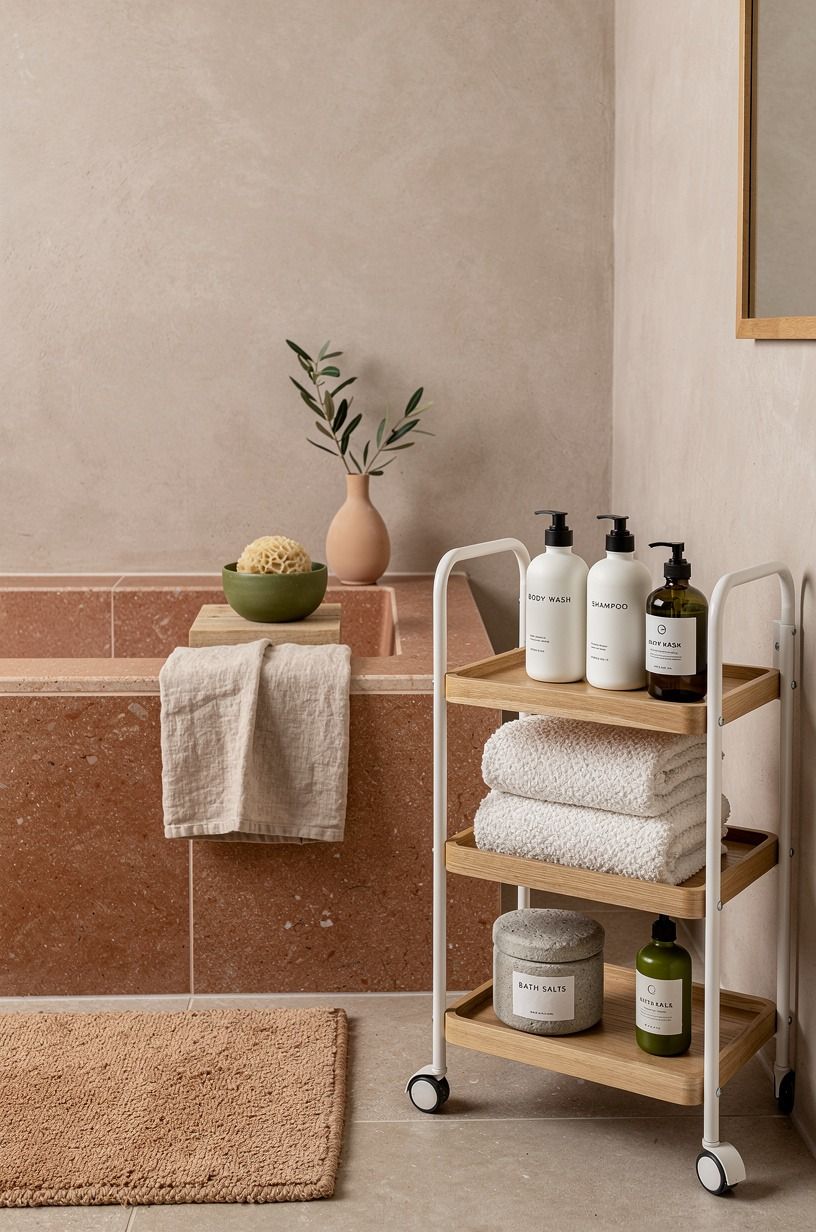
Yes, if you need storage that moves with your routine. A narrow IKEA RÅSKOG utility cart can sit beside your tub for bath towels, lotions, and a little basket of hair ties, then roll away when you’re cleaning.
Your cart needs a brake and a low profile, though. Don’t buy a towering metal unit that blocks the tub silhouette.
Use the bottom tier for backup supplies and keep the top shelf restrained. Terracotta, stone, olive, and one organic bouclé basket keep it from feeling utilitarian.
You can even pull color cues from this piece about noticing the quiet details, because the best bath corners reward a second look.
5Hang a picture ledge where splashes can’t reach
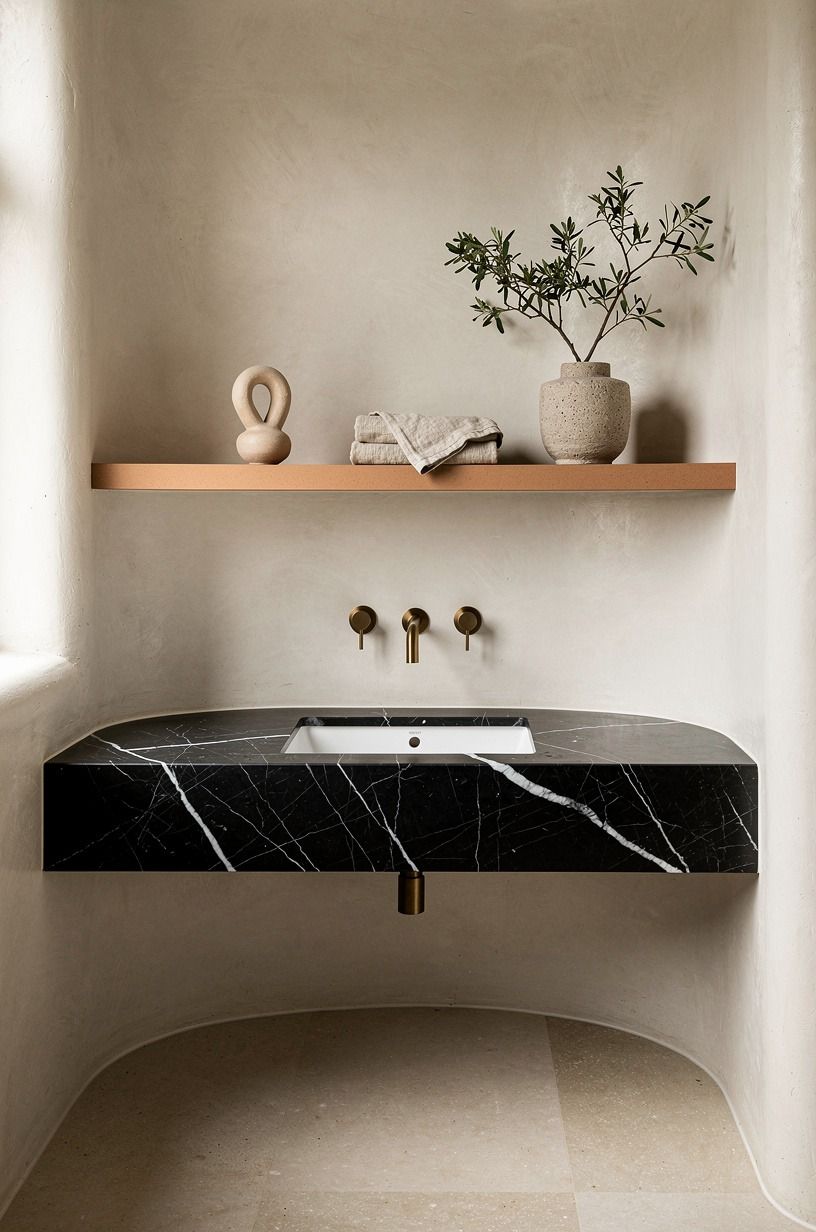
A IKEA MOSSLANDA picture ledge works beautifully behind a tub when your wall is dry enough for it. Keep it above the splash zone and let it hold a small framed print, a lidded jar, and a trailing faux stem if your bathroom has no window.
You don’t need every surface to work hard. This one earns its spot by giving your eye somewhere to land. Pair clay, linen, and aged brass with Nero Marquina black marble accents, and the white tub reads cleaner while the ledge feels gentle instead of fussy.
6Skip the built-in niche and use a stone pedestal
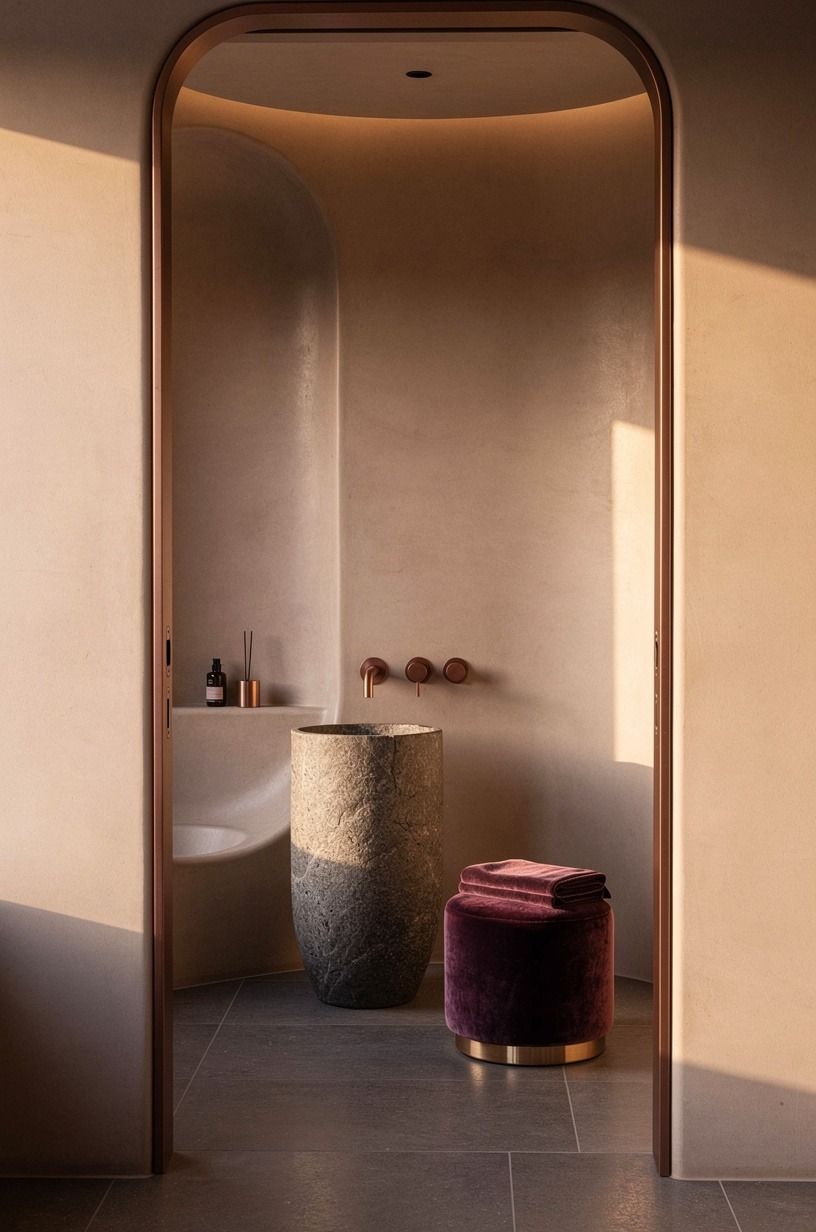
A squat stone pedestal gives you a ledge without drilling into tile. Place it close enough to reach from the water, but leave a clear path around it so you don’t clip your shin on the way out.
I made the mistake of choosing a tall pedestal once. It looked elegant until the first wet towel slid off it.
Low and broad wins every time. With plum, grey, rose gold, and deep-pile mohair velvet nearby, your bottle of bubble bath, a ribbed tumbler, and a dry brush are plenty.
7Paint the shelf wall instead of adding more objects
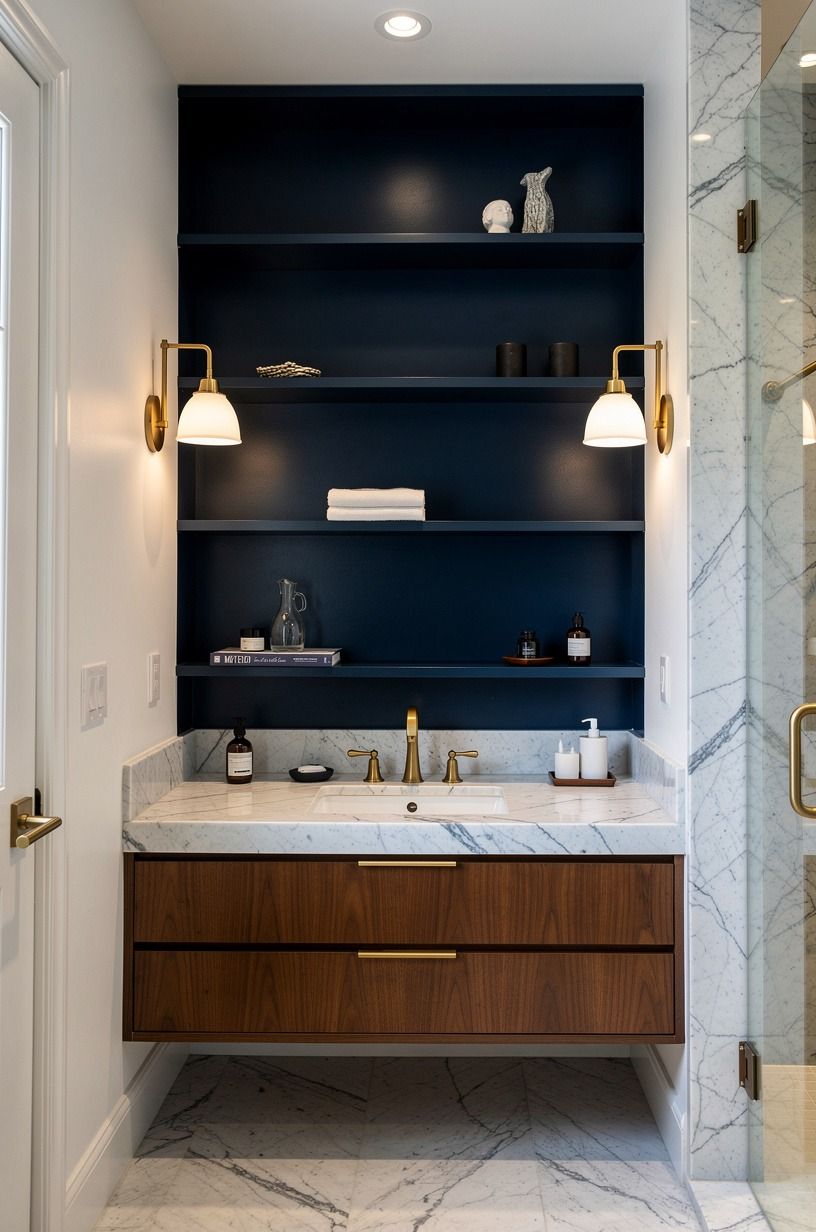
A shelf by freestanding tub doesn’t have to be the visual star. Paint the wall behind it in Farrow & Ball Hague Blue No. 30, then install one simple shelf in a pale finish. The dark field makes even a plain white bottle look considered.
You’ll see the water surface reflect the color at night, which is more dramatic than a crowded ledge. I’d pair the navy, white, and walnut scheme with Carrara marble rather than add more objects. It stays moody and grounded.
8Use a ladder shelf only where your floor plan has breathing room
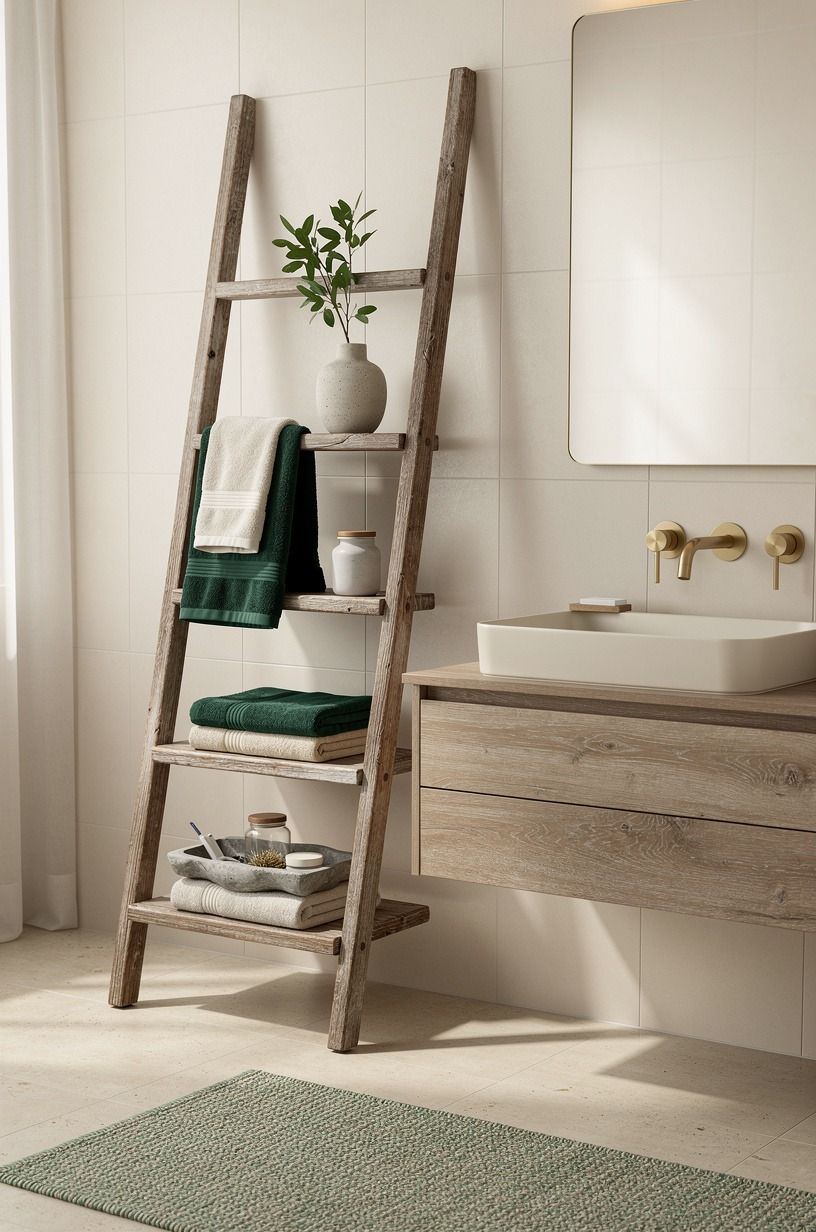
A Target Threshold leaning ladder shelf can work beside a tub if you have room to walk around it comfortably. Give yourself the same respect you’d give a toilet zone: keep at least 21 in clear in front of fixtures, and don’t force furniture into the escape route.
Your lower shelves can hold rolled towels in a woven bin. The upper ones are for a plant, a framed photo, and nothing fragile.
Emerald, gold, cream, and reclaimed weathered teak make the arrangement feel settled. And if it feels crowded, it is crowded.
Remove it. A peaceful bathroom needs air.
9Make The Three-Height Light Stack earn its place
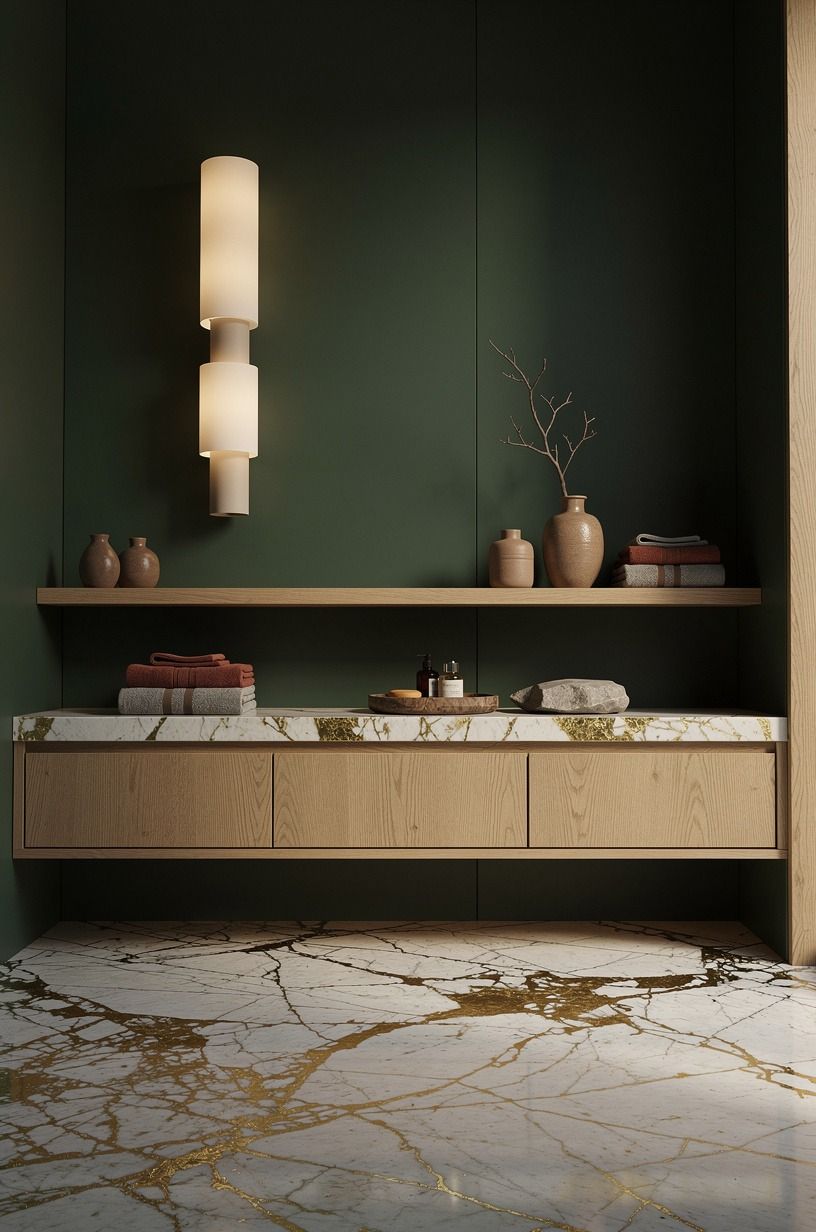
Pair a low candle, a medium lamp, and a higher sconce near your free standing tub shelf ideas. Forest green, rust, natural oak, and a Calacatta marble detail with gold veining give the three levels enough warmth to feel intentional.
10Frame the tub with a ledge and one oversized art piece
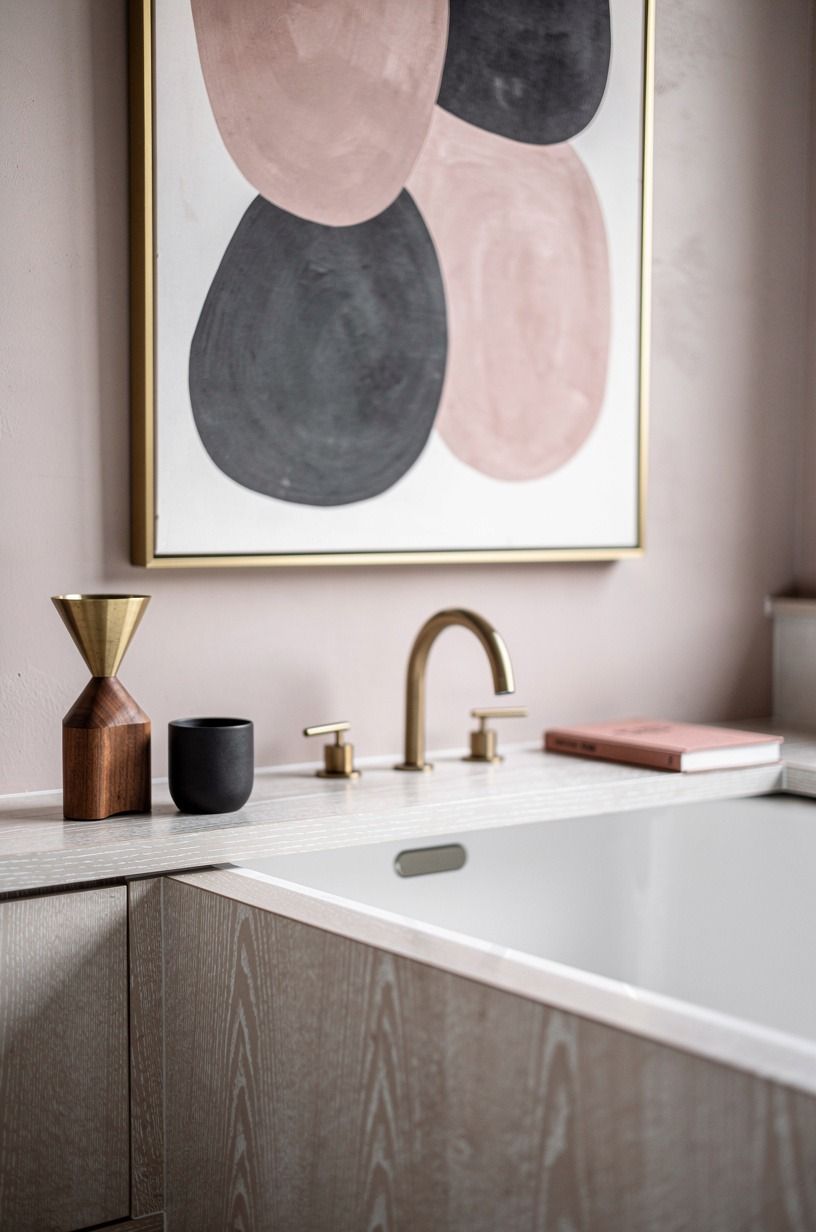
Use a thin ledge to support one large framed print instead of making a gallery wall. A CB2 black oak gallery frame above a shelf creates a clean vertical line, and you can change the print whenever your taste shifts.
Your art should be larger than you think. A timid 8×10 gets swallowed by a freestanding tub; one generous piece makes the corner feel settled.
Dusty rose, charcoal, brass, and cerused white oak keep the arrangement from feeling too severe. I’d skip word art.
The bath already tells you to relax, and it doesn’t need a sign yelling it.
11Choose linen bins over exposed product rows
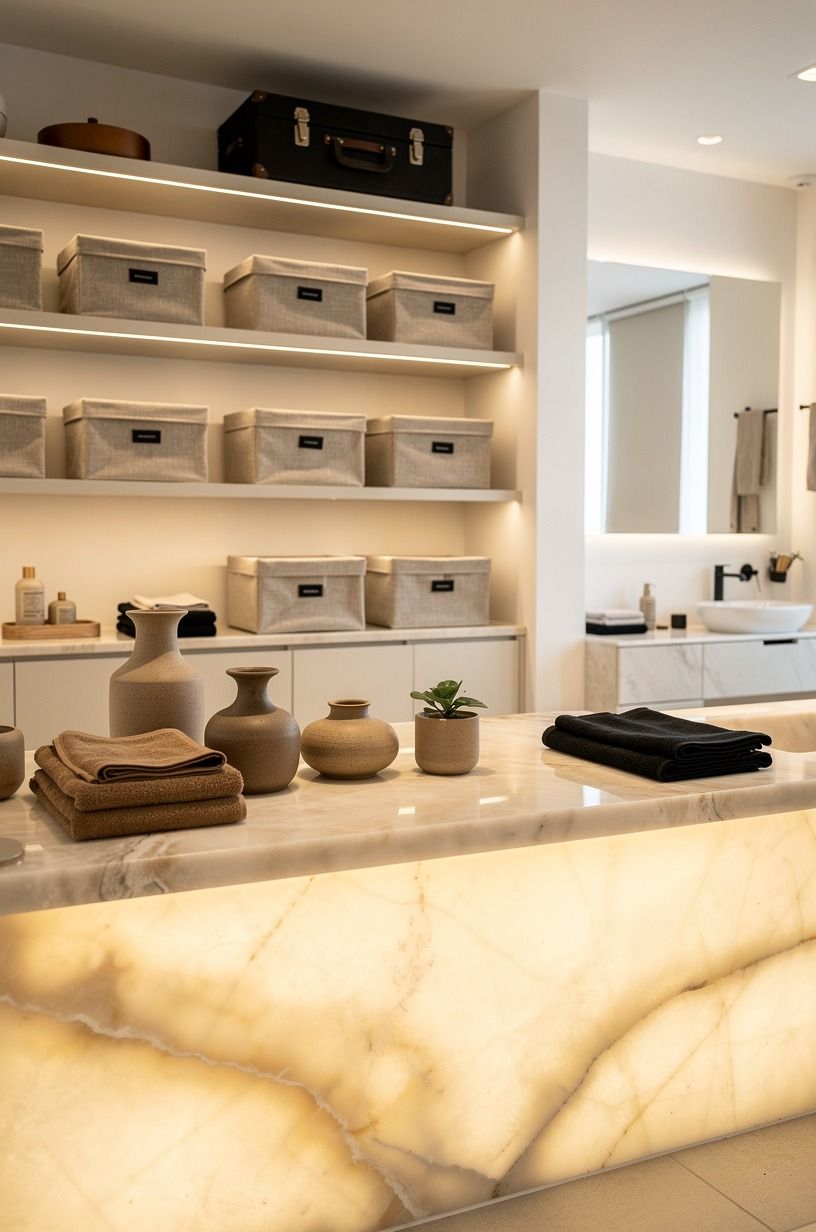
Open shelves look good for about twelve minutes if every bottle stays visible. Use linen bins for backup soap, cleaning cloths, and the less charming stuff you don’t want in every photo.
You can leave one amber bottle out, maybe two. Everything else belongs in a bin with a lid or a soft basket.
Warm white, camel, black, and backlit translucent onyx give the corner quiet texture. That’s not hiding your life. It’s making your daily routine less noisy.
For more practical choices, this article on what really gets delivered is oddly useful inspiration: buy less, choose better, know what you’ll use.
12Try a wall-to-wall ledge in a narrow alcove
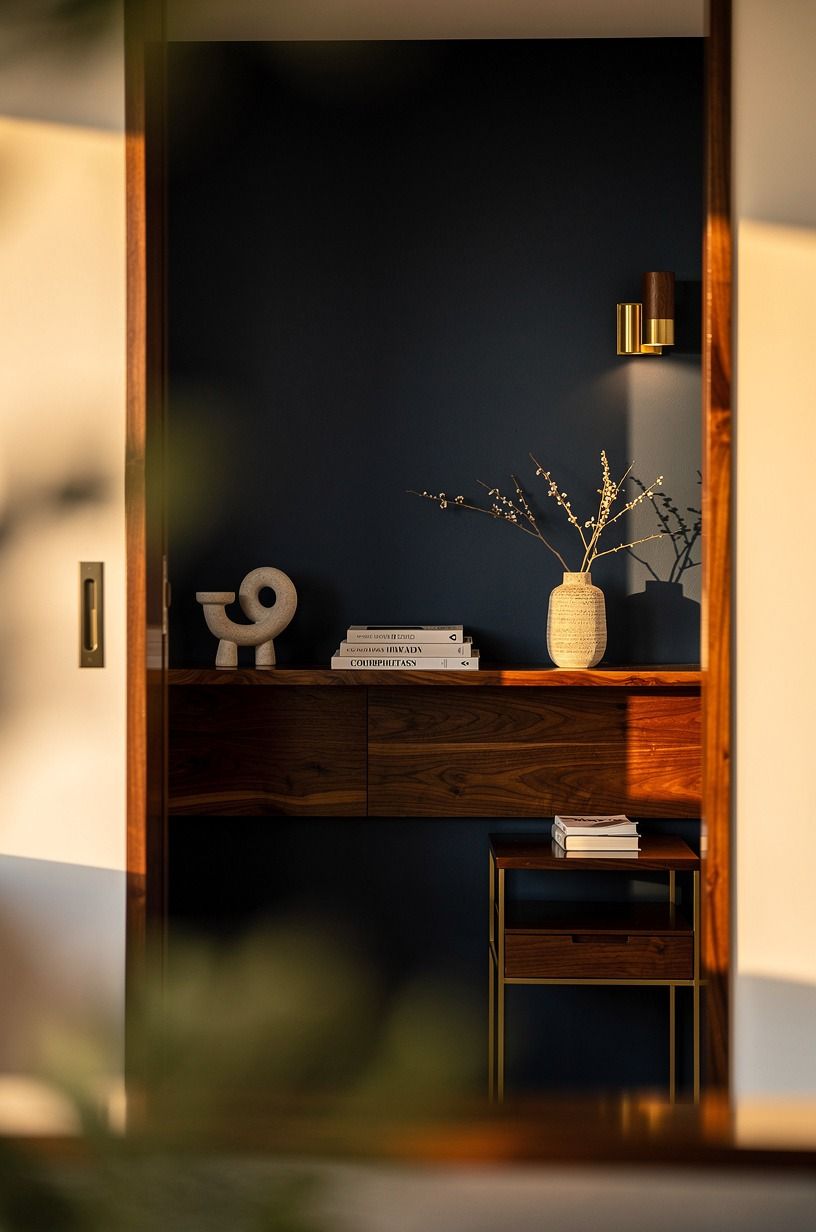
If your tub sits in an alcove, run one shelf from wall to wall behind it. A book-matched walnut ledge looks custom but doesn’t need to be thick. Keep its depth shallow so you can still clean around the faucet.
You’ll gain a proper spot for a towel, body oil, and a small speaker. I’d choose a continuous ledge over two tiny floating shelves, because broken-up pieces make a narrow room feel busier. Midnight blue, copper, and ivory make one line feel much calmer.
13Put a vintage stool to work, not on display
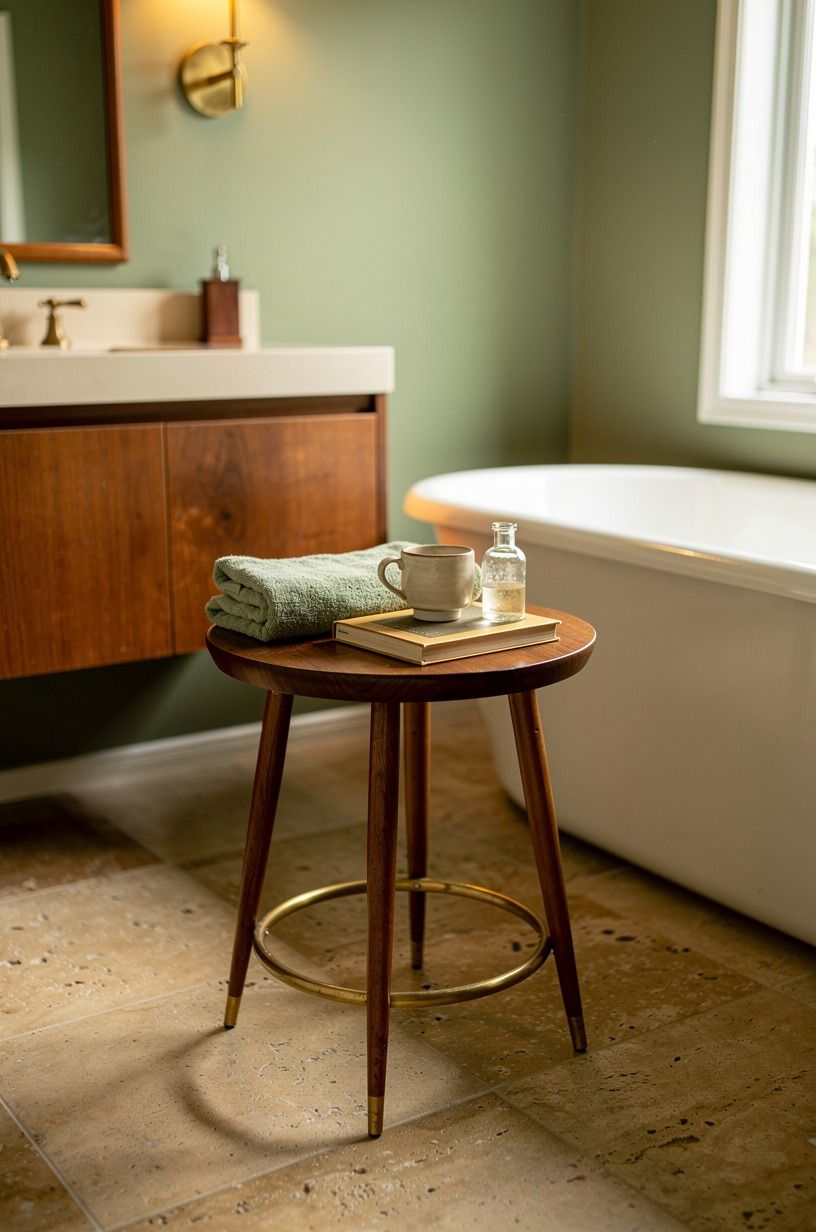
A worn stool beside the tub is charming only if it holds something you’ll use. A warm travertine surface beside sage green, warm cream, and natural wood gives you a sturdy place for a folded towel or glass of water.
14Why choose brass over matte black near the bath?
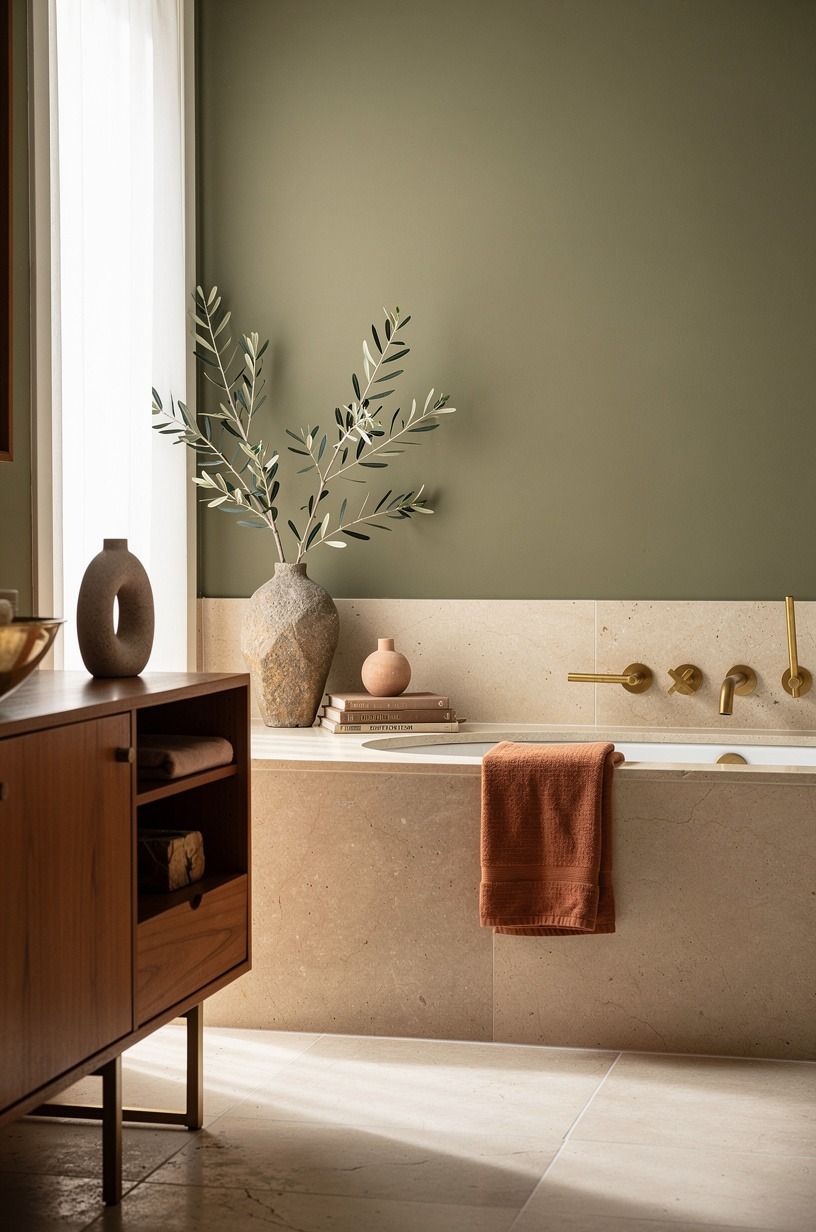
Choose brass if your bathroom needs warmth. A brushed brass faucet typically runs $120-$450, and its soft gold tone plays well with white towels, sea-glass paint, and natural wood. Matte black is tidy, sure, but it can look severe beside a deep soaking tub.
You’ll want a finish that changes gently in steam and low light. Unlacquered brass developing soft patina does that better than polished chrome, which can feel sharp by comparison. Let terracotta, stone, and olive keep the choice grounded.
If you rent, use brass trays and hooks before replacing plumbing.
15Mix closed storage with one visible shelf (The Quiet Utility Method)
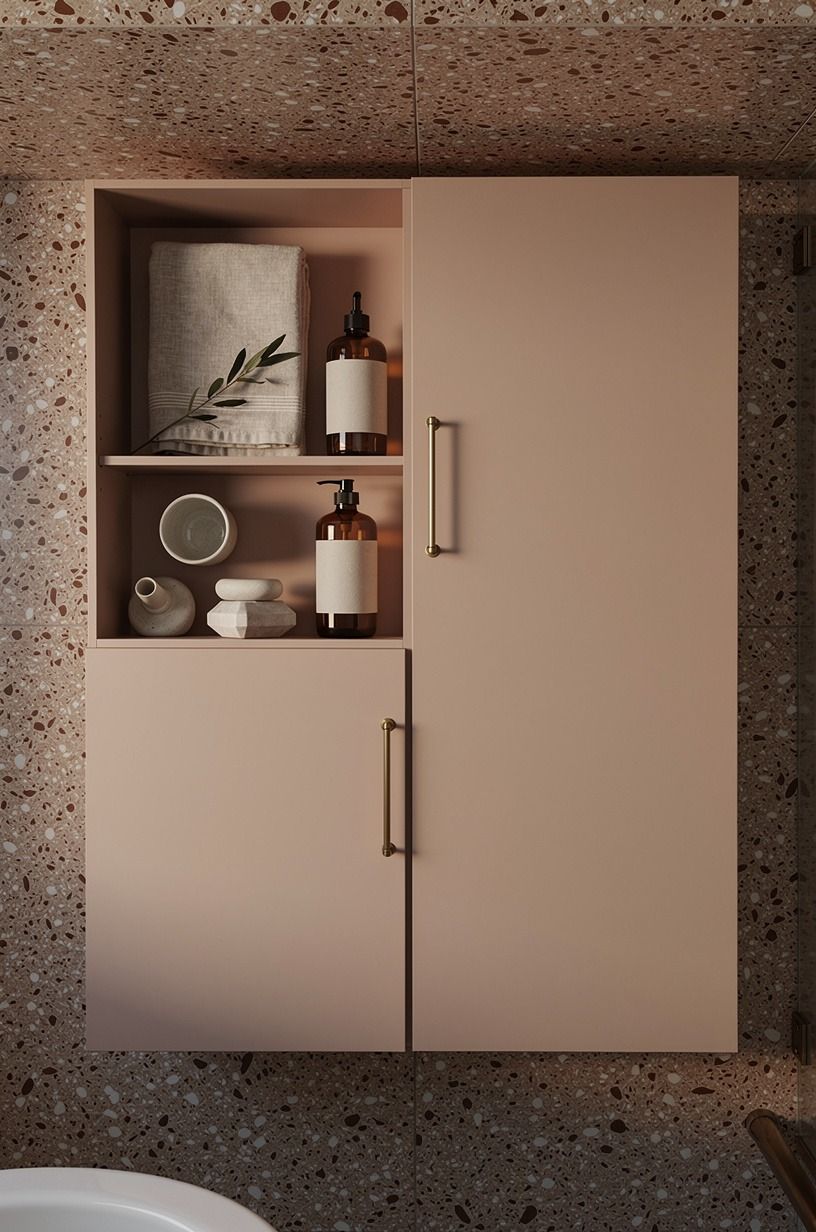
Give yourself one open shelf for the pretty essentials, then hide the rest behind cabinet doors or inside baskets. A IKEA HEMNES wall cabinet paired with one oak ledge lets your bathroom stay functional without looking stripped bare.
You can keep your visible shelf to three things: a towel, a candle, and a small stone dish. Oversized-chip terrazzo, clay, linen, and aged brass add texture without adding clutter.
That’s enough. I’ve tried the fully open version, and it asks you to tidy every morning. Your bathroom shouldn’t assign homework before coffee.
16Let a painted stool carry the color near your tub
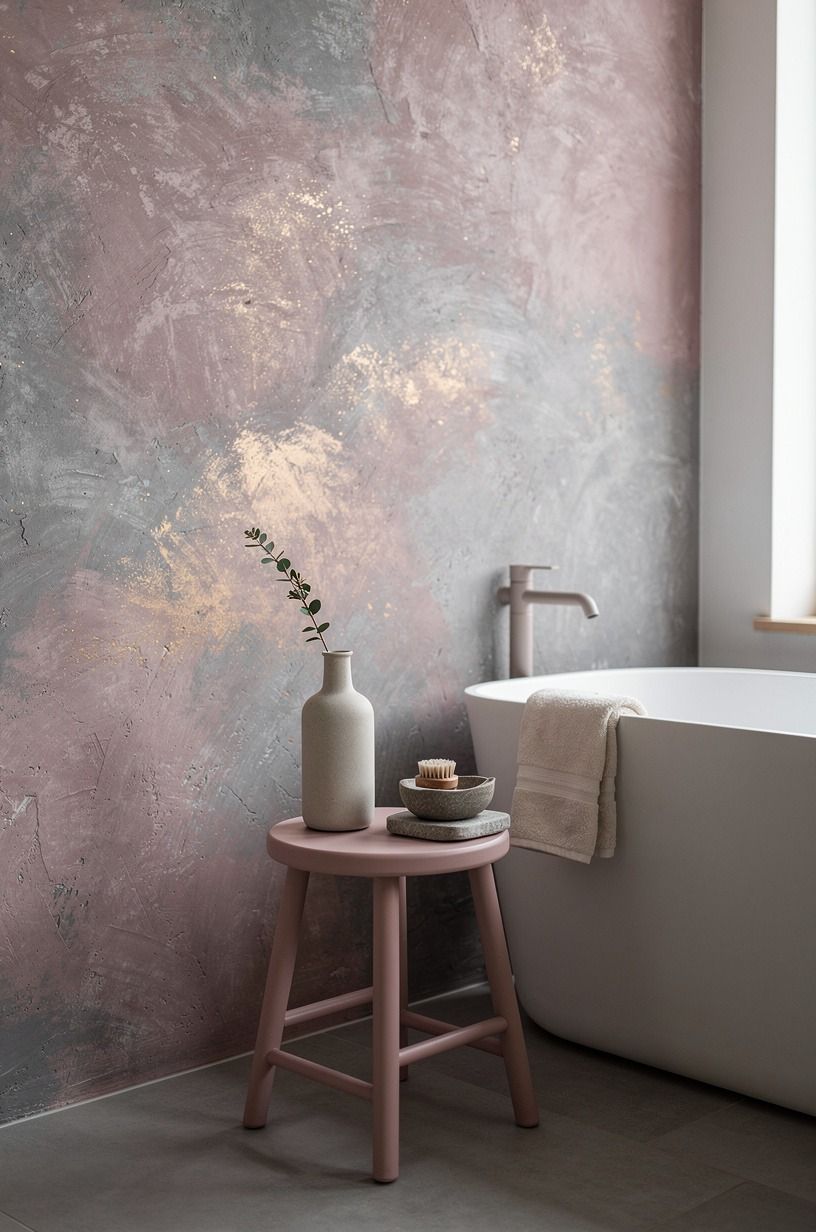
A shelf doesn’t have to provide every note of color. Paint a small stool in Benjamin Moore Chestertown Buff HC-9 and keep the tub ledge pale. The buttery ochre makes white tile feel more inviting, especially in a north-facing room.
You’ll get a bold focal point without committing to a whole painted wall. Venetian plaster, plum, grey, and rose gold give the corner richness without relying on mustard towels, which fade fast and often look dingy after a few washes. A painted stool can be redone when you’re ready for something else.
17Budget the room before you buy another bath accessory
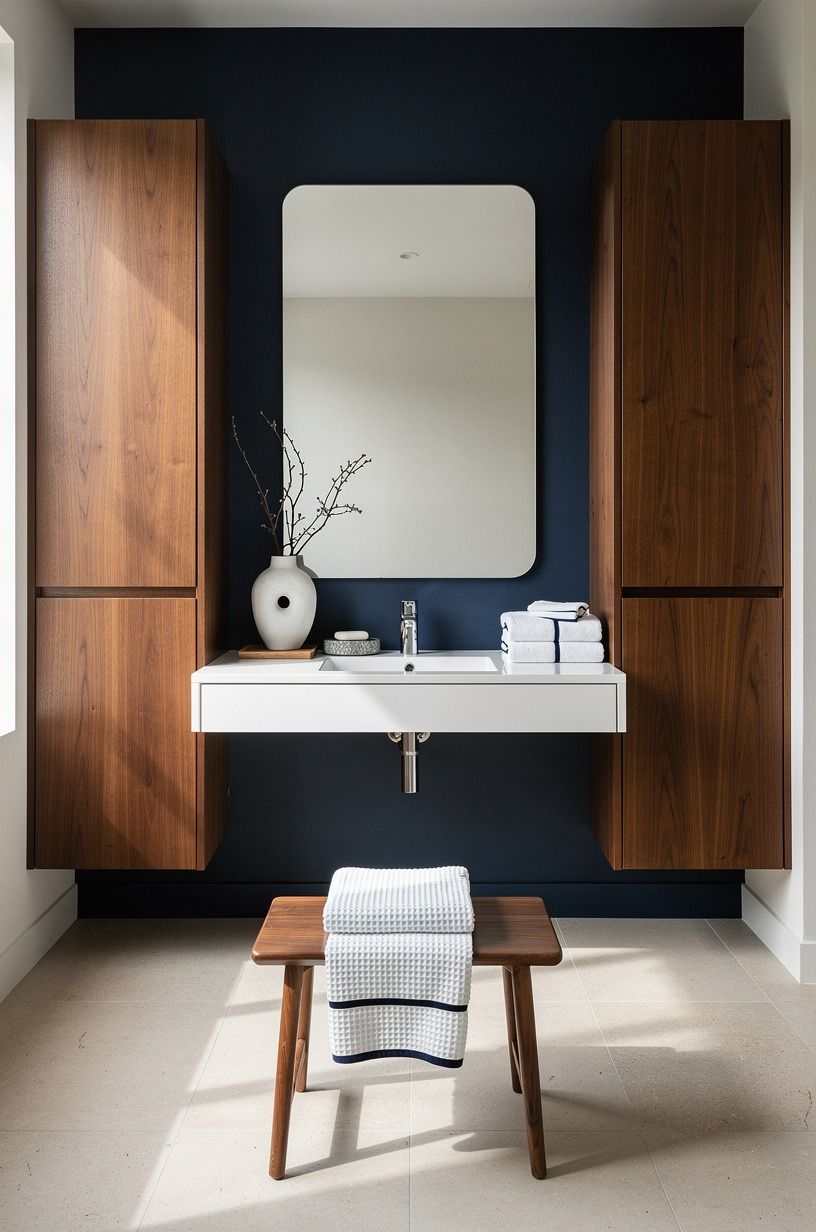
Start with what your room needs, not the first tray you see online. A bathroom refresh can range widely, and your freestanding tub ledge should fit the scale of the work around it.
Navy, white, walnut, and a shagreen accent can make even a modest update feel considered. You don’t need a full renovation to make the tub corner feel refined.
For a small update, spend on paint and textiles first, then add your shelf. A 32-36 in vanity height, a 36×36 in shower minimum, and clear circulation matter more than decorative clutter. You can find a useful reminder about choosing priorities in this unexpected piece on conflict language: the loudest option isn’t always the one your room needs.
My honest rule for a tub corner that lasts
I’ve watched bathroom styling swing from all-white minimalism to crowded “spa” shelves, and I don’t think either extreme serves real life. A freestanding tub is already a generous shape.
It has presence. When you stack it with ten product bottles, a faux plant, two signs, a tray, and a ladder, you’re asking the tub to compete with its own backdrop.
Nobody wants that when they’re trying to take a bath.
What I’ve learned is that useful restraint feels more luxurious than decorative excess. You need a safe place for a towel.
You need water within reach. You may want a book, though I always end up reading two pages before the steam makes me sleepy. Beyond that, the room should give you some quiet.
That’s why I prefer one solid ledge, one material with texture, and light that isn’t harsh.
And I don’t think you need to chase a hotel bathroom, either. Hotels can be lovely, but they’re designed for guests who don’t have backup shampoo, razors, children’s bath toys, or a cleaning spray they use every Tuesday.
Your room has a job. Let closed storage do the boring work, then let the ledge hold the things that make you pause for a minute.
The best version is personal, not precious. Maybe your shelf has a chipped ceramic dish from a flea market.
Maybe it holds your paperback and a plain glass of water. Fine.
Better than fine. A bathroom becomes comforting when you can use it without resetting it for a photograph every single time.
The Questions Worth Answering First
What is the best freestanding tub shelf and ledge for a small bathroom?
A slim wall-mounted white oak shelf is the best pick for a small bathroom because it uses empty wall space without narrowing your walking path. You’ll keep bath essentials close, while a shallow profile makes the room feel airy and less crowded.
Where can I buy freestanding tub shelf pieces on a budget?
Look first at IKEA, Target, and Wayfair for trays, carts, and narrow shelves. You can also check Facebook Marketplace or thrift stores for a sturdy stool. Your best value is often one used wood piece with real character, not three matching accessories.
How much does a freestanding tub shelf makeover cost?
A simple tub-corner update usually costs about $100 to $300 if you paint, add textiles, and use a shelf or stool. Paint and rearranging are the low-cost wins. You’ll spend more only if plumbing, tile, or lighting needs changing.
Can I create a freestanding tub shelf and ledge on a budget?
Yes, and you don’t need custom cabinetry. Use what you have: a small stool, a tray, and folded towels. Your cheap additions can be a Target bath caddy, removable hooks, and one painted shelf.
Keep the floor clear.
Is a freestanding tub shelf worth it in a small space?
Yes, because it gives your bath supplies a home without adding a bulky cabinet. A narrow picture ledge is especially useful when your tub sits against a wall. You’ll want it mounted where your arm can reach it comfortably from the water.
Is a freestanding tub shelf a good idea for a rental?
Yes, if you choose removable or freestanding pieces. Try a tension-mounted shelf, a rolling cart, or removable adhesive hooks for towels. Your landlord gets untouched tile, and you still get a warm place for the things you use every day.
Where I’d Start First
If I had to pick one, I’d start with a slim oak wall ledge. You can’t relax beside a tub when every useful thing lives on the floor. Pin the oak ledge for later and revisit these small-space ideas.