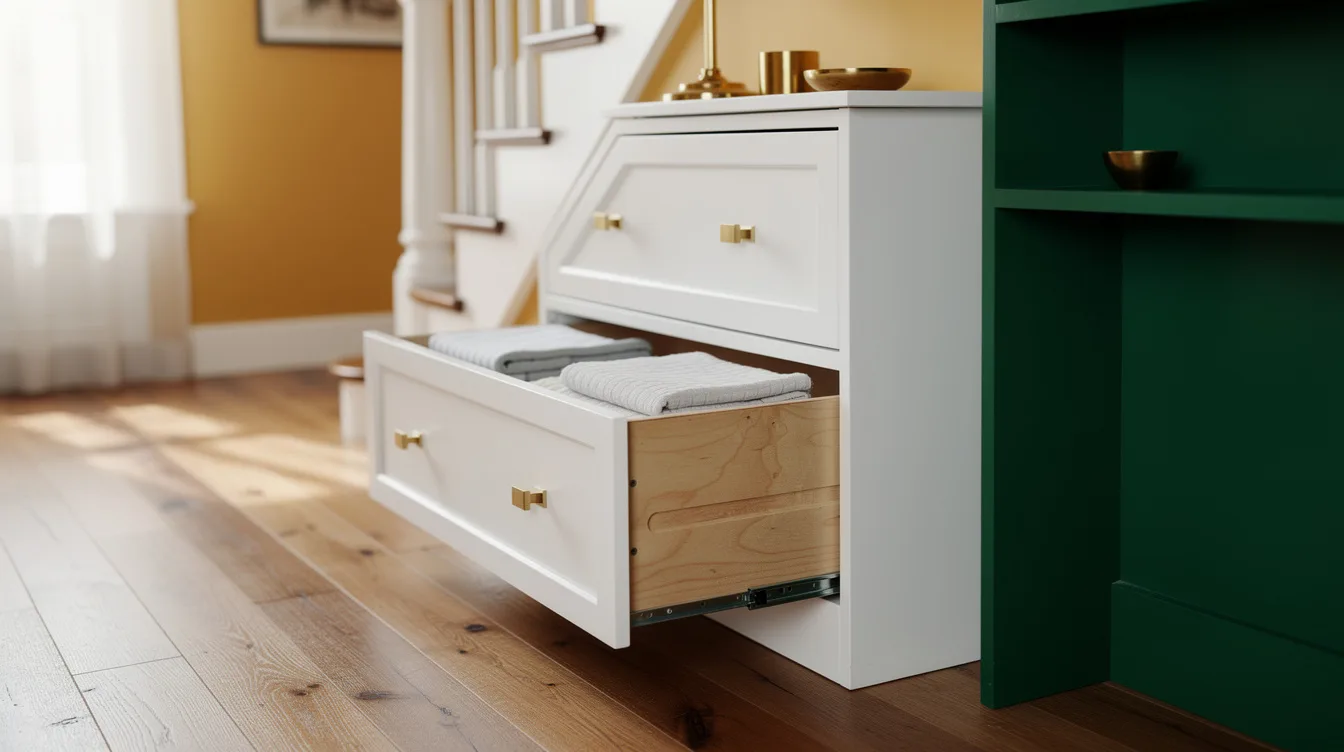
Three rentals in, I’ve never had a linen closet. My bedroom overflow lived in a stack of six bins beside the dresser, and I stopped seeing them the way you stop seeing a pile of mail.
Then I moved into a place with roughly 68 inches of clearance at the tall end of the staircase. That’s a closet, if you treat it like one.
Here’s what actually earned its space, and the one build I’d skip.
Measure the Slope Before You Buy Anything
I lost a weekend to this lesson. I bought bins first, measured second, and returned all six.
Take the clear opening width, the usable depth, the highest point, the lowest point, and then the height every 12 inches along the slope. That last one matters most.
A typical stair rises roughly 7 inches for every 11 inches of run, but your actual opening is the only number that counts. I wrote mine in pencil on the drywall so I could stop re-measuring.
Give Each Height Zone One Job
The mistake I made first: one deep, dark cupboard. Seasonal bedding went in and never came out.
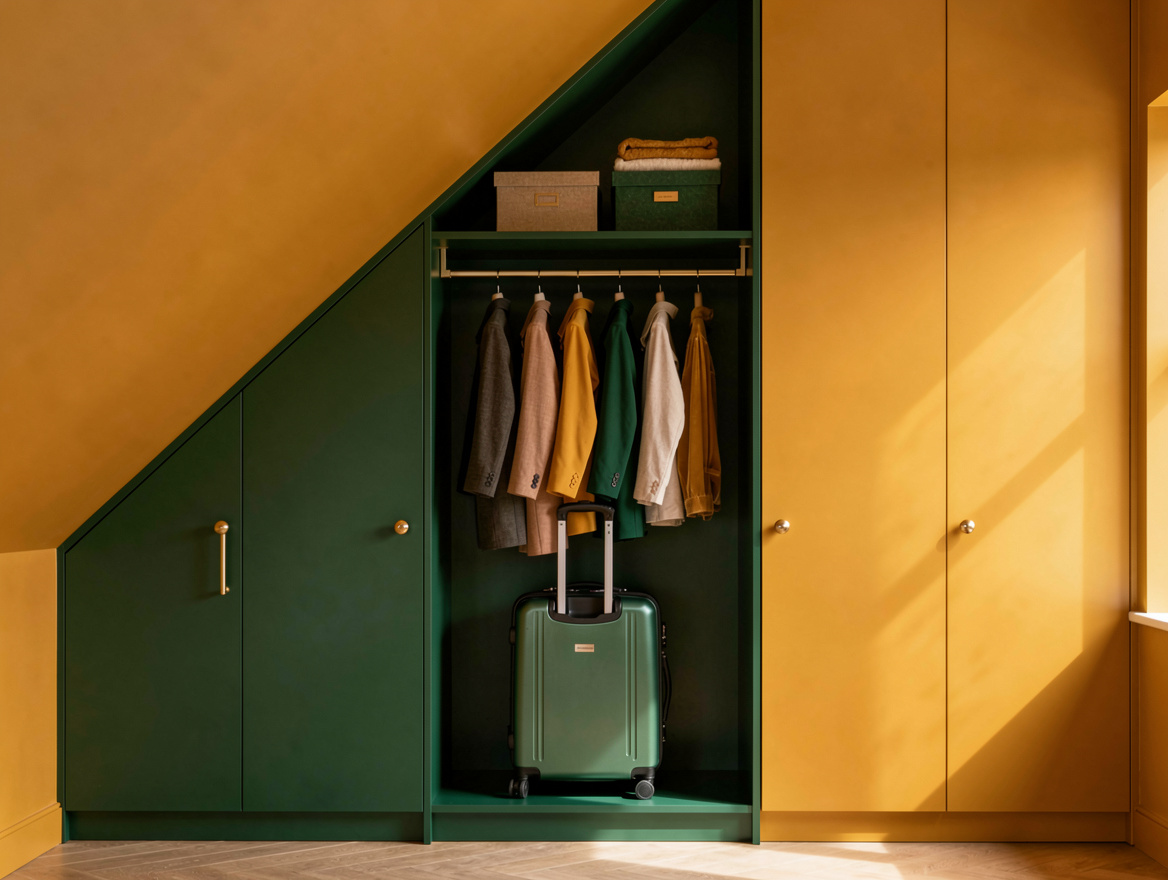
Now the low end holds flat linens and shallow bins. The middle carries drawers. The tall end takes hanging clothes and the roller bag.
Once you hit around 36 inches of height, larger bins and small luggage start to work. Around 60 inches, you can hang adult clothes without folding anything sideways.
Step the Drawer Fronts, Keep the Boxes Square
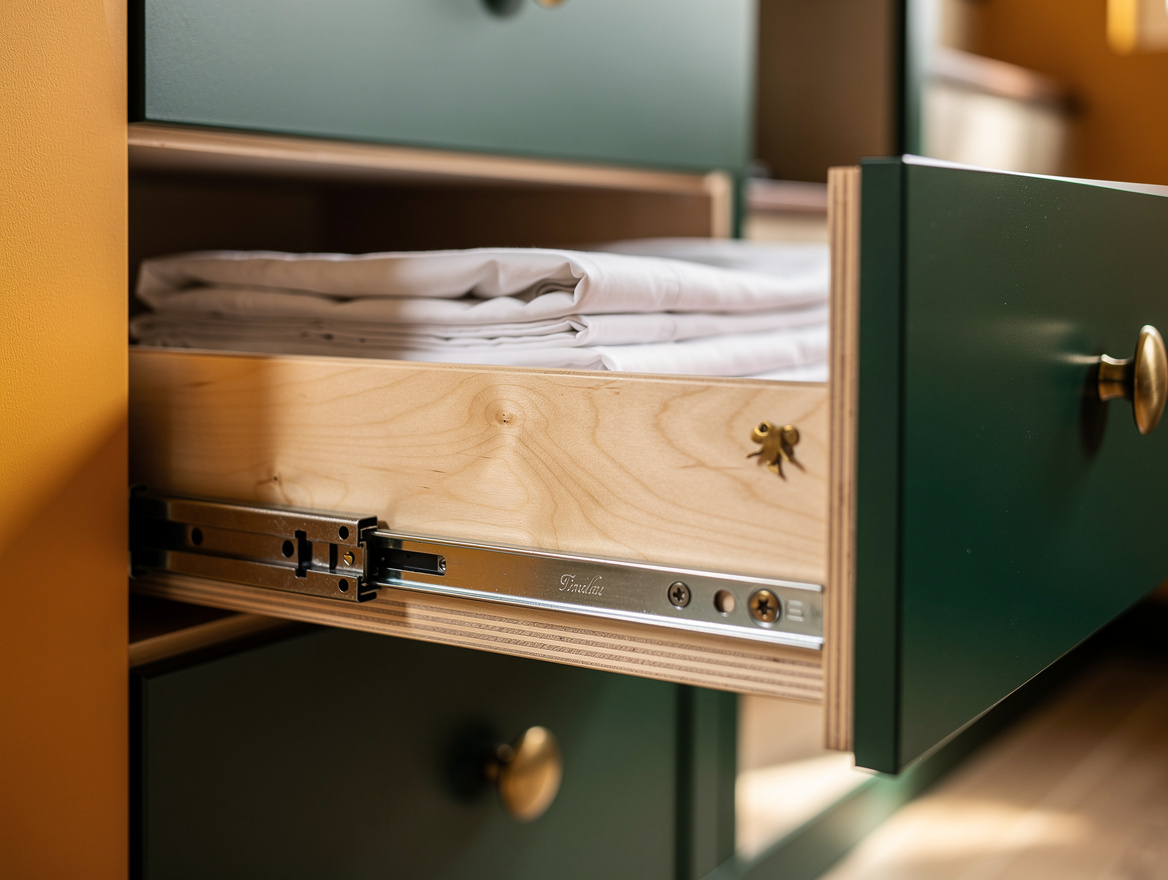
This is the highest-payoff build if your stairs sit near the bedroom. Three to five drawer fronts that climb with the stair angle, but rectangular drawer boxes inside.
Angled boxes look clever in renderings and jam in real life. I use 18 to 24 inch deep drawers: about 6 to 8 inches tall for tees, 10 to 14 for sheet sets, 16 to 20 for a duvet insert.
Spend the money on full-extension soft-close runners. Blum MOVENTO or Accuride slides let you reach the back of a triangular void, which is the whole point.
For boxes, 3/4 inch birch plywood with painted MDF fronts is the sweet spot. Melamine-faced board works if the budget is tight and you’re painting anyway.
Plan on roughly $600 to $1,200 in DIY materials, or about $2,000 to $4,000 built by a pro. Typical ranges, and your local cabinet shop will have opinions.
Turn the Tall End Into an Overflow Closet
Doors hide chaos. That’s not lazy, it’s the reason this zone works.
Give the section with at least 60 inches of clearance to hanging clothes, luggage, a hamper, and one shelf above the rail. Front-facing adult clothes want about 24 inches of depth.
If you only have 14 to 16 inches, don’t fight it. That depth is for folded stacks or side-facing hangers, and pretending otherwise means every shirt sleeve gets crushed in the door.
IKEA PAX is the shortcut here. Frames come in a 22 7/8 inch depth at around $170 to $200, and a finished PAX and GRIMO combination runs about $435 if your tall zone clears roughly 80 inches.
The trick is tapered filler panels above and beside the unit. Without them you don’t have built-in storage, you have a wardrobe parked under the stairs.
Keep Shelves Shallow So Nothing Disappears
Deep shelves lie to you. They look generous and swallow everything in the second row.
For folded clothing and small bedroom accessories, 8 to 12 inches is the honest range. Shoes, hats, and small bags live happily there.
Linens can push to 12 to 16 inches, which fits a folded sheet set and a towel stack with room for a labeled box. Anything past that, and you need a drawer, not a shelf.
I run cheap canvas bins from Target on the open shelves so the visual noise stays down. About $10 each, and they hide the fact that my folding is mediocre.
Mix Closed Cabinets Low and Open Shelves Up Top
Not everyone wants a full carpentry project. This is the lighter version.
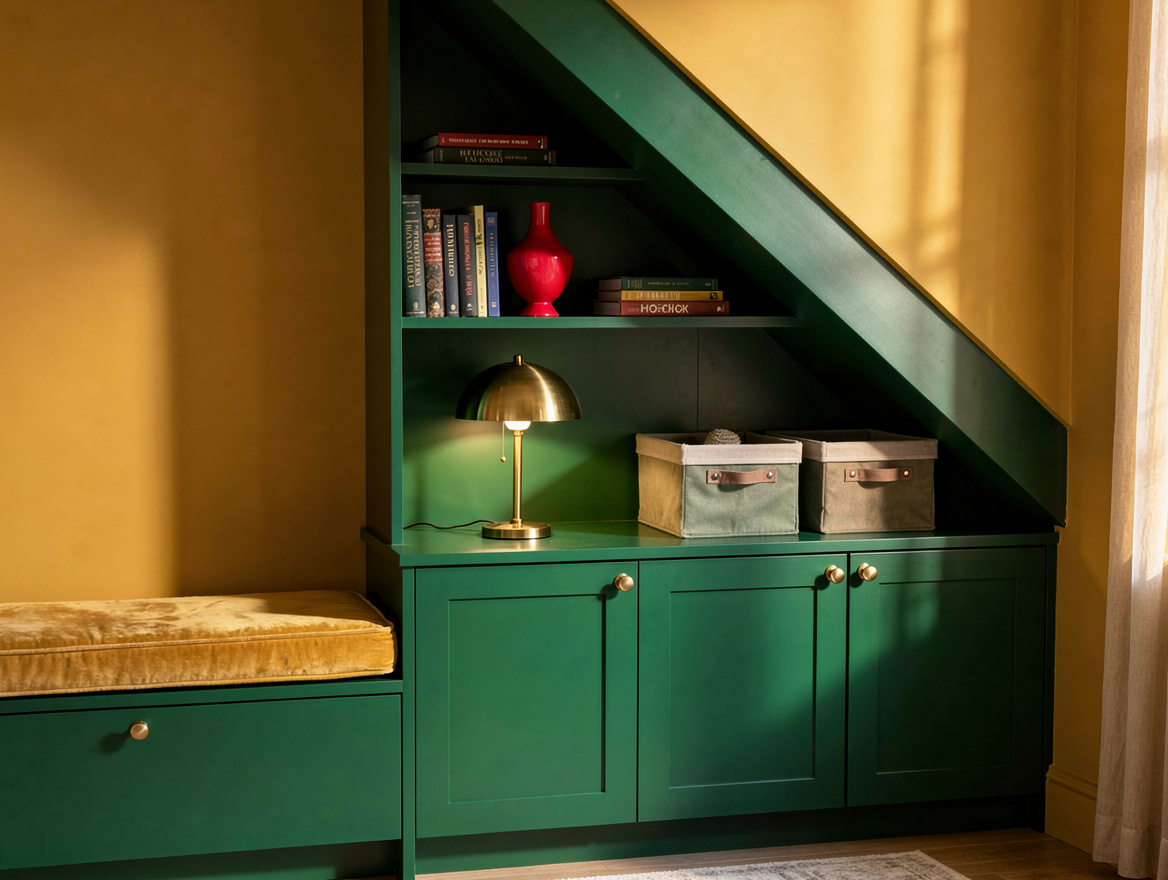
Run shallow closed storage up to about 30 to 36 inches, then leave the wall above it open. Cabinets take the ugly stuff, the open run takes books, a lamp, a stack of folded throws.
Home Depot and Lowe’s both stock stock-size base cabinets you can scribe to the slope with a filler strip. It’s a Saturday, not a month.
One warning: open shelving under a staircase collects dust from every trip up and down. Keep it to items you actually touch, or you’ll be wiping oak ledges weekly.
Add a Bench If the Low End Is Awkward
The lowest 20 inches of a stair void frustrate everyone. Too short for bins that stand up, too deep to reach comfortably.
A seat with a lift-up lid solves it. Around 16 to 20 inches of finished depth gives you storage plus a real perch for putting on shoes.
I topped mine with a 2 inch foam cushion in a washable cotton cover, which cost about $60 all in. Under the lid: extra pillows and the guest duvet, the two things I need twice a year.
Start with the tall end. It’s the only zone that solves a real problem, hanging clothes, and once it’s handled the rest becomes bin sorting.
Budget a full weekend for measuring and one for building, and expect the drawer slides to cost more than you planned.
Mia Carter writes about small-space living and budget home makeovers. She has restyled three rentals and tests most ideas in her own 45 sqm flat.