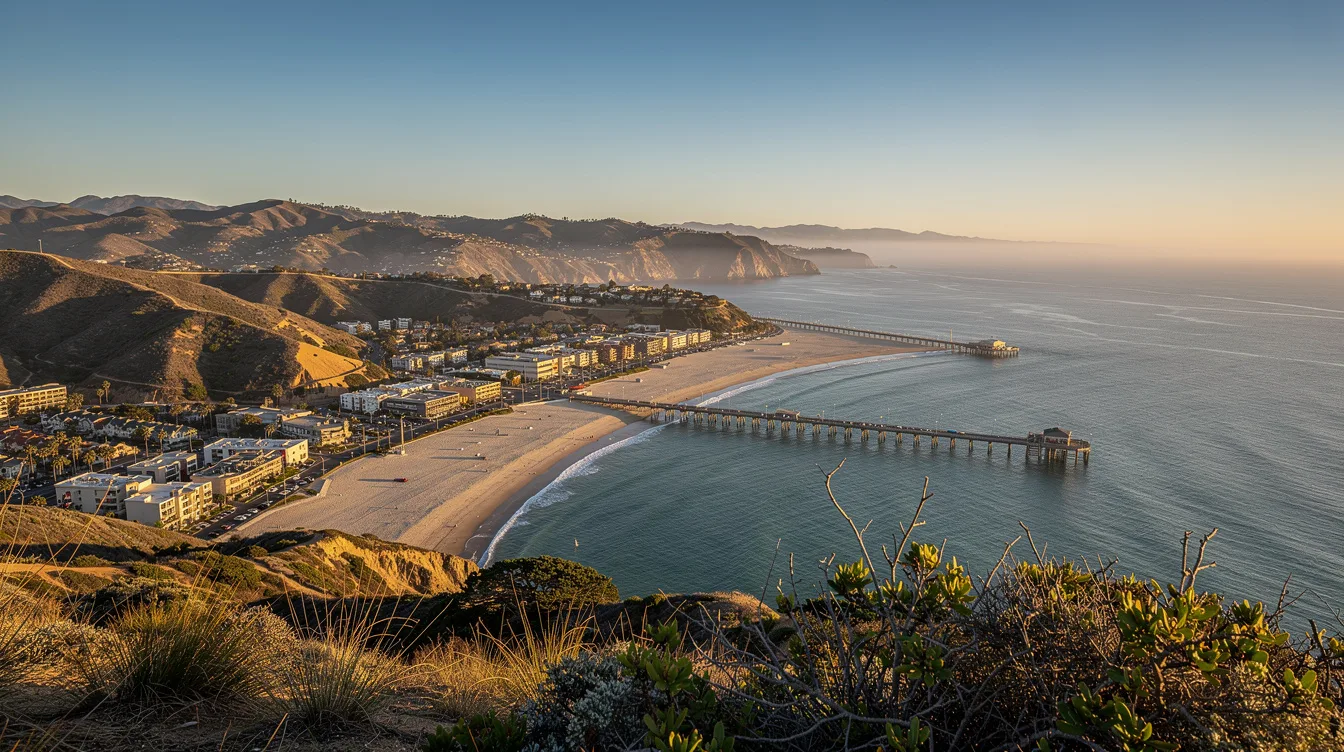
Avila Beach looks like an easygoing Central Coast stop, but its current streetscape came from a hard reset. In the late 1990s, crews removed 6,750 truckloads of contaminated material after old pipelines beneath town leaked oil.
The excavation ran a quarter-mile wide, and several blocks of Front Street, homes, and businesses were razed. Clean Guadalupe Dunes sand replaced what came out, so the beach town you walk today is largely a rebuild rather than a preserved old village.
A beach town rebuilt from below
And that history gives the compact center a slightly unusual feel. Modern walkways, sea-themed walls, and benches sit where the cleanup reshaped the town, while restaurants and shops line the three blocks of Front Street.
But this isn’t a place that asks you to tour its damage. You come for the cove, then notice how much of the town feels intentionally remade. I think that honesty makes Avila more interesting than a beach stop with a prettier backstory.
San Luis Obispo Bay shelters the main beach between Point San Luis and Fossil Point. Point San Luis blocks prevailing northwesterly winds, so the town beach is usually warmer than other Central Coast beaches.
The sand runs for less than half a mile, with a promenade, picnic areas, restrooms, showers, and restaurants nearby. It’s compact, but that works in your favor when you want a beach day without repeatedly moving the car.
The calm cove earns an unhurried morning
And the bay’s protection is the reason people swim, paddleboard, and kayak here. Dolphins, sea otters, and seasonal whales may appear offshore, though wildlife is never an appointment you can keep.
But don’t confuse every patch of water with an invitation. San Luis Obispo Creek reaches the sea west of downtown through a lagoon, and agricultural runoff means swimming or wading there isn’t recommended.
Main Beach is the better place to set up for the water, then take a stroll along the promenade. The Avila Beach Pier has been closed since 2015 for structural engineering considerations.
That closure is a real disappointment if you imagined fishing above the surf. Still, you can watch the cove from shore, and the slower rhythm suits you if your best beach afternoons involve a chair and no agenda.
Port San Luis has the working-waterfront edge
And west of town, Harford Pier keeps the commercial side visible. Fishing boats have offloaded there since 1873, and gray and humpback whales come into the bay around the pier to feed during their seasons.
But the nearby Olde Port Beach is dog-friendly and less suited to water sports because of its proximity to the port. Fisherman’s Beach is farther west and smaller, so check current dog rules before you build your day around either beach.
You can eat seafood near the harbor, then head inland to Avila Hot Springs for mineral-water soaking, pools, cabins, or camping. It’s a good pairing because the salt air can make a warm soak feel less like a detour.
And if you’d rather move than soak, the 3-mile Bob Jones Trail follows an old railroad right-of-way. It links the Avila Beach Golf Resort with a trailhead near Highway 101, alongside San Luis Obispo Creek.
Point San Luis brings the longer view
But the most memorable outing isn’t necessarily at the sand. The Pecho Coast Trail connects Port San Luis with Point San Luis Lighthouse, built in 1890 after shipping accidents, and a docent is required for the hike.
You’ll need to plan that one instead of treating it as a casual promenade walk. That limitation is worth knowing early, especially if you’re arriving for only one afternoon and have already committed to lunch by the harbor.
Avila Beach sits about 10 miles south of San Luis Obispo, off US-101 via Avila Beach Drive. Parking can be limited, with paid public parking near First Street and additional options closer to Port San Luis.
And timing changes the mood more than any itinerary does. Spring or fall weekdays are the sweet spot, while summer weekends draw the largest crowds. By late afternoon, the light settles across the sheltered bay and the harbor smells faintly of salt and working boats.