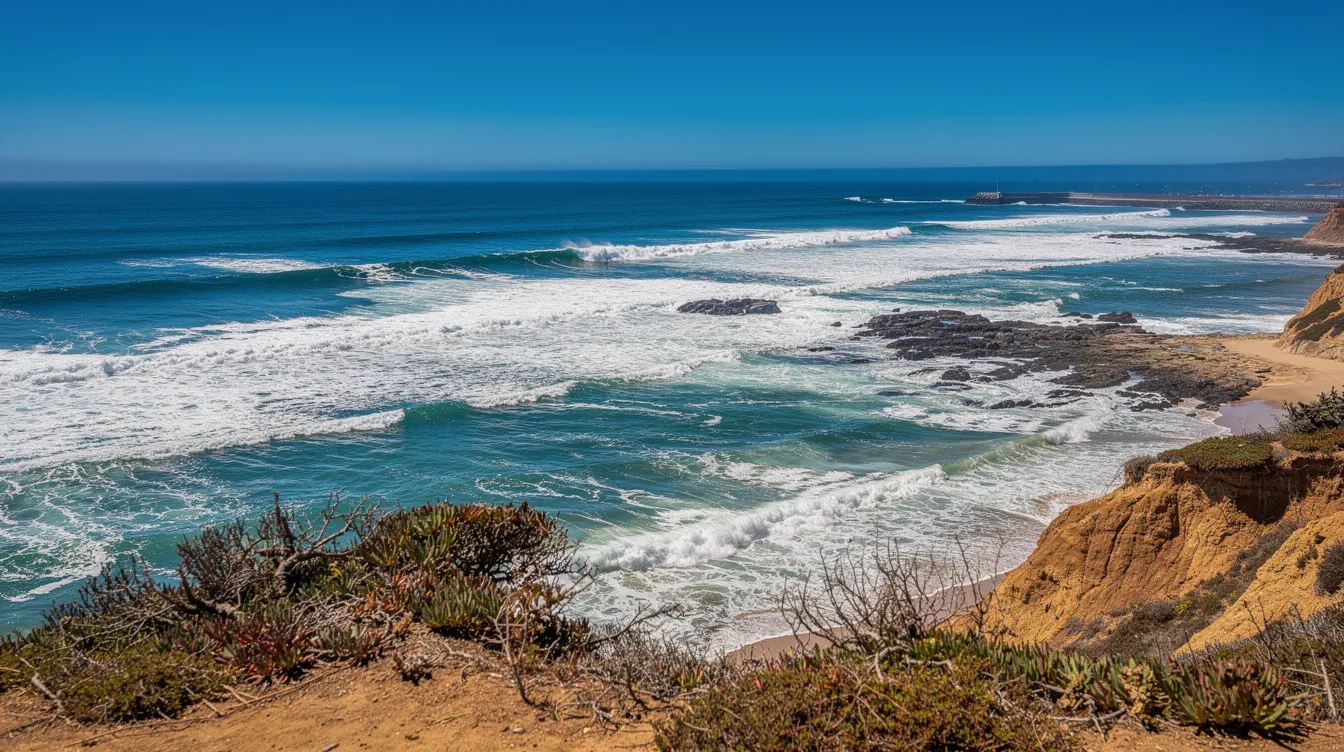
Half Moon Bay sits about 25 miles south of San Francisco, but the city’s mood changes fast once the Pacific comes into view. This is where broad beaches meet farm country, and where Mavericks turns an ordinary coast drive into a serious surf pilgrimage.
And you don’t need to surf to feel the pull of the place. Near Pillar Point, the ocean looks cool and muscular, while the town itself moves at a much slower pace.
Mavericks is the reason the coast feels different
Mavericks, near Pillar Point, is one of the world’s best-known big-wave surf locations. It’s for experienced surfers when conditions allow, but shore viewing gives everyone else a front-row sense of why this stretch of coast carries such weight.
But don’t arrive expecting a tidy spectator attraction. The drama depends on the ocean, and the best plan is simply to spend time near the harbor, watch the water, and let the weather set the agenda.
The salt air can feel cold even when the Bay Area is warm. Because this coast gets regular fog and marine breezes, Half Moon Bay is often far cooler than inland places around San Francisco.
You’ll find the more practical entry point at Pillar Point Harbor, beside Princeton-by-the-Sea. It’s a working harbor with seafood restaurants, so the setting feels useful rather than polished, and that’s part of its appeal.
Walk the shore before the fog lifts
Half Moon Bay State Beach gives you the simpler version of the coast: a long sandy shoreline built for walking and watching the day fade. Come early if you want the beach to feel hushed, with pale light flattening the water.
And the Coastside Trail links beaches and neighborhoods along the oceanfront. You can walk or cycle it, which makes it a better choice than hopping in the car every time a new stretch of shoreline catches your eye.
This is an easygoing coast, but not a heat-seeking beach vacation. Summer fog is common, and the cool air can make a jacket feel less optional than it did back in the city.
For the friend who wants action, Mavericks provides the story. For everyone else, the trail and beach are enough, especially when the wind carries that clean mix of salt and damp sand.
Main Street keeps the day from becoming all ocean
Main Street has cafés, galleries, boutiques, and restaurants in the historic downtown. The city was renamed Half Moon Bay in 1874, and older buildings remain part of the streetscape, rather than a separate historic zone you have to seek out.
But this isn’t San Francisco in miniature. Its population was 11,795 in the 2020 census, and the quieter scale is precisely why a lunch stop here can reset the pace of a crowded Bay Area weekend.
You should leave room to wander without a checklist. A café stop followed by a gallery window and a slow pass down Main Street works because the town doesn’t demand a grand itinerary.
Beyond town, the Pescadero area brings farms and coastal parks into the picture. The shift from storefronts to open fields happens quickly, so a one- or two-day trip can hold both harbor air and rural roads.
Late spring through early fall is the easiest bet
Late spring through early fall usually brings the easiest conditions for coastal walks. That said, fog can still roll in during summer, and the Pacific edge keeps the day cooler than visitors often expect.
And October changes the town’s rhythm with the annual Half Moon Bay Art & Pumpkin Festival. It draws visitors from around the country, so it’s a lively time to visit, but not the moment for a quiet Main Street.
A car is the practical choice here. It lets you move between the beaches, harbor, viewpoints, farms, and Pescadero-area parks without treating every stop as a logistical project.
From San Francisco, Highway 1 south or Highway 92 west leads toward town. Favorable traffic can make the drive about 45 minutes, though this is one route where the view makes rushing feel like a mistake.
Stay for the contrast, not a packed schedule
Half Moon Bay works because its elements don’t blur together. There are fishing boats at the harbor, sandy walks at the state beach, and agricultural countryside farther south, all on a coast that still feels exposed to the weather.
But the town’s best quality is also its limit: it asks you to slow down. By late afternoon, fog can soften the bluffs and the harbor, while the Pacific keeps making its own plans beyond Pillar Point.