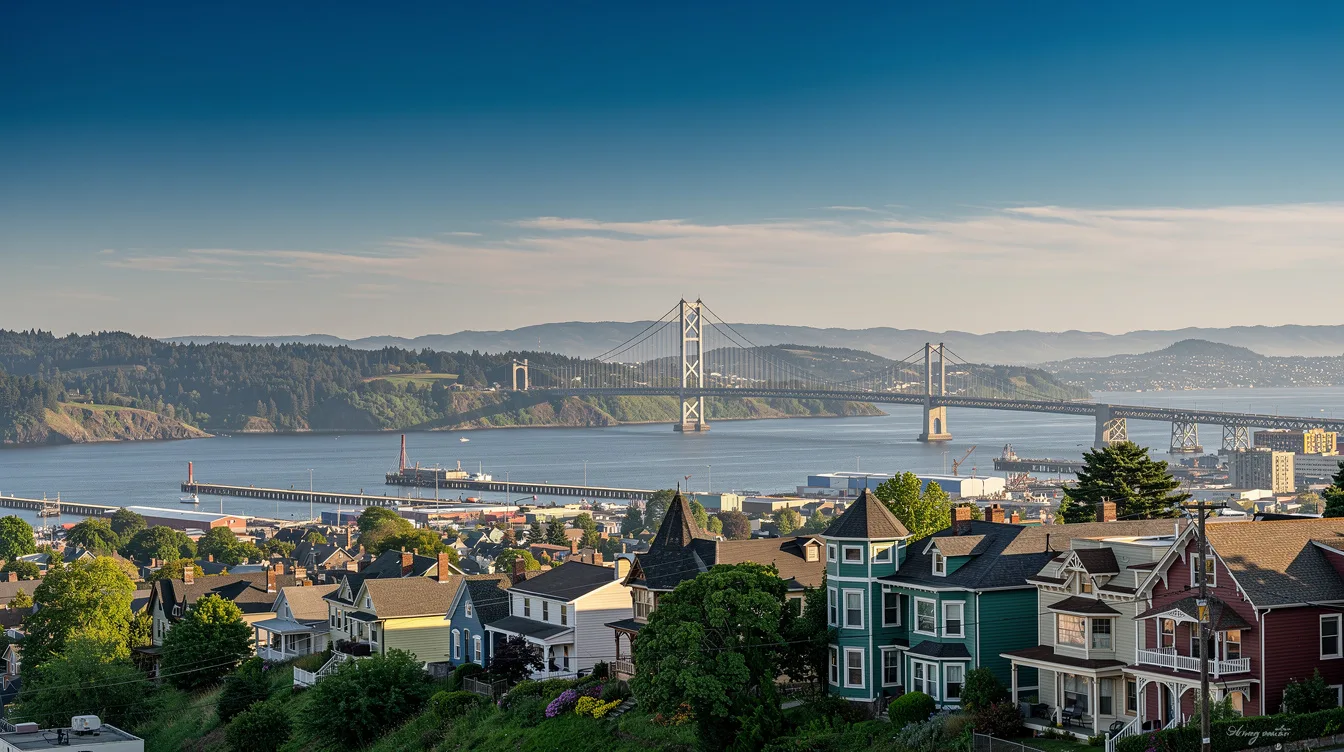
Astoria made history in 1811 as the first permanent American settlement west of the Rocky Mountains. That claim is the reason to come, but the town doesn’t feel preserved behind glass. It still faces the Columbia River like a working port should.
You arrive on Oregon’s northwestern edge, where the river is nearing the Pacific. The water and hills set the mood quickly. Astoria’s streets climb sharply, so even a short walk can turn into a view.
And this is not a beach-resort version of the coast. The Pacific beaches around Warrenton and Fort Stevens require a drive, while Astoria itself is about docks, river traffic, old houses, and weather that often arrives wet.
The 1811 story is still the town’s best reason to stop
Astoria began as a fur-trading post, then grew through shipping, fishing, salmon canning, and timber. Oregon’s oldest city has changed industries, but its waterfront identity remains easy to read from the street.
You don’t need a costume tour to feel the history here. Two National Register historic districts and a dense collection of older buildings make the past part of an ordinary afternoon, especially where Victorian and Queen Anne homes rise above the river.
But don’t expect a polished colonial village. Astoria is a real small city with steep blocks and practical edges, which makes its historic fabric more convincing than a tidied-up version would be.
The nearby reconstructed winter encampment at Fort Clatsop adds another layer. It sits about 4.5 miles southwest of town, so you can pair national history with Astoria’s riverfront without turning the day into a long drive.
The Columbia River keeps Astoria from feeling like a museum
The Columbia River is the main event, not a backdrop. It explains the deepwater port, the shipping history, and why the town’s best walks tend to pull your attention back toward the water.
And you should give the riverfront time. The Port of Astoria still has an active maritime character, so the appeal comes from motion and utility, not from a waterfront designed only for visitors.
The city’s hilltop landmark, Astoria Column, puts the river, bridge, mountains, and ocean-area views into one frame. The climb uphill is part of the deal, but you’ll understand the town’s geography much faster once you’re above it.
For a closer look at the water’s difficult reputation, head to the Columbia River Maritime Museum. Its focus includes the Columbia River bar and regional shipping, a useful counterweight to all those calm-looking river views.
The bridge is the view you’ll remember
The Astoria-Megler Bridge carries U.S. Route 101 across the Columbia River into Washington. It’s dramatic because the crossing makes the scale of the river impossible to ignore, even when the town below feels intimate.
But the bridge also makes clear that Astoria is a gateway, not an isolated outpost. You’re on the south bank, near the river’s meeting with the Pacific, with Washington visible across the water.
If you like old homes, let the hills slow you down. The house-lined slopes and Victorian architecture give the city a distinct profile, while the riverfront keeps it from becoming too precious.
You may hear Astoria called “Little San Francisco”. The comparison comes from its steep hills and older architecture, though the river, working port, and Oregon weather make it firmly its own place.
A practical stop from Portland, with one clear limitation
Astoria is roughly a two-hour drive from Portland International Airport. That makes it manageable for travelers who want a coastal detour without adding another flight.
And driving is the normal plan because Astoria Regional Airport has no commercial service. You’ll want a car anyway if Fort Clatsop or the beaches near Warrenton and Fort Stevens are part of your visit.
Film fans have an easy extra stop at the Oregon Film Museum, since The Goonies was filmed in Astoria. Even if you skip it, the connection suits the town’s slightly scruffy, cinematic character.
Astoria had 10,181 residents in the 2020 census, small enough that the river and hills dominate your sense of place. By the waterfront, the air feels damp, the bridge holds the horizon, and the town still looks outward.