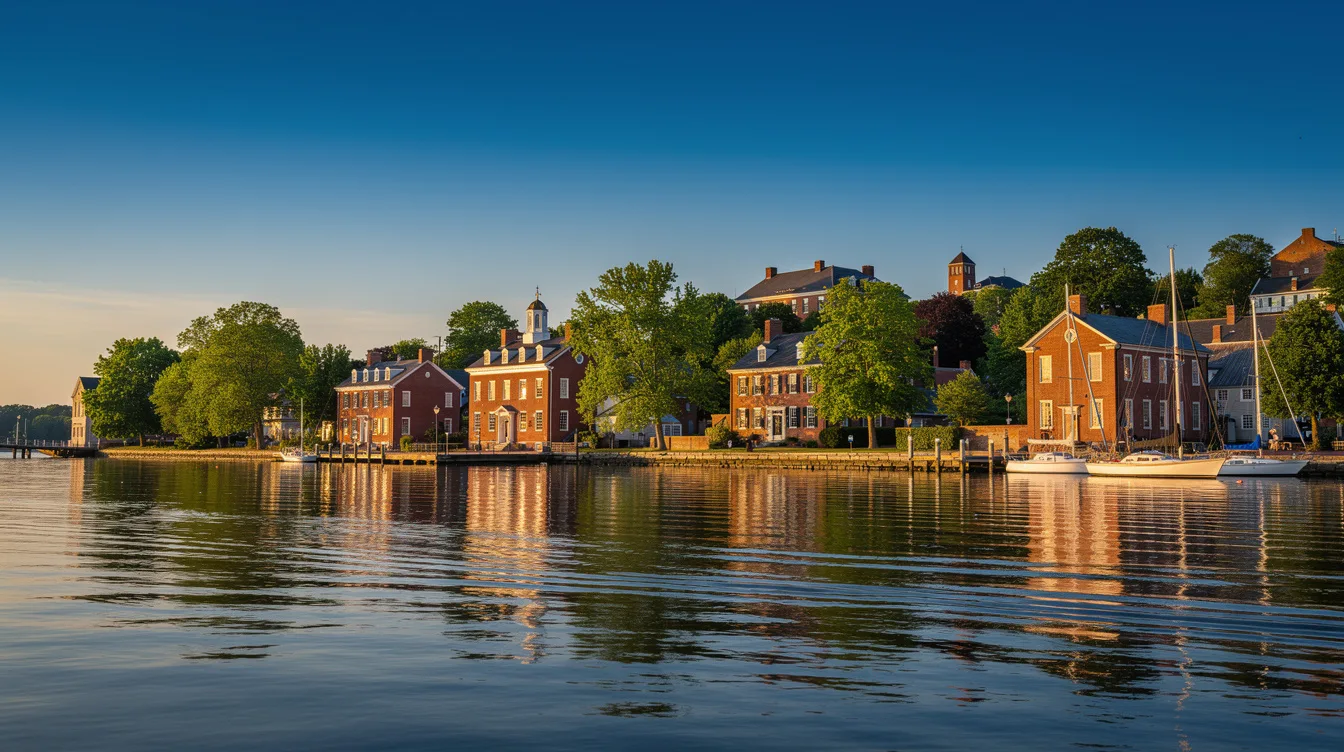
Chestertown has only 5,532 residents, yet its past has unusual weight. Founded in 1706 along Maryland’s Chester River, this Kent County seat feels small because it is. But the riverfront streets carry the confidence of a place that has never needed to rush.
You come for a quiet Chesapeake weekend, then notice the brick sidewalks and old merchant homes. The town is walkable, so your plans can stay pleasantly loose. That’s Chestertown’s best quality: it gives you room to wander without asking much in return.
A 1706 river town with real college history
Washington College was founded in 1782 with George Washington’s support, which gives the town a story larger than its census count. The college is part of daily Chestertown, not a separate campus world tucked beyond town.
And that connection makes the historic district feel lived-in. You’ll pass students, shop windows, inns, and restaurant doors within the same few blocks. It is polished, but it doesn’t feel like a stage set.
The Colonial-era buildings and brick underfoot provide the texture. But don’t arrive expecting a packed sightseeing program. Chestertown works best when you let the streets, river air, and small-town pace take over an afternoon.
The Chester River is the reason to slow down
The town sits along the Chester River on Maryland’s upper Eastern Shore. Water changes the mood here. It softens the edges of a historic downtown and gives a short walk somewhere to end besides another store.
You can look for the educational schooner Sultana, a reminder that this is a maritime town as much as a college town. The river setting suits people who prefer a dockside pause to an overplanned day.
And the trade-off is clear. Chestertown is quiet, not action-packed. If you need constant attractions, you may run out of boxes to check.
If you want to hear the water and linger over dinner, that restraint feels like the point.
Crab, oysters, and a Saturday market
Chestertown’s food culture leans Chesapeake, especially crab and oysters. That means you should come hungry, but keep expectations sensible: this is a small town, not a city with endless reservations. The appeal is local dining with no need to sprint between tables.
The year-round Saturday farmers and artisans market is a useful anchor for a weekend visit. You can browse local goods, then drift back toward the historic district. And because it runs year-round, the town isn’t limited to a single warm-weather moment.
Independent shops and antiques fit naturally into the route. You won’t need a complicated plan. Start downtown, follow whatever catches your eye, then let the river pull you back toward the waterfront when the light begins to soften.
Memorial Day brings a louder weekend
The Chestertown Tea Party Festival traditionally takes place over Memorial Day weekend. It gives the town a more animated side, with a crowd that changes the usual calm. But that’s also when you should expect less of the private, unhurried Chestertown many visitors seek.
If you prefer the town at its most relaxed, visit outside that festival weekend. You’ll still find the historic district, Washington College, local food, and the river. The difference is simple: fewer people competing for the same quiet corners.
Is Chestertown easy for a weekend trip?
Yes, if you have a car. It is roughly 1.5-2 hours by car from Baltimore, Washington, D.C., or Philadelphia, depending on traffic and where you start. That makes it reachable for two nights, though the drive is long enough to reward an unhurried departure.
And you don’t need to save it for one season. Chestertown works year-round because its draw is less about a single event than its compact mix of river, history, shops, and dining. Cold weather may narrow your outdoor ambitions, but it won’t erase the town’s character.
Come for the scale, not spectacle
Chestertown is a quiet, affluent-leaning river town, and it knows it. You should choose it over a larger destination when you want cycling, antiques, local meals, and a historic streetscape without the pressure to see everything.
But its limits are part of the deal. There is no big-city rush here, and that may feel too slow for some travelers. For me, the small scale is the argument: by evening, the brick sidewalks cool, the river sits nearby, and the town asks nothing except that you stay a little longer.