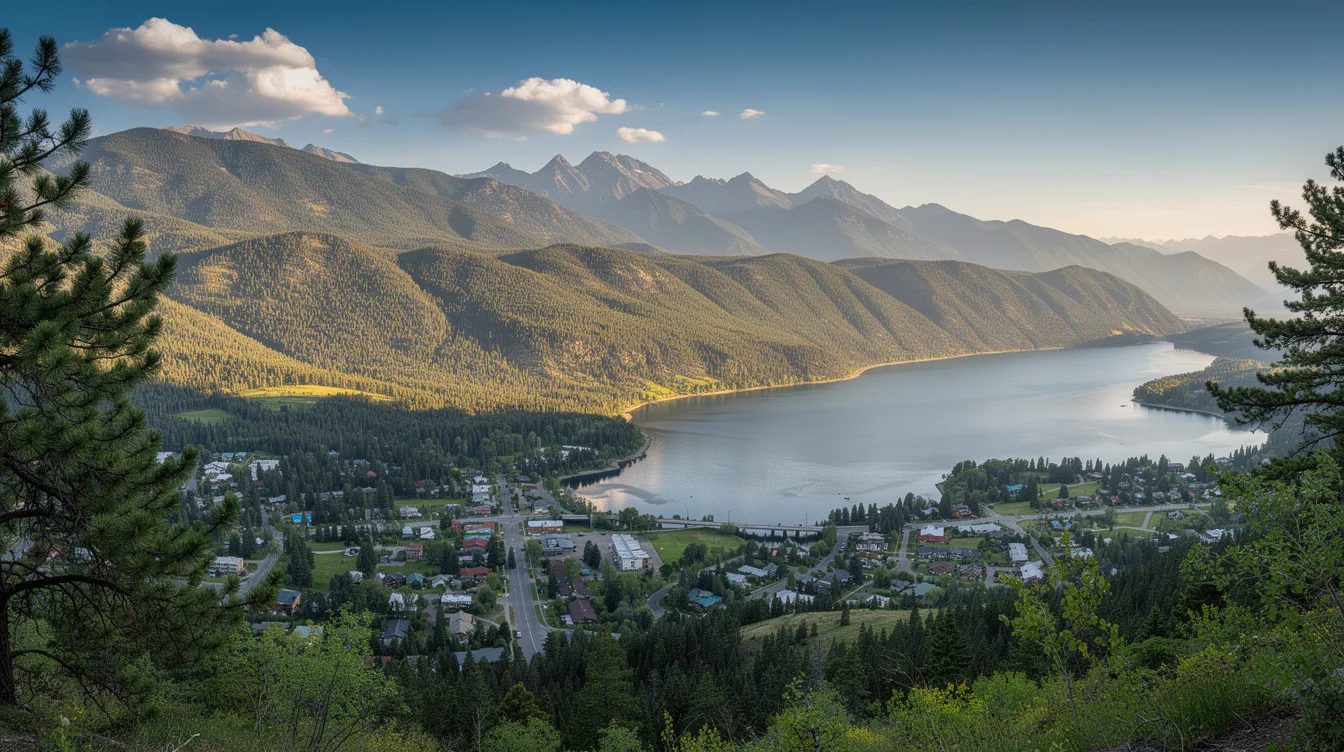
Whitefish lets you skip a long drive because Amtrak’s Empire Builder stops here every day on its Chicago-to-Pacific Northwest route. Step off the train into a mountain-and-lake town with cafés, shops, and an actual downtown, not a roadside staging area.
That matters if Glacier National Park is the goal but the road trip isn’t. Whitefish sits about 25 miles west of Glacier National Park, so you can make the town your base without giving up evenings somewhere worth walking around.
The daily Empire Builder changes the whole arrival
The Empire Builder is the rare train route that makes this corner of Montana feel reachable without a rental car at the first moment. It connects Whitefish to the Chicago-Pacific Northwest corridor daily, which is the central fact behind the town’s appeal.
And the train arrival fits the place better than another airport parking lot. You come for the mountains and water, then begin in a compact center where dinner, coffee, and a slow first walk are close at hand.
But don’t mistake rail access for car-free simplicity. The notes place Whitefish near U.S. Highway 93 and identify it as a practical Glacier base, so travelers planning farther-afield park days should think through local transportation before booking.
You can also fly into Glacier Park International Airport near Kalispell, listed at about 15 minutes away by Montana’s tourism office. That’s useful for a shorter trip, though the train is the more memorable way to trade interstate miles for a window seat.
Glacier is close, but Whitefish has its own pull
Glacier National Park is the headline, and Whitefish earns its keep by being close enough to support a park-focused stay. You’re about 25 miles west of it, yet your day doesn’t have to end at a park entrance.
And that separation is the point. Park gateways can feel like places you pass through, while Whitefish has restaurants, cafés, shops, and an après-ski energy that gives an overnight stay some shape.
Whitefish Lake sits beside town, with boating, swimming, fishing, and waterfront lodging in the mix. On a warm day, the water gives you a softer counterpoint to hiking plans, especially when your legs have had enough of uphill ground.
But the town isn’t empty when the park is busy. Its visitor economy makes peak periods feel livelier than its 7,751 residents in the 2020 census might suggest, and that means summer lodging can cost more.
Big Mountain makes winter a real reason to go
Whitefish Mountain Resort on Big Mountain is the town’s winter center, with skiing and snowboarding drawing people into cold-weather Montana. If you want snow scenery with restaurants and cafés afterward, Whitefish makes a convincing case.
And winter has a clean trade-off: you get skiing, but you also get cold weather and higher resort demand. You’ll want to treat a ski trip as its own season, rather than assuming the town works the same way as a Glacier summer escape.
In warmer weather, Big Mountain shifts toward mountain biking and hiking. The terrain still asks something of you, but the reward is a town that can pair active days with a lake afternoon instead of making every outing a full expedition.
But don’t come expecting solitude at the height of summer. Late spring and summer are prime for Glacier, hiking, cycling, and lake days, which also brings peak crowds and higher lodging prices.
Choose the season for the trip you actually want
Late spring and summer work best when Glacier and Whitefish Lake are central to the plan. The days lean toward hiking, cycling, swimming, and boating, so you can build a stay around being outside from morning onward.
And autumn offers a quieter version of the same base, with foliage, cooler weather, and less crowded trails. It’s a good choice if you prefer a coat in the morning to the pressure of securing a summer room.
But autumn comes with less predictable weather and some seasonal closures. That’s not a flaw, just a reason to book Whitefish for its town, lake, and mountain mood rather than pinning the whole trip on one itinerary.
Whitefish is also roughly 50 miles south of Canada, in Montana’s Flathead Valley. By evening, the downtown lights come on, the lake air cools, and the train tracks remain a reminder that you didn’t have to drive here.