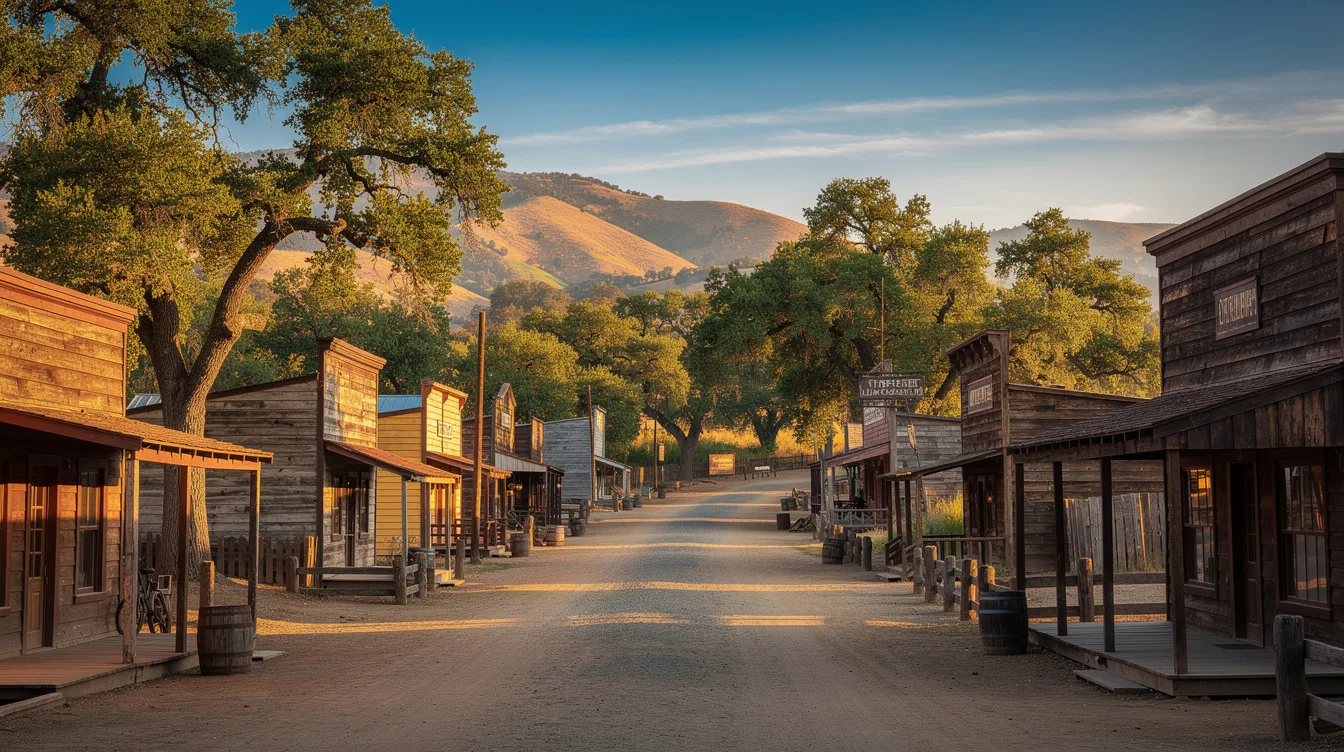
Columbia State Historic Park preserves a California Gold Rush town from the 1850s, and its downtown is a National Historic Landmark District. Gold was discovered here in 1850, then a boomtown rose fast. Today, you can walk the historic core without worrying about traffic.
Columbia, California sits in Tuolumne County, about 3 miles north of Sonora on Highway 49. That proximity makes it an easy Gold Country detour. But this is not a town you rush through between errands.
A former mining town where cars stay out
The strongest part of Columbia is its car-free historic street. Wooden sidewalks set the pace, so you notice storefronts, hotel facades, and the small sounds that disappear when a road is full of engines.
And that is why the National Historic Landmark District designation matters here. The town is not a single preserved building behind a rope. It is an open-air historic district where you can move through the setting on foot.
You will encounter period-costumed interpreters, old-style shops, historic hotels, and saloons. It can feel theatrical, but the setting has enough room to breathe. Take your time, because Columbia works best when you let the wooden sidewalks slow you down.
Gold was the beginning, not the whole story
Gold discovery in 1850 turned Columbia into a boomtown, later called the “Gem of the Southern Mines.” That history is the reason this small Sierra Nevada foothills community still draws travelers off Highway 49.
But don’t arrive expecting a large modern destination. Columbia is a historic-day-trip stop, not a city built around late-night choices. Its appeal is more specific: the chance to walk through a preserved mining-town downtown rather than merely read about one.
Gold panning gives the visit its most hands-on turn. You can also take a stagecoach ride, visit a working blacksmith, or look into historic-town tours. Choose one activity, then leave room to wander.
Can you do more than look at old buildings?
Yes. Columbia offers gold panning, stagecoach rides, a working blacksmith, period-style shops, and an old-fashioned bowling alley. You can also find a theater, inns, restaurants, and sweet shops within the historic-town experience.
And the activities keep the place from becoming a dry lesson. You hear wheels and footsteps instead of a museum audio guide. Still, if staged history is not your thing, the town’s quieter pleasure is simply walking its car-free center.
Make Columbia part of a Gold Country drive
Columbia is in Tuolumne County, in the Sierra Nevada foothills, with an elevation of about 2,130 feet. The setting makes it a natural stop during a California Gold Country road trip, especially if Sonora is already on your route.
From there, the notes suggest pairing it with Angels Camp, Jamestown, or Yosemite-area travel. You should treat those as separate stops, though. Columbia earns a few unhurried hours because its historic district is the point, not a roadside photo.
The town had 2,577 residents in the 2020 census. That small scale explains its appeal and its limitation. You are visiting a community with a preserved historic core, not checking into a resort built for constant entertainment.
What makes this overlooked stop worth it
Columbia is overlooked because California travelers often drive toward larger names. Yet its former mining-town center offers something many road trips lack: a place where the walking itself tells the story.
But go with the right expectation. This is not a wilderness escape or a large museum complex. It is a preserved 1850s town, and its rewards come through details, from the wooden boards underfoot to the blacksmith work and old-style storefronts.
You can reach it by car on Highway 49, while Columbia Airport serves private aircraft. For most visitors, the short drive from Sonora is the practical move. The road brings you close, then the car-free street does the rest.
By the time you turn back toward Highway 49, the strongest memory may be simple: footsteps on wooden sidewalks, with the old town still holding the road at a distance.