I once watched a dusty rose sample turn peachy at noon and nearly purple after sunset in a 12-by-14-foot bedroom. That shift is exactly why this color needs a plan: treat it like a muted neutral, then give it wood, cream, and one dark element to hold onto.
The current look is quiet rather than sugary. Think softened rose, tactile bedding, and furniture with enough visual weight to keep the room from reading like a childhood sleepover.
Anchor a Feature Wall With Warm White
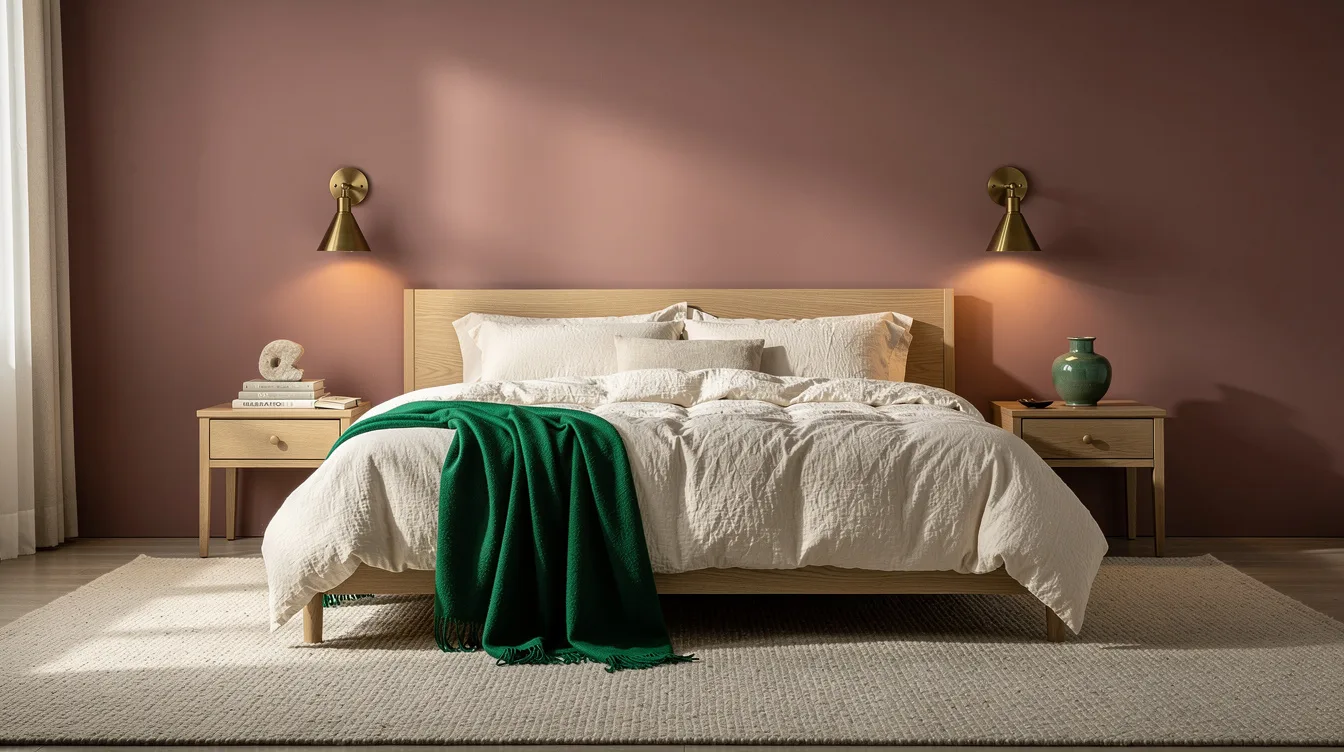
Use dusty rose paint on the wall behind the bed, then keep the other walls, ceiling, and trim in a warm off-white. A cream with a faint beige cast makes rose look intentional; a sharp blue-white can make it look oddly bubblegum.
Bring in a light oak bed and an ivory linen duvet, then repeat oatmeal through a bench or woven shade. This is the safest scheme, and it still has personality once an aged brass lamp catches the evening light.
Sample a beige-based rose beside a mauve-based one before buying gallons. North-facing light often pulls out gray-violet undertones, while bright afternoon sun can make a warm sample look much pinker than expected.
Wrap the Room in Mauve Rose
For a cocooning bedroom, paint every wall in a restrained mauve-rose matte finish. Matte has the softest, velvety read in a bedroom, though washable matte or eggshell is the practical choice near headboards and frequently touched walls.
Counter that softness with walnut nightstands, cream bedding, and a sage or oatmeal wool rug. The deep grain in walnut gives the room the boutique-hotel mood that pink rooms often miss.
Keep the rose portion generous only when the architecture can handle it. A room with decent daylight and simple trim looks enveloping; a dim room with busy millwork can quickly feel boxed in.
Ground Rose With Olive and Walnut
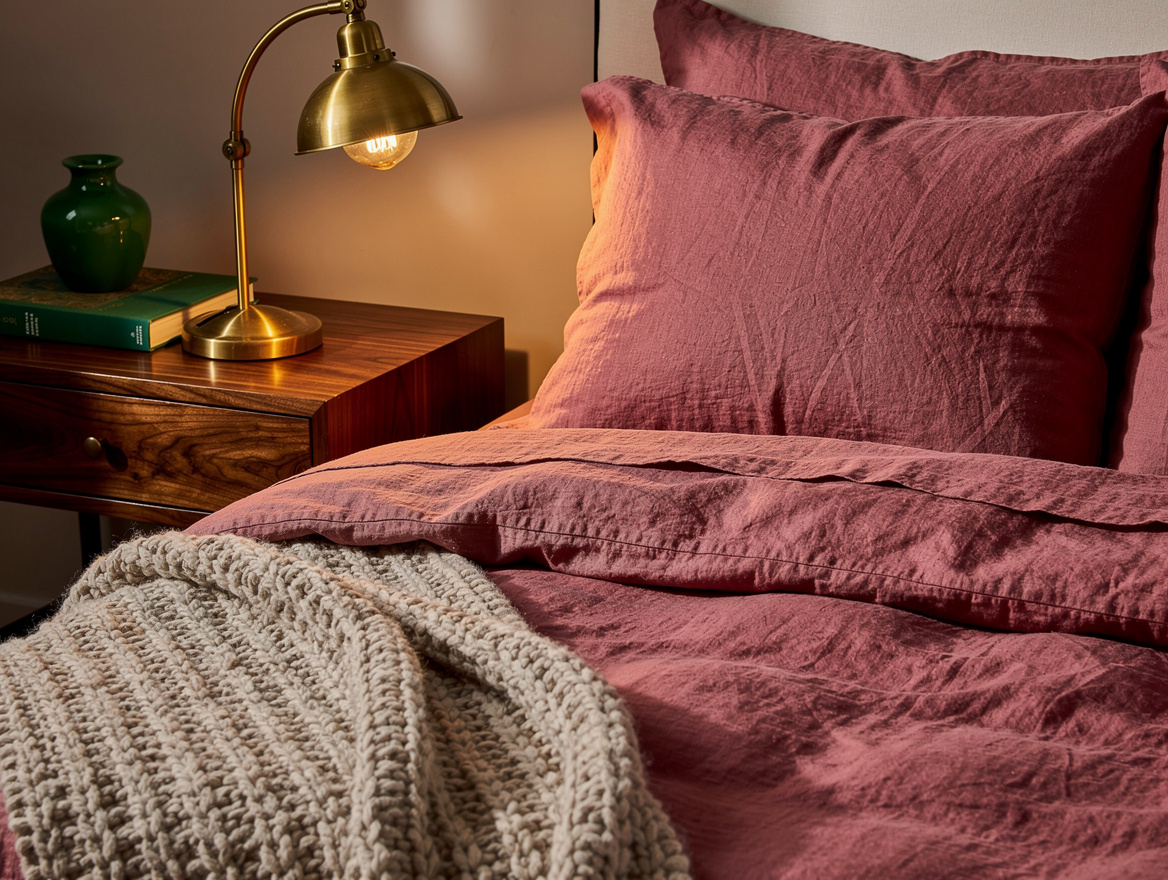
Muted olive is dusty rose’s most useful partner because both colors have a weathered, earthy cast. Use it in one substantial place, such as a rug, an upholstered chair, or a long lumbar pillow, instead of sprinkling tiny green accents everywhere.
Pair the palette with walnut veneer or solid walnut furniture and natural linen. The room gets warmth from the rose and wood, while olive supplies the contrast that makes the palette feel current.
A chunky knit throw. One brass candleholder. A framed botanical print with plenty of blank space.
Those details are enough, and anything more starts to make the color story feel themed.
Sharpen the Palette With Charcoal
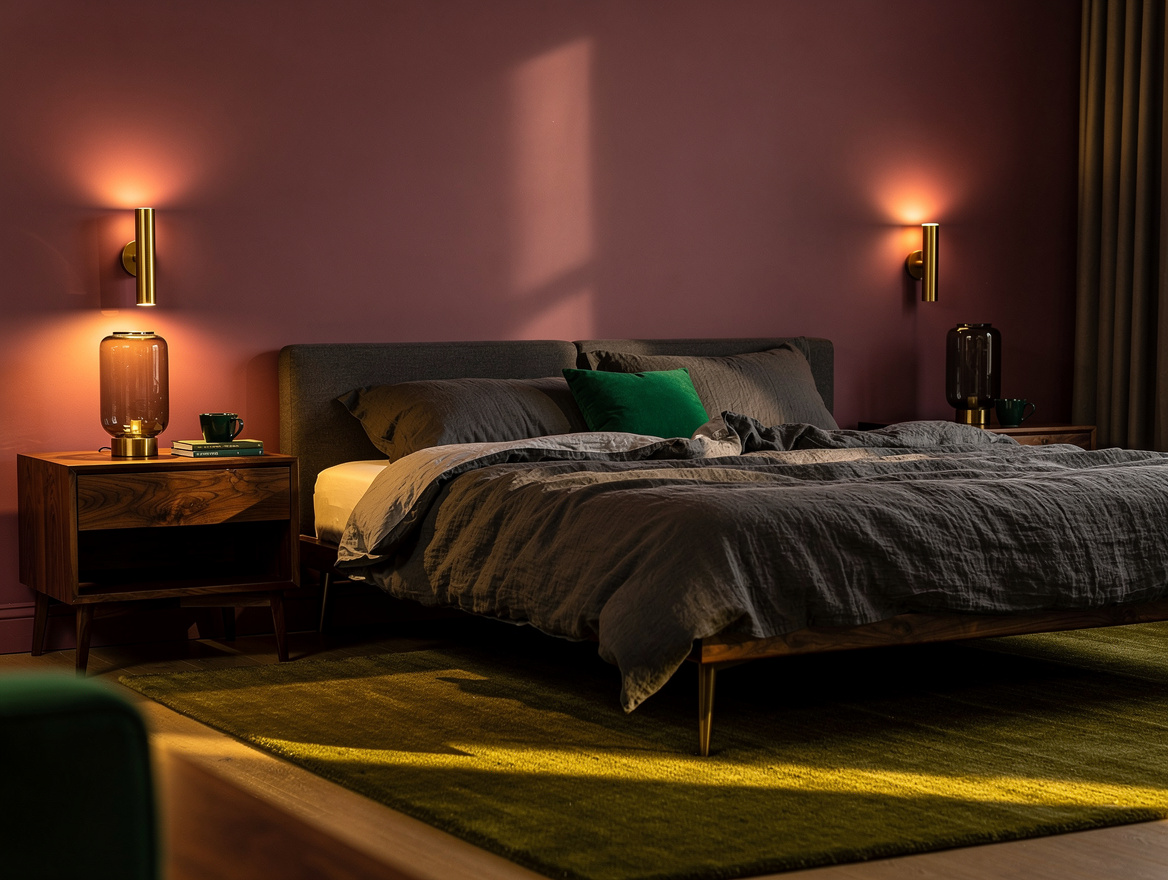
Choose charcoal linen bedding when you want dusty rose to look architectural rather than romantic. Charcoal has enough seriousness to make rosy walls feel edited, especially alongside dark timber and bronze or black lighting.
A charcoal upholstered bed works, but a blackened steel sconce is often the better first move in a smaller room. Mount bedside sconces roughly 55 to 65 inches from the floor, and position them about 6 to 12 inches from the bed edge for a useful reading pool.
Skip glossy black furniture here. Its hard shine fights the chalky softness of rose; smoked glass, matte metal, and textured cotton keep the contrast more convincing.
Use Navy for a Tailored Finish
Deep navy curtains give dusty rose a crisp, tailored edge without cooling the entire room. Keep the bedding warm white so the contrast remains clean and the windows do not become a dark visual block.
Choose a natural oak dresser or warm-white casegoods rather than gray furniture. Rose, navy, and gray can feel overly formal together, while pale wood gives the composition some welcome daylight.
Hang curtain rods roughly 4 to 8 inches above the window, with panels that reach close to the floor. That extra height makes even a modest bedroom feel more composed, and it lets the navy read as a deliberate frame.
Make the Bed the Soft Tailored Moment
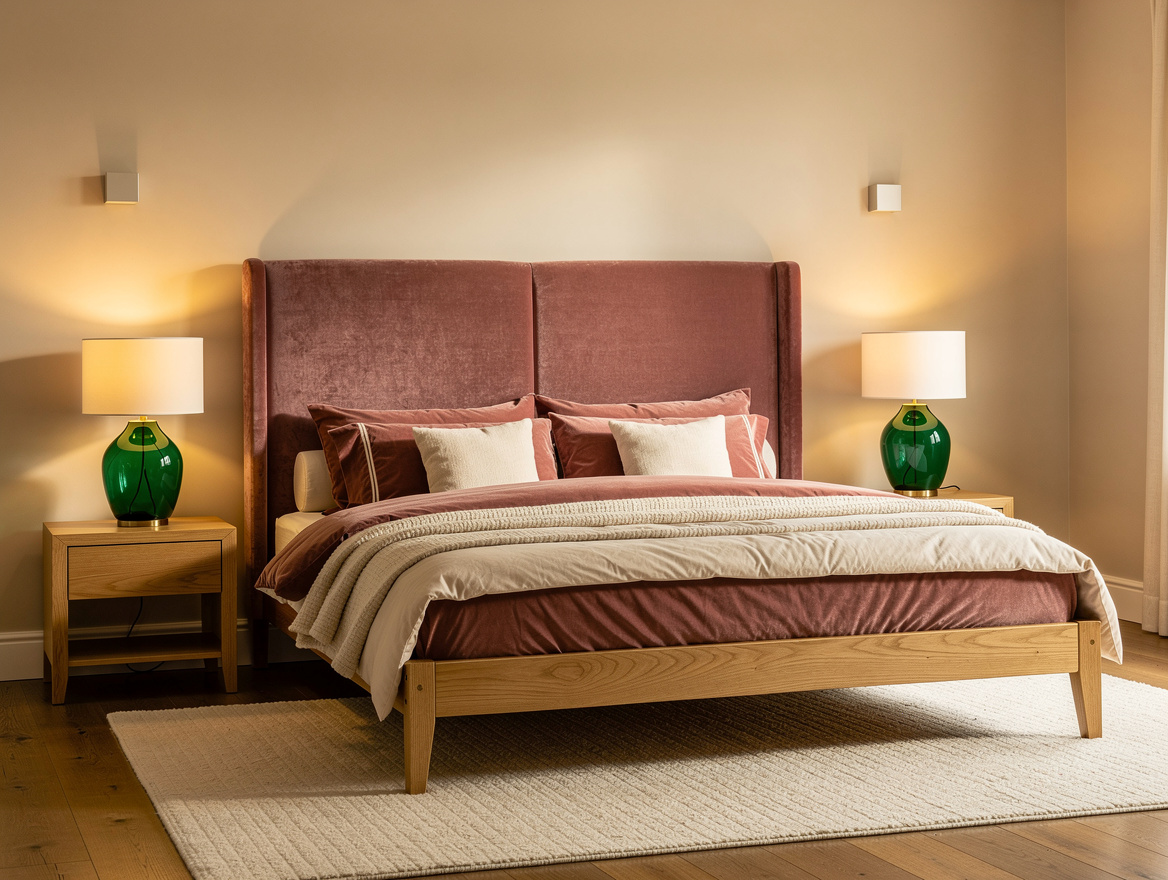
Keep cream walls and make the bed the dusty rose statement with a linen-blend upholstered headboard or rose quilt. Linen and linen-blend upholstery stay calmer than performance velvet, which can be excellent but needs simpler surrounding finishes.
Place an 8-by-10-foot wool rug beneath a queen bed, or use a 9-by-12-foot size beneath a king when the room allows. The rug should extend beyond the sides of the bed so the first step each morning lands on texture rather than bare floor.
Choose nightstands about 20 to 28 inches wide and keep their tops within roughly 1 to 2 inches of the mattress height. That small proportion detail makes the whole bed wall look custom, even with straightforward pieces from Wayfair or Home Depot.
Start with two paint samples, a cream textile, and the wood tone you already own. Once those three items agree in morning and evening light, dusty rose stops being a risky color and becomes the room’s calmest decision.
Mia Carter writes about small-space living and budget home makeovers. She has restyled three rentals and tests most ideas in her own 45 sqm flat.