
The ceiling above a 160 × 200 cm bed is often the room’s most neglected surface. A wallpaper canopy changes that view, either by framing the paper inside a shallow recess or carrying it down the headboard wall for an alcove effect.
The right version feels quiet and enveloping, while the wrong one looks like an afterthought pasted overhead. Designers tend to solve it with scale, alignment, and a pattern that earns its place above the pillow.
Frame the Paper Inside a Ceiling Recess
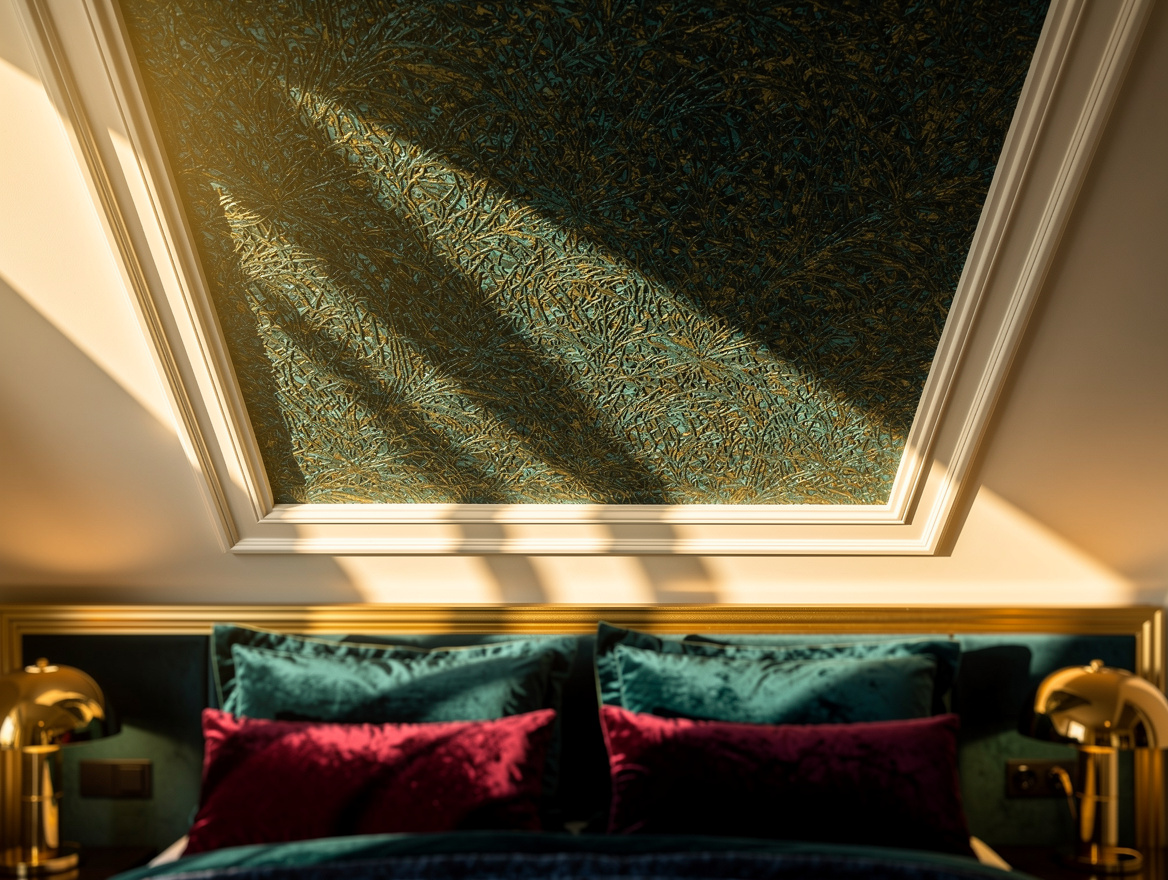
A framed inset gives a tray ceiling the tailored look of a boutique hotel. Cover the recessed center with **textured wallpaper**, then paint the raised trim in a shade pulled from the pattern.
This approach keeps the ceiling detail contained, which works especially well with neutral bedding and a simple pendant. A matte finish from **Home Depot** can help the surrounding trim look intentional rather than glossy.
Wrap the Headboard Wall Into the Ceiling
On a flat ceiling without architectural detail, carry the same **low-contrast stripe** up the headboard wall and across the ceiling. Stopping the paper at an arbitrary line overhead usually makes the room feel chopped in half.
A muted blue on ivory or taupe on cream creates a tucked-in alcove without overwhelming the bed. Keep the duvet mostly solid, and let **Wayfair** bedding provide only quiet texture.
Scale the Inset Around the Bed
For a 160 × 200 cm bed, a 220 × 240 cm inset is a useful starting proportion. It extends about 30 cm past each side and about 40 cm beyond the foot when the panel begins at the headboard wall.
Use those dimensions as a design guide, then adjust for the room’s sightlines and ceiling light. A border made from **painted wood trim** gives the paper a finished edge and makes the canopy feel built in.
Follow Slopes Instead of Fighting Them
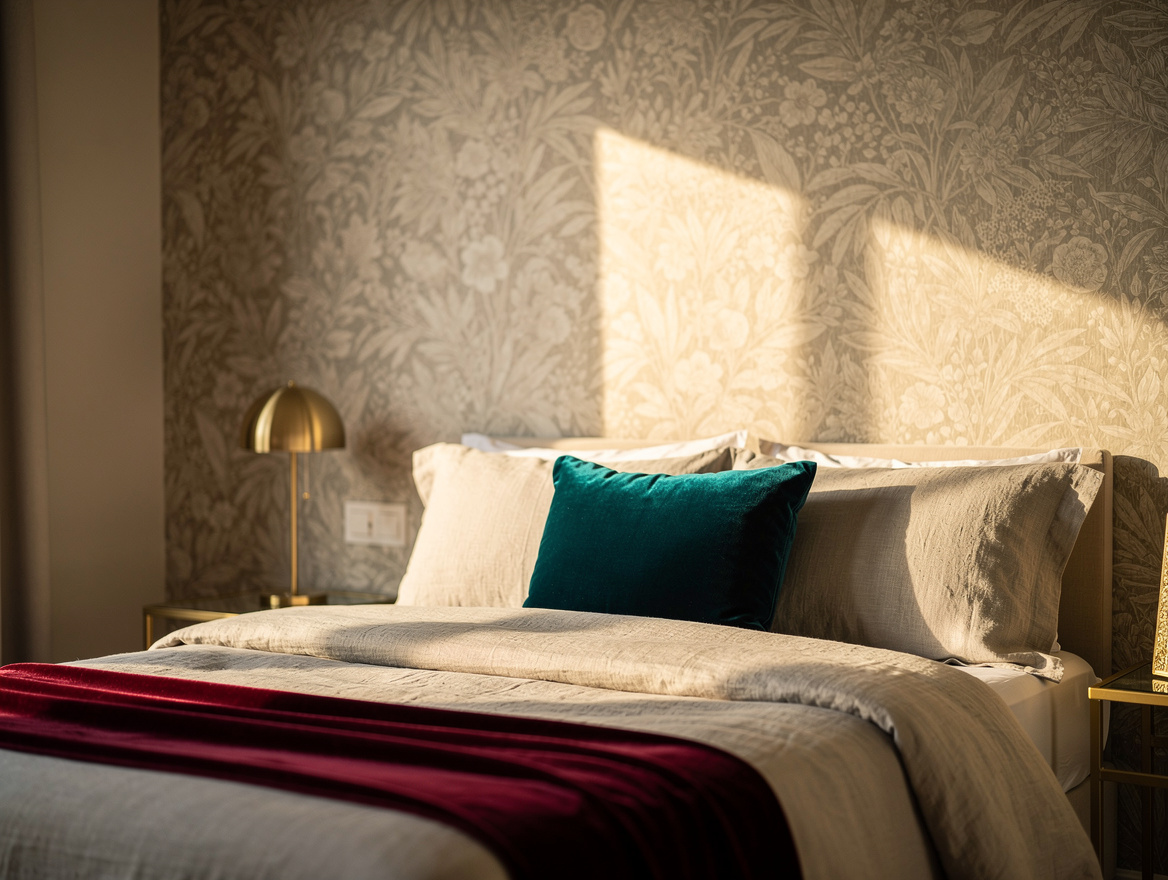
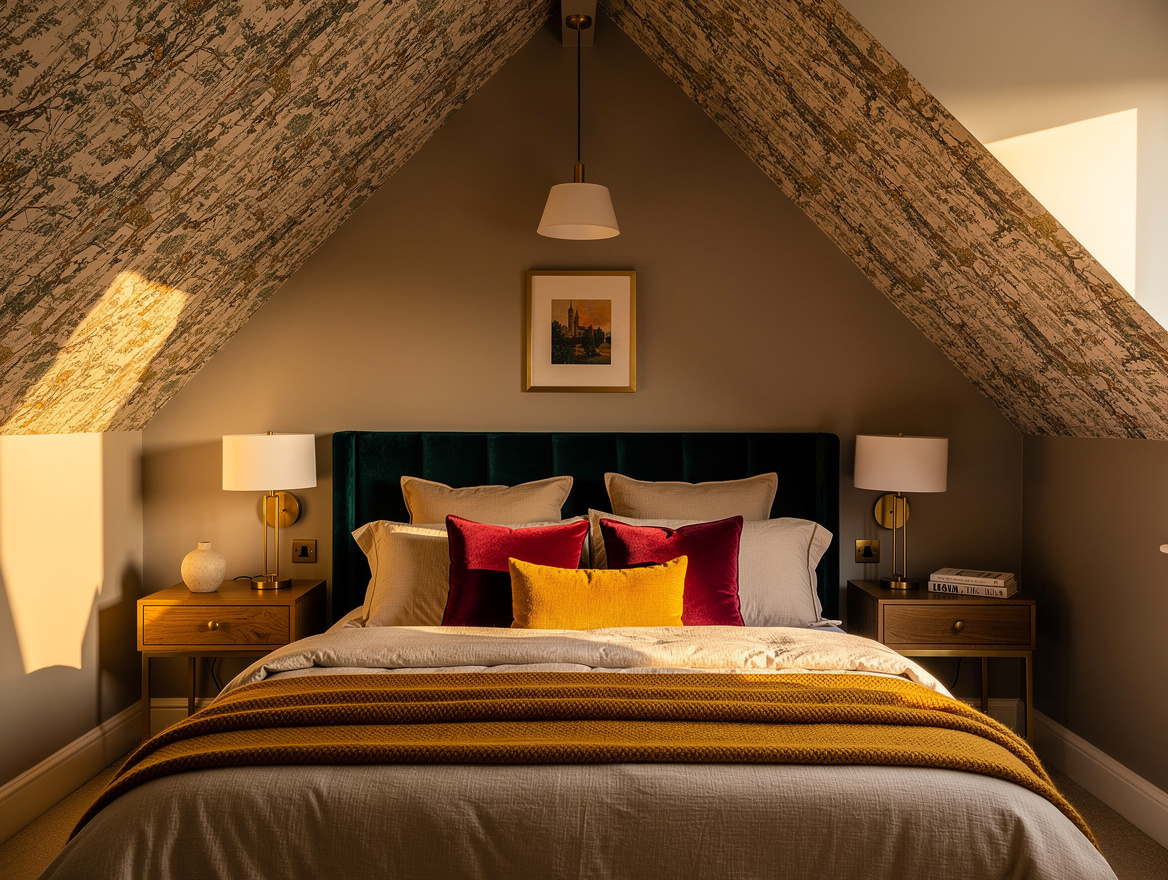
On a sloped ceiling, follow the architecture with **botanical wallpaper** rather than forcing a level rectangle overhead. The angled pattern can make a small bedroom feel more deliberate and give the bed a natural sense of shelter.
Choose a quiet print from **Lowe’s** or another US retailer, and keep the scale moderate if the ceiling has several changes in direction. Solid linen-colored bedding will keep the angles from becoming visually busy.
Crop the Sky Where Your Pillow Sees It
A painted-sky mural works best when its most interesting clouds sit in the view from the pillow. Ask for a crop preview with the **ceiling light** and bed marked before ordering, because the fixture can hide the focal section.
For a softer effect, use a made-to-measure **cloud mural** across the entire ceiling or crop it inside a recess. A custom example priced at about €53 per square meter shows why measuring first matters, especially on a large overhead surface.
Budget the Ceiling Before You Order
A 12 m² ceiling, roughly 3 × 4 meters, needs extra material for trimming. One published worked estimate adds 5 cm to each overall dimension and puts the paper at about €655, with installation bringing the total to roughly €1,025 on a sound ceiling.
Treat that figure as a planning reference rather than a US average. A typical custom-wallpaper project also needs an installer who approves the adhesive, checks the ceiling for repairs, and confirms that **ceiling-safe paste** is suitable for overhead use.
Start by marking the bed, light fixture, and proposed paper edges on the ceiling with painter’s tape. That small layout test will tell you whether the canopy feels tailored before you spend on material or installation.
Mia Carter writes about small-space living and budget home makeovers. She has restyled three rentals and tests most ideas in her own 45 sqm flat.