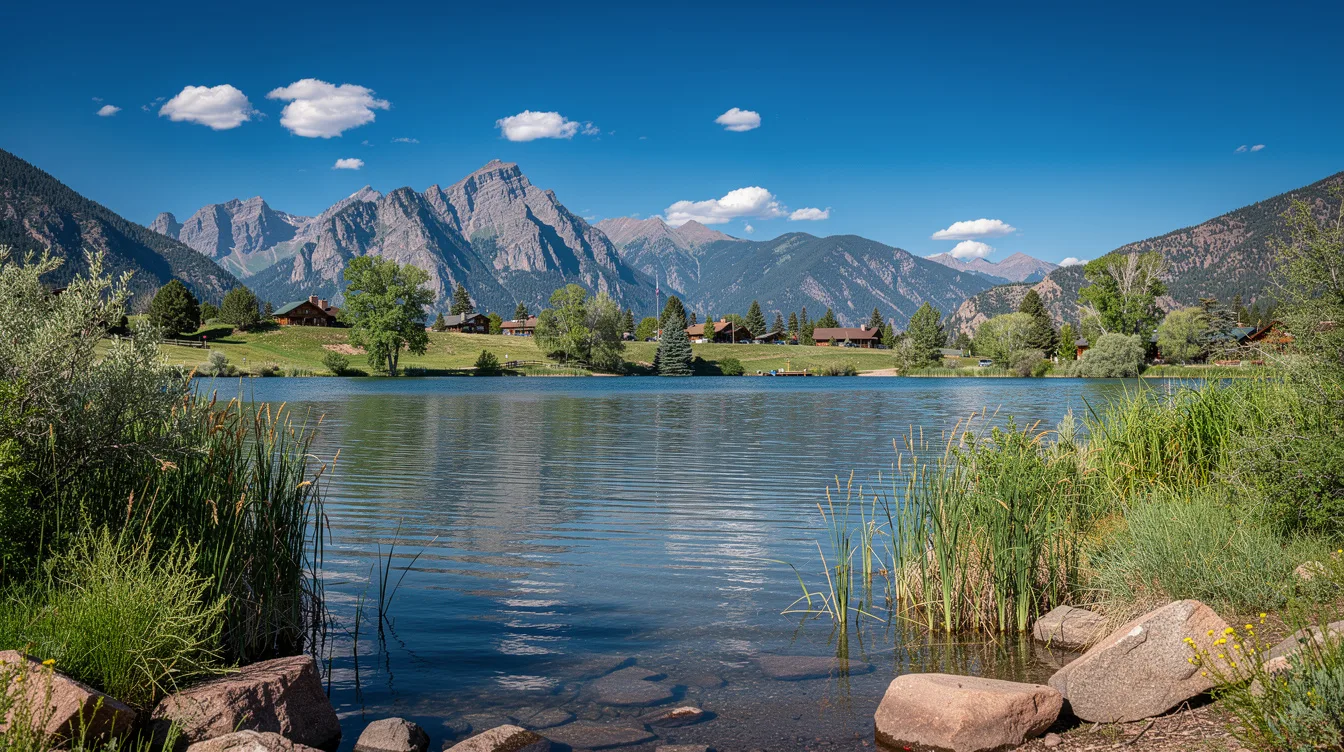
Estes Park sits 7,743 feet above sea level at Rocky Mountain National Park’s eastern entrance, so the town feels like a real gateway rather than a distant lodging stop. It’s also home to the park headquarters, which explains why so many park days begin here.
About 70 miles northwest of Denver, this Larimer County town gives you a direct route into the Rockies without pretending to be remote. But the elevation is real. Take the first day slowly, drink water, and expect cooler nights after the sun slips behind the mountains.
The east gate makes Estes Park a useful base
Rocky Mountain National Park is the reason to come, and Estes Park is the practical place to wake up before heading in. You can spend a day hiking, looking for wildlife, driving through high country, or cycling, then return to restaurants and a proper bed.
And that convenience has a trade-off. Summer crowds fill the town and can make it relatively expensive, especially when visitors are all trying to enter the park on the same clear morning.
Timed-entry permits are typically used during high season, so check the current park rules before you commit to a plan. That small bit of homework matters because you don’t want your mountain morning to end at an entrance station.
Elk are part of the town’s daily rhythm
Elk are especially common in and around Estes Park, along with mule deer and bighorn sheep. You may spot them near town, which is thrilling until you remember that they are wild animals and need substantial space.
Fall is the season to come for elk viewing and changing foliage. The air has that sharper mountain edge, and the quieter pace makes a better match for people who’d rather watch than rush.
But don’t treat wildlife as roadside entertainment. Keep your distance, let animals move through, and resist the urge to turn every sighting into a closer look.
Elkhorn Avenue is lively, but it isn’t the whole trip
Elkhorn Avenue is Estes Park’s tourist center, with restaurants, shops, galleries, and mountain-town lodging. It’s easy to spend an afternoon here after a park outing, especially when your legs are done with uphill miles.
And you should give it some time. The street has the useful, slightly busy feel of a town built around travelers, not a silent mountain outpost trying to impress you with emptiness.
The town also has The Stanley Hotel, a historic landmark connected to the inspiration for Stephen King’s The Shining. Its presence adds a strange literary note to a destination otherwise focused on trailheads and weather.
Lake Estes gives the town a slower afternoon
Lake Estes was created in 1949 when Olympus Dam was completed, and it offers an easier local break from the national park. In season, visitors can walk, cycle, kayak, paddleboard, or go boating.
The water changes the mood. After a day of park traffic and high-country plans, you can stand near the shore and let the wind do very little except cool your face.
But Lake Estes isn’t a substitute for Rocky Mountain National Park. It works best as the softer edge of the trip, a place to reset before dinner or after you’ve spent hours looking uphill.
Summer and early fall are the sensible choices
Summer and early fall are the main outdoor seasons, and that’s when Estes Park makes the strongest case for itself. Trail Ridge Road through the park is generally seasonal, commonly open from May to October, though snow and weather decide the final word.
And if you want fewer people than peak summer brings, late May, June, September, and early October can offer a more manageable balance. You’ll still need to plan, but the town has more room to breathe.
Estes Park began in 1859, yet its appeal remains immediate: a river town at the park gate, built for people who want the Rockies close. By evening, the light fades over Lake Estes and the mountain air turns cold enough for another layer.