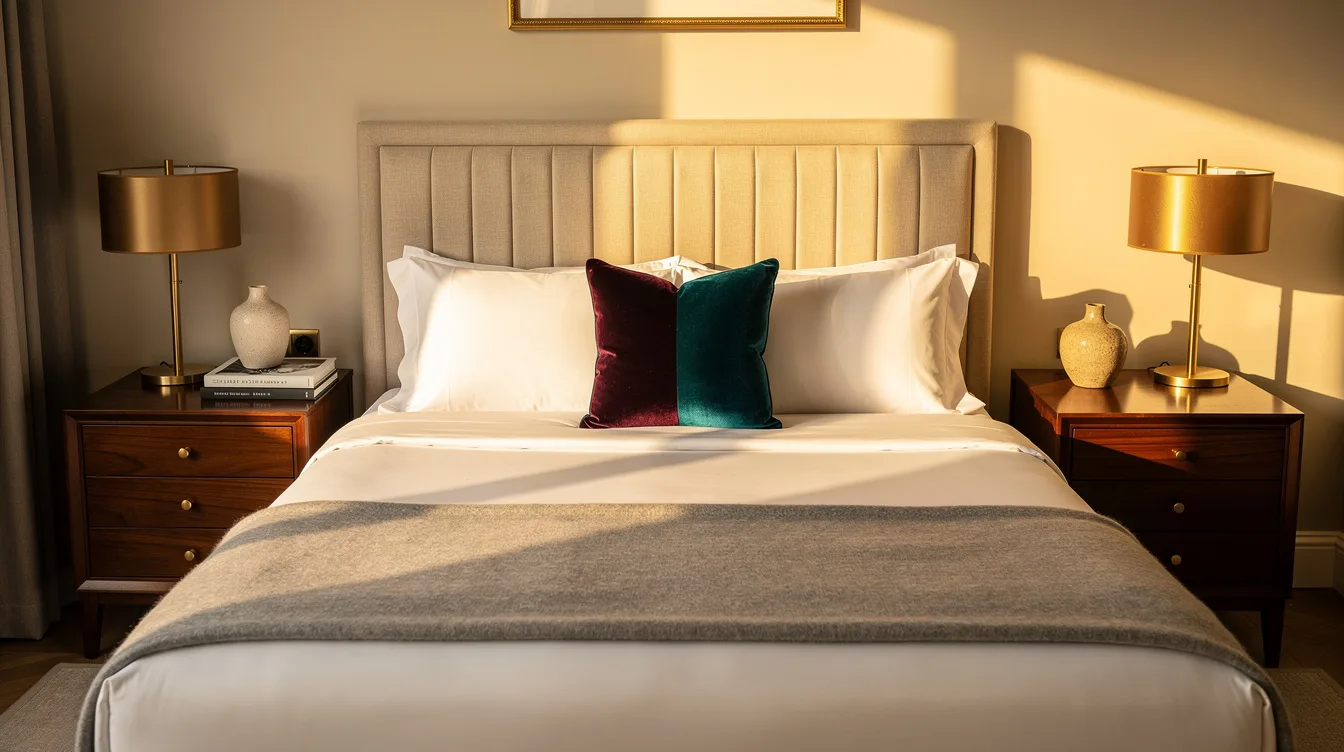
I learned the hard way that a cashmere bed can become too warm fast: my 54-inch-wide guest bed felt plush at bedtime, then stuffy by 2 a.m. The better move is to let cashmere appear where your hands and eyes notice it most, rather than covering every inch of the mattress.
Typical cashmere-blend sheet or duvet pieces run about $250 to $700, while premium blankets can range from roughly $650 to $3,500 or more. That price spread makes layering a far smarter luxury decision than buying an entire matching set on impulse.
Start With Crisp Ivory Percale
Build the bed on warm-ivory cotton percale sheets, then reserve the softer texture for the upper layers. A cashmere blanket looks richer against a clean, matte foundation than it does beside shiny synthetic sheets.
I favor an unfussy white sheet set from Target or Amazon for this setup. The contrast has that quiet hotel-room polish, and the breathable base keeps the bed practical in every season.
Fold Cashmere Across the Lower Third
Place a dove-gray or taupe cashmere blanket across the lower third of the bed, with a generous fold rather than a narrow runner. This gives the fabric a visible role without trapping warmth around your shoulders all night.
Keep the blanket’s edges relaxed but straight. A softly folded layer feels tailored; a rumpled pile makes even expensive bedding look like it was dropped there at laundry time.
Choose a Cool-Sleeper Blend
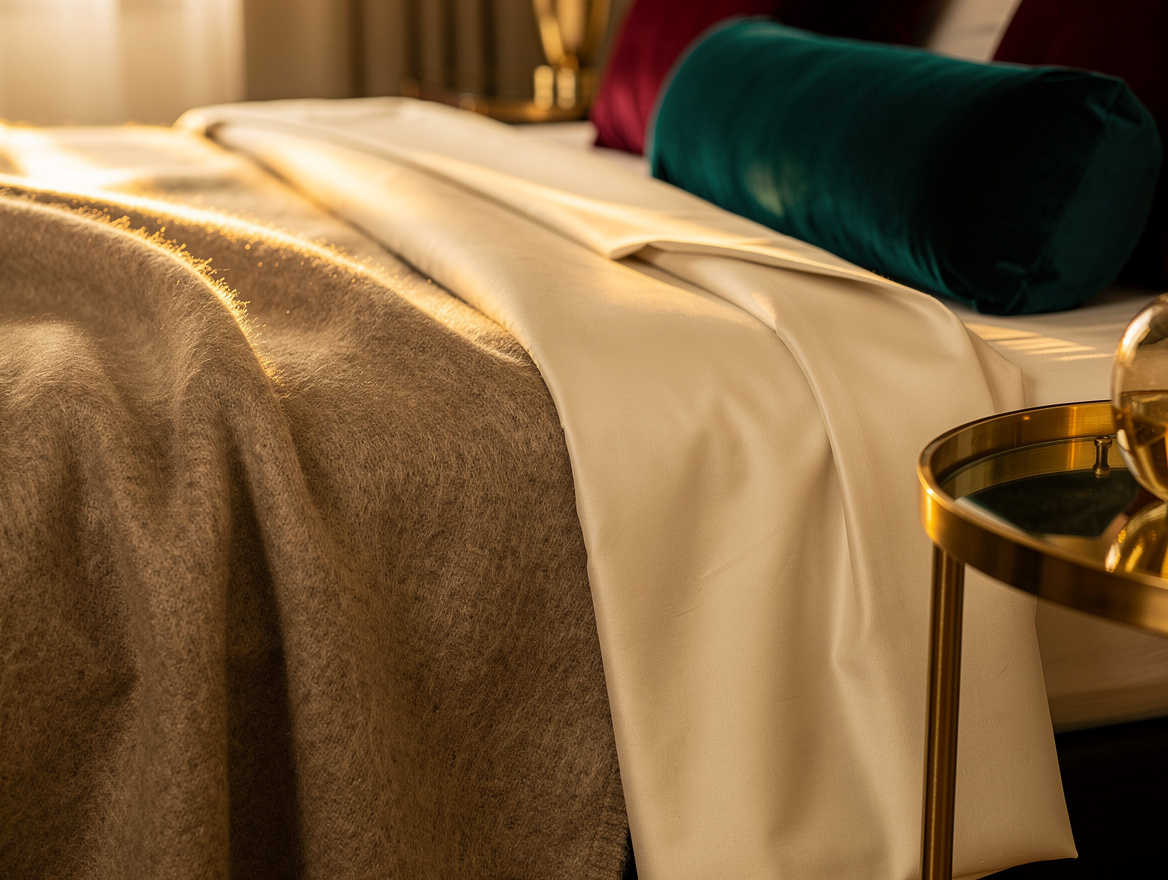
Cool sleepers should look for a brushed cashmere-cotton blend, not pure cashmere sheets. The cotton carries the everyday wear, while the small cashmere content adds a gentler hand and a lightly heathered finish.
Charcoal, oat, camel, and stone are the useful shades here. They work especially well with a warm-beige upholstered headboard and walnut nightstands, while bright white can make the blend look oddly sporty.
Give the Duvet a Matte Frame
Cover the insert with a matte linen duvet cover or washed cotton cover, then let the cashmere remain the tactile star at the foot of the bed. Too much sheen beside brushed fibers can make the layering feel costume-like.
A cashmere-and-wool-filled duvet is a sensible choice for a strongly air-conditioned room. It offers more balanced warmth than pairing pure cashmere layers with a heavy down comforter, which is often more insulation than a bedroom needs.
Anchor the Bed With Warm Woods
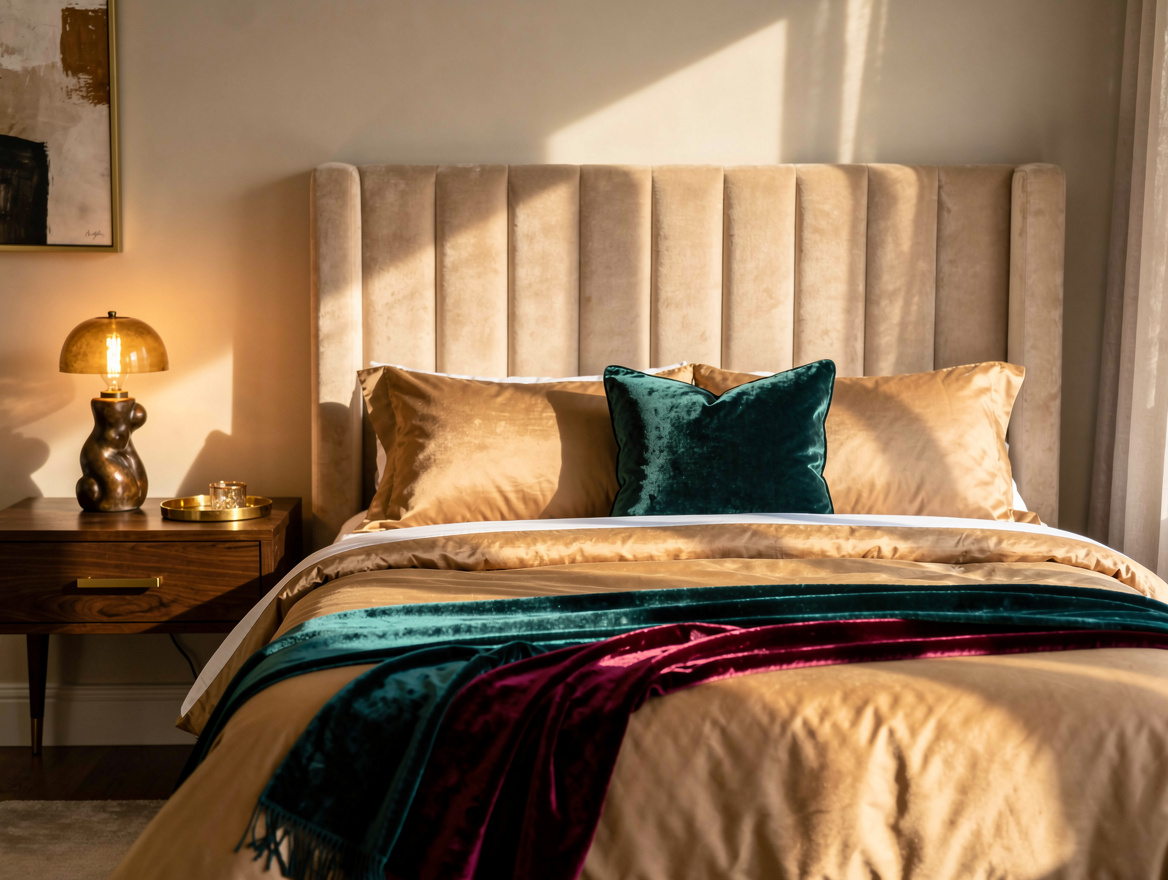
Cashmere needs a little structure around it. Add walnut side tables and compact bronze reading lamps so the soft textiles do not make the room feel overly sweet.
For an accessible starting point, shop a simple wood nightstand at IKEA and spend more on the layer that touches the bed. The expensive-looking result comes from the material contrast, not from matching every piece of furniture.
Edit the Pillow Layer Ruthlessly
Use two Euro shams and one long lumbar pillow, then stop. A nubby bouclé lumbar or a quiet suede cover gives the bed depth without burying the cashmere under a parade of decorative pillows.
Skip novelty wording, oversized monograms, and high-gloss satin. Cashmere already reads as a luxury material, so it needs restraint around it to keep the room calm and grown-up.
Buy the blanket first and test it over the lower third of your existing bed for a week. Once that layer works with your room’s temperature and palette, the rest of the luxury look becomes much easier to build.
Mia Carter writes about small-space living and budget home makeovers. She has restyled three rentals and tests most ideas in her own 45 sqm flat.