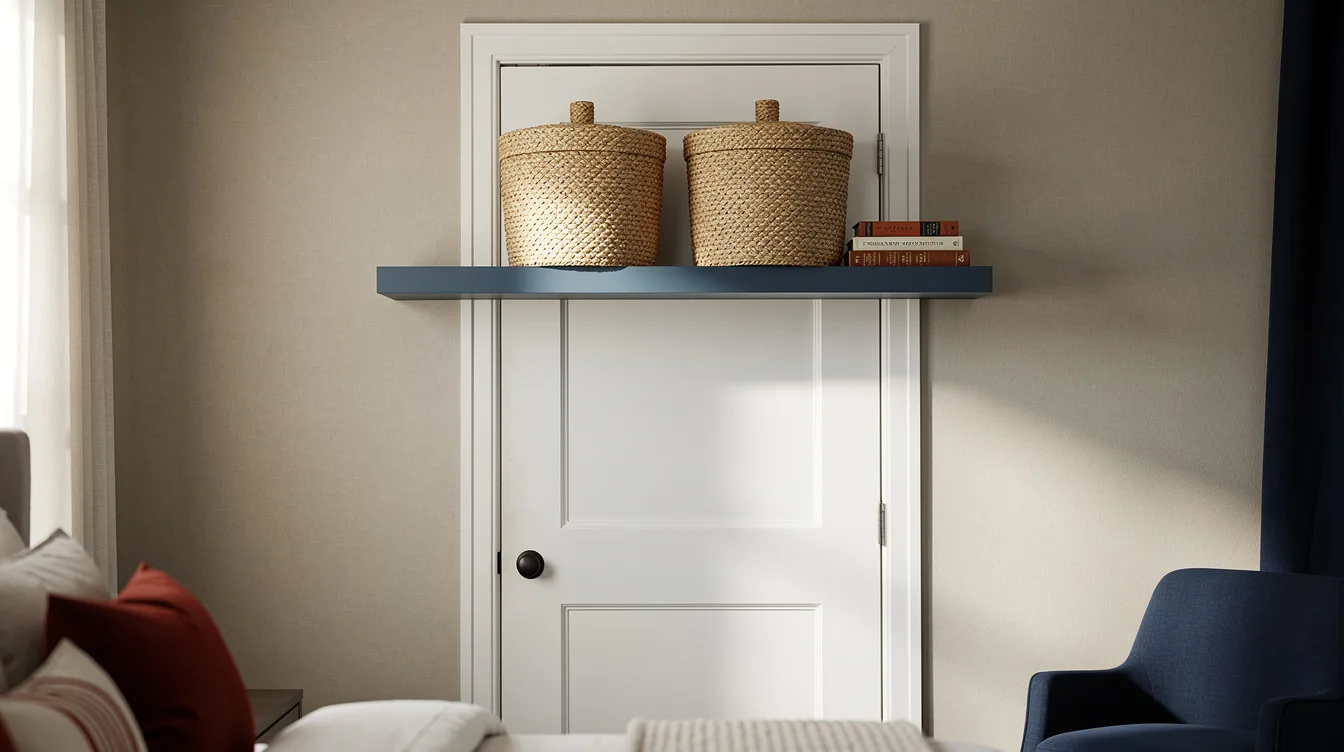
A shelf over the bedroom door can solve the awkward gap that collects nothing but dust, yet it often turns a doorway into a visual speed bump. In a small bedroom, an about 100 x 20 x 3.8 cm pine shelf has enough presence for two baskets without making the opening feel pinched.
The consensus among designers is firm: this is high-up storage, so it should look intentional from the bed and hold only the things you do not reach for every morning.
Measure Past the Casing Before You Buy
Stopping a shelf exactly at the door trim makes it look accidental. Measure the casing, then let the shelf extend roughly 5 to 10 cm beyond each side for a composed frame; a finished single-door shelf is typically about 90 to 110 cm wide.
A Home Depot poplar board cut to that span is a clean starting point because poplar takes paint well and does not bring heavy grain into a quiet bedroom. Skip a shelf that is narrower than the trim, which always reads undersized.
Keep the Projection Visually Shallow
Depth is where good intentions become a forehead hazard. About 18 to 25 cm is the useful sweet spot for books and low baskets, while roughly 25 to 30 cm can handle linens but looks bulky in a narrow room.
For a decorative mini library, choose a shelf around 15 to 18 cm deep and add a small front lip in natural oak. Paperbacks, one framed photo, a compact ceramic object, nothing that crowds the edge.
Anchor the Shelf to Real Structure
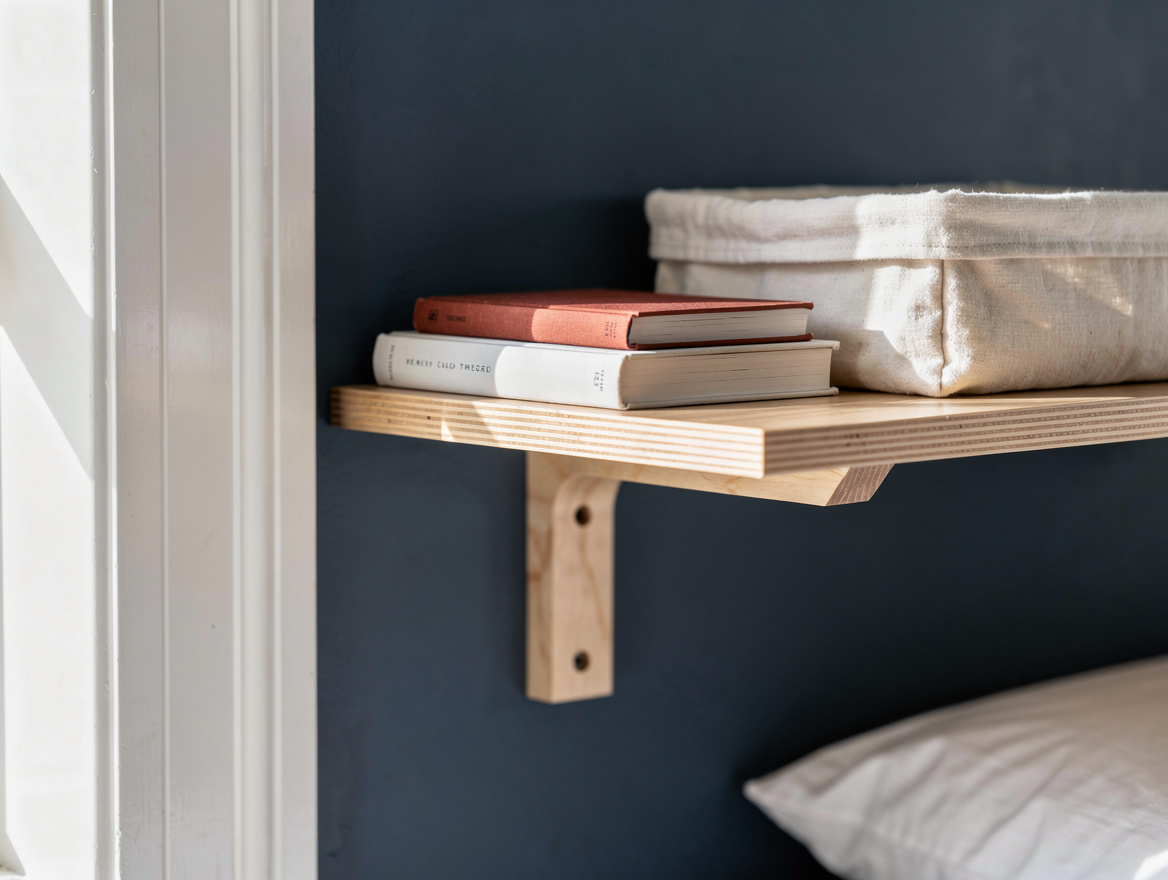
A floating shelf above a door is never the place to trust drywall anchors alone. Fasten its concealed bracket into studs or solid masonry, and treat lightweight construction as a reason to reduce the load, not to gamble with it.
A steel floating-shelf bracket from Lowe’s can disappear behind a painted board, but the hidden hardware still needs a solid bite. Books are deceptively heavy, especially when they become a full door-width row.
Store Only What Can Stay Up There
This spot earns its keep when it holds infrequently used belongings: spare bedding, seasonal accessories, extra books, or small plants that do not require daily tending. It is a terrible landing zone for the items you need while half awake.
Use matching IKEA KUGGIS boxes or lidded fabric baskets to keep the shelf from becoming overhead clutter. Two containers and a short stack of books feel deliberate; a jumble of loose cords and random bags does not.
Leave Room to Lift a Basket
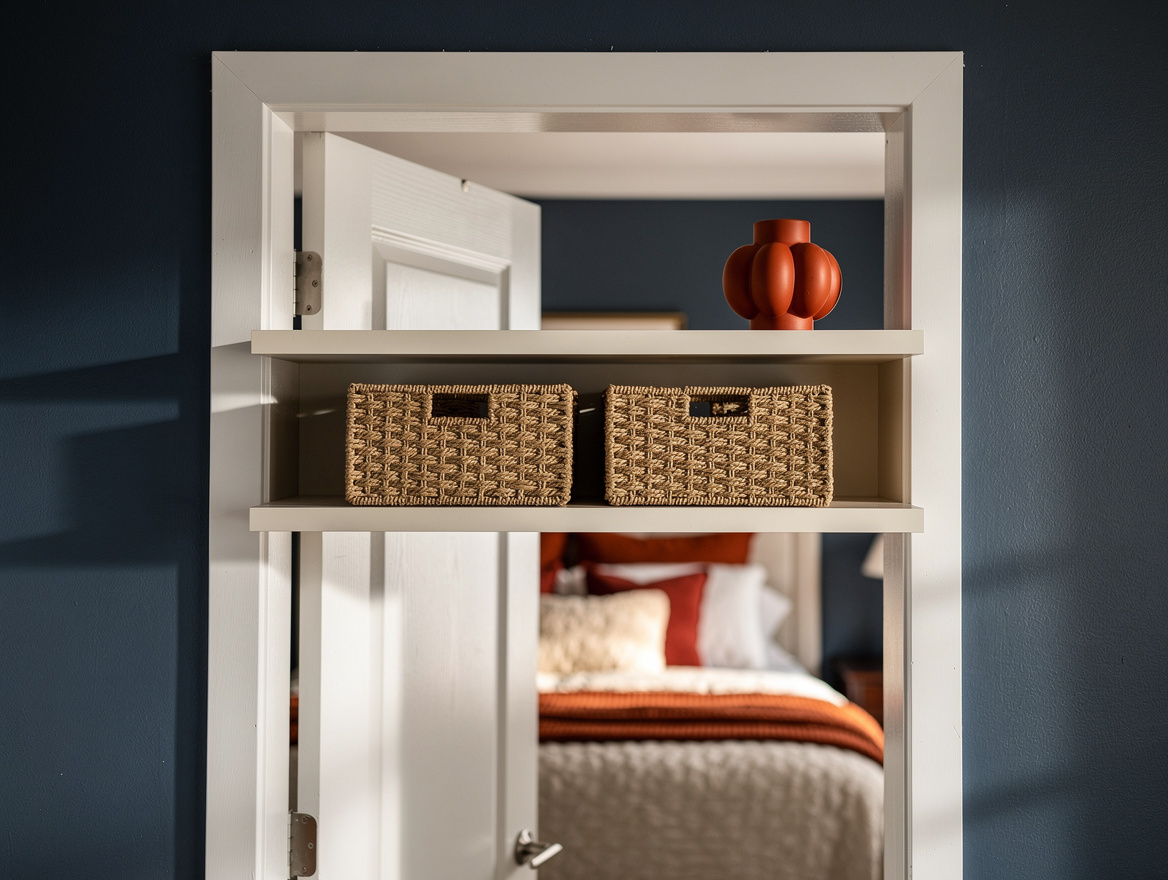
Ceiling clearance matters more than a shelf’s styling. Leave roughly 25 to 35 cm above the shelf whenever possible, so a basket can be lifted off without scraping the ceiling or forcing you to tip its contents onto the floor.
A pair of low Target Threshold lidded baskets makes better use of that clearance than tall bins. The lid should be easy to grip from below, and the basket should not need to be dragged along the shelf.
Match the Shelf to the Wall’s Architecture
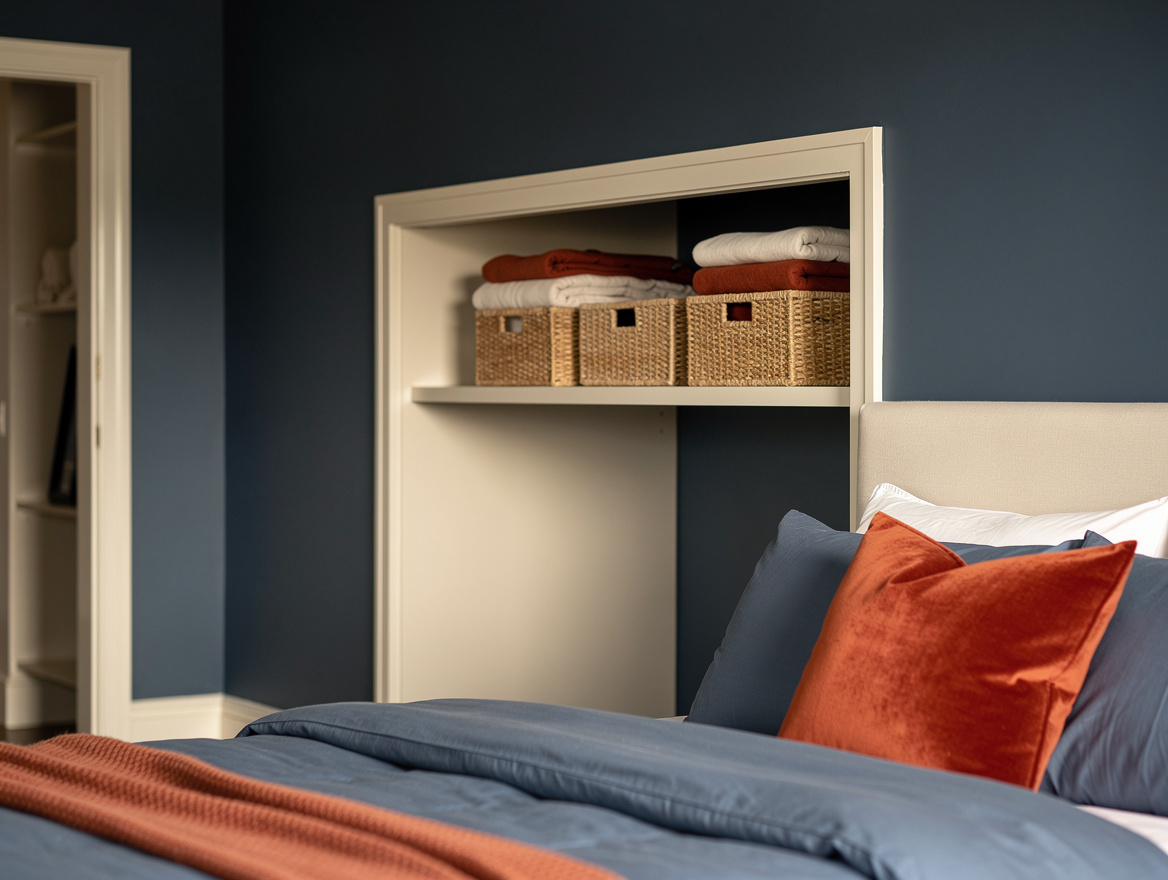
A lone shelf can look excellent over one door, but a long wall often wants a stronger line. Run a roughly 20 to 25 cm deep rail across the wall, or bridge the door toward a closet for a built-in effect that makes storage feel planned.
Paint a deeper ledge in the same color as the wall, then use Wayfair woven storage bins for linens or holiday accessories. The continuous paint line quiets the projection and lets the architecture do the talking.
Choose Material for the Actual Load
Cheap laminated boards are fine for a few baskets, but they are not the answer for dense hardcovers or a shelf that spans a wide doorway. Budget ready-made shelves typically cost about $15 to $35, while a better retail option may cost more because its bracket system and board are sturdier.
Use birch plywood for a paintable custom shelf with more stability than bargain particleboard, or choose solid oak when you want a furniture-like finish. A 3 to 4 cm visible thickness usually feels substantial without hanging over the door like a beam.
Start with the door that needs linen storage most, then measure the trim and ceiling clearance before choosing a board. Secure the shelf to structure first, and let its contents stay sparse enough that the doorway still feels open.
Mia Carter writes about small-space living and budget home makeovers. She has restyled three rentals and tests most ideas in her own 45 sqm flat.