
In my last rental, the bedroom had a low dark-wood bed, brass lamps, and exactly the problem I had feared: by 7 p.m., it felt smaller than it was. The fix was not buying more lighting or adding more gold, it was deciding which surfaces deserved to stay dark.
I treated the walnut bed as the room’s main visual mass, then gave its edges a few warm reflections. Once I used lighting around 2700 to 3000K and brought in a pale rug, the room felt hushed rather than gloomy.
The result convinced me that dark wood and brass need editing, not decoration. Here is what actually made the combination work.
Let Dark Wood Carry the Visual Weight
I started with a bed frame in American black walnut because the room needed one confident dark mass before any accessories arrived. A thin dark stain on lightweight furniture reads like a costume, especially beside real wood grain.
My rule became simple: the bed, nightstands, and dresser should feel related, even when they are not a matching set. Wide panels can use quality veneer, but solid-wood frames and legs give a dark bedroom the weight it needs.
Limit Brass to Useful Touchpoints
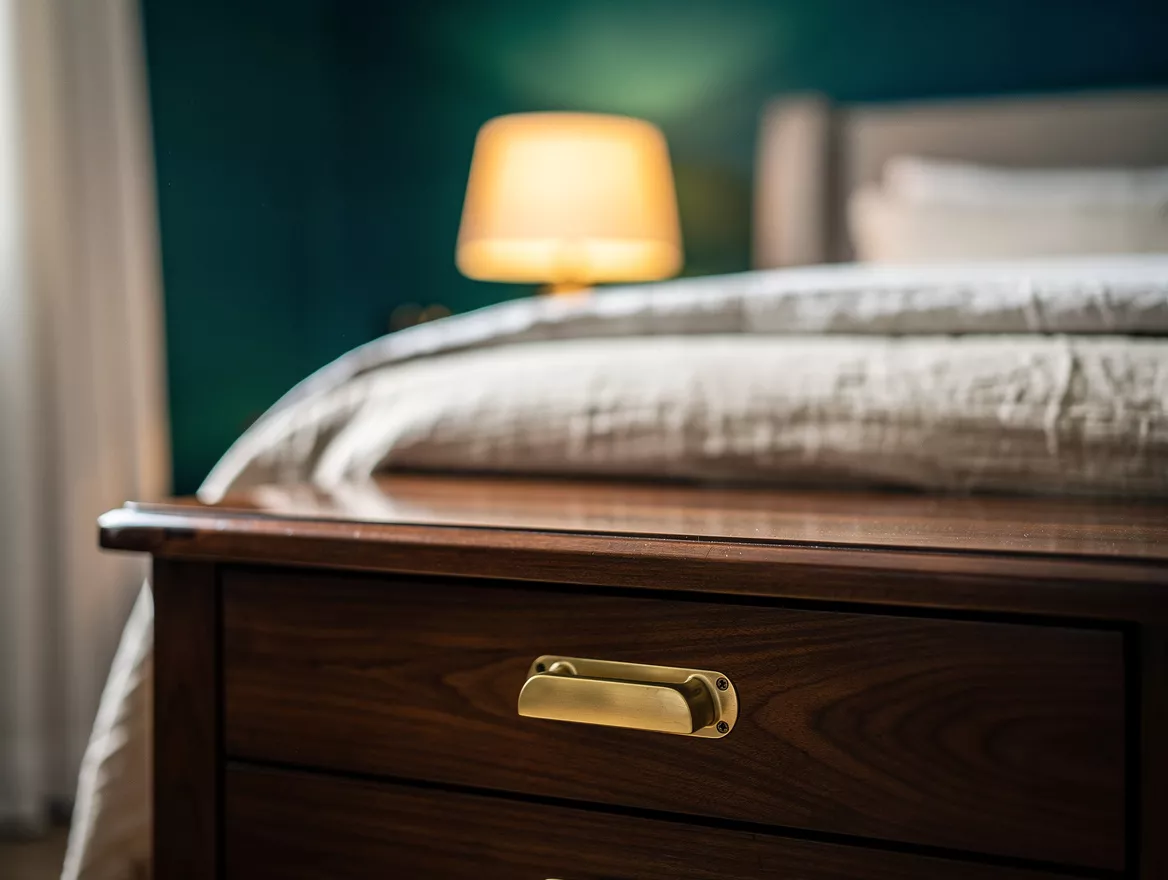
I kept to two or three brass moments: bedside sconces, drawer pulls, and one mirror. That restraint made every warm reflection feel deliberate instead of turning the room into a shiny theme.
For hardware, I would pay extra for solid unlacquered brass, which develops an easy patina over time. On a large lamp or mirror, brushed and satin finishes look calmer and are easier to live with.
Mount Lighting Before Filling the Nightstands
Wall-mounted brass sconces cleared the nightstands and gave the bed a hotel-like outline after dark. I chose warm bulbs in the 2700 to 3000K range, because cooler light makes walnut look flat and turns cream bedding gray.
A pair of sconces also keeps the visual balance steady when one nightstand holds a book and the other holds nothing. I would avoid polished brass here unless the rest of the room has a clear retro direction.
Break Up the Brown With Creamy Bedding
Dark furniture gets heavy fast when the bed is dressed in charcoal, navy, and brown from headboard to foot. I used creamy linen for the main bedding, letting its rumpled texture soften the clean lines of the wood.
An oatmeal duvet, ivory pillowcases, and a tobacco leather lumbar pillow gave me enough contrast without a bright-white glare. The bedding should look touchable, not perfectly pressed into a showroom display.

Anchor the Bed With a Pale Rug
A dark bed placed directly on dark flooring can look as if it is floating in a cave. I put an 8 x 10 ft light wool rug under the lower two-thirds of the bed, with enough border visible to brighten the floor plane.
For a typical queen setup, I want the rug to extend past both sides so bare feet land on wool rather than wood. A muted ivory or warm beige pattern is more forgiving than solid cream in a real bedroom.
Choose One Moody Color for the Perimeter
I considered painting every wall nearly black, then stopped at one deep color and let the rest stay warm white. A wall in deep olive or ink blue gives the dark wood a backdrop without erasing its grain.
With espresso-stained white oak, I prefer charcoal or muted green over a red-toned paint. With mahogany or sapele, creamy walls and aged brass keep the room from drifting toward a formal colonial set.
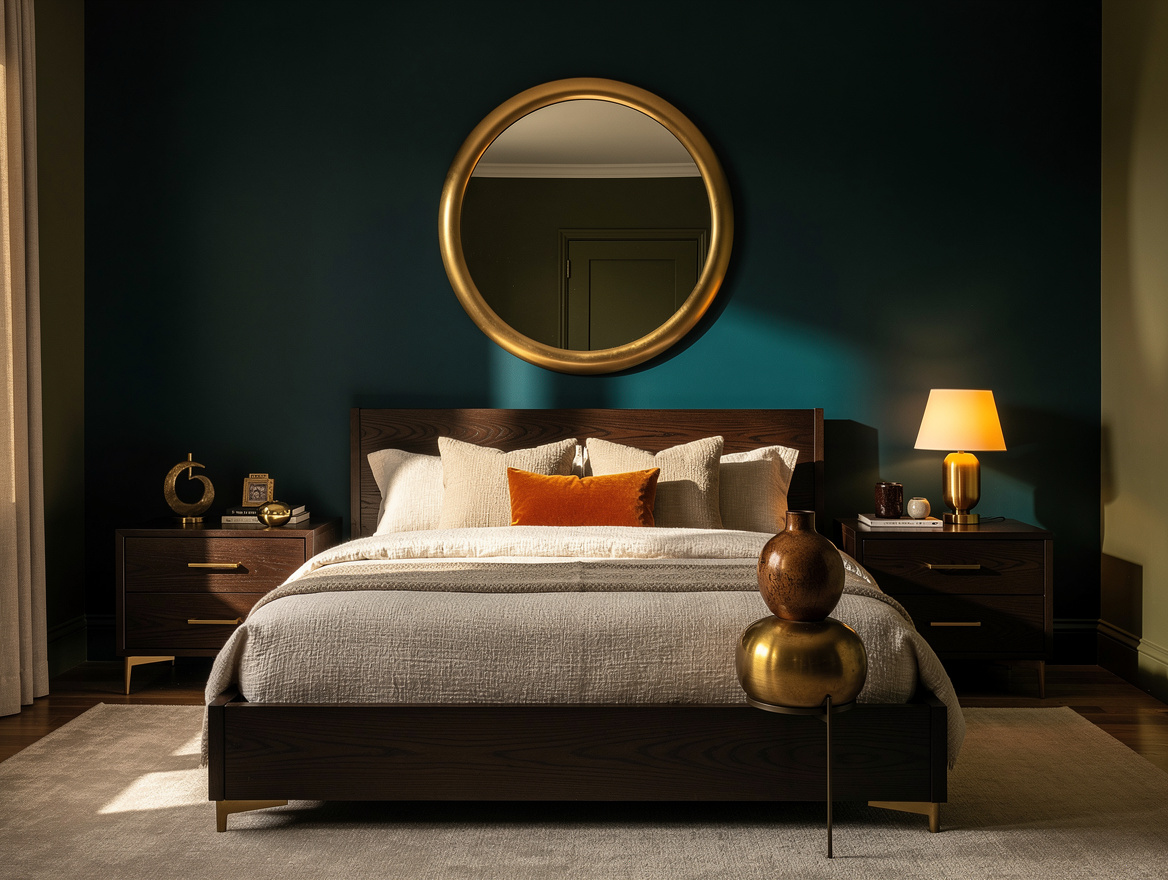
Start with the bed and rug before shopping for decorative brass. Once those two surfaces set the contrast, add a single pair of brushed-brass sconces and stop until the room asks for more.
Mia Carter writes about small-space living and budget home makeovers. She has restyled three rentals and tests most ideas in her own 45 sqm flat.