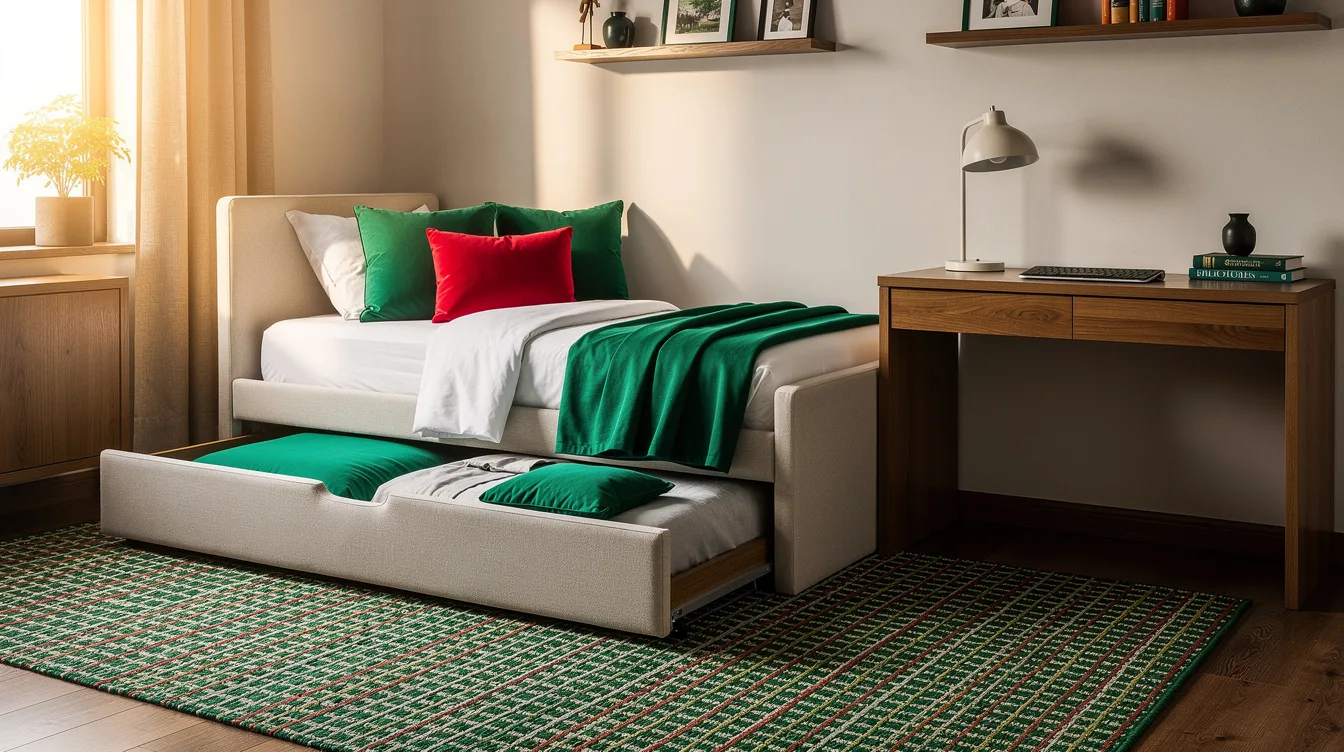
The problem usually appears at 10 p.m., when a teen’s friend is staying over and the lower bed hits a desk chair halfway out. In a room built around a 38-by-75-inch US twin mattress, the trundle’s open footprint has to lead every decorating decision.
A daybed can feel like a proper lounge spot all week, then sleep two without turning the room into permanent bedroom furniture. The calmest versions plan for the second bed first and decorate the remaining space with restraint.
Measure the Rollout Before Buying Furniture
A twin daybed plus trundle needs roughly 80 to 85 inches of clear room depth when it is open. That measurement matters more than a clever floor plan, because a trundle blocked by a dresser is a bed nobody can use.
Place the daybed on the longest uninterrupted wall and measure to the opposite furniture, not merely to the opposite wall. A typical twin daybed is roughly 78 to 84 inches long and 40 to 43 inches deep when closed.
Keep about 30 to 36 inches clear along the visible front edge for everyday lounging. When guests arrive, pull the lower bed fully out before deciding where a chair, hamper, or storage bench belongs.
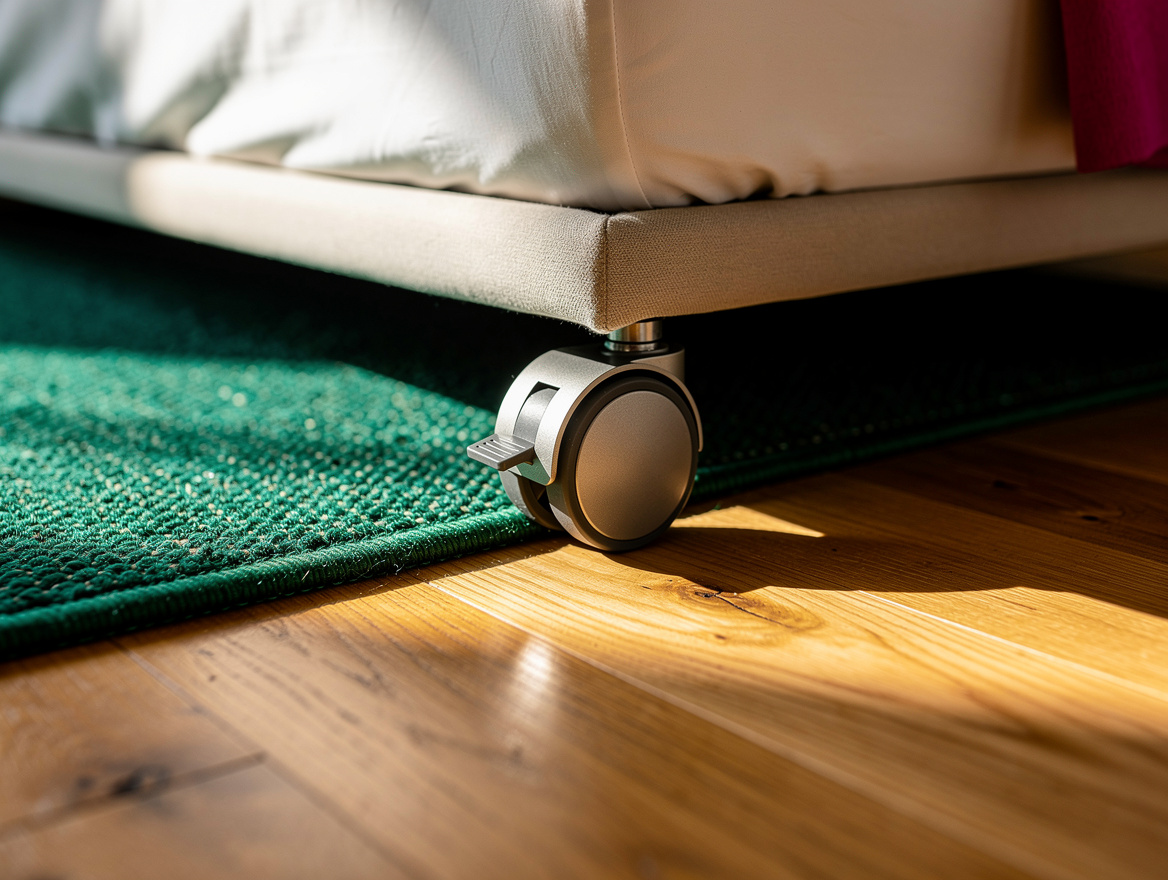
Skip a thick shag rug in the rollout path. Low-pile wool, flatweave cotton, or bare flooring lets the casters move without a nightly wrestling match.
Build a Study Wall Beside the Daybed
Give the room a narrow desk on the wall beside the bed, leaving the trundle side completely open. A desk about 18 to 20 inches deep is usually enough for a laptop, lamp, and actual homework.
Use IKEA wall shelves above the desk for books and chargers instead of a bulky bookcase. Vertical storage keeps the floor available for the second mattress.
Add a plug-in reading light and a blackout shade so the room works for studying, scrolling, and sleeping. A lidded canvas laundry basket belongs near the closet, never beside the trundle wheels.
This layout feels especially smart in a room that must serve one teen most nights and two sleepers on weekends. The open floor is part of the furniture plan, not leftover space.
Choose a Grown-Up Upholstered Frame
A guest room should not advertise its age with a cartoonish bed frame. Pick an upholstered daybed in oatmeal linen, charcoal, navy, or camel, colors that still feel right when the teen moves out.
Dress the back like a sofa with two roughly 26-inch cushions and one lumbar pillow. A quilted coverlet hides the fitted sheet and makes the bed inviting at 3 p.m., not only at bedtime.
Set a small wood C-table at one end for a phone, water glass, and paperback. It takes far less space than a full bedside table and can slide away when the trundle opens.
A 5-by-8-foot rug can anchor the closed daybed without swallowing the room. Keep its edge clear of the lower bed, then test the rollout with the rug in place.
Match Mattress Height to the Underbed
The under-trundle mattress is where many otherwise good purchases fail. Most models allow a mattress roughly 5 to 8 inches thick, but every frame has its own limit.
The IKEA SLÄKT pull-out bed allows only a roughly 3 7/8-inch underbed mattress. That makes it efficient for a tight teen room, though it is less appealing for frequent adult visitors who need more cushioning.
The overall SLÄKT twin setup measures about 77 1/8 by 40 1/2 inches, while its pull-out unit is roughly 75 1/4 by 40 1/8 inches. Its stated static-load rating is about 220 pounds, useful context but not a substitute for checking current instructions.
Buy both mattresses with the frame’s clearance in hand. A 10-inch mattress may feel luxurious upstairs and still make the lower bed impossible to close.
Pick Storage That Clears the Wheels
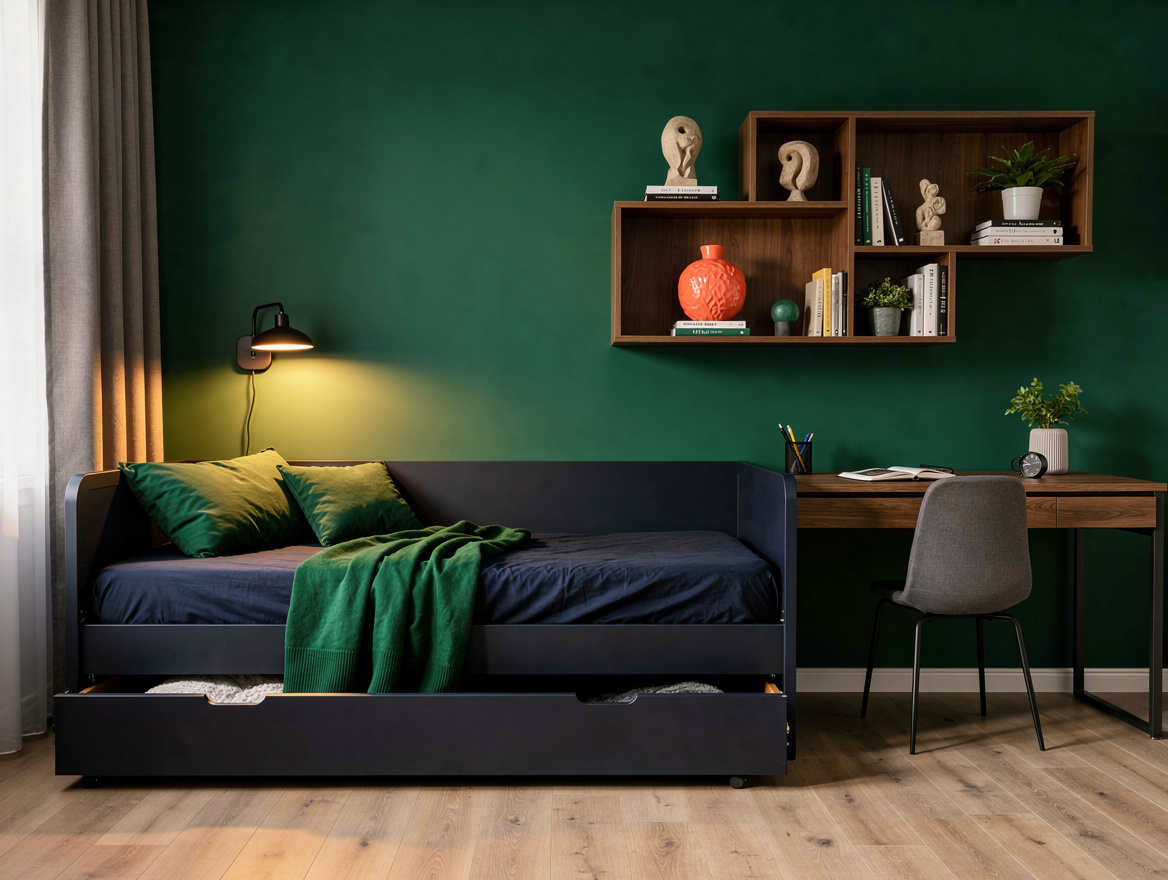
Storage-first rooms work best when the bed itself does some of the heavy lifting. A wood platform model with trundle drawers can hold linens, books, charging cables, and sports gear without adding another cabinet.
The SLÄKT storage drawers are a practical option for a room with a tiny closet or none at all. Use labeled bins inside them so clean sheets do not disappear under hoodie piles.
Keep radiator covers, desk legs, and floor baskets off the trundle side. Even a handsome rattan hamper becomes an obstacle when someone is trying to make up a bed after dark.
Wall hooks beat a luggage bench in the smallest rooms. Guests can hang a tote and jacket while the floor stays clear for the open-bed zone.
Spend More on the Parts Guests Feel
Trundle frames commonly cost about $75 to $600, with an average around $250, while styled daybeds can run roughly $230 to $1,130. The frame price is only the beginning once two mattresses, delivery, and assembly enter the picture.
Expect an entry-level twin trundle or daybed frame to land around $180 to $400. Practical mid-range choices often cost roughly $400 to $800 and may offer better slats, solid-wood parts, storage, or a pop-up mechanism.
Spend on a supportive twin mattress and smooth-operating hardware before paying extra for ornate upholstery. Two mattresses can add roughly $200 to $700 or more, depending on thickness and materials.
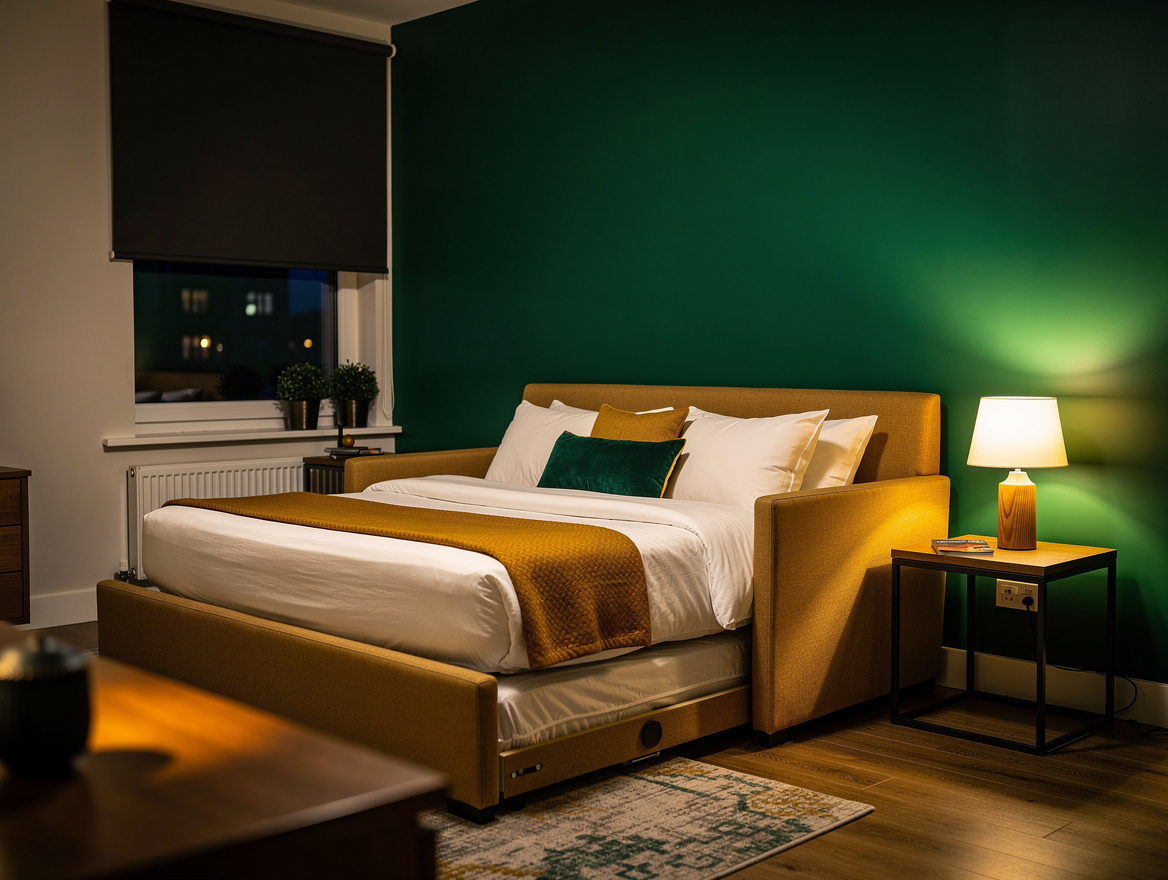
A pop-up trundle is worth considering when friends sleep over often, because two equal-height twin beds can sit together as a king-width surface. For occasional guests, a simple roll-out model leaves more money for bedding that makes the room feel considered.
Start with painter’s tape: mark an about 80-by-84-inch open-bed zone on the floor before ordering anything. That small test will tell you whether the room needs a slimmer desk, a flatweave rug, or a different trundle altogether.
Mia Carter writes about small-space living and budget home makeovers. She has restyled three rentals and tests most ideas in her own 45 sqm flat.