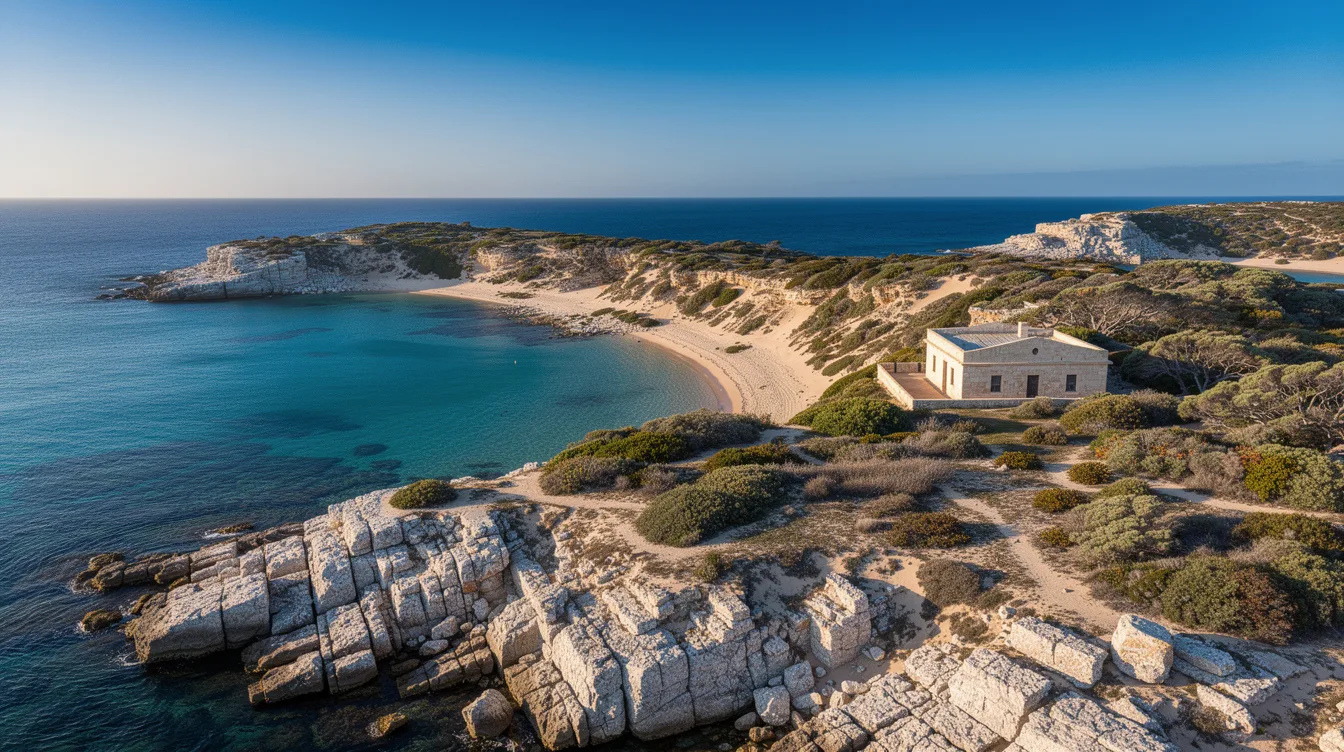
Wadjemup, known to most visitors as Rottnest Island, is only about 11.8 miles west of Fremantle. The ferry takes roughly 30 minutes, yet the crossing leads to a place with a history that should change how you see every beach and bike path.
Between 1838 and 1931, this island held more than 3,600 Aboriginal people in a prison and forced-labor camp. It is a hard fact to sit with, especially when the water around you flashes turquoise.
The island’s beauty doesn’t erase what happened here
Rottnest is called Wadjemup by the Whadjuk Noongar people. The name means “place across the water where the spirits are,” and you should use it when speaking about the island’s deeper history.
But this isn’t a story tucked away in a museum. For 93 years, Aboriginal boys and men were incarcerated here under extremely harsh conditions, while the island was used as a prison and forced-labor camp.
At least 373 people died during that period and were buried in unmarked graves in at least two areas north of the Quod. That makes Wadjemup the largest known deaths-in-custody grave site in Australia.
You can still see colonial-era limestone buildings around the settlement. Some became holiday accommodation for decades, which is an uncomfortable contrast, not a detail to glide past on the way to the beach.
The Quod is the place to approach slowly
The Quod was built between 1863 and 1864 as a quadrangular prison building. It later became tourist accommodation, but it closed in 2018 after decades of protests by Aboriginal people.
And that closure matters. It acknowledges that a former prison cannot be treated as neutral lodging when so many people suffered and died on this small island.
You don’t need to turn a visit into a performance of grief. But you should make room for the history before taking the familiar quokka photos, because Wadjemup is more than the version sold in ferry brochures.
The island is car-free, so you’ll move through it by bike, e-bike, foot, or shuttle. That slower pace can help. Salt air and wheel noise replace traffic, and the distance between stops gives the place time to register.
Then there are the quokkas, bays, and crowds
Rottnest has 63 beaches and bays, along with salt lakes, coastal routes, and snorkeling spots. The island is roughly 6.8 miles long, so you can cover a surprising amount in a day if you plan your route.
And yes, you’ll see quokkas. They’re the reason many visitors come, but don’t feed, touch, or chase them. Keep your distance, especially when food and cameras turn a quiet wildlife encounter into a crowd.
The Basin and Pinky Beach are among the places visitors seek out for swimming and snorkeling. The water looks almost unreal in clear weather, but the island’s appeal is also its limitation: popular spots don’t stay quiet in peak season.
You can visit Oliver Hill for the island’s World War II-era history. It adds another layer to a place that has repeatedly been used for purposes far beyond leisure.
How to time a visit without treating Wadjemup lightly
Summer in Western Australia is drier, and it is also the busiest season. If you’re traveling around Christmas, book accommodation well ahead because rooms can disappear quickly.
But winter is quieter and wetter. That trade-off may suit you if you’d rather have more space on the paths and bays, even if blue-sky beach weather isn’t guaranteed.
Can you visit in a day?
Yes. The Fremantle ferry ride is about 30 minutes, and day visitors can walk, cycle, or use the island shuttle. But don’t rush it as a quick stop between Perth attractions.
Give yourself time for the historical context, then decide how much recreation feels appropriate. The ferry makes Wadjemup easy to reach, which is precisely why its difficult past deserves your full attention.
By the time the boat heads back toward Fremantle, the wind carries salt across the jetty, and the island recedes without becoming simple.