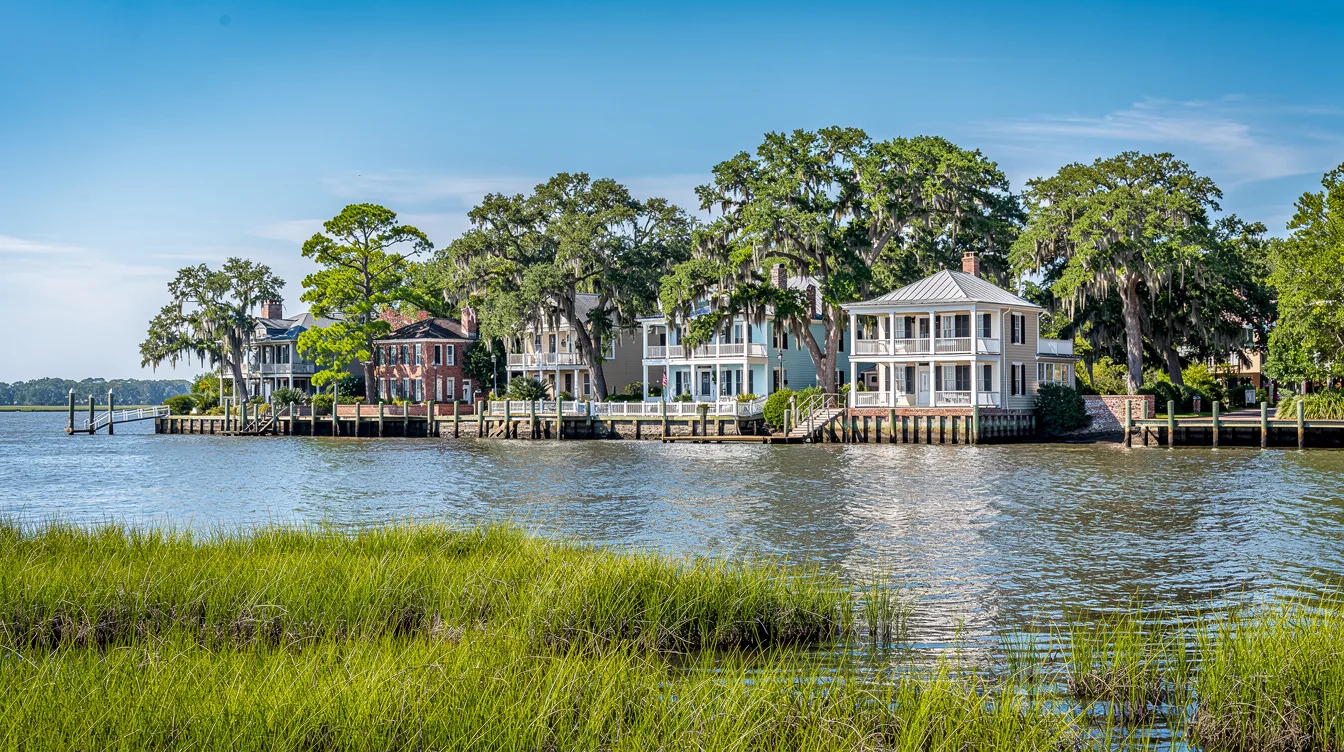
Beaufort was chartered in 1711, and that early start still shapes the city’s appeal. This is South Carolina’s second-oldest city, set on Port Royal Island where waterfront streets and old homes make history feel close rather than staged.
It’s pronounced “BYOO-fert,” which is useful before you start asking for directions. And the city’s scale works in its favor: Beaufort had 13,607 residents in the 2020 Census, so you can settle into its pace quickly.
A 1711 city that still feels lived in
Downtown Beaufort is a designated historic district, with antebellum homes, live oaks, and Spanish moss along the streets. You’ll see the past everywhere, but the setting doesn’t feel trapped behind velvet ropes.
And that’s the point. The old buildings face ordinary daily life, while the waterfront keeps pulling your attention toward the water and away from any urge to rush.
But don’t expect Charleston at a smaller scale. Beaufort is more relaxed and residential, which makes it better for a quiet two- or three-day stay than for a packed itinerary.
The city sits in South Carolina’s Lowcountry, between Charleston and Savannah. That position gives it a useful split personality: coastal enough to slow you down, connected enough that it doesn’t require a complicated detour.
Waterfront time is the real itinerary
Henry C. Chambers Waterfront Park is where Beaufort’s waterfront becomes part of the day instead of a quick photo stop. The park puts you close to boating, fishing, marshes, and the shifting light along the shore.
And you should leave room to sit there without a plan. Salt air, water movement, and the broad open edge of the park do more for an afternoon than another historic plaque ever could.
But this is not a destination built around constant action. Beaufort’s appeal comes from slowing down, and travelers who need a full schedule may find the quiet a little too quiet.
Sea Islands and local shrimp and seafood culture sit close to the city’s identity. That makes the waterfront feel less decorative than practical, shaped by the surrounding coast and the people who work around it.
Go beyond downtown for Lowcountry context
Beaufort’s story reaches beyond its streets. St. Helena Island and the Penn Center connect visitors with Lowcountry and Gullah Geechee heritage, an essential part of understanding the area.
And that broader context matters. The moss-draped trees and historic houses may catch your eye first, but they are only one part of a place shaped by coastal culture and Black heritage.
But don’t reduce Beaufort to an architecture tour. The city’s most interesting tension is how easily its polished historic center can distract from the deeper stories nearby.
Parris Island, home to the U.S. Marine Corps Recruit Depot, is about 5 miles south of Beaufort. Its proximity adds another layer to the area, though the downtown mood remains notably calm.
Easy to reach, hard to hurry through
Beaufort is about 70 miles south of Charleston and 45 miles north of Savannah. You can use either city as an anchor, but Beaufort rewards travelers who give it its own overnight stay.
And that distance is the practical advantage. It sits between two better-known Southern stops, so you can trade crowds and constant noise for waterfront walks and a more residential rhythm.
But the sources don’t point to a specific best season, so plan around your own schedule rather than chasing a promised perfect month. The city’s draw is not an event calendar. It’s the chance to linger.
By late afternoon, the waterfront, the live oaks, and the Spanish moss make a simple case for staying put a little longer.