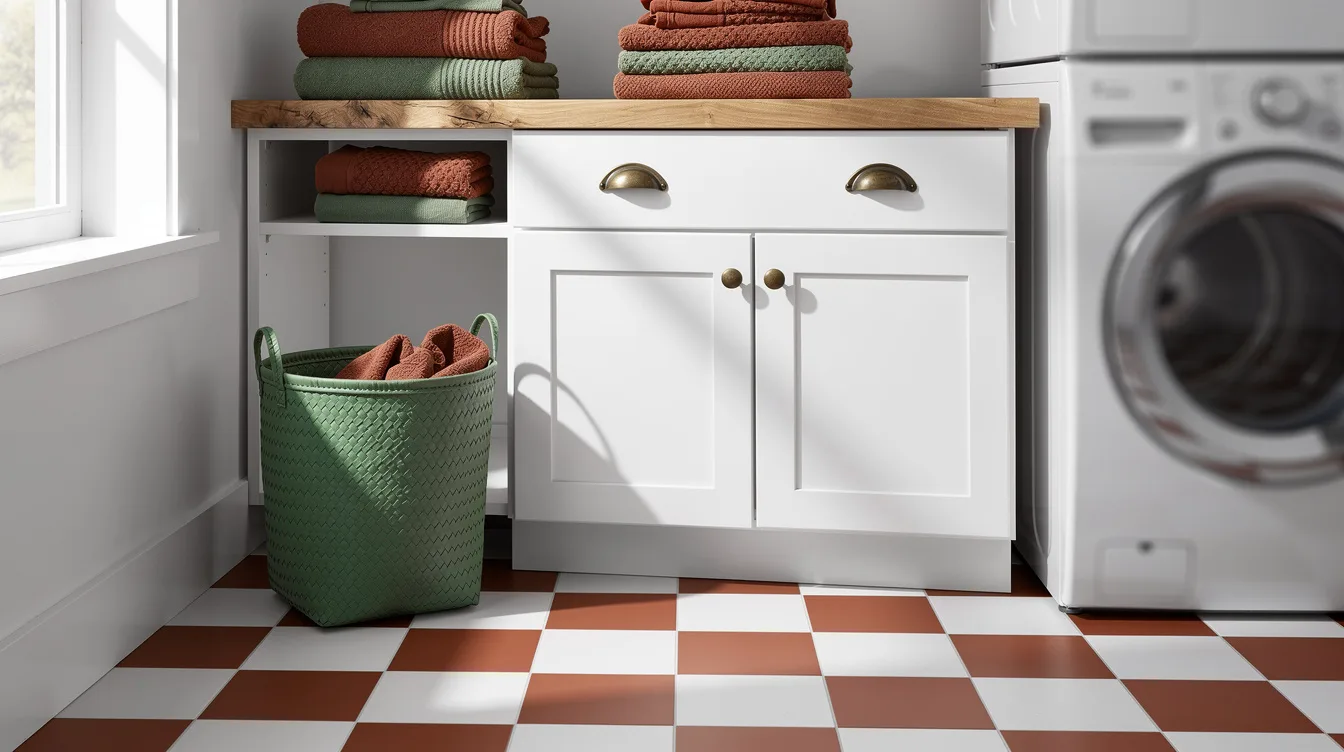
A checkerboard floor can make a laundry room feel finished even when the room holds only a washer, dryer, and a 30-inch counter. The tension is scale: a bold grid looks deliberate in a compact utility space, but the wrong tile size or color pairing turns every detergent spill into visual noise.
For 2026, matte porcelain squares around 8 by 8 or 12 by 12 inches are the practical sweet spot. They handle water, wipe clean easily, and outlast temporary vinyl in a hardworking room.
Size the Grid for the Actual Floor Area
Start with the room measurement, not the tile you spotted online. In a closet laundry under roughly 35 square feet, 8-by-8-inch matte porcelain keeps the checkerboard visible; oversized 24-inch tiles can erase the pattern completely.
A typical 40-to-80-square-foot laundry room can take 8-inch or 12-inch squares comfortably. Save 16-inch and 18-inch formats for larger laundry-mudroom combinations, where the floor has enough open area to read as a grid.
Designers also plan around appliances. Center the pattern on the entry aisle and try to place the washer and dryer over full tiles, because a lonely cut square at the front edge makes a solid installation look improvised.
Choose Matte Porcelain Over a Short-Term Surface
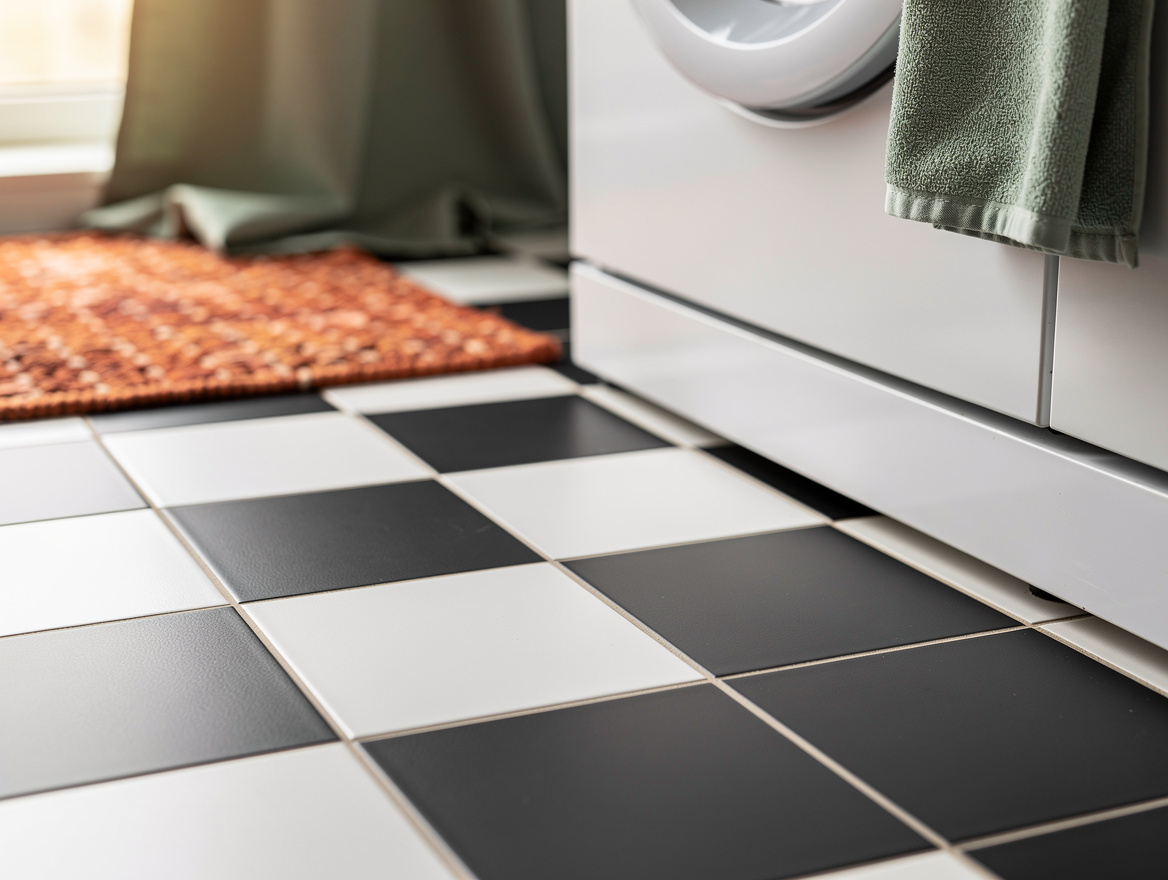
Matte porcelain tile is the clear choice for most laundry rooms. Its low-sheen finish hides water spots better than glossy tile and feels more grounded under white cabinets than a shiny black-and-white diner look.
At Home Depot or Lowe’s, floor-rated porcelain typically runs about $3 to $9 per square foot for materials, with installed costs often around $7 to $14 per square foot depending on the substrate and region. That is more upfront than peel-and-stick, but it is a better place to spend in a room built around water connections.
Peel-and-stick vinyl has a place in a very flat rental floor, usually around $0.50 to $2 per square foot. It is not my pick near an aging washer, where one leak can lift corners and trap moisture below.
Keep the Color Pairing Calm Enough to Live With
Classic soft white porcelain with charcoal gives a small laundry room the crisp utility-room character designers keep returning to. Use warm-white grout, white shaker cabinets, and aged-brass pulls so the contrast feels collected rather than stark.
For a warmer room, pair white with terracotta porcelain and use a natural-oak counter. The floor brings personality, while woven baskets and cream walls keep it from feeling like a themed kitchen.
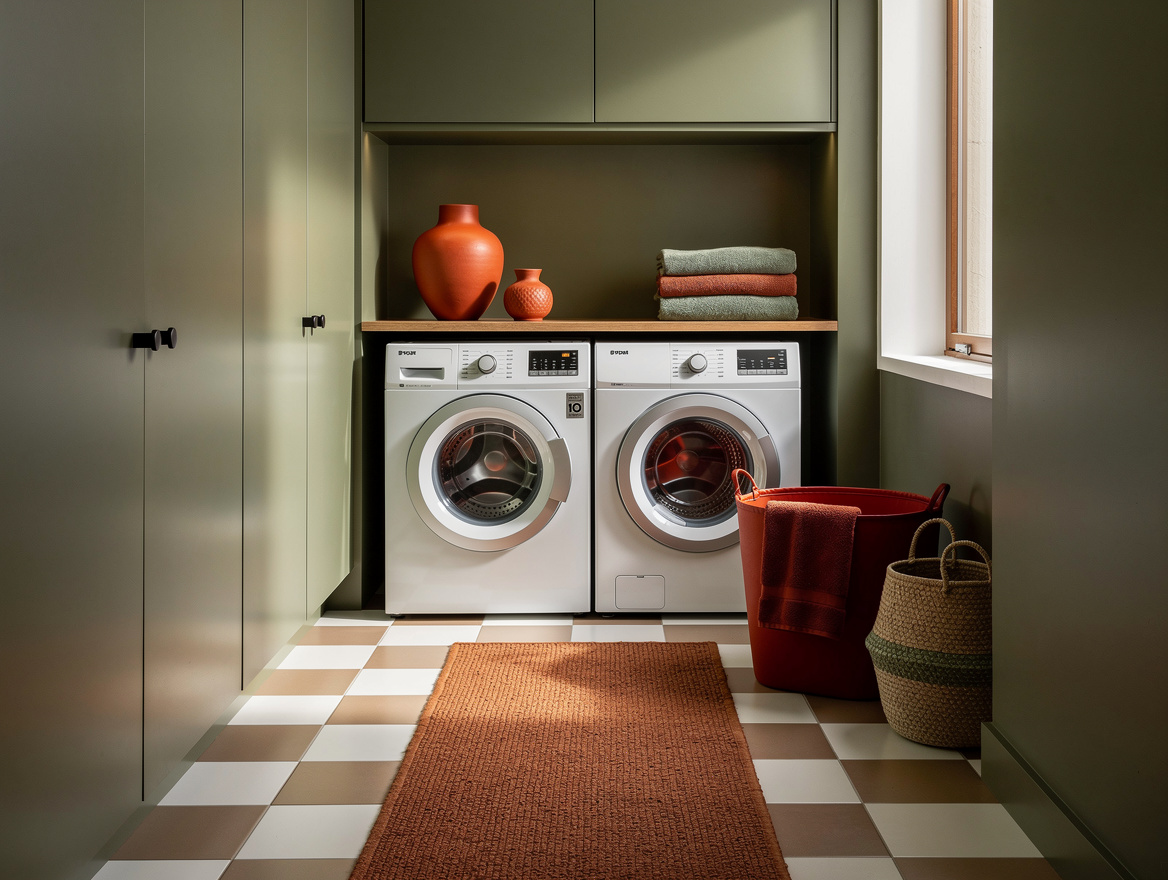
Quiet modern rooms benefit from taupe porcelain with white. A soft greige grid delivers the same tailored geometry with much less visual pressure, especially beside flat-front cabinetry and matte black hardware.
Set the Pattern Straight Before Turning It Diagonal
A straight-set checkerboard is cleaner, calmer, and generally less expensive to install. It also gives narrow rooms a useful visual order when the cabinets, machines, and shelving already create plenty of rectangles.
A diagonal layout can make a tight room appear wider, but it commonly adds roughly 15 to 25 percent to installation labor because every wall needs more cuts. Spend that budget on a level subfloor or a better tile instead.
Use a one-tile-wide solid-color border when walls are out of square. That perimeter absorbs awkward cuts and lets the central checkerboard stay even, which is the detail that makes the pattern feel custom.
Let the Floor Be the Room’s Loudest Move
Playful checks in tomato red, cobalt, or butter yellow can work, but cabinets and walls need to back away. Plain painted cabinetry, simple white walls, and one useful open shelf are enough.
Do not add a busy floral wallpaper, striped window shade, and patterned runner on top of a high-contrast grid. The floor already supplies motion, and a laundry room has too little square footage to absorb competing patterns.
For a more traditional direction, choose marble-look porcelain in white and black rather than actual stone. It gives the Carrara-and-dark-marble effect without asking you to worry constantly about bleach, detergent, and resealing.
Build a Counter That Softens the Hard Tile
A checkerboard floor needs one warm material overhead. A sealed natural-wood countertop above front-loading machines is my favorite counterweight, especially with ivory-and-sage or white-and-terracotta tile.
Keep the accessories practical: a canvas hamper, two lidded detergent containers, and a small tray for stain tools. A $39 IKEA SINNERLIG lantern can add texture if the room has a shelf, but skip decorative clutter that steals precious folding space.
Choose closed storage for cleaning supplies and leave the floor visible at the doorway. A checkerboard earns its keep when it is seen as a complete field, not broken up by baskets parked everywhere.
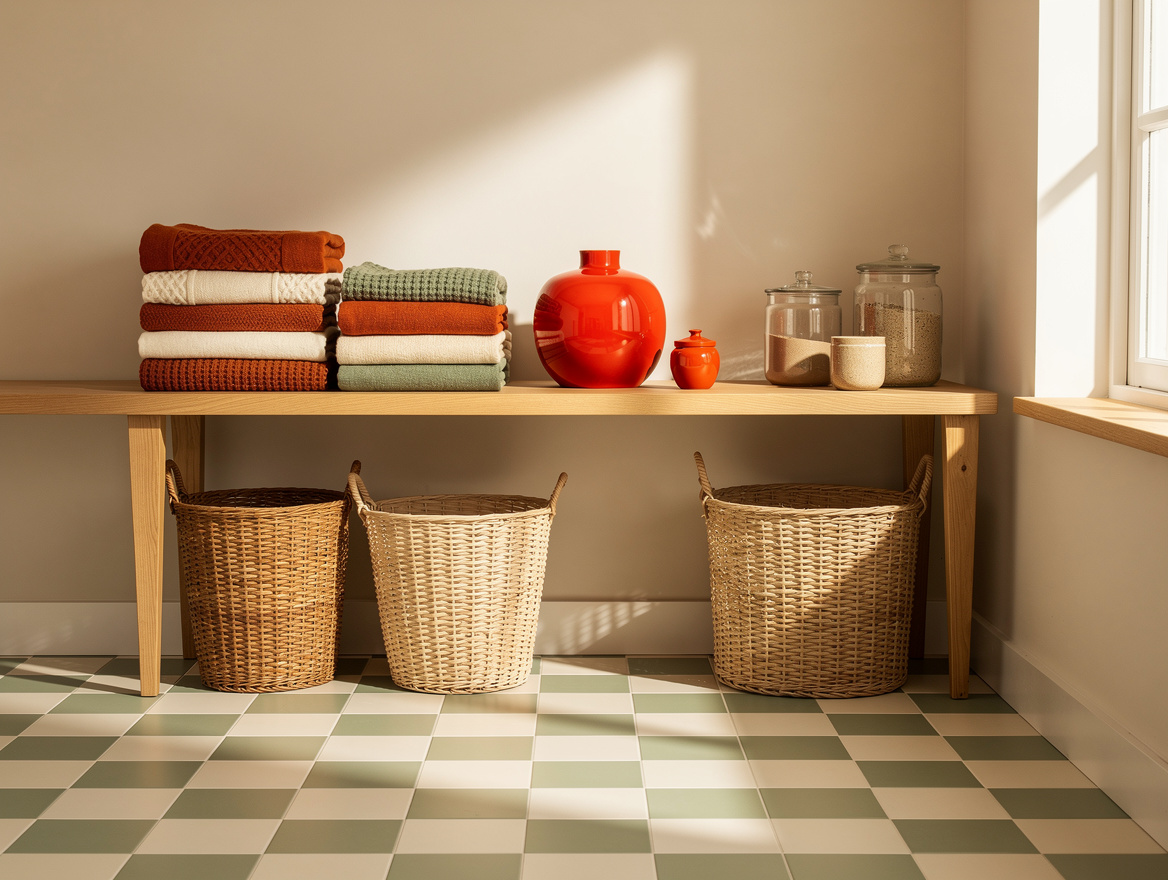
Measure the open aisle first, then tape out an 8-inch or 12-inch grid before ordering tile. Getting that proportion right matters more than chasing the boldest color pair.
Mia Carter writes about small-space living and budget home makeovers. She has restyled three rentals and tests most ideas in her own 45 sqm flat.