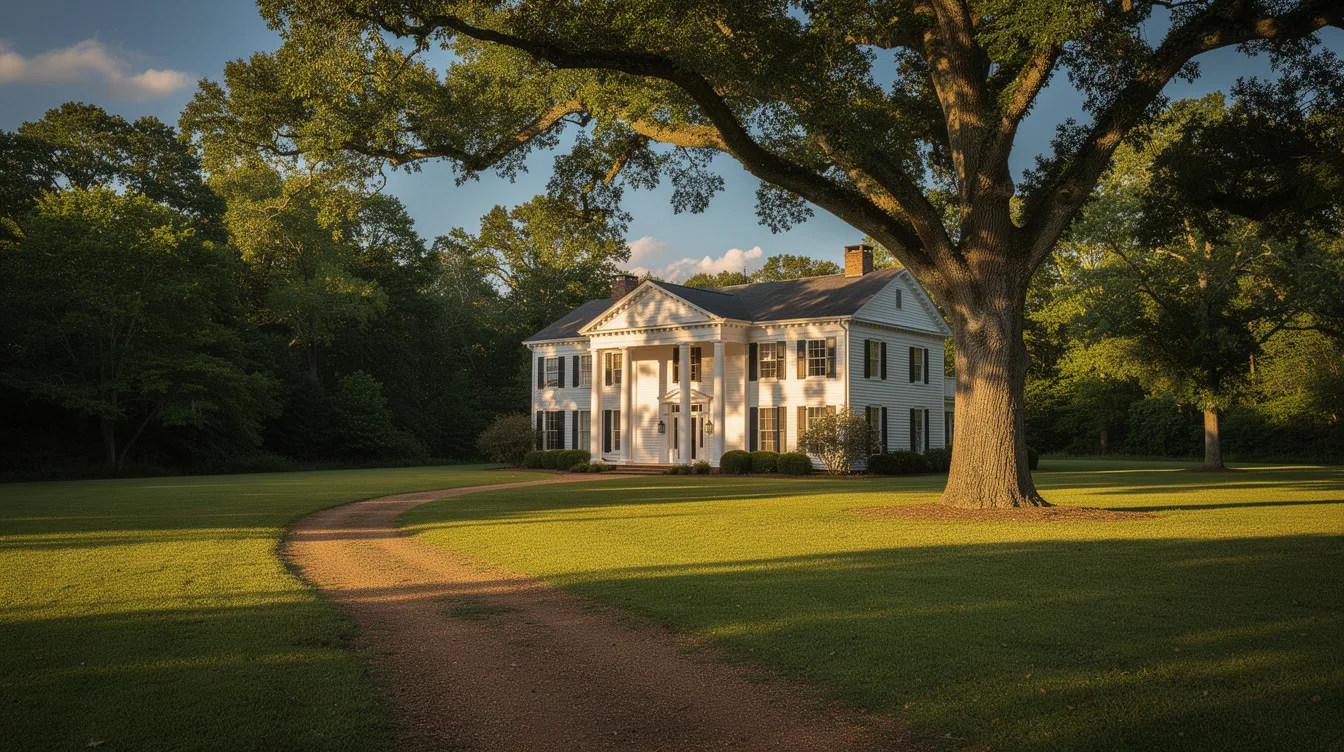
Oxford, Mississippi, puts William Faulkner’s former home at the heart of a visit, and that focus gives the town its pull. You can come for the university energy or the food, but Rowan Oak is where the story starts to feel physical.
The town sits about 75 miles southeast of Memphis in Lafayette County. That distance makes it an easy change of pace from the city, yet Oxford has its own rhythm: walkable blocks, bookstore browsing, and a campus calendar that shapes the streets.
Rowan Oak is the reason to slow down
Rowan Oak was the former home of Nobel Prize-winning author William Faulkner, and it remains one of Oxford’s major local sites. You don’t need to arrive as a literary scholar. The value is seeing the place that anchors so much of the town’s identity.
But don’t treat it as a quick photo stop between meals. Give the visit room. The appeal is quieter than a headline-grabbing attraction, which is exactly why it works for travelers who want a town to reveal itself gradually.
And Faulkner’s presence changes how Oxford reads. A street corner, a shop window, even a pause under shade can feel tied to the town’s literary reputation. That’s an earned atmosphere, not a theme-park version of a writer’s life.
The Square keeps the day moving
The historic Courthouse Square is Oxford’s most useful starting point because it is walkable and lined with independent shops. You can drift without a rigid plan, then decide where to settle in once the day gets warm.
Square Books gives the downtown its clearest literary stop after Rowan Oak. Browse first, then look around. The bookstore belongs to the same Oxford story, but it feels current rather than preserved behind glass.
And the restaurant scene is a real part of the visit, not an afterthought. Oxford is known for strong dining, so leave space in your schedule for a meal near the Square. The trade-off is simple: lingering works better than trying to check off every address.
The town had 25,416 residents in the 2020 Census. That number helps explain the scale. Oxford feels active, but it doesn’t ask you to navigate a large city just to find an independent shop or a table for dinner.
Ole Miss supplies the energy
The University of Mississippi, known as Ole Miss, opened in Oxford in 1848. Its long presence drives much of the cultural, student, and sports life, so you’ll feel the campus influence well beyond university buildings.
But this isn’t a campus town that shuts down whenever classes do. The Square, the restaurants, and the literary sites give visitors several reasons to stay engaged. You get student energy without needing to build the whole trip around it.
And in autumn, Ole Miss football changes the pace. The Grove tailgating and game activity make the town especially busy, which can be fun if you want company and momentum. If you prefer a looser visit, choose another popular season instead.
Spring and fall suit Oxford best
Spring and fall are the popular times to visit Oxford, and the choice depends on what kind of day you want. Spring gives you a calmer frame for Rowan Oak and the Square. Fall brings more football-driven activity and more people.
You should plan around that distinction. Fall is lively, but it is less spontaneous around Ole Miss football. Spring may be the better fit if your ideal afternoon involves bookstores, a long lunch, and no pressure to match a game-day schedule.
And Oxford rewards an unhurried approach because its strongest pleasures sit close together: Faulkner’s former home, the walkable Square, and university life. There is no need to invent a grand itinerary when the town’s central story is already clear.
By the end of the day, the best memory may be the simplest one: a book tucked under your arm, the Square nearby, and Rowan Oak still holding the center of Oxford’s attention.