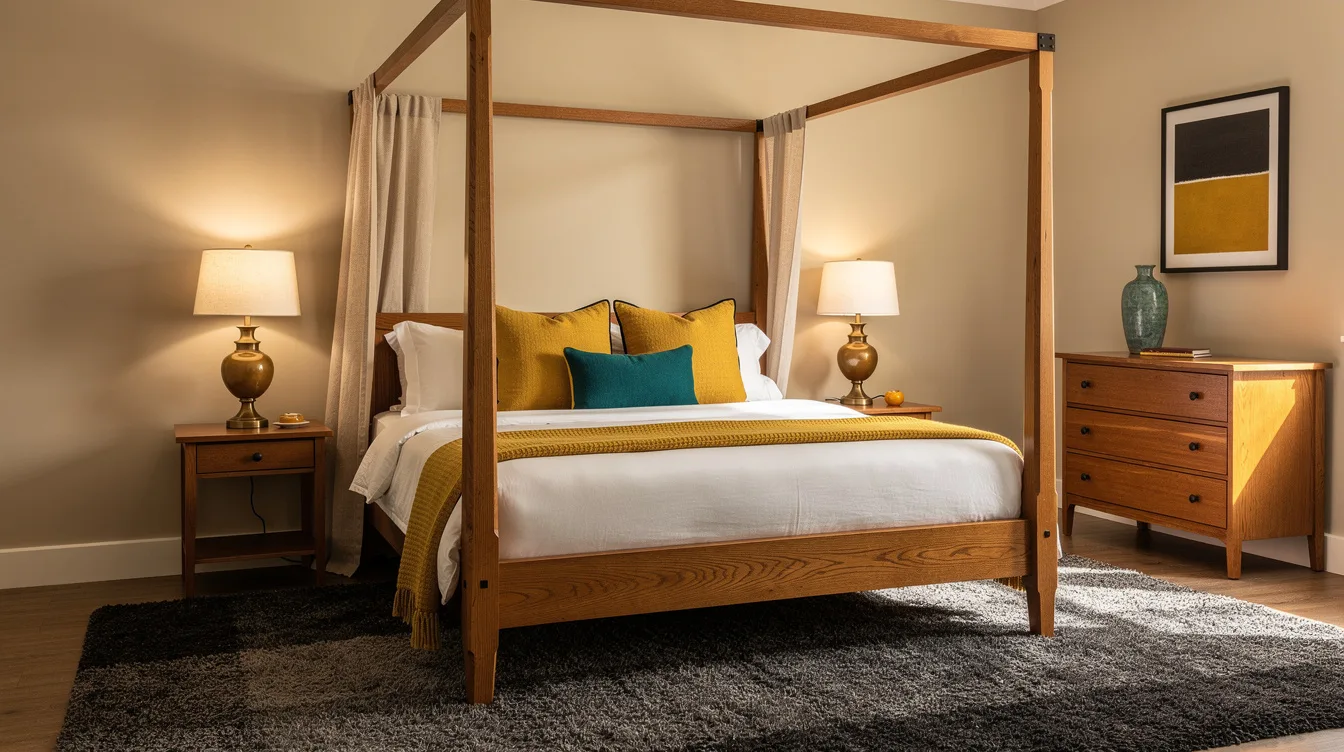
A four-poster can make a bedroom feel dignified, or make it feel like the ceiling is closing in. The difference often comes down to a typical 75-to-83-inch-tall frame and whether the room gives those posts enough breathing space.
I would rather see a plain oak bed with thoughtful bedding than a fussy canopy fighting every surface around it. Traditional style gets convincing when the materials look like they can age well.
The bed is the architecture here. Everything else should support its scale.
Give the Bed Room to Breathe
A four-poster needs air around its posts. For a typical 63-by-79-inch mattress, allow roughly 66 to 71 inches of frame width and around 82 to 87 inches of length, then keep a clear walking path at each side.
Ceiling height matters more than buyers expect. A frame around 75 to 83 inches tall can feel proud under an 8-foot ceiling, but it needs a calm ceiling plane and no low-hanging fixture competing above it.
Choose Honest Wood for the Frame
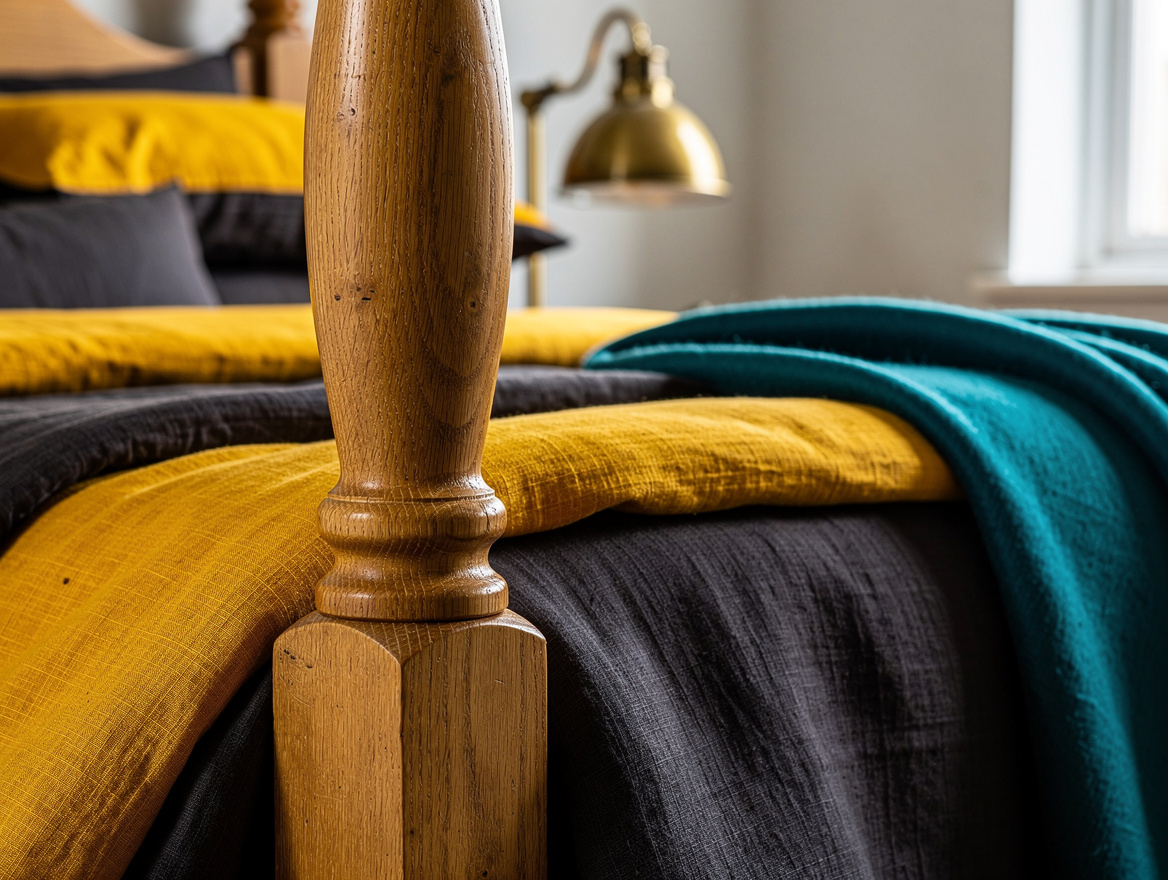
Make solid oak the default when you want an English country or rustic traditional mood. Its grain gives the tall structure enough visual weight without needing elaborate carving on every rail.
Walnut and mahogany suit a more formal, colonial-inspired room, especially with aged brass nearby. They are darker and visually heavier, so pair them with pale walls rather than another deep wood floor.
At Home Depot or Wayfair, inspect product descriptions for solid wood versus veneer before falling for a photo. A typical solid-wood four-poster can start around $1,000, while carved or made-to-order versions often climb far beyond that.
Keep Canopy Fabric Deliberately Spare
Heavy drapery belongs in a genuinely large bedroom with generous clearance around the bed. In an average room, hang two loose linen panels at the head end or use sheer side panels that still show the posts.
Choose flax, ivory, soft stone, or faded tobacco instead of bright white synthetic fabric. Cotton percale sheets and one patterned quilt keep the bed inviting while letting the architecture stay visible.
Build a Grounded Palette Around the Posts
Warm ivory walls make medium oak look settled rather than orange. I like a muted stone paint with a wool rug extending well beyond the lower posts, because bare floor makes a tall frame feel oddly isolated.
Use checks, small botanicals, faded stripes, or a worn floral for personality. A Target neutral coverlet can work as the quiet base, then a vintage-style quilt or embroidered lumbar pillow brings in the history.
Skip matching every wood surface. An oak bed, painted chest, dark framed print, and antique-brass lamp create the collected tension traditional rooms need.
Anchor the Bed With Useful Companions
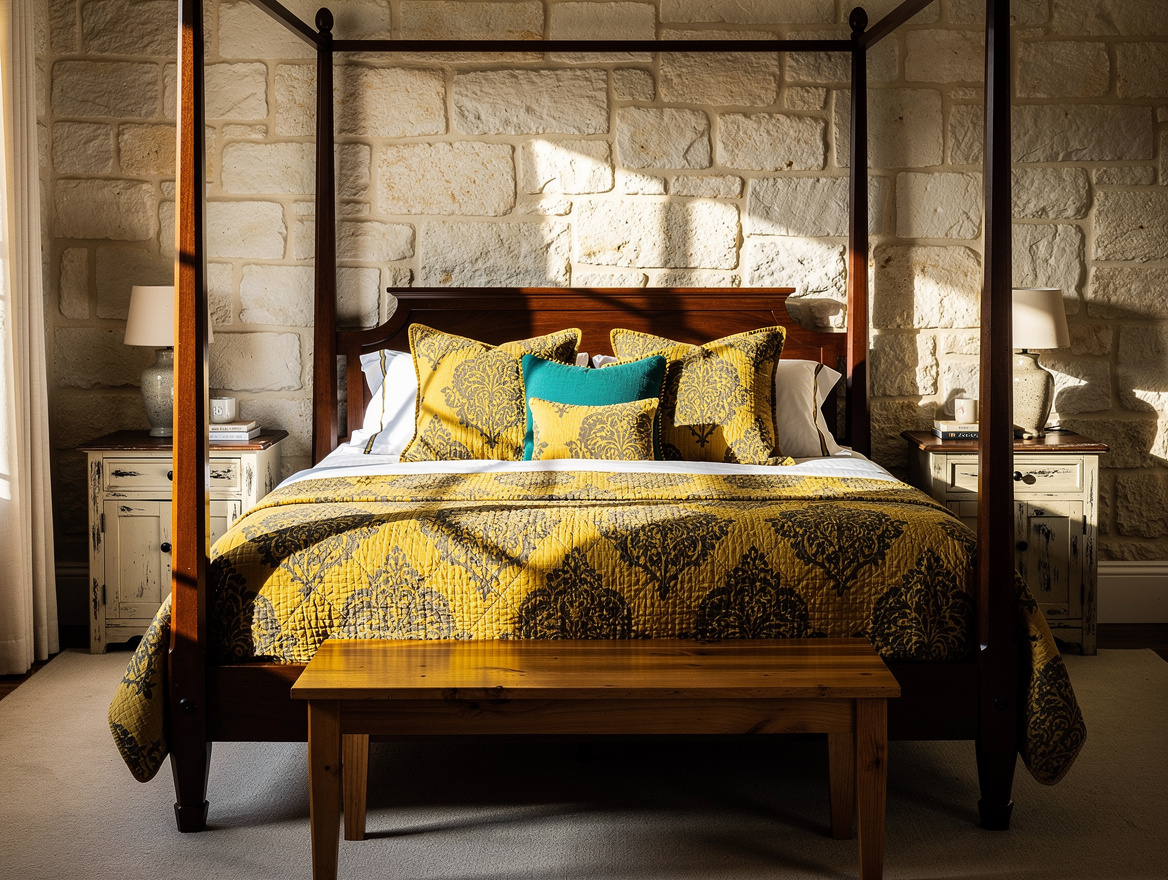
Put matching bedside tables beside a formal carved bed, but choose simple shapes so the posts remain the headline. A pair of brass lamps with fabric shades brings a soft evening glow and avoids the cold look of exposed bulbs.
At the foot, use a narrow wood bench, upholstered storage bench, or painted chest that sits below the mattress line. Avoid a bulky television console there, which turns the room’s strongest feature into background furniture.
For a lighter campaign look, add one cane chair near the window and keep the rest of the seating minimal. The room should feel lived in, not staged as a period set.
Start by measuring ceiling height, side clearance, and the wall behind the headboard before buying fabric or furniture. Then let the four-poster frame set the room’s pace.
A traditional bedroom earns its warmth through restraint, not clutter.
Mia Carter writes about small-space living and budget home makeovers. She has restyled three rentals and tests most ideas in her own 45 sqm flat.