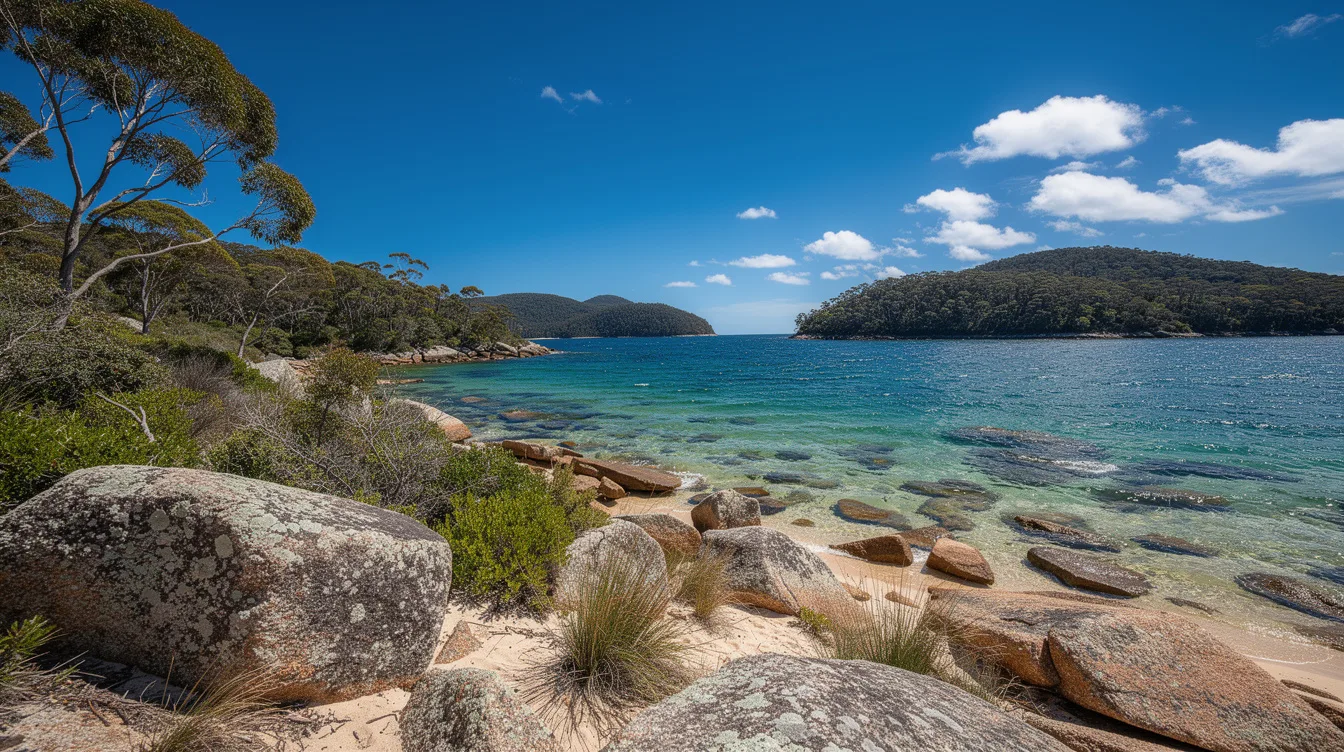
Bruny Island holds the world’s largest population of the threatened forty-spotted pardalote, and that fact changes how you should visit. This isn’t an island for rushing between photo stops. Its dry eucalyptus forest matters as much as its cliffs.
South of Hobart, Bruny feels close enough for a day trip. But it asks you to slow down once the ferry ramp drops and the road begins to narrow.
A bird refuge with a wild edge
The forty-spotted pardalote is the reason Bruny carries unusual weight among Tasmania’s islands. The island is classified as an Important Bird Area, and its forests support the largest population anywhere of this endangered species.
And that distinction isn’t confined to one carefully managed corner. Bruny also supports all 12 Tasmanian endemic bird species, so you’re traveling through habitat rather than simply arriving at an attraction.
You may come for the coast, then find yourself listening more closely in the trees. The island’s eucalyptus stands and coastal heathland make the interior feel quieter than the lookout circuit, though wildlife viewing still requires patience.
Bruny has other bird numbers that land hard. It supports up to 240,000 breeding pairs of short-tailed shearwaters, along with seabirds and seasonal little penguins. But don’t treat the island like a checklist.
The weather and the animals set the schedule.
The Neck divides the pace of the day
The Neck is the thin sandy isthmus joining North Bruny and South Bruny. It gives the island its unmistakable shape, with Adventure Bay on one side and Isthmus Bay on the other.
Climb to the lookout early if you can. You’ll see why this small strip feels like the island’s hinge, with long beaches stretching away and the wind making itself known.
But Bruny isn’t calm everywhere. The channel side is more sheltered and draws fishing boats, while the seaward coast is rugged, marked by dolerite cliffs rising over 656 feet above sea level.
Adventure Bay and Cloudy Bay are the long beach names worth knowing. Beyond them, South Bruny National Park preserves much of the southeastern coast, so the views come with fewer signs of built-up life.
Cape Bruny has earned its place on the route
Cape Bruny Lighthouse first shone in 1838 and remained Australia’s longest continuously staffed lighthouse until automation in 1993. That long working history gives the stop more gravity than a quick coastal selfie.
You can take a guided tour of the structure, which is now part of South Bruny National Park. And the cape works best later in a self-drive loop, after The Neck and Adventure Bay have already pulled you south.
The lighthouse left service in 1996, then entered the national park in 2000. It’s a practical marker at the island’s far end, but the real draw is the exposed feeling of being near the Tasman Sea.
Wind is part of the deal here. Bruny has a cool oceanic climate, cold fronts arrive even in summer, and the island averages a 17.3 mph wind speed at 3 p. M.
Getting there takes a car and a little planning
From Hobart, drive about 20.5 miles south to Kettering, then take the vehicle ferry for roughly 20 minutes. There’s no bridge, which is exactly why Bruny still feels separated from the city.
But there’s also no public transport on the island. Bring or rent a car, or book an organized Hobart tour, because its stops are spread across roughly 62.1 miles from end to end.
You can manage The Neck, Adventure Bay, South Bruny National Park, and Cape Bruny in one determined day. Still, an overnight stay makes more sense if you want hikes, wildlife viewing, or an eco-cruise without watching the clock.
Food is part of the reward for covering the distance. Oysters, cheese, honey, whisky, and chocolate give the driving day useful pauses, and they keep Bruny from feeling like scenery alone.
Summer brings penguins and the crowds
December through February brings the warmest temperatures and better chances of seeing little penguins. It’s also the busiest season, so you’ll need to reserve accommodation and activities ahead.
And that’s the honest trade-off. Summer gives you the mildest conditions, but the ferry, food stops, and overnight beds demand more advance planning than the island’s remote mood suggests.
If you do stay late, let the final light do less work for you. The wind moves over The Neck, the road empties, and Bruny returns to the sound of water beyond the dunes.