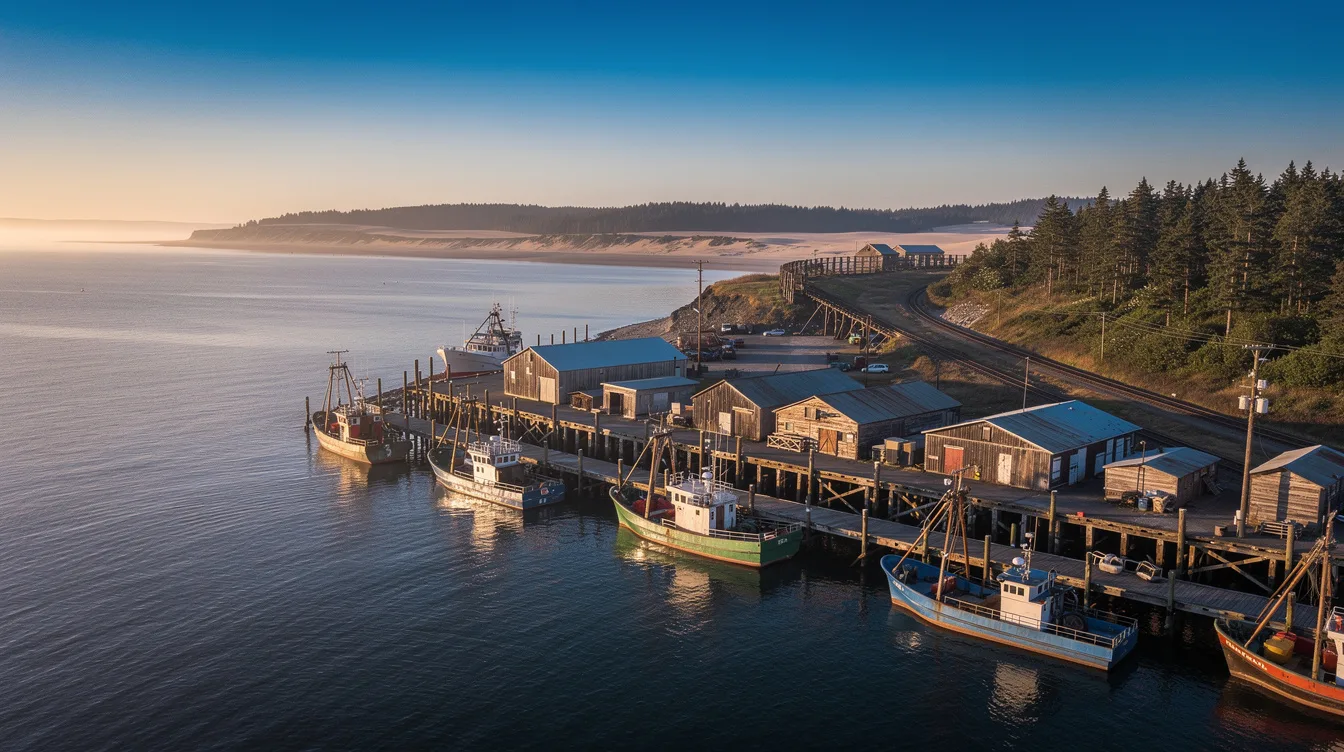
Ilwaco sits on Baker Bay at the mouth of the Columbia River, and its old railroad story still gives the harbor a little extra pull. This Washington town of 1,087 residents kept a narrow-gauge line moving along the Long Beach Peninsula for more than 30 years. You can feel why it mattered here: water, weather, work, and distance all meet at the dock.
It’s about 20 minutes from Astoria, Oregon, and roughly five minutes from Long Beach. But Ilwaco feels less like a quick stop than a place to slow your plans down. The harbor is the point.
The railroad ran where the harbor still works
The Ilwaco Railway and Navigation Company ran for over three decades, carrying people and freight north along the peninsula. In town, the tracks followed First Street, with the depot on Spruce Street and the line eventually reaching Nahcotta.
That history is unusually easy to picture because the route was woven into everyday commerce. The train ran out onto Ilwaco’s dock, while log booms floated nearby. And by 1916, First Street had been paved over, covering the plank road and changing the surface beneath those old routes.
You won’t find a working narrow-gauge train waiting at the waterfront now. But the freight depot survived and became part of the Columbia Pacific Heritage Museum, which gives the railroad story a useful physical anchor instead of leaving it as a plaque-only memory.
Start at the Port of Ilwaco Marina
The Port of Ilwaco Marina is where the town makes its strongest case. Fishing boats, charter departures, and working docks keep the waterfront from feeling staged. Salt hangs in the air, and rigging clicks when the breeze gets up.
But this isn’t a harbor frozen in nostalgia. A fire at Ilwaco Landing on January 22, 2024, destroyed a dock, a receiving facility, and an estimated 600 crab pots. The loss came only days before fishing season began, which makes the working character of the place feel earned rather than decorative.
If you’re looking for polished boutiques and a packed promenade, Long Beach is closer. Ilwaco is quieter, and its appeal is more direct: the boats are here because the water still supports livelihoods. That makes a harbor walk feel less like sightseeing and more like paying attention.
Cape Disappointment is close, and properly moody
Cape Disappointment State Park sits near town with cliffs, beaches, historic fortifications, and coastal trails. The name is blunt, but the setting isn’t gloomy in a dull way. Gray light on the Pacific can make the headlands feel almost theatrical.
And you don’t need to choose between sea views and old infrastructure here. The park’s fortifications add weight to the walk, while the coast supplies the sound: surf pushing in, then draining back through the beach. It’s dramatic, but never precious.
The trade-off is simple. Coastal weather can make a stroll feel raw, and that’s part of the experience rather than a flaw to outsmart. Bring a layer, then let the wind do its work.
Two lighthouses make the detour worthwhile
North Head Lighthouse and Cape Disappointment Lighthouse give this small corner of Washington two distinct reasons to look outward. You can reach the North Head area from Ilwaco via the Discovery Trail, a hiking and biking route linking the harbor zone to the lighthouse.
That connection is the best way to understand Ilwaco’s scale. The town is compact, but its story stretches from a railroad dock to headland light stations and the river’s meeting with the Pacific. And you can cover those shifts without spending all day in the car.
Can you combine Ilwaco and Long Beach?
Yes. Long Beach is about five minutes away, so the pairing is easy. Start in Ilwaco for the harbor and railroad history, then head north if you want a more visitor-oriented beach-town stop.
The contrast works because neither place tries to do the other’s job.
A small town with an outsized edge
Ilwaco was founded in 1890, and its older economy centered on logging, timber rafting, fishing, and later cranberry production north of downtown. That past explains the town’s practical shape. This was never built mainly for leisurely wandering, though it rewards it now.
US Route 101 runs through town, so access is straightforward. But the nearby Columbia River mouth and Pacific coast keep the atmosphere unsettled in the best sense. You’re close to services, yet the water still feels like the deciding force.
Stay long enough for the harbor to quiet down. By the time the boats settle against their lines, the old railroad’s absence feels less like a missing attraction and more like another layer beneath the dock.