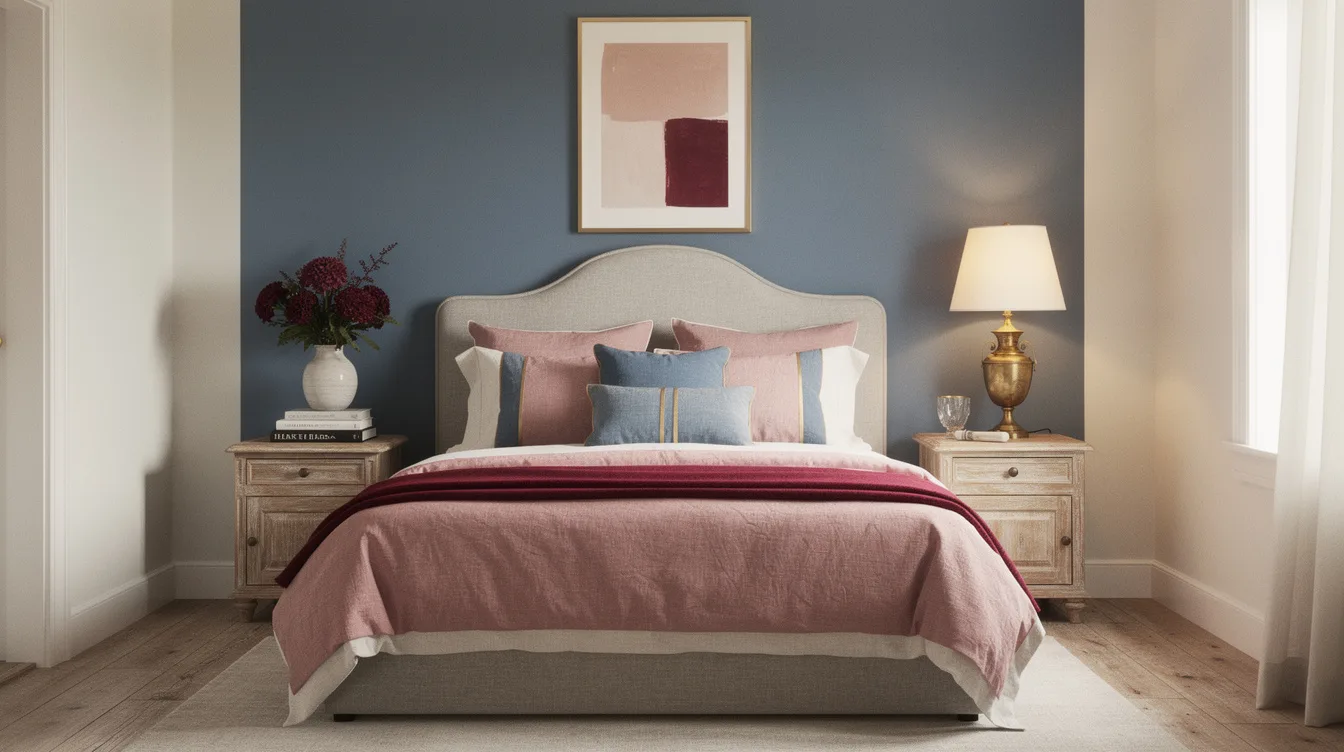
A bedroom can miss the mark before the bed is even made: the walls read icy, the wood looks orange, and every linen pillow suddenly feels like an afterthought. For a 54-inch bed, that backdrop takes up far more visual space than the headboard.
The French country look needs softness with some age to it. Matte washable paint typically runs around €1 to €5 per square meter in materials, so test the undertone before committing to every wall.
Warm Up a Stark White
Bright, blue-based white makes a bedroom feel newly built instead of gently lived in. Choose a creamy, plaster-like white such as Benjamin Moore Swiss Coffee or Antique White for all four walls.
These shades give oak, walnut, and antique brass a calmer backdrop. A linen duvet and a weathered wood nightstand will look intentional against a warm white, even in a small room.
Keep the sheen low. Matte paint hides minor wall texture better than a glossy finish and gives the room the quiet, chalky surface this style needs.
Choose Greige With a Warm Undertone
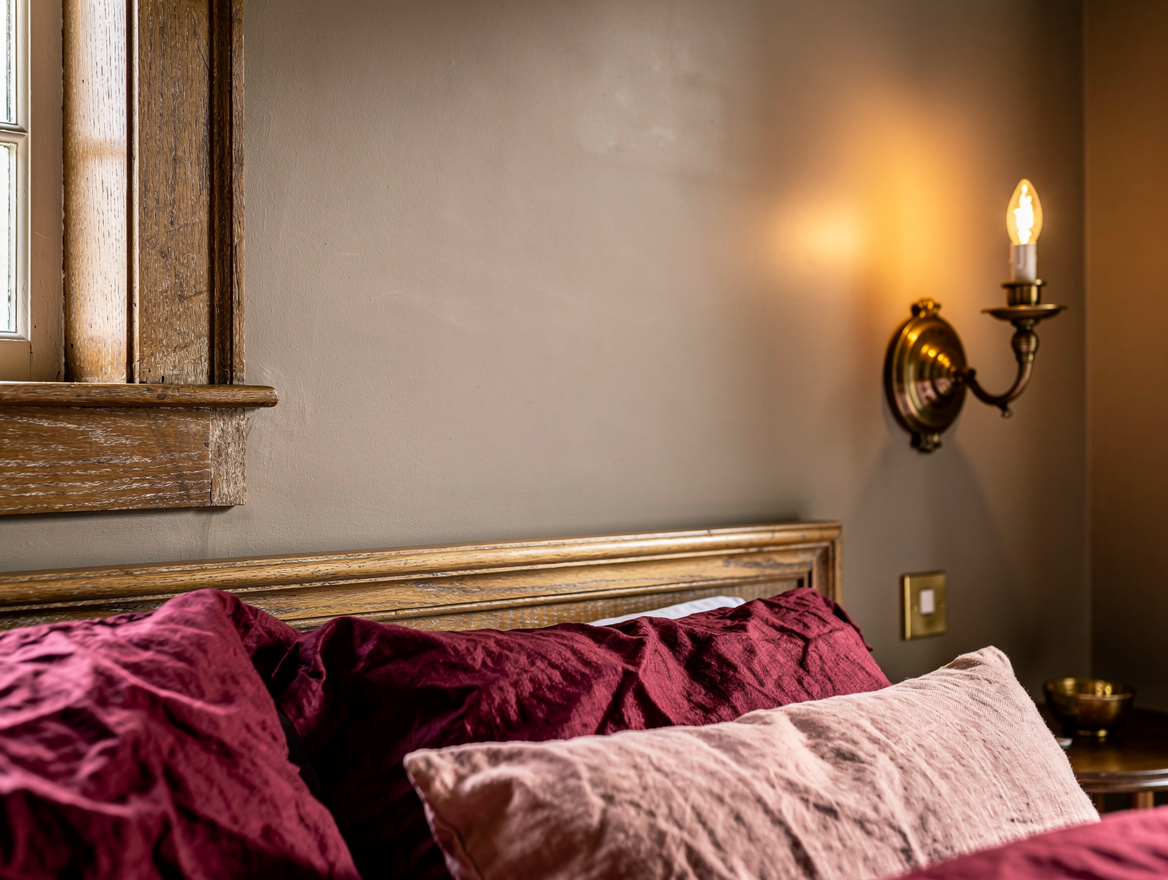
Cold gray is the fastest route to a bedroom that feels detached from its vintage-inspired furnishings. A warm greige such as Sherwin-Williams Repose Gray gives the walls depth without turning them heavy.
Benjamin Moore Revere Pewter is another solid option when the room has cream drapes, dark wood, or natural woven shades. Both work best with daylight, so paint a large sample near the bed and check it from morning through evening.
Skip blue-gray walls unless the room gets strong warm sun. French country rooms need beige, soft green, or brown undertones to keep their relaxed character.
Ground the Bed With Faded Blue
A saturated navy feature wall can overpower carved furniture and floral bedding. Use a muted powder blue behind the headboard instead, with the remaining walls in warm white or pale greige.
Look for a softened blue with gray in it, then bring the color down to the floor with a vintage-style wool rug. The result feels collected rather than themed.
A blue wall earns its place when the bed wall is visually plain. It is especially useful behind an upholstered headboard, where the paint adds shape without requiring more furniture.
Use Sage as an Accent, Not a Blanket
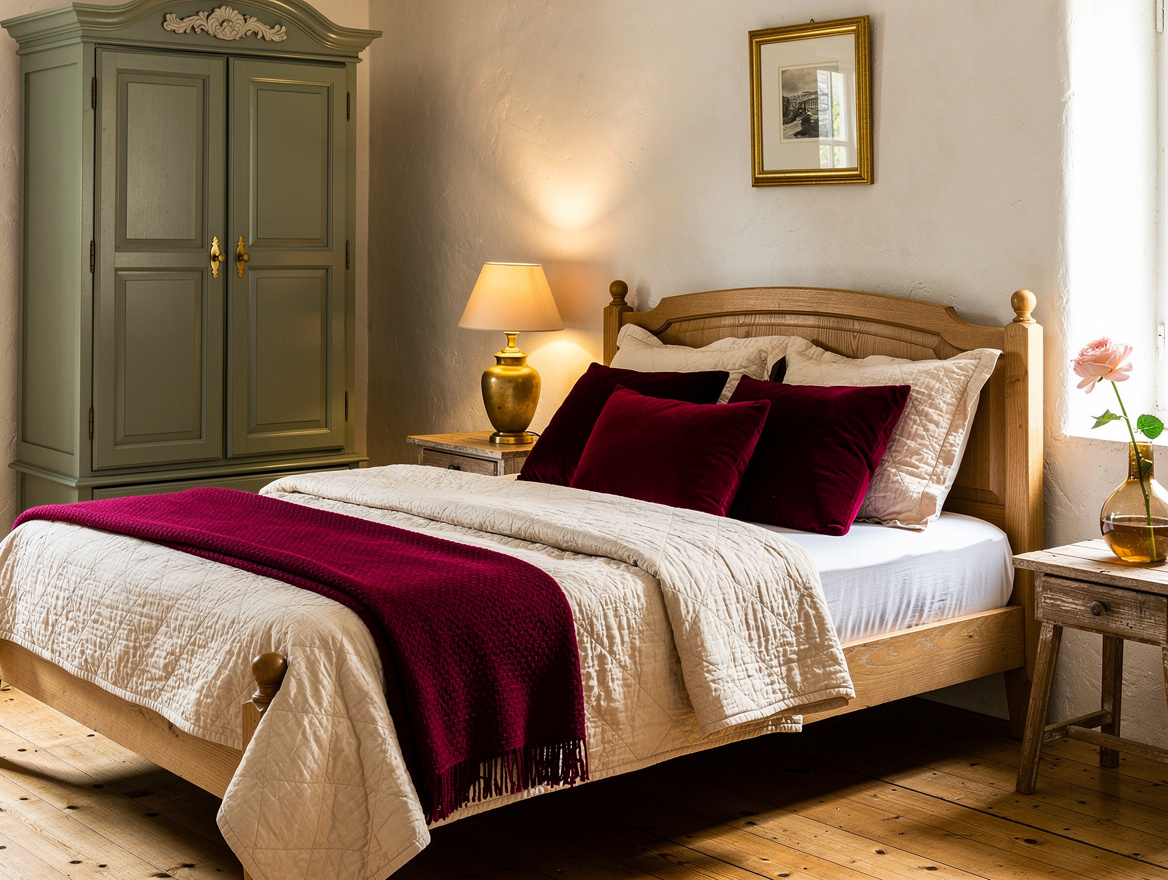
Muted green belongs in this style, but four dark green walls can make a bedroom feel smaller and gloomy. Reserve muted sage paint for one wall, a painted wardrobe, or a pair of bedside tables.
Pair it with natural oak, ivory bedding, and aged-brass hardware from Home Depot or Ace Hardware. The warm metal keeps sage from looking too contemporary.
Olive works in a larger, sunny room, while pale sage is safer in a compact bedroom. Avoid a sharp mint tone, which clashes with the worn, earthy finish that makes French country convincing.
Keep Dusty Pastels Off Every Surface
Dusty rose and lavender can make a bedroom feel tender and personal, but they need breathing room. Paint one small wall in dusty mauve, then let warm white handle the ceiling and surrounding walls.
Bring the same family into a Target cotton quilt or a single faded pillow cover instead of repeating it across curtains, rugs, and furniture. Too much matching color reads like a showroom set.
Terracotta, burnt orange, and golden ochre are better as small notes in pottery, a lamp base, or a framed print. Their warmth is powerful, so the walls should stay light enough to reflect it.
Start with a large warm-white sample beside the headboard, then compare it against your wood furniture after sunset. Once that base feels right, add one faded blue, sage, or dusty-pastel accent where the room needs depth.
Mia Carter writes about small-space living and budget home makeovers. She has restyled three rentals and tests most ideas in her own 45 sqm flat.