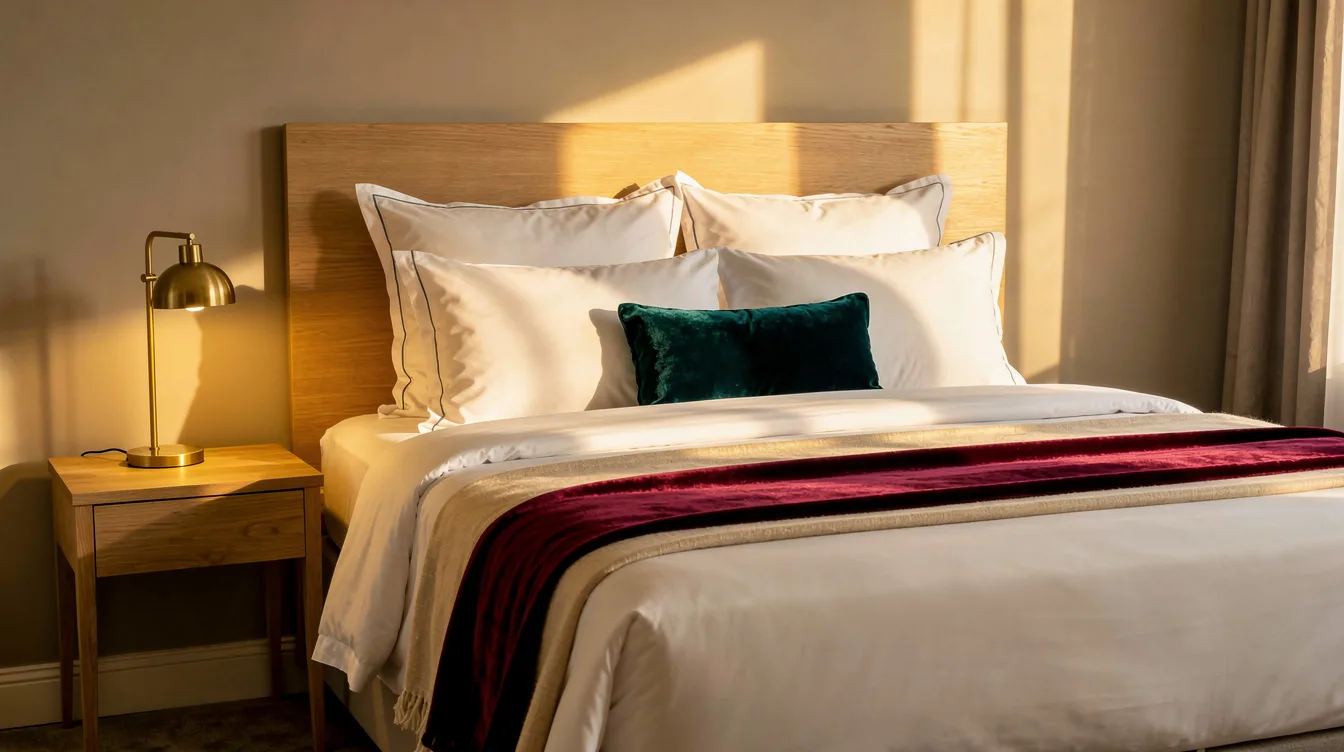
After a work trip where I slept better in a generic chain hotel than in my own bedroom, I got a little obsessive. I spent roughly $220 rebuilding my queen bed to copy that crisp, cool, tightly tucked feel, and some of my purchases were total misses.
Here’s what actually recreated the effect, and what I’d skip if I did it again.
Start With Percale, Not Sateen
My first mistake was buying sateen because it felt silky in the package. At home it draped soft and shiny, the exact opposite of that cool, matte snap you get sliding into a hotel bed.
The fix is 100% cotton percale in a typical 200 to 400 thread count. That’s the range hotel guides keep repeating, and it’s the range that actually rustles when you pull the sheet tight.
Marriott literally sells its own percale set because guests kept asking about it, usually around $180 to $225. I went cheaper with the Brooklinen Classic Core set at about $139, and honestly, it nails the feel.
Check Your Mattress Depth Before You Buy
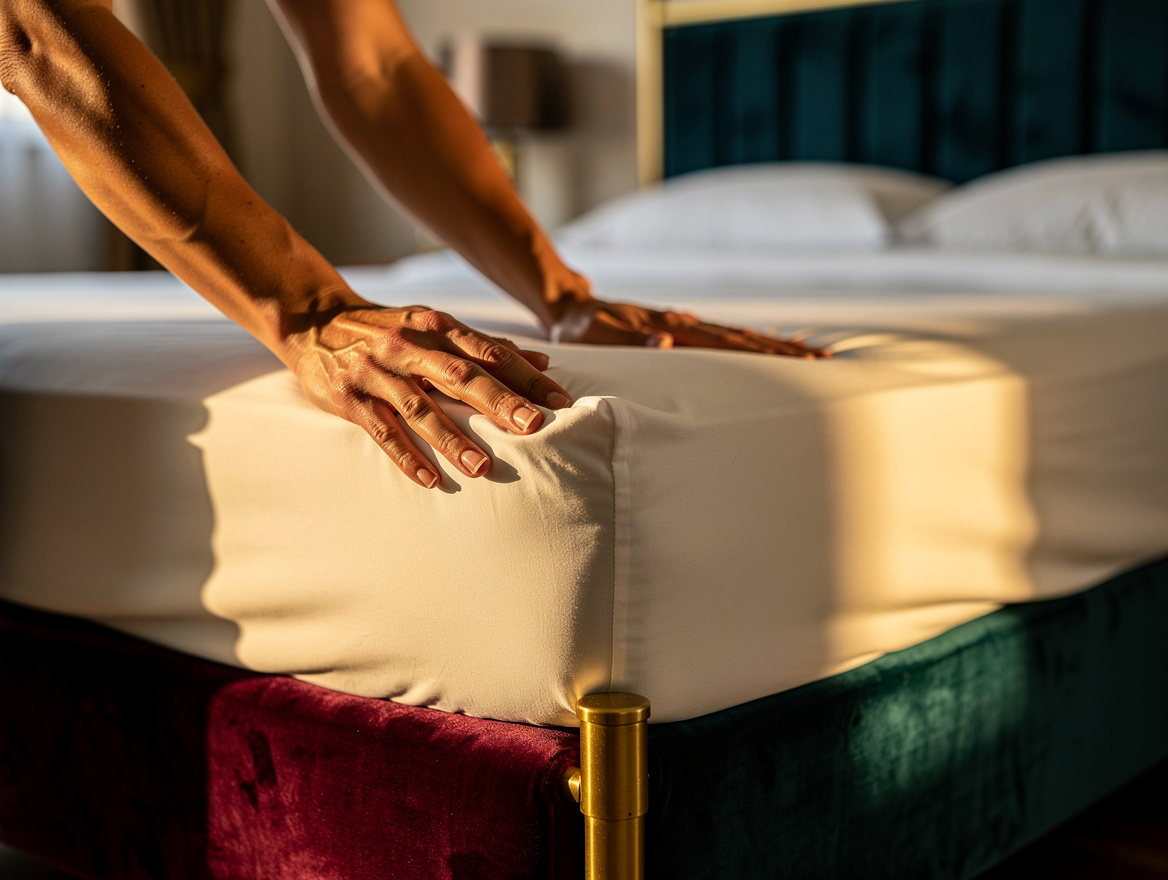
Nothing kills the hotel look faster than a fitted sheet that pops off a corner at 2 a.m. My mattress is roughly 14 inches deep with a topper, and standard sheets barely gripped it.
Standard fitted sheets typically cover mattresses up to about 16 inches, while deep-pocket versions stretch to roughly 20. Measure yours, then buy accordingly.
That smooth, drum-tight tuck is 90% of the visual effect. A deep-pocket percale fitted sheet does more for the look than any throw pillow ever will.
Learn the Hospital Corner
I watched a 40-second tutorial and spent one evening retraining my hands. Tuck the foot of the flat sheet under the mattress, fold the hanging side into a 45-degree flap, tuck that under, repeat on the other side.
The result is a flat sheet that stays put for days and reads crisp even unmade. It costs zero dollars and it’s the single highest-impact move in this whole project.
Pair it with a white cotton duvet cover folded back about a third of the way down the bed. That fold is what makes a bed look turned-down instead of just made.
Build the Pillow Stack in Layers
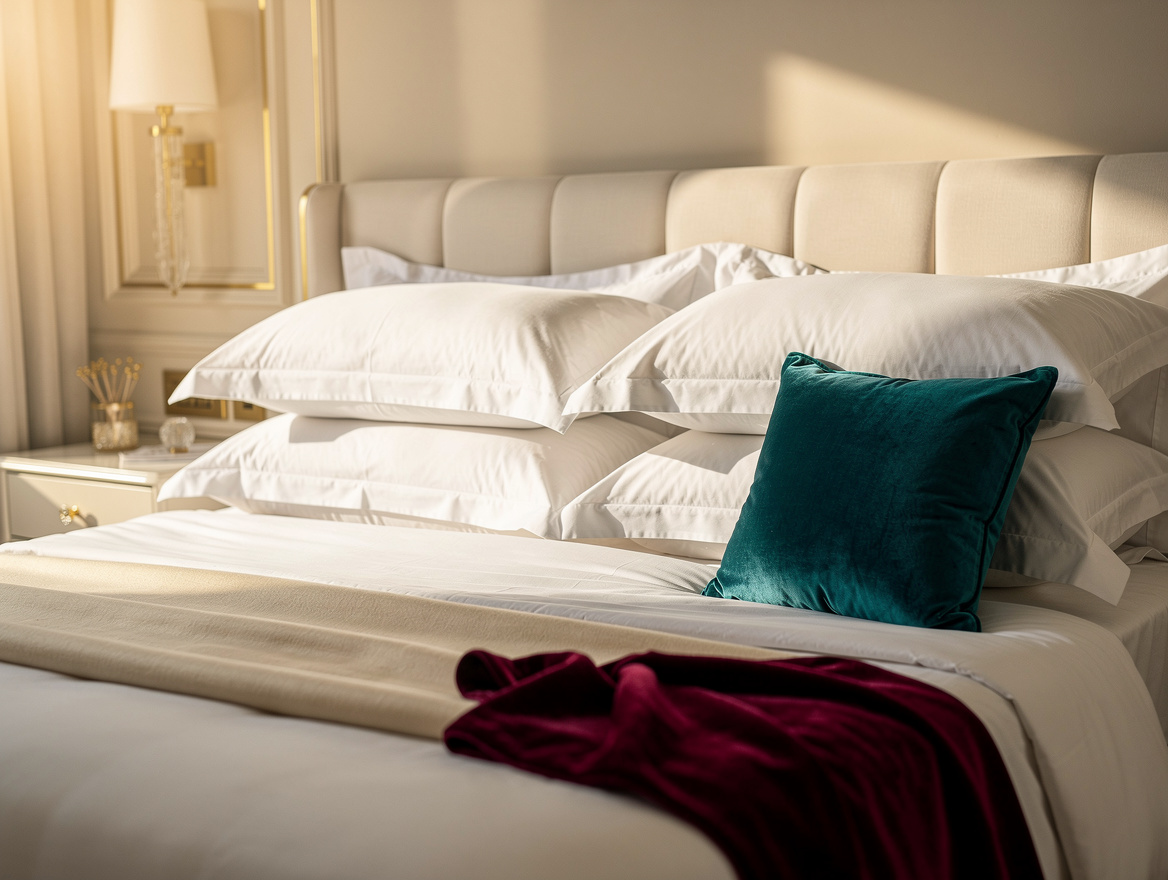
Hotels almost never use one lonely pillow per side. The standard formula is two firm sleeping pillows against the headboard, then two softer or decorative ones in front.
I grabbed two down-alternative firm pillows at Target for roughly $25 each, then layered two high-loft ones from Home Depot’s bedding aisle behind them. Four pillows per side sounds like a lot until you see it.
Keep every pillowcase the same white percale as the sheets. Mixed textures here read cluttered, not cozy.
Strip the Nightstands Down to Almost Nothing
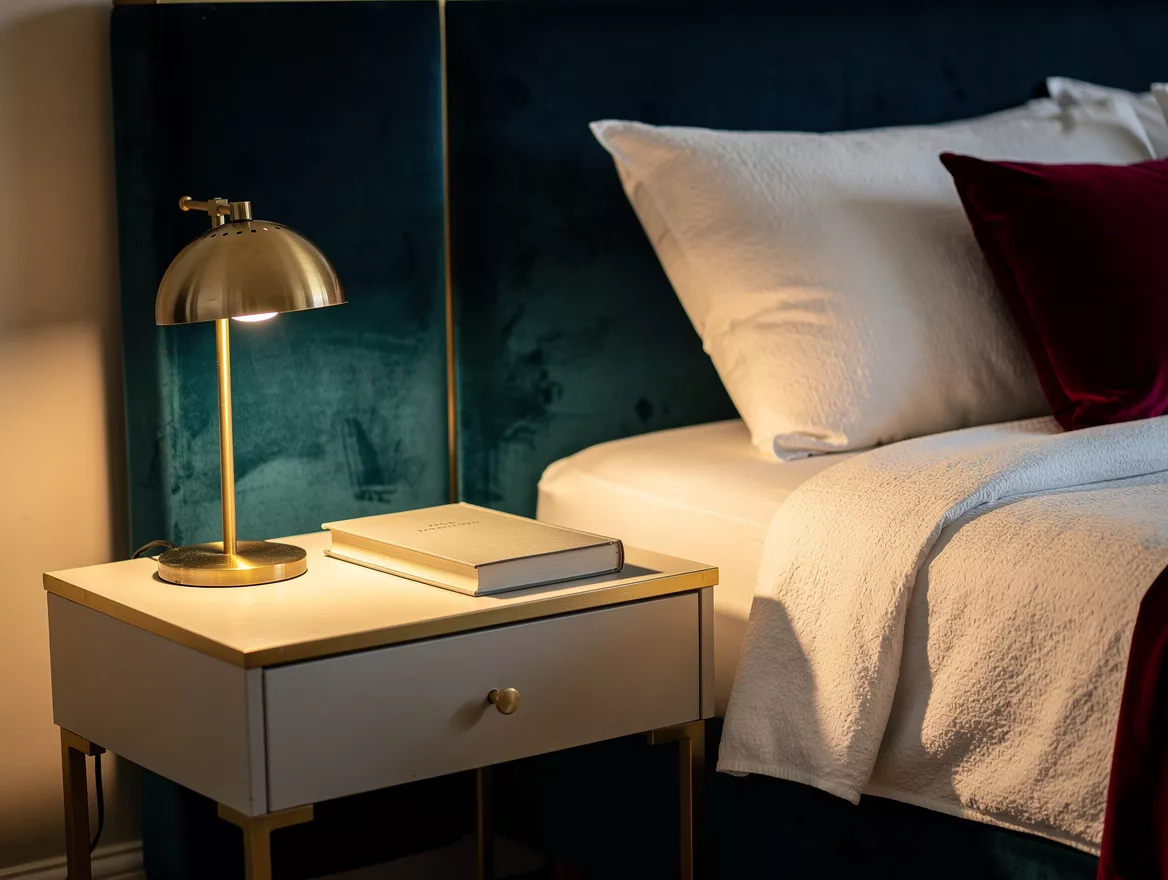
My nightstand used to hold a water glass, three half-read books, hand cream, and a tangle of charging cables. Hotels keep one lamp, maybe one small object. That’s the whole trick.
I moved the cables into a drawer, kept one book, and added a small brass table lamp from IKEA at about $35. The bed suddenly looked intentional instead of slept-in.
A hard rule that worked for me: nothing on the nightstand that isn’t either a light source or genuinely pretty.
Commit to a White and Ivory Palette
Every element does its job quietly. White percale sheets. An ivory duvet.
A light wood headboard. No accent color competing for attention.
I was tempted to add a rust throw because every feed told me to, and I resisted for a month. The plain version photographed better and, more importantly, felt calmer at the end of the day.
If you genuinely want warmth, add it through the headboard or one wool throw in oatmeal, not through the bedding itself.
Wash and Press Like It Matters
The part nobody mentions: hotel sheets look the way they do because they’re laundered hot, dried fully, and often pressed. Percale wrinkles, that’s the tradeoff for the crispness.
I pull my sheets from the dryer while still slightly warm and put them straight on the bed. That alone removes most of the wrinkling without touching an iron.
A quick pass with a handheld steamer on the duvet’s folded edge takes about two minutes and makes the whole bed look professionally turned.
Start with the sheets and the tuck, because those two things cost the least and carry the whole look. Everything else, the pillows, the lamp, the cleared nightstand, is just supporting cast.
Mia Carter writes about small-space living and budget home makeovers. She has restyled three rentals and tests most ideas in her own 45 sqm flat.