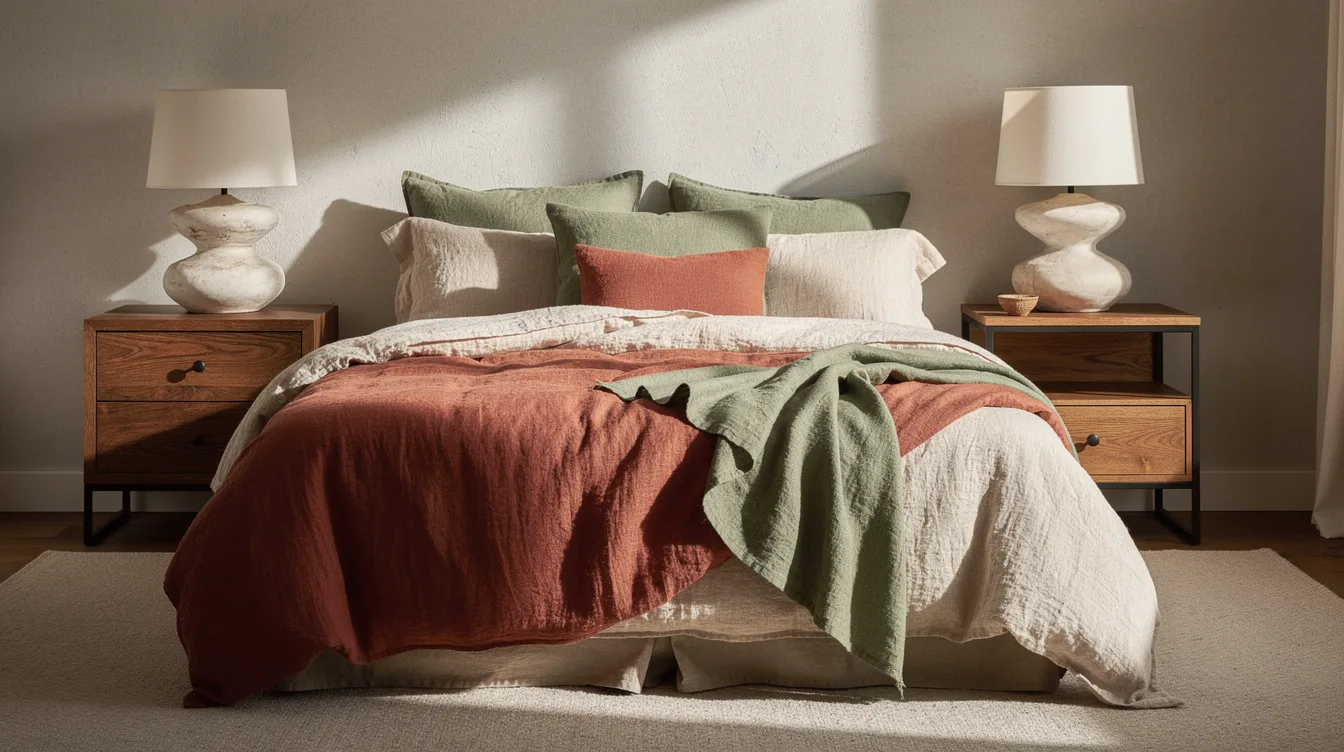
A shared bedroom gets tense fast when one sleeper needs a drawer for medication and the other wants an open table for books. The answer is not buying identical furniture, especially when a standard bed usually needs bedside pieces around 24 to 26 inches tall.
I like a pair with different jobs, provided the silhouettes carry similar visual weight. A deeper storage piece can live beside a lighter table and still look settled.
Match the Mattress Height First
Start with the top surfaces, because uneven nightstands make every bedtime routine feel awkward. For a low platform bed, aim for roughly 18 to 22 inches; taller traditional beds often need around 26 to 30 inches.
Keep both tops close to mattress level, even if one is a small chest and the other is a table. The eye forgives different shapes much faster than a six-inch height gap.
Leave roughly 3 to 6 inches between each piece and the bed frame. That little strip gives comforters room to fall cleanly instead of bunching around furniture legs.
Give Each Sleeper a Different Job
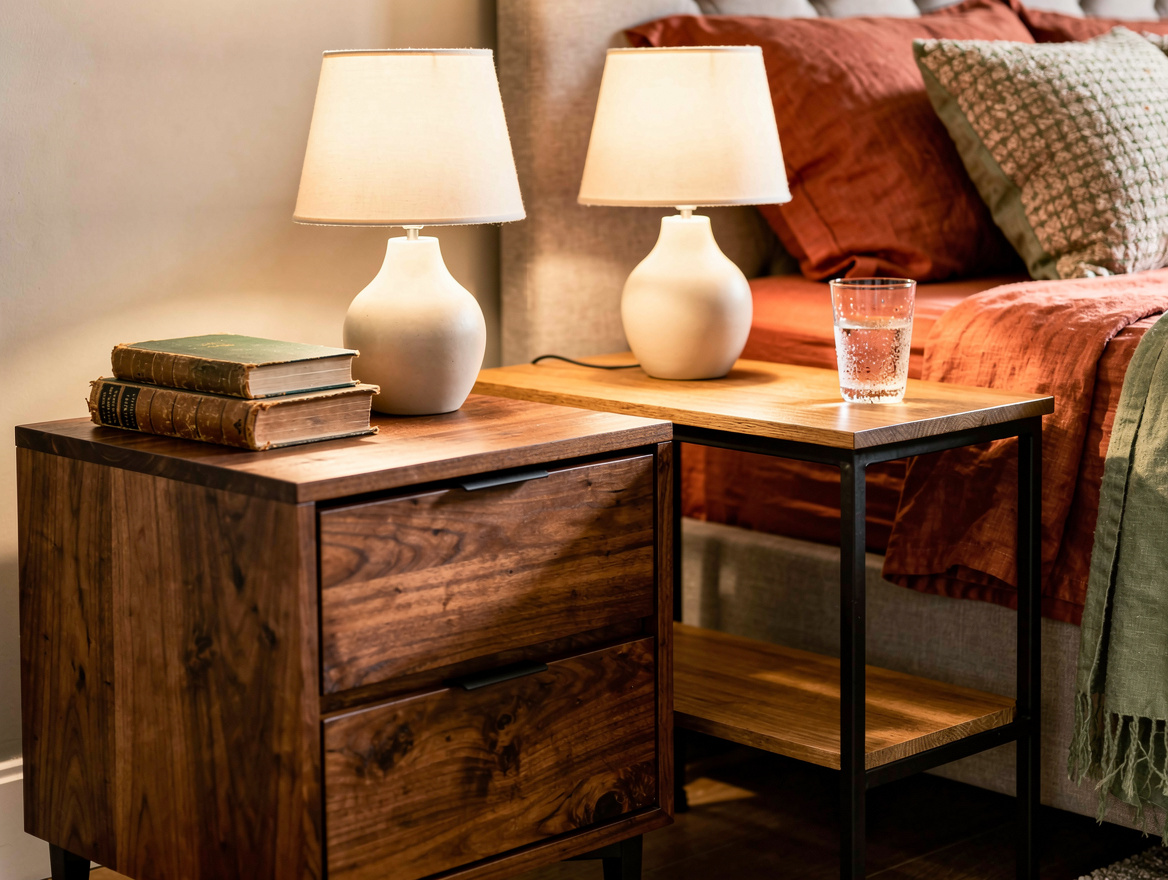
A shared bedroom rarely needs matching storage. Put a compact two-drawer wood nightstand on the side that collects chargers, reading glasses, and daily necessities, then use an open shelf table for the person who prefers less furniture.
This split feels considerate, not decorative for decoration’s sake. One side holds the practical clutter, while the other keeps the room visually lighter.
A typical usable bedside top is around 16 by 16 inches at minimum. Anything smaller needs a wall sconce or a very slim lamp, otherwise the surface becomes frustratingly crowded.
Repeat One Finish With Intention
Choose one finish that appears on both sides, then let the construction differ. A walnut drawer chest beside an oak-and-black-metal accent table has enough contrast to feel collected, while the warm wood family keeps it calm.
Do not mix pale gray laminate, orange pine, and glossy black metal in a compact shared room. That combination reads like leftover furniture, even when every piece is useful.
For a softer setup, paint two different tables in the same off-white or muted sand tone. Their shapes can disagree as long as the color creates one clear visual sentence.
Use Matching Lamps as the Bridge
Matching lamps are the fastest way to make mismatched nightstands look planned. Two Target ceramic lamps with the same shade shape will pull together a drawer chest and a simple side table immediately.
Keep the lamp bases near the same height, especially if both sleepers read in bed. A tall lamp on one side and a tiny task light on the other makes the headboard look lopsided.
For a tighter budget, pair two similar plug-in lamps from IKEA or Walmart. The furniture can vary more when the lighting creates a steady rhythm across the bed.
Balance Visual Weight, Not Exact Width
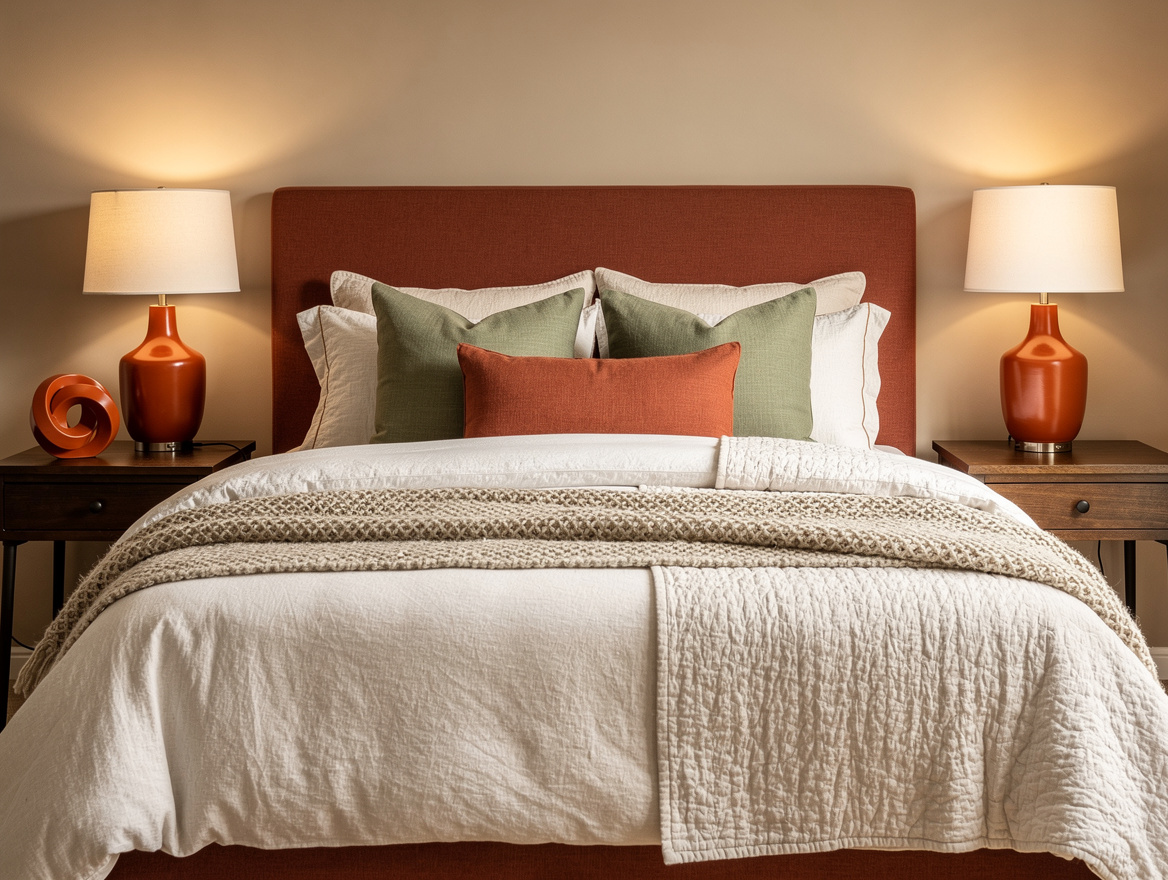
Nightstands do not need matching footprints, but they should feel equally substantial from across the room. An 18-inch-wide drawer chest can balance a roughly 22-inch open table if the chest has clean legs and the table has a lower shelf.
Watch heavy materials carefully. A chunky marble-top table beside a delicate rattan stand makes one sleeper’s side look permanently underfurnished.
Try an oak cabinet with a modest profile opposite a metal-and-wood table. Their widths may differ, yet the warm wood repeat and similar height keep the bed centered.
Spend More on the Piece You Touch Most
You do not need two expensive nightstands to get a grown-up shared bedroom. A typical budget piece may run about $80 to $150, while stronger entry-quality options often fall around $150 to $300.
Spend on the side that needs reliable drawers and solid hardware, then save on the open table. A sturdy solid wood cabinet from Home Depot, Lowe’s, or Wayfair can sit comfortably beside a simpler accent table.
In a room with more breathing room, a typical $300 to $700 per-piece range gives you better choices in wood veneer, metal, and storage. In a small bedroom, restraint matters more than the receipt total.
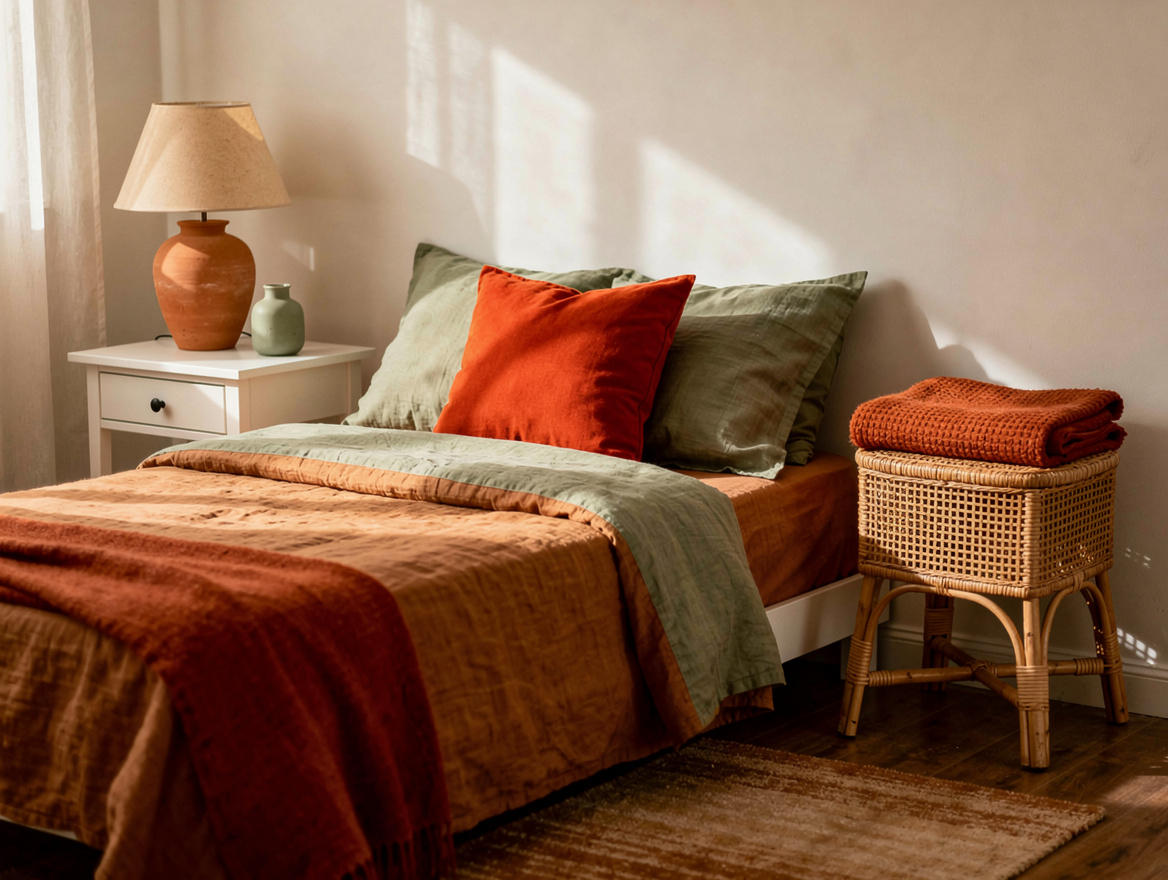
Measure the mattress top and choose that height range before shopping for finish or storage. Once both bedside surfaces land comfortably by the bed, let each sleeper choose the piece that makes their own side work.
Mia Carter writes about small-space living and budget home makeovers. She has restyled three rentals and tests most ideas in her own 45 sqm flat.