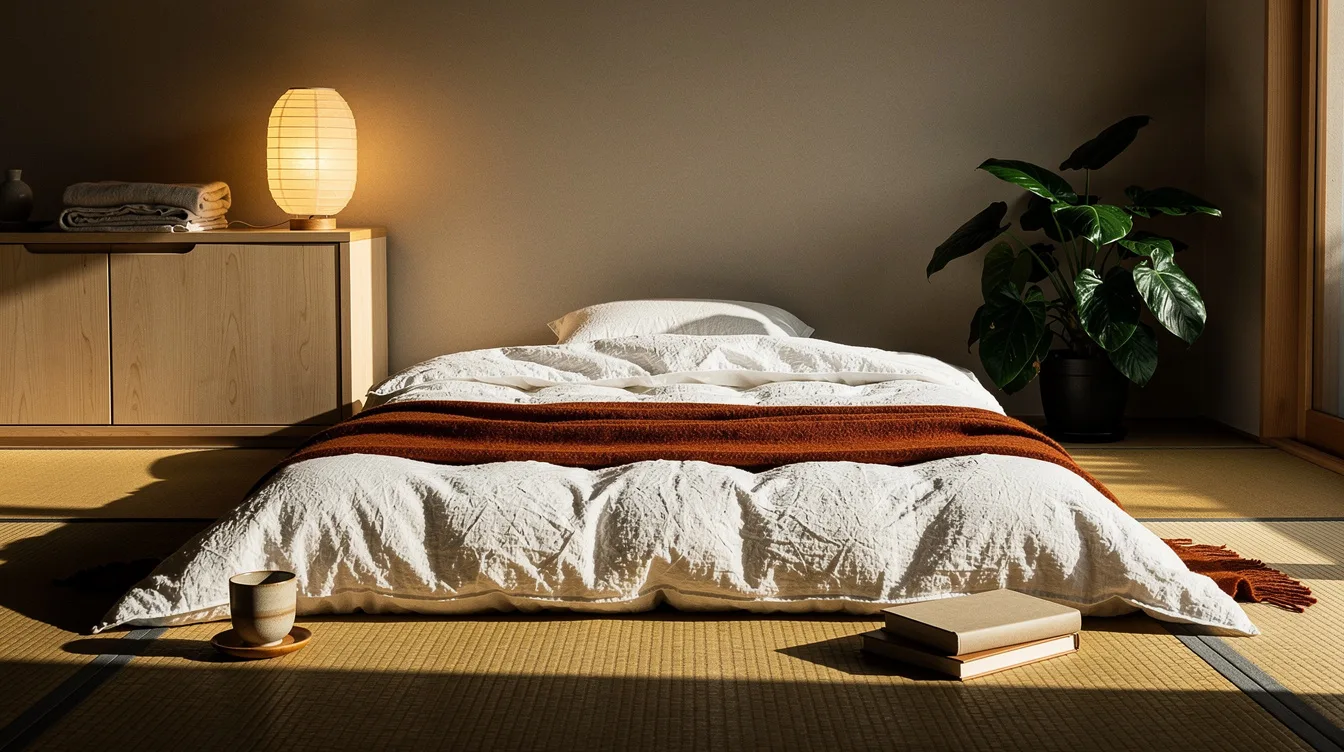
A Japanese minimalist bedroom can go wrong the moment a standard-height bed fills the center of a 10-by-12-foot room. The appeal comes from keeping the sleep zone low enough that the floor still feels present.
A typical tatami reference measures around 72 by 36 inches, so its proportions give you a useful grid before furniture starts crowding the walls. I like this style most when it feels restful, not like a theme-room display.
Build the Room Around a Low Tatami Grid
Let tatami establish the room’s footprint first, then place the sleeping area within that boundary. A twin-style mat can be roughly 75 by 39 inches, while traditional regional sizes vary, so measure the actual product before committing to a layout.
Choose natural rush-grass tatami if you want texture and scent, or select a modern foam-core version for easier care. Igusa rush grass has more character than synthetic flooring, but it needs a dry, well-aired room.
Keep at least one clear walking edge around the mats. That empty strip of floor is part of the look, and it makes a small bedroom feel considerably less boxed in.
Put the Futon Directly on the Floor
A cotton shikibuton directly on tatami gives the room its most convincing silhouette. Fold it away during the day when possible, especially in a compact apartment where the same floor needs to work for stretching, reading, or getting dressed.
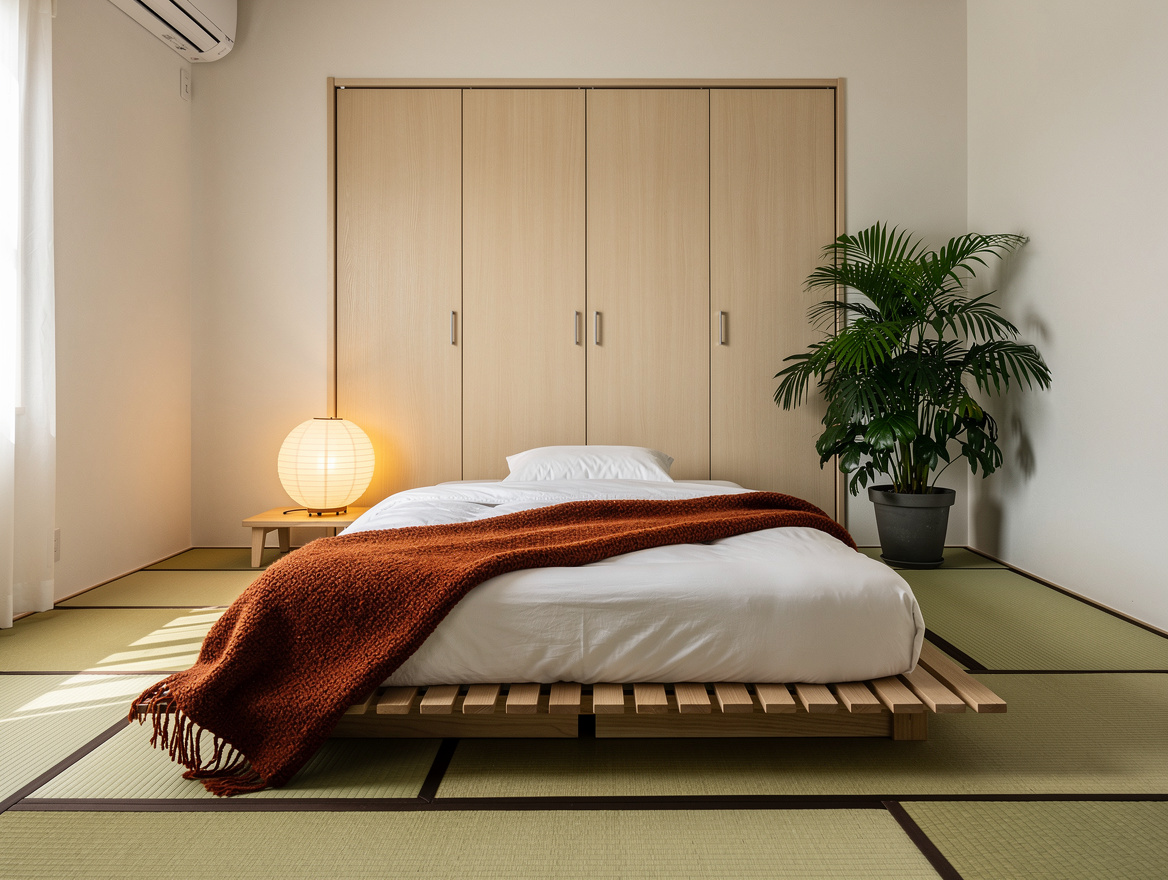
If direct floor sleeping feels too cool, add a low slatted base with plenty of air beneath it. Home Depot and Amazon carry simple unfinished pine slats and low platform options that can support the idea without adding a bulky bed frame.
Skip towering headboards and upholstered side rails. They pull the eye upward and erase the calm horizontal line that makes this arrangement work.
Limit the Palette to Quiet Natural Surfaces
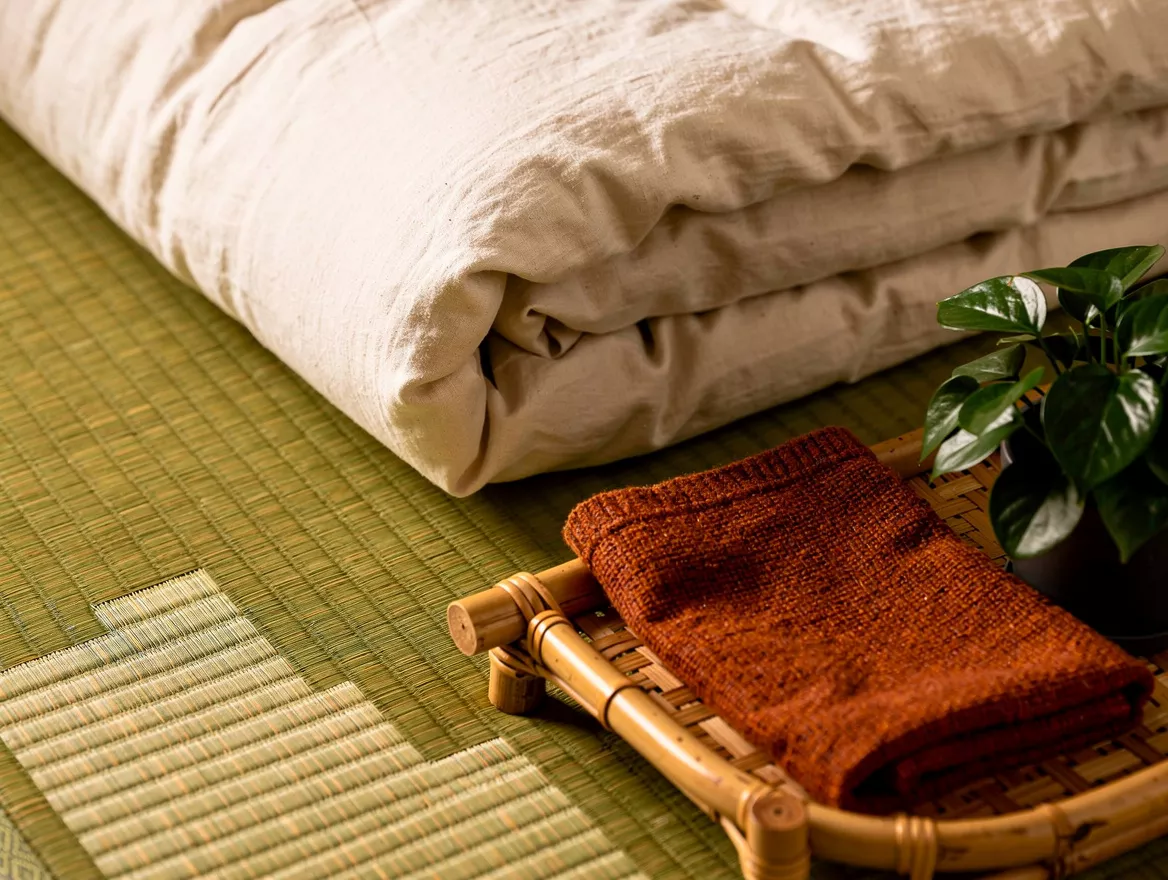
Start with off-white linen, pale wood, beige, and a softened gray rather than stark white and pitch black. The room should look warm in daylight, not sharply graphic.
For a paint backdrop, a muted warm white from Home Depot is a practical choice because it lets the tatami and bedding carry the texture. Matte paint is the right call here, since glossy walls feel oddly formal beside woven flooring.
Add one natural note, such as a small leafy plant or a hand-thrown incense holder. A single bamboo tray on the floor is enough for the nightly essentials.
Diffuse Light With a Paper-Style Lamp
Use one low, warm lamp instead of several decorative fixtures competing for attention. A paper lantern lamp gives the soft, clouded glow associated with Japanese interiors, and a typical basic option from IKEA or Target costs far less than designer collectible lighting.
Premium Akari-style lamps can run roughly from $375 into four figures, depending on the model, so I would not make one the starter purchase. A modest IKEA rice-paper shade gets the proportion right while you learn how the room feels at night.
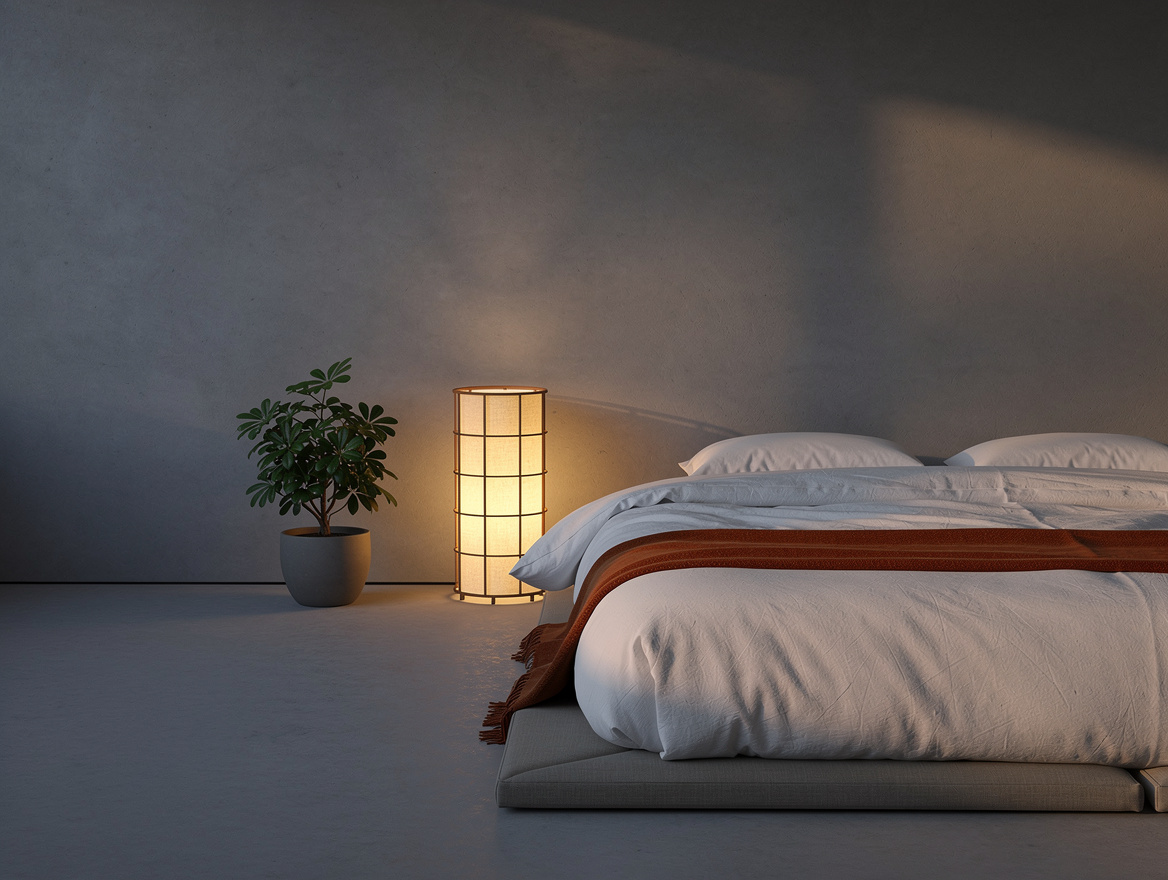
Place the light beside the futon or near a reading cushion, never centered overhead like a showroom fixture. The low pool of light makes the ceiling seem higher.
Hide Storage Behind Simple Wood Fronts
Minimalism falls apart when laundry, chargers, and extra blankets stay visible. Give the room one closed storage piece, preferably a low oak-tone cabinet from Wayfair, Walmart, or Target, with flat fronts and restrained hardware.
Store folded bedding, books, and seasonal layers inside instead of adding a row of baskets. One under-bed storage bin can help when the futon rests on slats, but don’t let storage become the room’s main visual story.
A built-in look is welcome only when it stays flush and quiet. Open shelving usually asks you to decorate it, which creates work this room does not need.
Edit Decor Until the Floor Can Breathe
Keep the final layer spare: one framed print, one small ceramic vessel, perhaps a woven floor cushion. A cotton zabuton from Amazon or a simple neutral cushion from IKEA is more useful than a decorative bench.
Leave the walls partly blank and resist matching every object to a Japanese reference image. Real comfort comes from a bedroom that has room for daily life, not from collecting symbols.
A matte black reading sconce or one slim wood hook is plenty of contrast. Glossy metal, oversized art, and crowded nightstands make the space feel busier within minutes.
Begin with the tatami area and the futon, then live with that arrangement for a week before buying decor. Once the floor feels open and the lighting feels gentle, the rest of the room can stay wonderfully minimal.
Mia Carter writes about small-space living and budget home makeovers. She has restyled three rentals and tests most ideas in her own 45 sqm flat.