C Calming bedroom sleep routine ideas start with a darker, quieter room and repeatable evening cues. A bedroom can feel peaceful without a renovation, but random decor won’t create that feeling. Layer soft light, breathable fabric, and clear surfaces so the room reads as finished for the day. Start small.
Don’t overthink: Swap Overhead Glare for Layered Light.
Editor’s note: Begin with the quiet zone, then soften the light. You’ll notice the room changing before you buy anything.
- Clear One Quiet Zone Beside the Bed
- Swap Overhead Glare for Layered Light
- Which Wall Color Can Stay Quiet After Sunset?
- Anchor the Bed With a Rug 18 to 24 Inches Past the Frame
- Layer Washed Linen Beneath a Heavier Coverlet
- What Belongs on Your Bedside Table?
- Hang Curtains That Stop the Room From Feeling Exposed
- Mix Two Textures in the Pillows
- Frame the Bed With Balanced Nightstand Heights
- Soft Contrast: How Much Is Enough?
- Float a Narrow Bench at the Foot of the Bed
- Set a Realistic Budget Before Buying Anything
- Replace Harsh Hardware With Aged Metal
- Choose a Headboard That Absorbs Visual Noise
- Let One Natural Material Lead the Room
- Paint the Ceiling a Shade Deeper Than the Walls
- Place Art Where Your Eyes Naturally Rest
- End the Evening With the Same Small Sequence
The essentials for a calmer bedroom
The five pieces we recommend for a calmer bedroom.
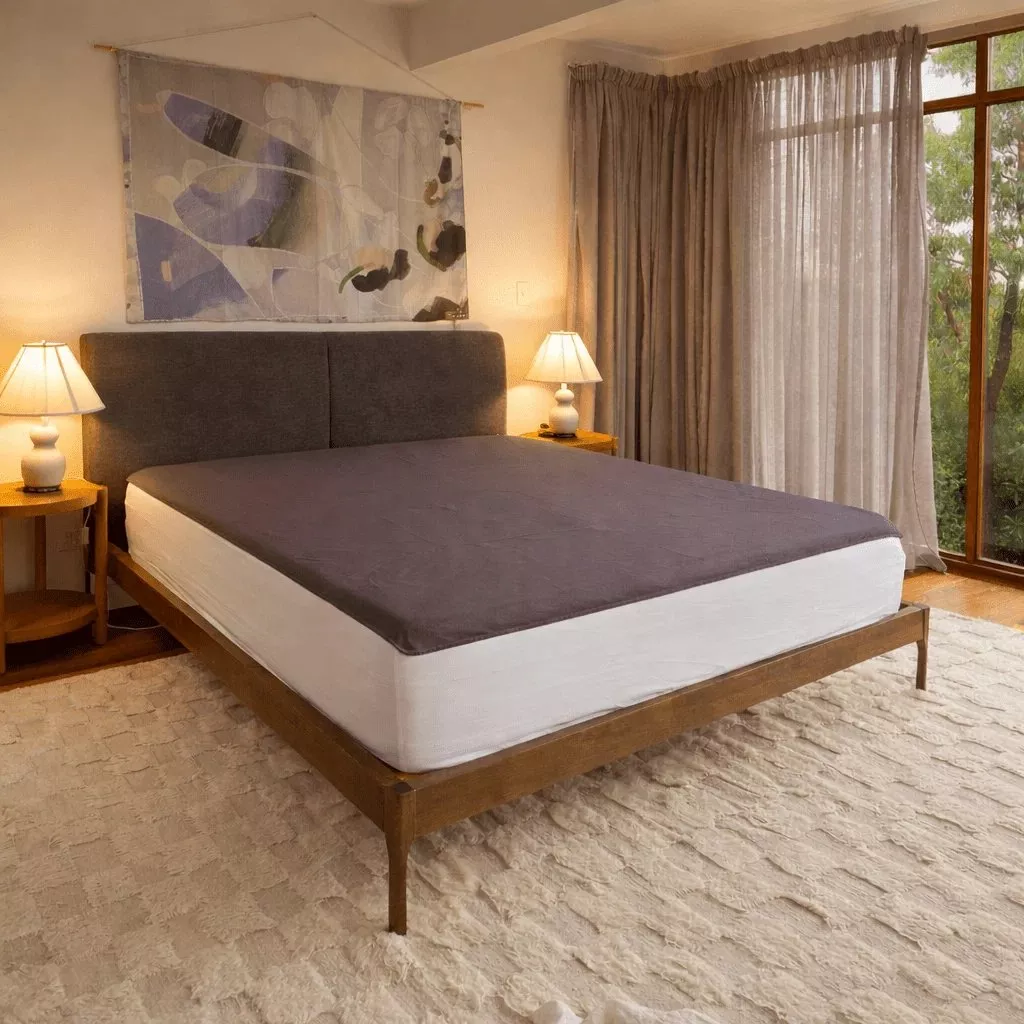
Premium Grounding Sheet
Premium Grounding · woven 316L stainless-steel fibers, goes under your fitted sheet
Save 10% with code mattressnut
Through Nov 30: buy one sheet, get one free (per the brand)
 THE MATTRESS
Saatva Classic
Saatva
- THE TOPPER
Graphite Topper
Saatva
- THE PILLOW
The Saatva Pillow
Saatva
- THE COMFORTER
Down Alternative Comforter
Saatva



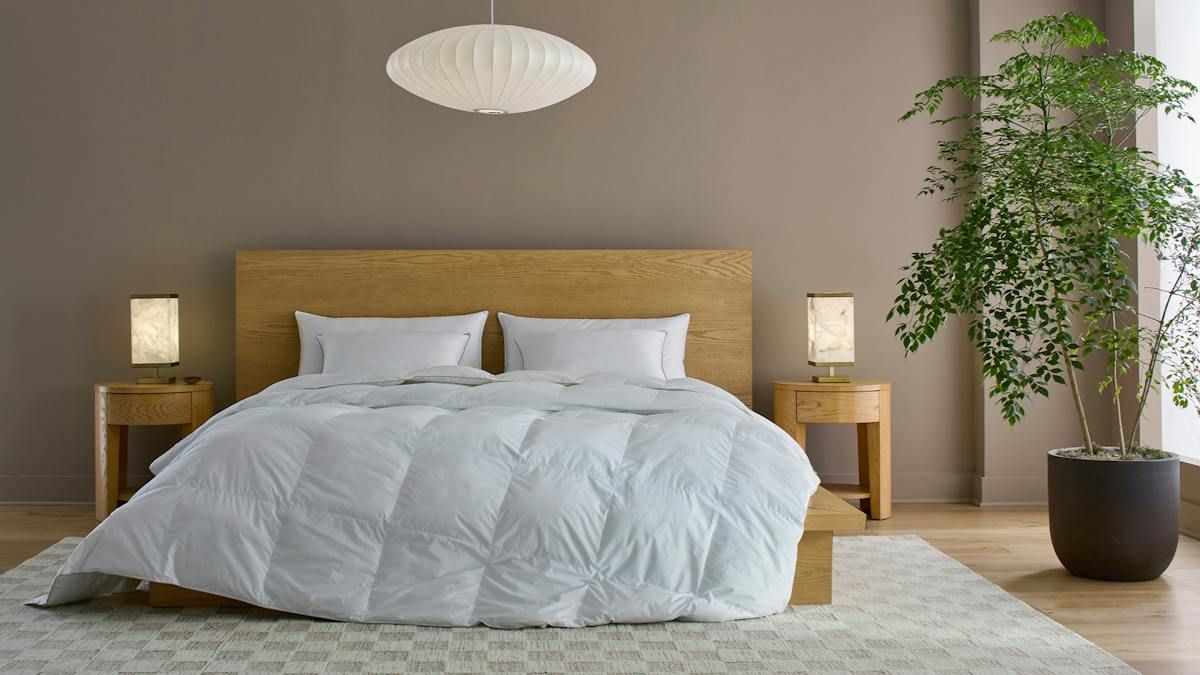
1Clear One Quiet Zone Beside the Bed
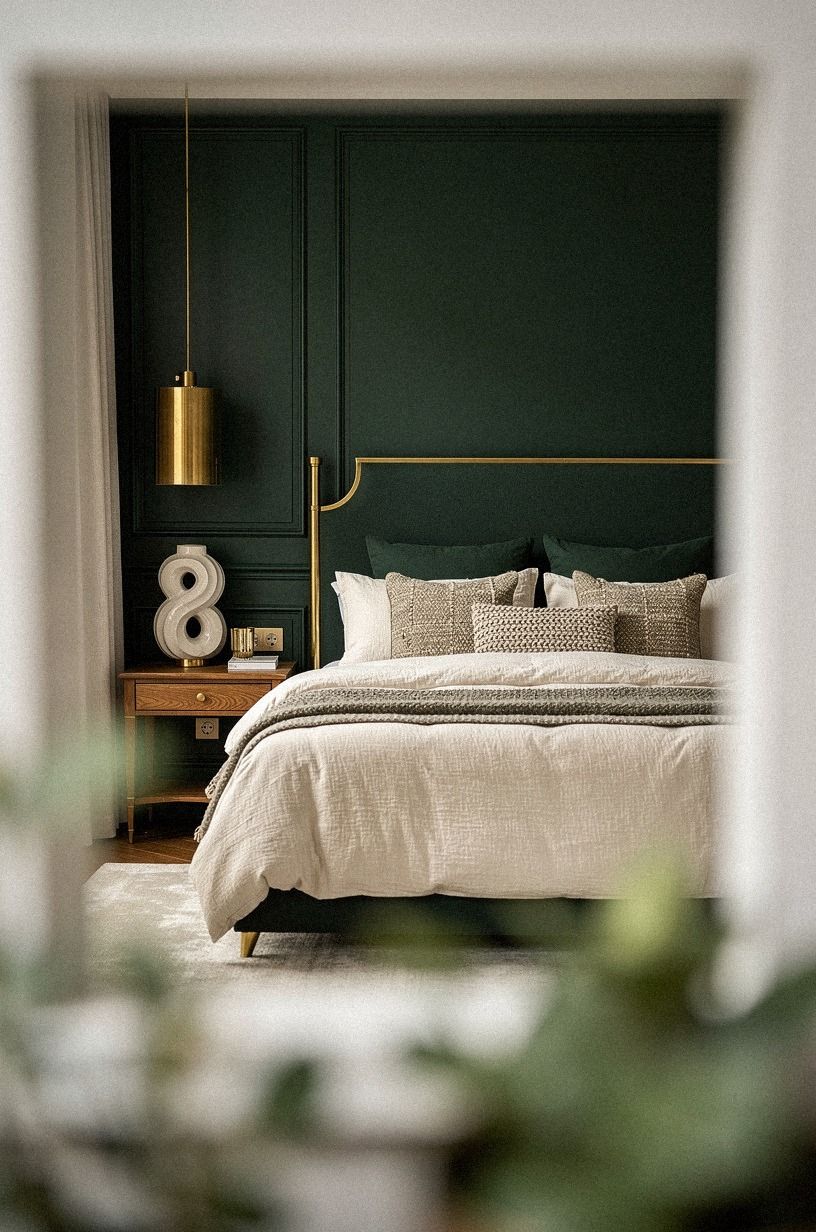
A calming room needs one visible zone that isn’t asking for attention. Clear the chair, dresser top, and floor beside your bed, then keep only an unlacquered brass catchall tray for the essentials. When your eye lands on fewer objects, your evening routine feels gentler and more intentional.
If you’re working with a small bedroom, give your most-used items a home within reach. A cream-painted cube can hold folded blankets without crowding the floor, while a lidded basket keeps chargers and loose clothing out of sight. Keep one quiet visual lane clear, even if the rest of the room stays lived-in.
And the quiet zone shouldn’t become a storage pile by midnight. Keep the tray, basket, and chair limited to useful items, or the calming effect disappears quickly.
2Swap Overhead Glare for Layered Light
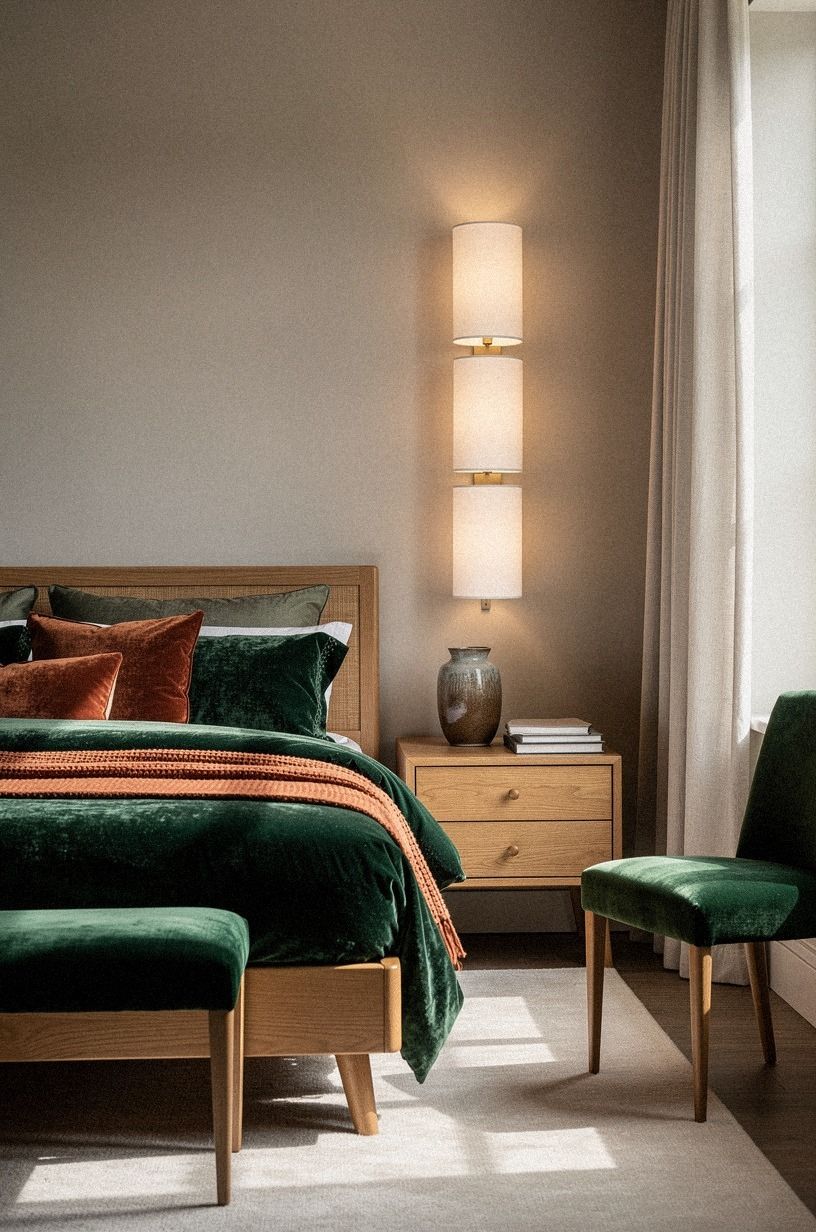
Overhead lighting is practical, but it rarely feels peaceful at night. Build three gentle points instead: a bedside lamp, a lower glow near the floor, and a small accent light on a dresser. The combination creates layered warm lighting that feels inviting without leaving the room dim and awkward.
Choose a lamp with a matte shade and a natural-oak base, plus a deep-pile mohair velvet cushion on a nearby low seat. The warm grain catches light without becoming visually heavy. Your bedside light should sit close to mattress height, so you won’t need to stretch or squint.
But don’t place every light at the same height. Your room will feel flatter, and the ceiling fixture will still dominate the evening mood.
A lower glow near a rug or curtain adds the soft, welcoming contrast that makes this setup feel finished. You can compare it with the ceiling color approach later.
3Which Wall Color Can Stay Quiet After Sunset?
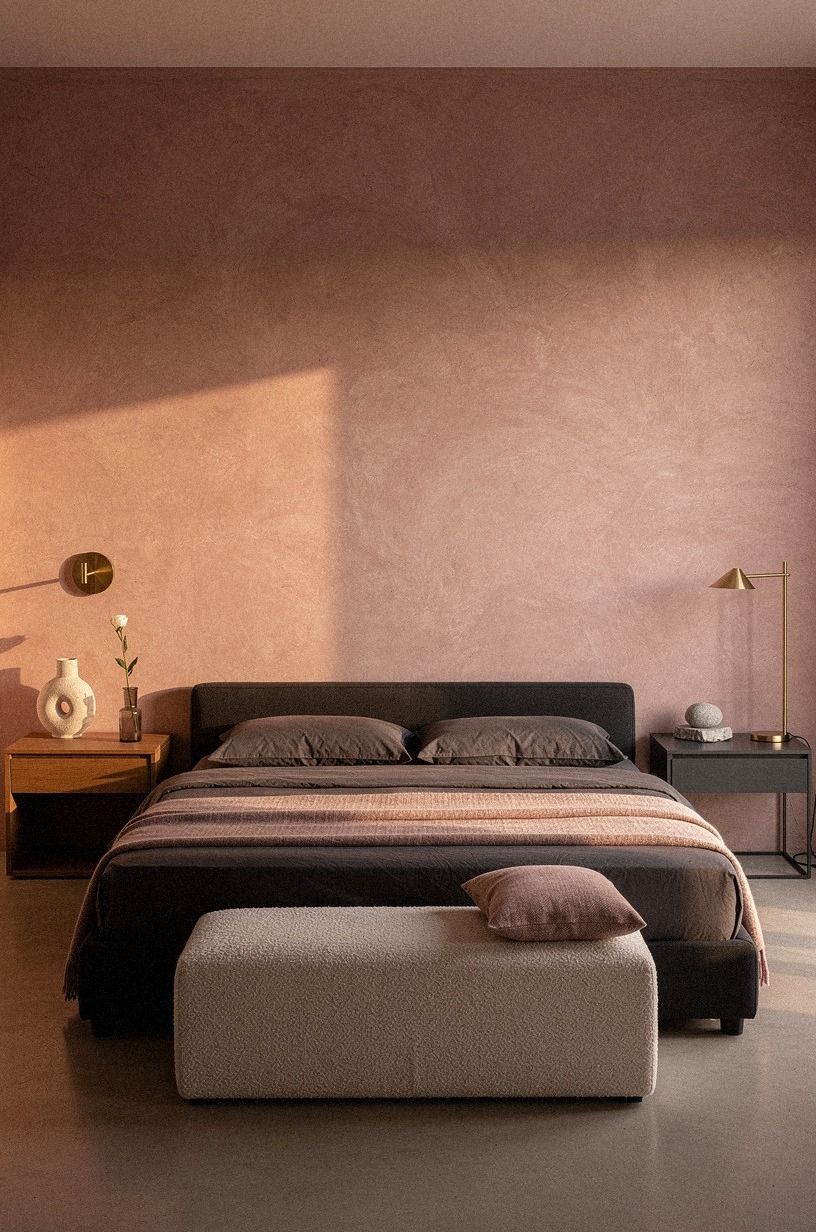
Color matters most after sunset, when artificial light changes every undertone.
4Anchor the Bed With a Rug 18 to 24 Inches Past the Frame
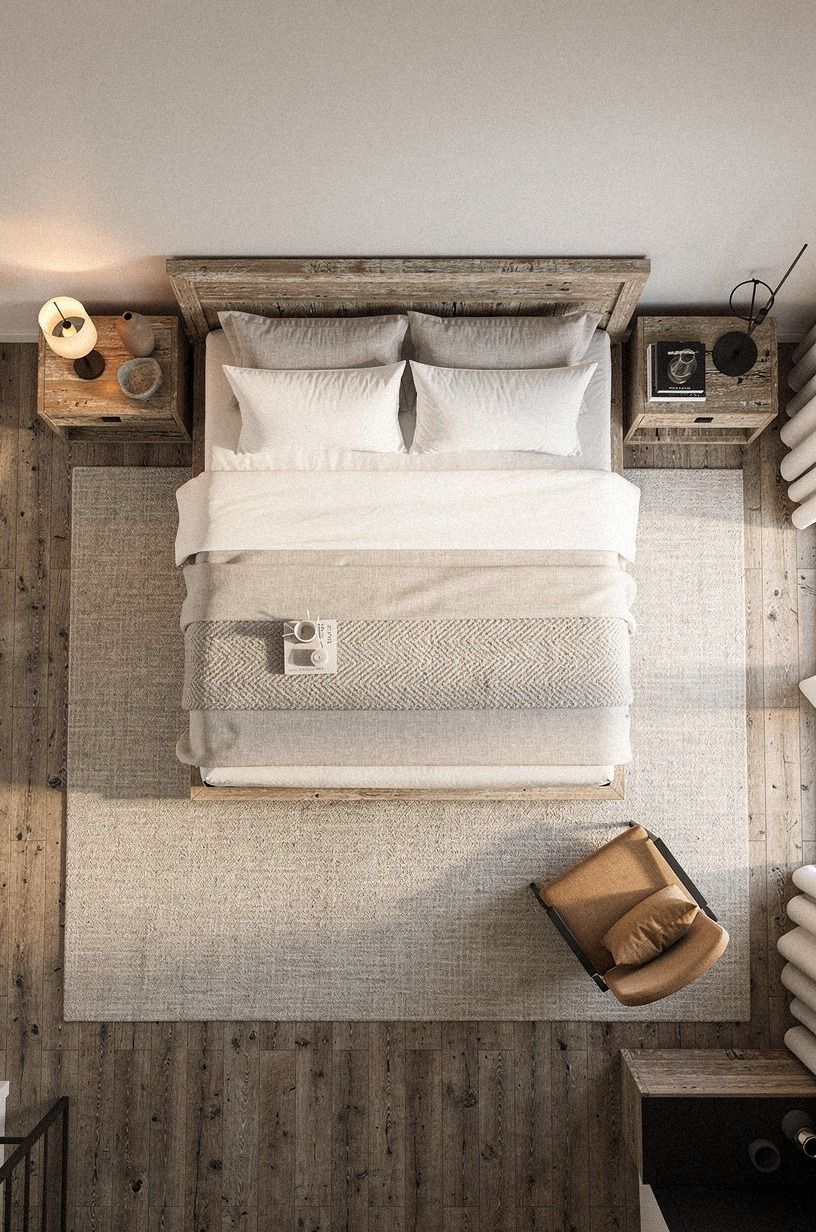
A rug should extend 18 to 24 inches past the bed so your feet land on something soft instead of a cold floor. For a queen bed measuring 60×80 inches, an appropriately scaled rug can make the furniture feel grounded. The goal is comfort underfoot, not a tiny floating rectangle.
Choose wool with a low, dense pile if you want warmth without a difficult cleaning routine. A wool rug can soften footsteps and add an earthy texture beside painted walls. If you’re styling a king bed measuring 76×80 inches, check the rug placement from both sides before finalizing the position.
If your bedding already has texture, a patterned rug is optional. A quiet weave in warm white or camel will keep your room serene while giving the floor enough visual weight. That’s far more relaxing than a small rug that stops just before the nightstand.
Your feet will notice the difference.
5Layer Washed Linen Beneath a Heavier Coverlet

Texture can make a bedroom feel inviting without adding clutter. Start with washed-linen bedding, then layer an ivory linen coverlet and one folded blanket across the lower third of the bed. The rumpled surface catches low light in a way that smooth polyester rarely can.
Your bedding should feel breathable rather than glossy. Belgian flax linen, cotton percale, or a light quilt gives the bed an organic look that still feels refined. If you prefer a more polished room, fold the top sheet evenly and let only the linen pillowcases show.
Don’t buy a matching bedding set simply because the package looks convenient. Matching fabric can make the bed look flat.
A washed Belgian linen blanket or a textured matelassé coverlet gives your eye a softer stopping point, and you’ll notice the difference each evening.
Why We Recommend This Product
If the ideas in this article speak to you, here is why this one product belongs next to them.
- 1
It goes where your routine already is.The sheet sits beneath your existing fitted sheet, so nothing else about your bed has to change.
- 2
Nothing to charge or switch on.It is a woven layer with a cord, with no screen and no battery, according to the seller.
- 3
Built to keep going.The seller lists woven 316L stainless-steel fibers and says there is no silver to tarnish.
- 4
Easy to try without a long commitment.The product page states a 120-night trial. Read the terms for your country.
Why buyers look at grounding sheets at all: many people add one to their evening routine to feel calmer at night. A small 2004 study (Ghaly & Teplitz, Journal of Alternative and Complementary Medicine) reported better sleep and lower night-time cortisol in grounded sleepers, and early research reviewed by Oschman et al., Journal of Inflammation Research (2015) suggests grounding may influence inflammation markers, though larger studies are still needed.1,2
What you get: a woven 316L stainless-steel sheet that goes under your fitted sheet, the connection cord and plug, and a 120-night trial as stated on the product page.
Save 10% with code mattressnut
Through Nov 30: buy one sheet, get one free (per the brand)
6What Belongs on Your Bedside Table?
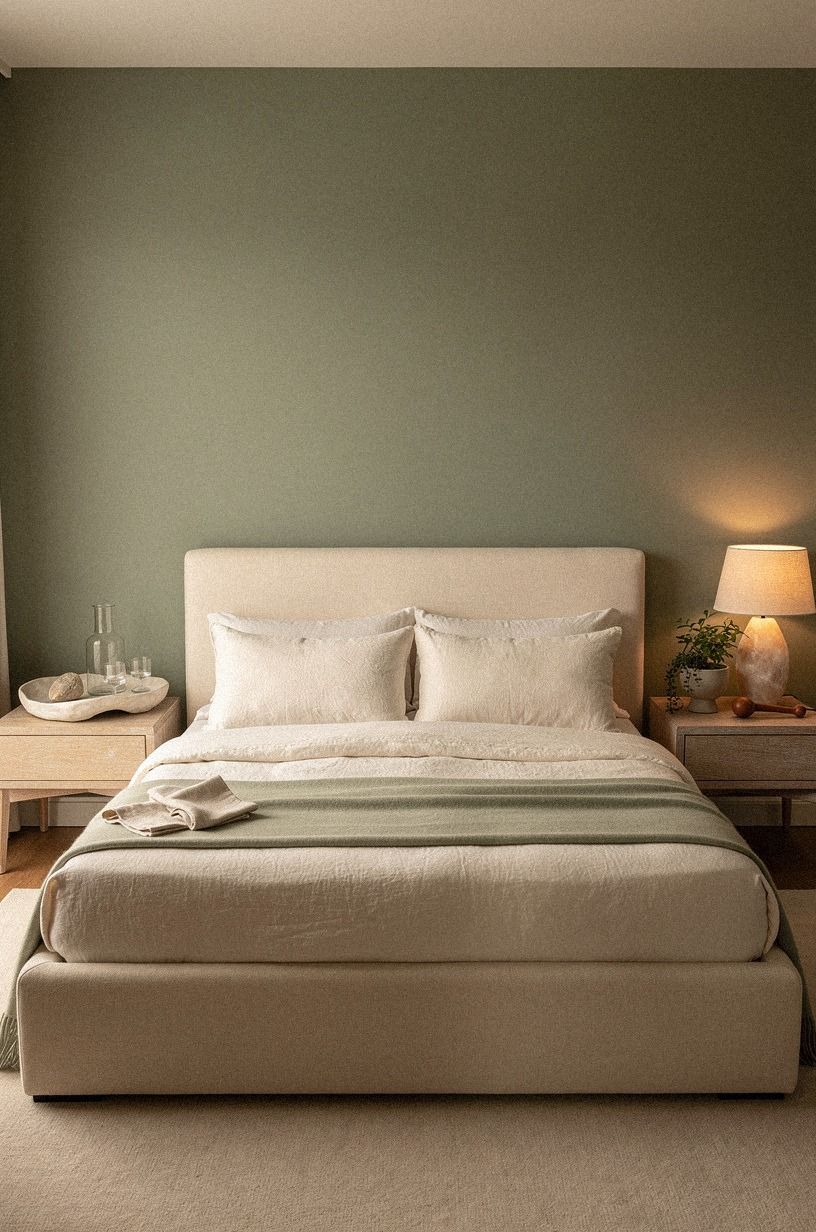
A nightstand should support your routine, not become a second desk.
7Hang Curtains That Stop the Room From Feeling Exposed
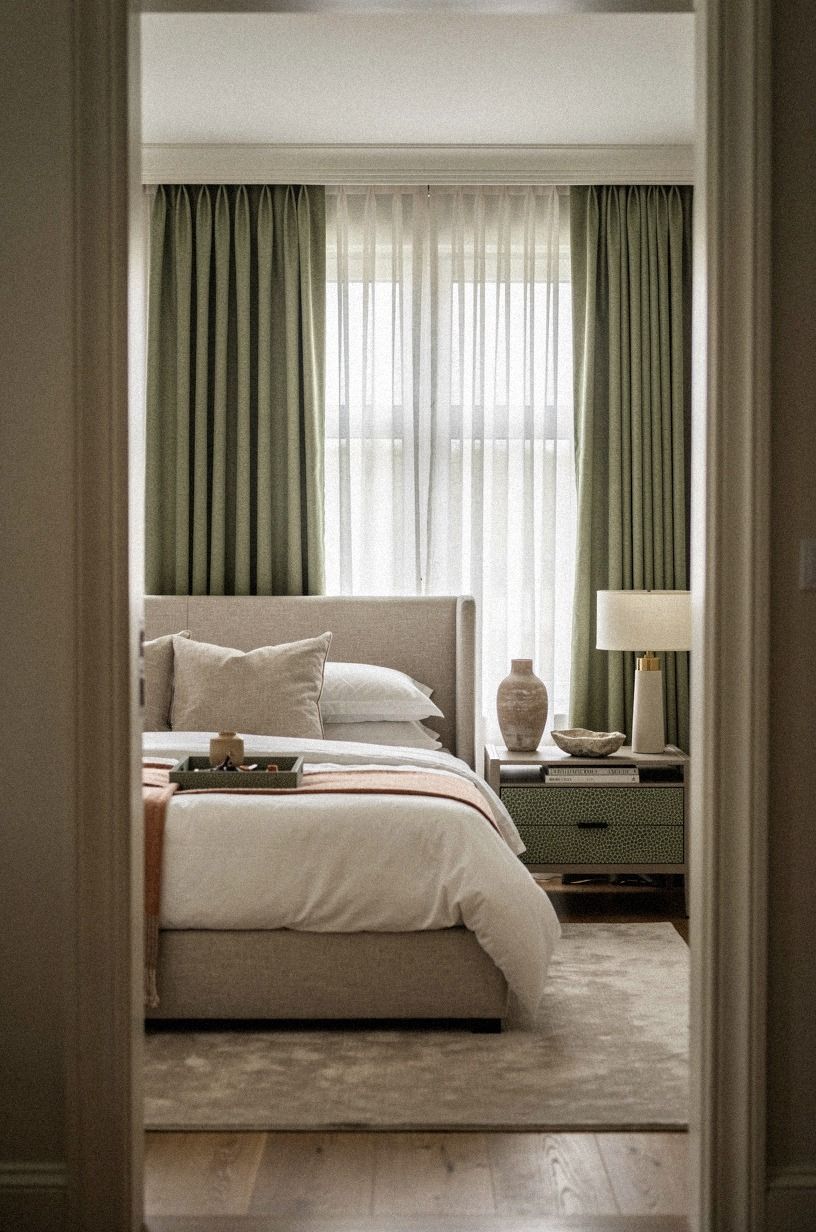
Curtains change the emotional temperature of a bedroom because they soften windows, reduce visual noise, and frame the bed. Choose linen drapes in terracotta, stone, or olive, then echo the room’s shagreen accents in a small trim or handle.
Your curtains should reach the floor or finish just above it. Short panels can make a calm room feel unfinished, especially when the bed and rug already have substantial proportions. If you’re working with a rental, use a tension rod and lightweight panels rather than drilling into the wall.
But don’t choose a shiny synthetic curtain simply because it blocks more light. The surface can look harsh beside matte bedding.
A lined linen blend offers privacy while keeping the room soft, airy, and comfortable during the last part of the day. Pair it with layered evening light.
8Mix Two Textures in the Pillows
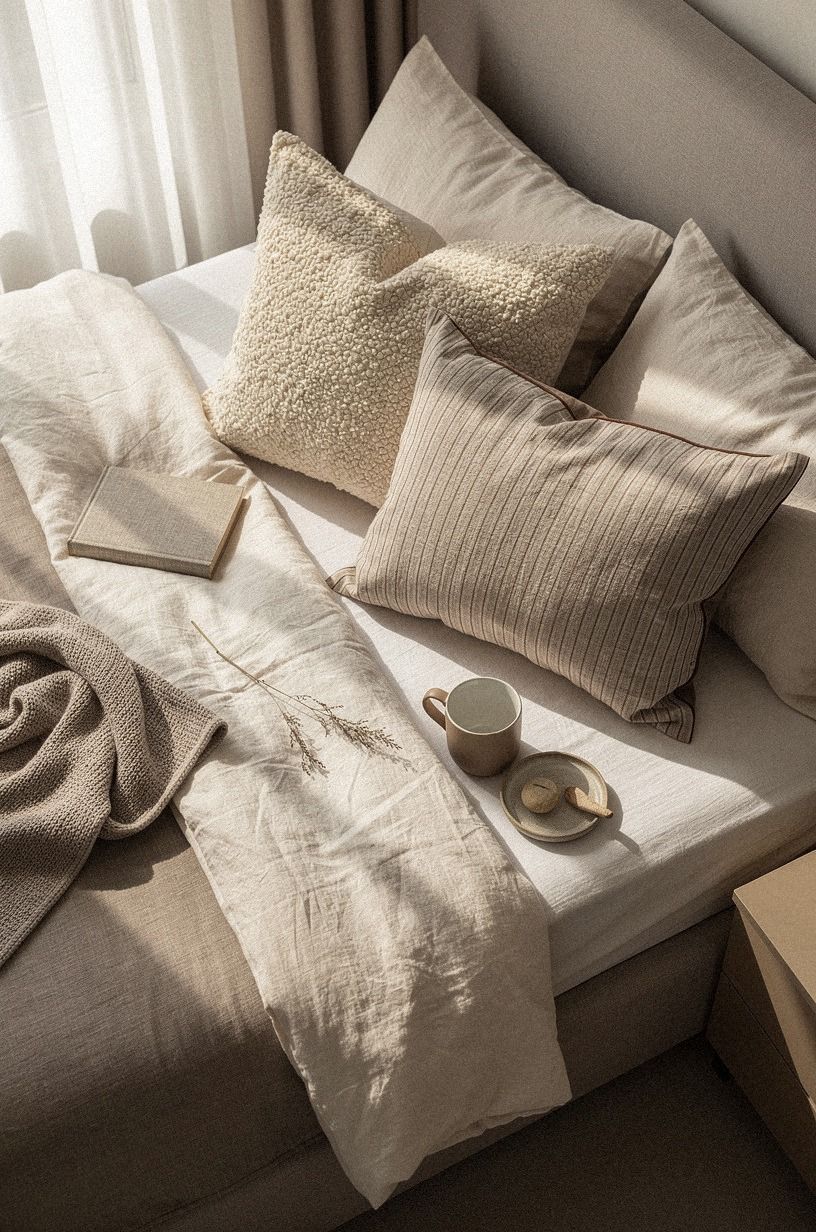
Too many decorative pillows create a nightly chore.

9Frame the Bed With Balanced Nightstand Heights
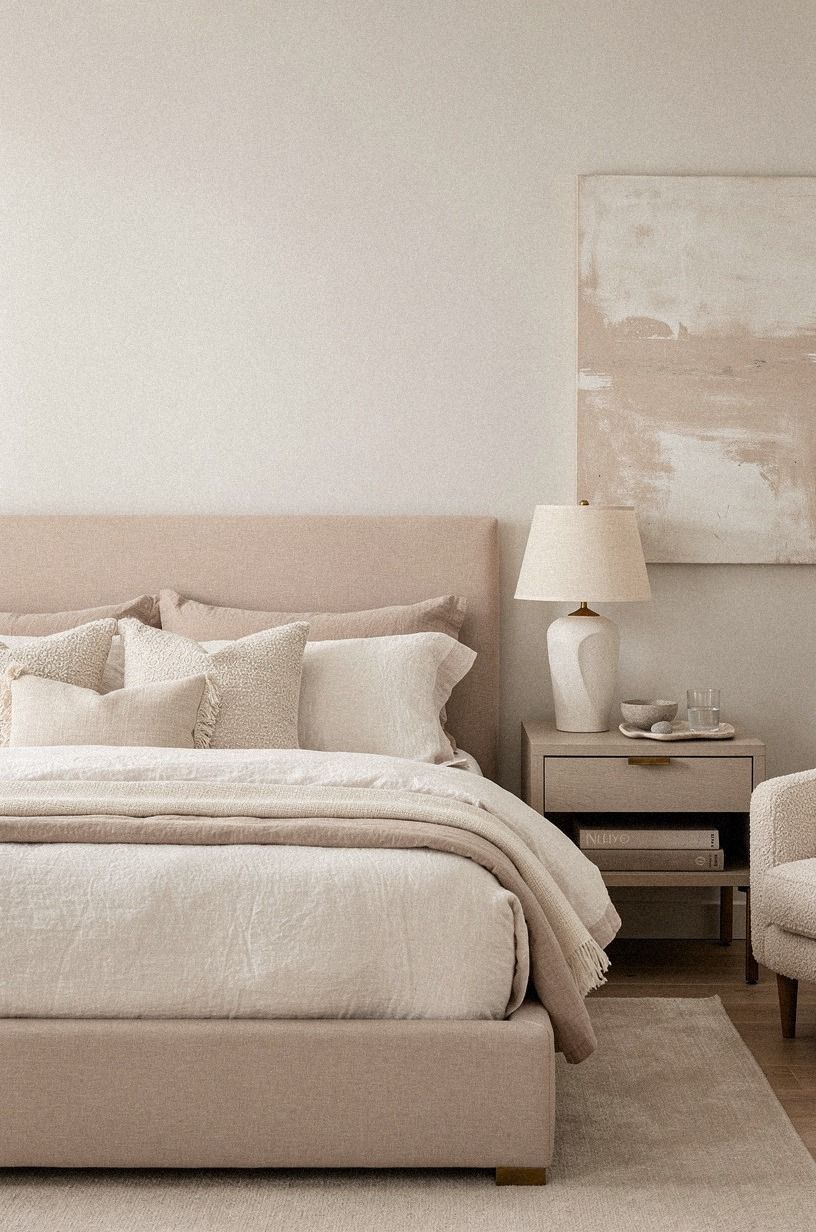
A bed feels more settled when the objects beside it have visual balance. For a queen or king frame, choose nightstands that sit near the mattress height, then pair each with a lamp or wall sconce. Aged brass hardware adds a soft glow that grows richer over time.
Both sides should carry similar visual weight, even if the furniture differs.
One side can hold a wood table and ceramic lamp, while the other uses a narrow cabinet and a fabric shade. The room will feel personal without looking randomly assembled.
Don’t let one nightstand tower over the bed while the other disappears. You can correct the imbalance with a stack of books, a taller lamp, or a wall-mounted light. That’s a small adjustment, but it changes how calm the whole bed wall feels.
10Soft Contrast: How Much Is Enough?
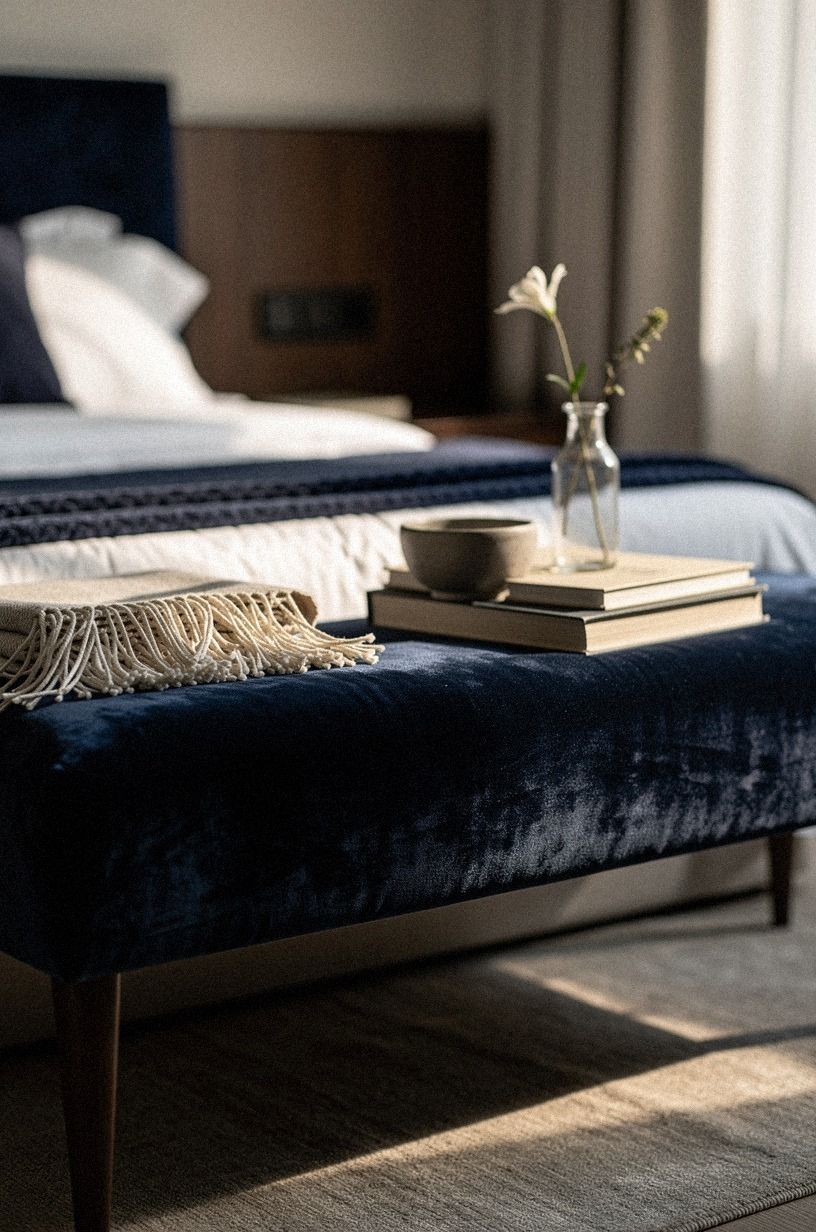
A bedroom with no contrast can look washed out, while sharp black-and-white contrast can feel restless.
11Float a Narrow Bench at the Foot of the Bed
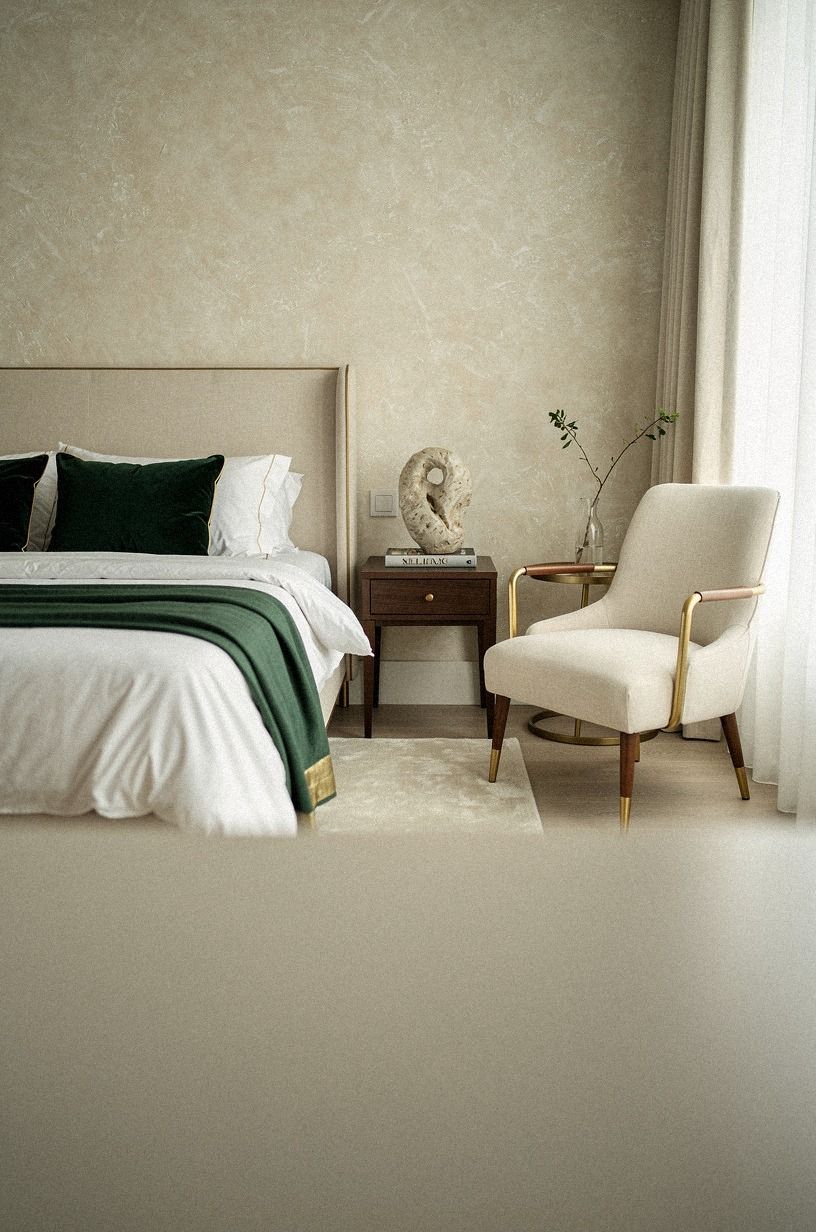
A bench gives the bed a finished endpoint and creates a useful place for folded blankets. Choose a frame with visible legs so the floor remains open beneath it. Navy deep-pile mohair velvet can add warmth, though a simple walnut bench works beautifully when the room already has several upholstered pieces.
Your bench should leave comfortable walking space around the bed. In a tight room, select a narrow profile with a firm cushion instead of a deep storage ottoman. A bulky piece can make the bed feel boxed in, especially when the rug already extends past the frame.
Skip a bench with a glossy finish if your goal is softness. The reflection can pull attention toward the foot of the bed.
A matte wood surface or woven seat gives your room a calmer texture and makes the blanket look deliberately placed.
12Set a Realistic Budget Before Buying Anything
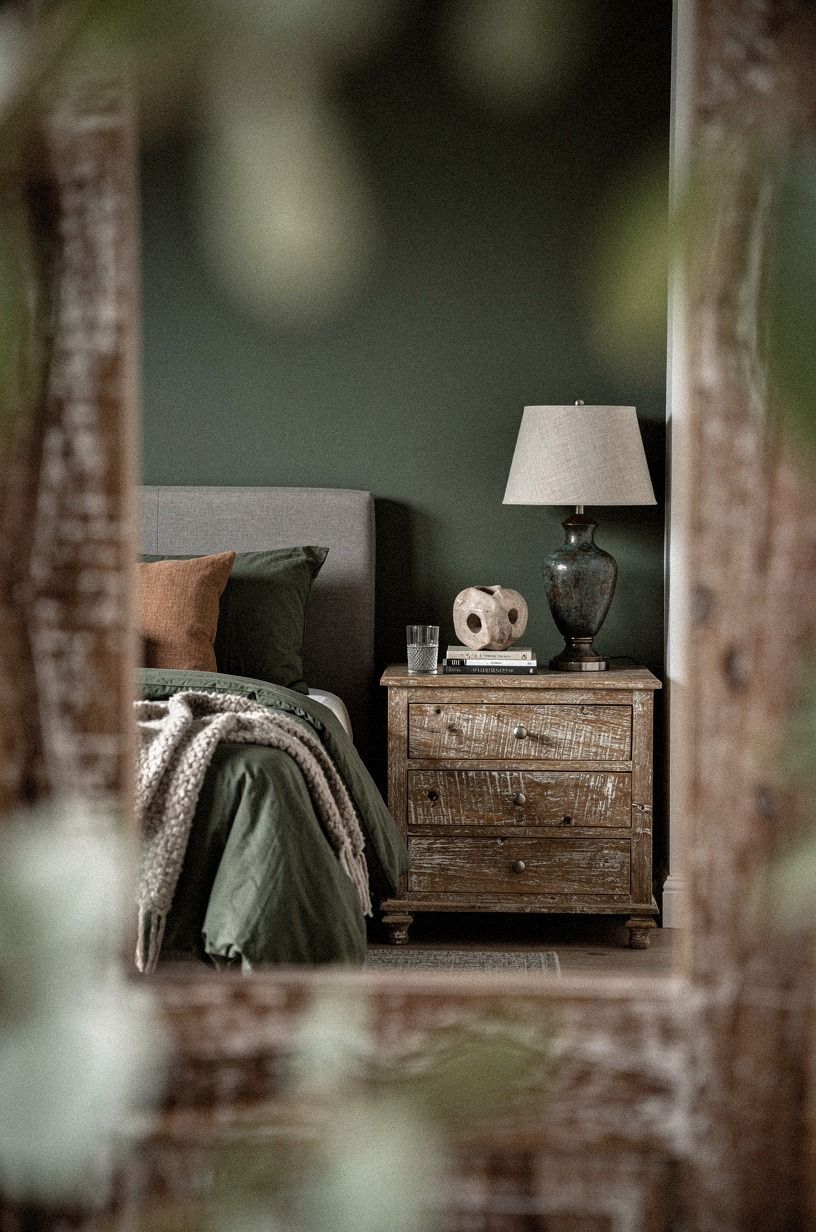
A calming bedroom routine can be created in layers, but a budget keeps the project from becoming a pile of half-finished purchases. Bedding, paint, shades, and art can change the room at a lower entry point, while custom drapes, furniture, and built-ins require a larger commitment.
Your best first purchase is usually the item that affects the largest surface, such as breathable bedding, paint, or a rug. If you’re working with $200 to $800, focus on one visual layer instead of scattering small purchases across the room.
But a high budget won’t fix poor scale. Measure your bed, nightstands, window, and walking paths before ordering anything. A less expensive room with correct proportions will feel more refined than an expensive room filled with furniture that crowds the floor.
You can start with the rug.
13Replace Harsh Hardware With Aged Metal
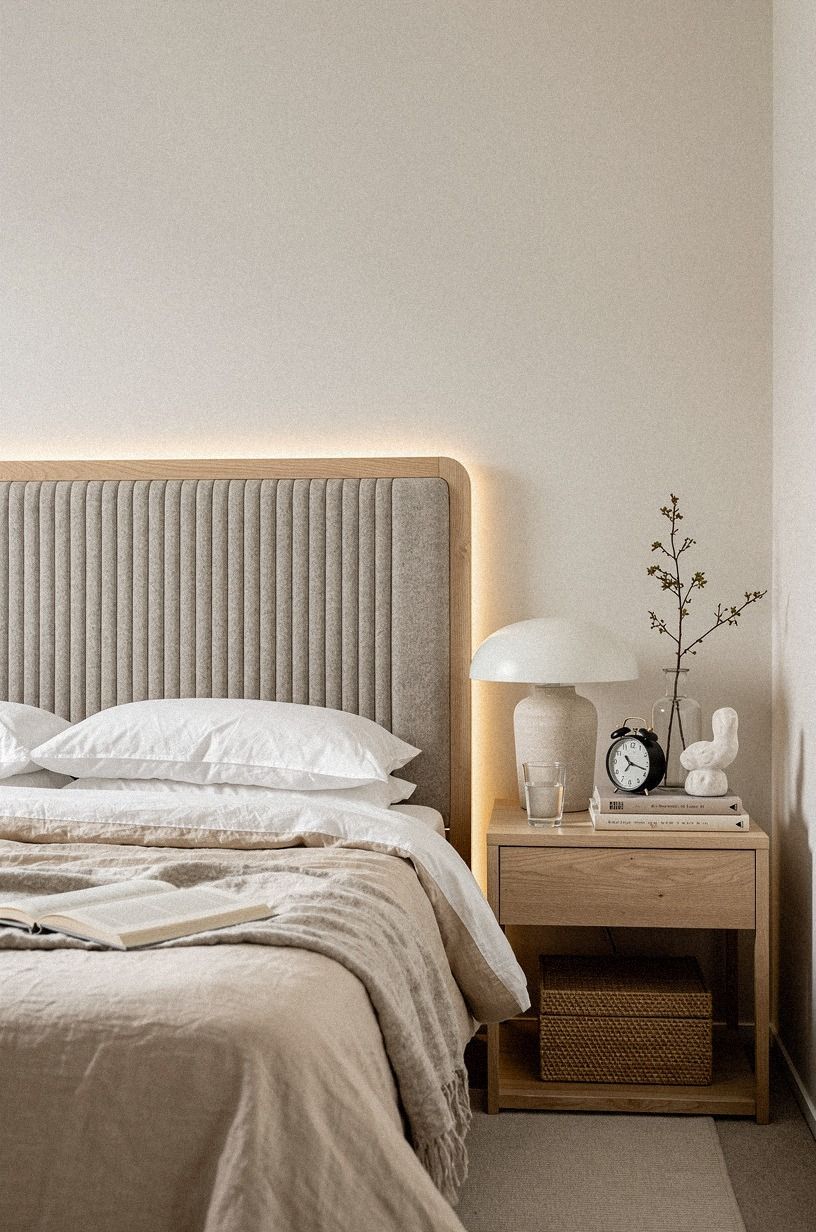
Small hardware can change the mood of a bedroom more than expected. Swap bright chrome pulls or shiny brass on a warm wood dresser for aged bronze or unlacquered brass with a softer, less reflective finish. The result feels warm and collected rather than newly installed.
Your hardware doesn’t have to match every lamp and frame. Choose one dominant metal, then let a second finish appear only in small amounts. Blackened steel beside aged bronze can feel sophisticated, while three competing finishes can make the room look busy.
Don’t replace every piece at once if the budget is tight. Start with the dresser pulls or bedside drawer knobs, then repeat the finish near the bed.
That’s enough repetition to make the change feel intentional without turning the room into a showroom. Keep this change aligned with your budget plan.
14Choose a Headboard That Absorbs Visual Noise
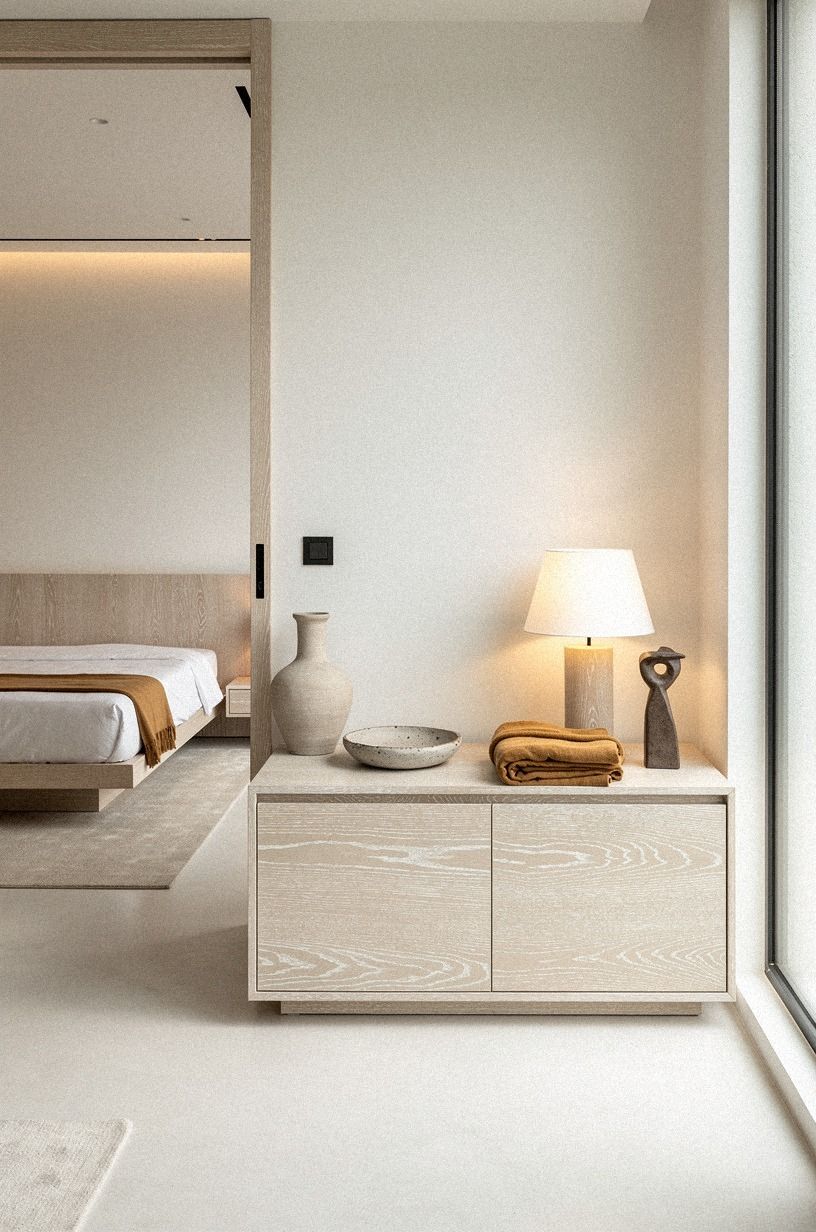
An upholstered headboard can soften the bed wall and reduce the hard edges created by frames, nightstands, and art. Washed Belgian linen upholstery works especially well with dusty rose, charcoal, and warm brass because the weave adds depth without a loud pattern.
Your headboard should be tall enough to anchor the bed but not so tall that it dominates a low ceiling. A simple rectangular profile feels timeless, while a deeply tufted shape can lean formal. If you’re choosing between ornate details and clean upholstery, choose the quieter shape for a bedroom routine built around calm.
A headboard is also a useful investment when the rest of the room is temporary. It gives your eye one stable focal point.
A gallery wall, oversized mirror, and statement lamp would only compete above the bed. Let the narrow bench finish the lower half.
Premium Grounding Sheets: what you get
Specifications as stated by the manufacturer.
| Material | Woven 316L stainless-steel fibers |
|---|---|
| Fit | Beneath your existing fitted sheet |
| In the box | Connection cord and plug |
| Trial | 120 nights, as stated on the product page |
Save 10% with code mattressnut
Through Nov 30: buy one sheet, get one free (per the brand)
15Let One Natural Material Lead the Room
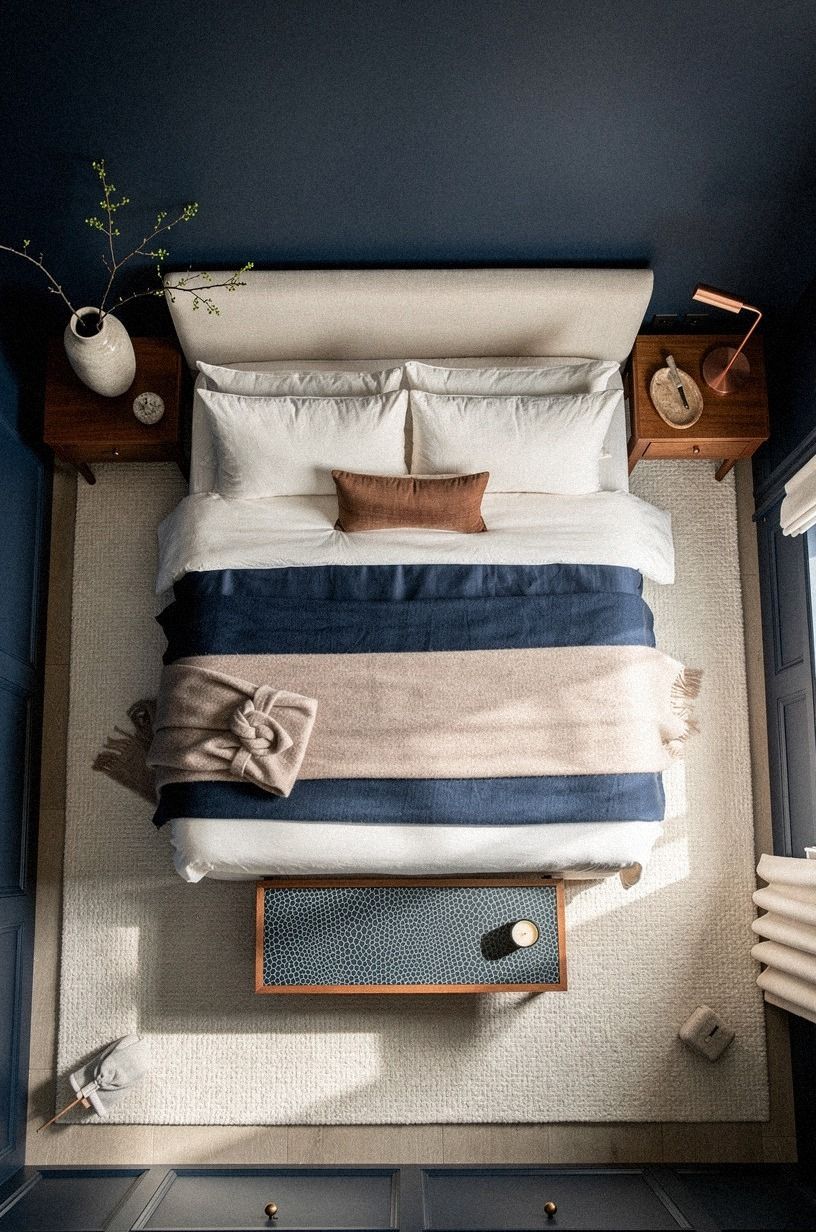
Natural material brings sensory variety to a bedroom, but too many competing textures can make the room feel unsettled. Choose one lead material, such as cerused white oak, then support it with linen, wool, or woven cane.
Your lead material might appear on a dresser, bench, bed frame, or picture frame. Repeat it once or twice, not everywhere. If your room has a wood floor and wood furniture, add softness through fabric rather than another wood accent.
Don’t pair highly polished wood with several glossy surfaces if you want a serene look. Matte finishes catch the light gently and keep the room from feeling sharp.
A tactile surface gives your hands and eyes something quieter to notice at the end of the day. The right soft contrast palette will keep it balanced.
16Paint the Ceiling a Shade Deeper Than the Walls
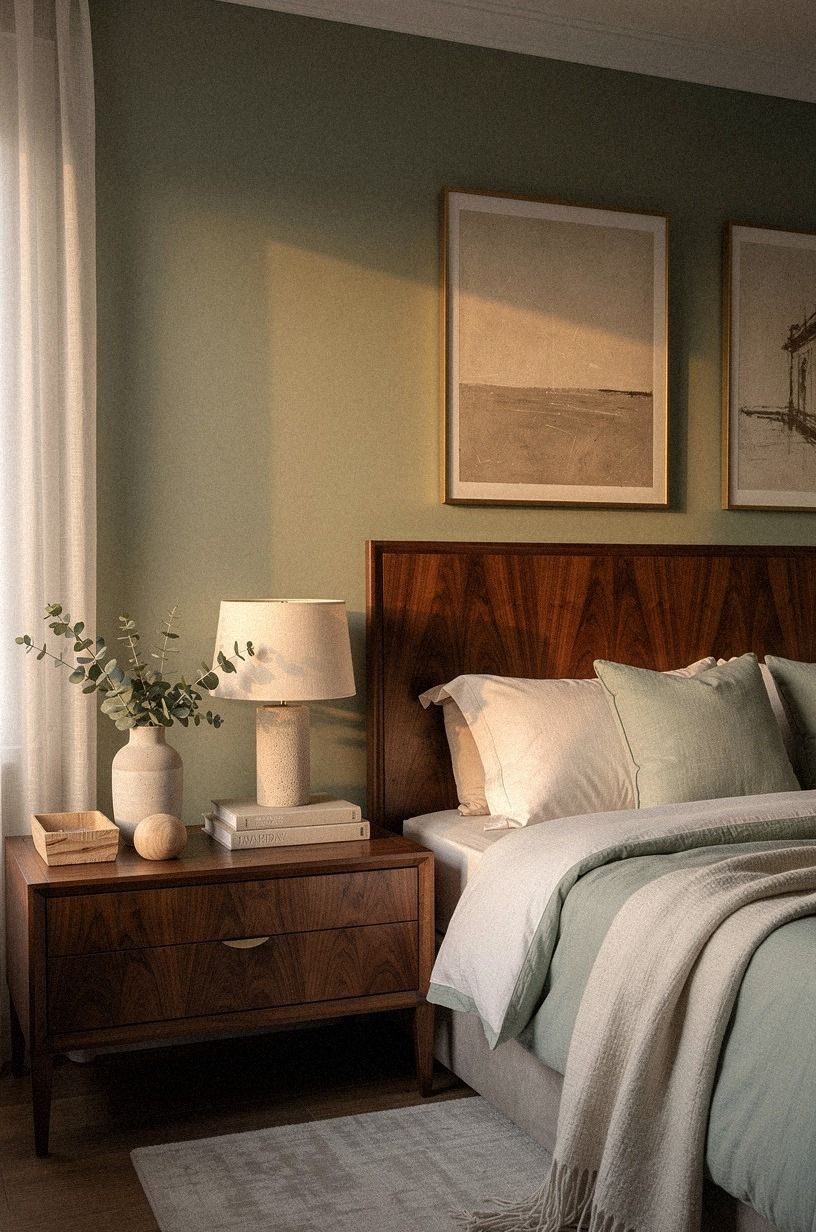
A ceiling can support a calming bedroom routine when it carries a slightly deeper version of the wall color. Farrow & Ball Hague Blue can create a moody, intimate envelope when used with warm lamps and pale bedding. In a small room, the effect can feel surprisingly comforting.
If the room receives limited daylight, skip the dramatic shade. Choose a warm taupe, muted clay, or soft beige instead. Benjamin Moore White Dove OC-17 can keep trim and ceiling details gentle without the cold contrast of a stark blue-white.
But don’t choose a ceiling color before checking it beside your lamp at night. Paint changes dramatically under artificial light.
A sample card in daylight won’t tell you whether the color feels peaceful after sunset. Check it beside the curtains and bedding, too.
17Place Art Where Your Eyes Naturally Rest
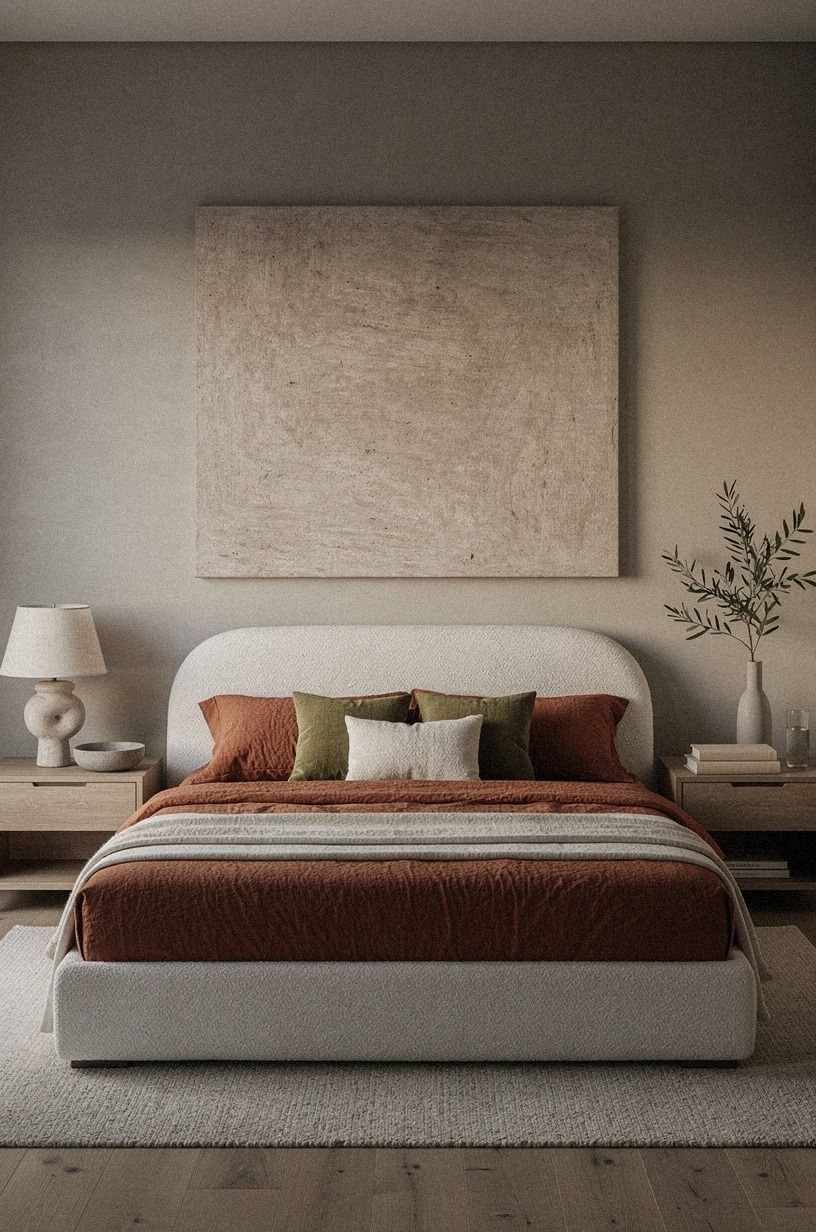
Art should support the room’s quietest sightline. Hang one medium piece above the dresser, beside the bed, or across from the doorway where your eyes land without searching. Walnut frames and muted botanical prints can add character without introducing visual clutter.
A faded landscape, abstract wash, or charcoal line drawing can feel more restful than a literal sleep-related print. Choose colors that echo the bedding or rug, then allow the artwork to remain slightly imperfect.
And if you’re styling a rental, lean framed art on a dresser or use removable picture strips. A single larger piece often feels calmer than several small frames competing for attention. Leave enough wall around it so the room can breathe.
18End the Evening With the Same Small Sequence
A calming bedroom works best when the room and routine reinforce each other. Dim the lamps, clear the nightstand, close the curtains, and place tomorrow’s essentials in one predictable spot. A shallow stone-toned tray placed on an organic-bouclé bench can hold a watch, glasses, and small items without spreading them across the room.
Repetition is the useful part. If you’re tired, a routine with four familiar steps is more realistic than a long checklist that feels like another task.
The room should make the sequence easy to repeat. Keep the lamp switch reachable, the blanket folded at the foot, and the book where it belongs.
A gentle transition mostly means fewer decisions between the living room and the bed.
Keep the bedside table ready for tomorrow.
Why a Calming Bedroom Is More About Rhythm Than Decor
The strongest bedrooms have a repeatable rhythm: light lowers, surfaces clear, fabrics feel breathable, and the eye meets familiar colors. That rhythm matters more than a trend because it gives the room a consistent role at the end of the day.
Designers often reach for warm neutrals because they work with changing light. Farrow & Ball Setting Plaster can look muted in daylight and softly rosy beside a lamp, while Benjamin Moore Pale Oak keeps darker furniture from feeling too heavy. Those shifts give a room depth without demanding attention.
The most useful bedroom change is the one that removes friction. A lamp within reach matters more than a decorative chandelier.
A clear nightstand matters more than another vase. A rug that extends 18 to 24 inches beyond the bed matters more than a tiny accent mat that photographs well but feels cold underfoot.
Your room also needs a little imperfection. Linen can crease. Wood can show grain.
A blanket can remain folded unevenly. That lived-in quality keeps the space from feeling like a hotel display, while still giving you enough order to settle down.
A calming bedroom routine should also respect the room’s limitations. Small bedrooms benefit from wall-mounted lights, narrow furniture, and lighter visual weight. Larger bedrooms need stronger anchors, such as an upholstered headboard, a substantial rug, or a bench at the foot of the bed.
Scale changes the answer.
The best choice is rarely the most expensive one. A $200-$800 budget can cover bedding, paint, shades, and art, while higher tiers may add custom drapes or built-in storage.
Spend first on the surface your eyes and feet experience most often. That decision creates more comfort than scattered decorative purchases.
Common Questions
How do you set up a calm bedroom in a small space?
A clear nightstand, wall-mounted light, and soft neutral bedding are the strongest starting points for a small room. IKEA KALLAX birch-effect storage can hold blankets without using much floor space. Keep your bed area open, and choose one warm accent instead of several small decorations.
Where can you buy bedding and lamps on a budget?
IKEA, Wayfair, and Target offer accessible bedding, lamps, shades, and storage. Facebook Marketplace and thrift stores can also provide solid wood nightstands or framed art. Display advertising supports this site, so there are no affiliate commissions or shopping links directing your purchases.
How much does it cost to refresh a bedroom?
A budget refresh typically falls between $200 and $800 for bedding, paint, shades, and art. A mid-range project can reach $1,500 to $5,000 with a headboard, rug, custom drapes, and a light fixture. Your existing furniture can keep the total lower, especially when you prioritize paint and bedding.
Can you make a bedroom calmer without replacing furniture?
Yes, and you can begin without replacing furniture. Clear one surface, rearrange lamps for softer light, and use existing blankets in a layered arrangement. Benjamin Moore Pale Oak OC-20 paint can create a warmer background when a full renovation isn’t practical.
Does a rug really matter in a small bedroom?
Yes, because a smaller room can make routines easier to repeat. Keep the bed, lamp, and nightstand aligned, then use a rug extending 18 to 24 inches past the bed when the layout allows. Your goal is a clear path and fewer visual interruptions.
What are the best changes for a rental bedroom?
Yes. Use tension rods, removable art strips, plug-in sconces, peel-and-stick wall panels, and lightweight linen-look curtains.
Your room can feel warm without permanent changes. A removable wall panel behind the bed can also introduce color without repainting the entire room.
Which paint color works well for a warm bedroom?
Sherwin-Williams Accessible Beige SW 7036 is a flexible option for rooms that need warmth without a strong pink or yellow cast. Farrow & Ball Setting Plaster and Benjamin Moore Pale Oak can also work, but sample each color beside your evening lamp before choosing.
Start With the Wall Color
Start with Farrow & Ball Setting Plaster No. 231. It gives bedding and wood a warm field to work against, while cooler white can look flat under evening light. Pin this calming bedroom routine for later, then check the color beside your lamp after sunset.
World Sleep Almanac score: 7/10
- Trial and returns: 120 nights is longer than most in this category and long enough to judge your own sleep. Scored 8/10.
- Materials and construction: Woven stainless steel rather than silver thread is the more durable choice on the oxidation question. Scored 8/10.
- Price at equal size: Not scored here, since we do not quote prices; check the current figure on the product page against competitors at the same bed size.
- Public customer reviews: Not scored here, since merchant ratings are not independently audited; read recent reviews on the product page before buying.
- Evidence base: The mechanism is plausible and the two cited studies (Ghaly & Teplitz 2004; Oschman et al. 2015) are consistent in direction, but sample sizes are small and replication is limited. Scored 5/10.
Reviewed by the World Sleep Almanac editorial team. 2026.
Sources
- Ghaly M, Teplitz D. The biologic effects of grounding the human body during sleep as measured by cortisol levels and subjective reporting of sleep, pain, and stress. Journal of Alternative and Complementary Medicine. 2004;10(5):767-776. Small study of 12 adults.
- Oschman JL, Chevalier G, Brown R. The effects of grounding (earthing) on inflammation, the immune response, wound healing, and prevention and treatment of chronic inflammatory and autoimmune diseases. Journal of Inflammation Research. 2015;8:83-96. Narrative review; larger controlled studies are still needed.
Affiliate link: this article contains affiliate links. The site may earn a commission if you purchase through them.