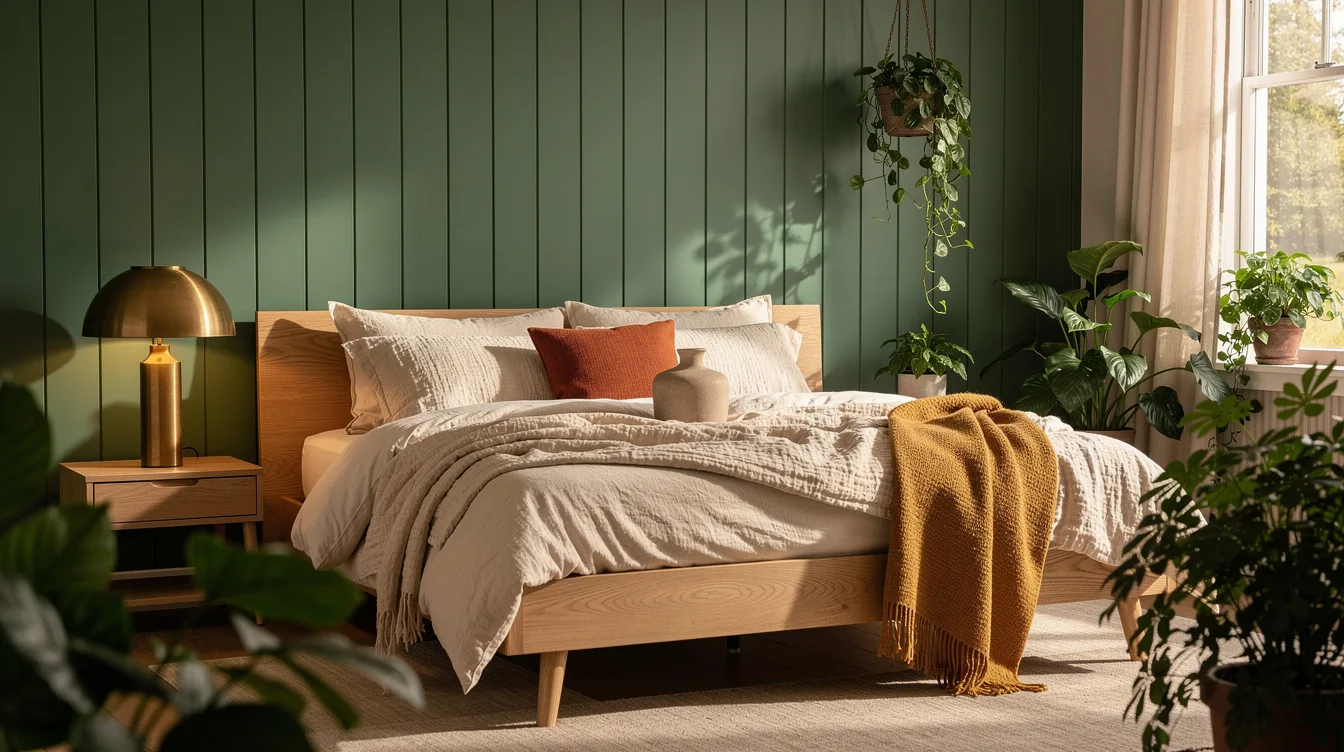
The appeal of a sage green bedroom with oak is obvious until the furniture starts arriving and the room suddenly feels too gray, too rustic, or strangely busy. In my last rental, a roughly 54-inch-wide oak bed against a muted green wall taught me that this pairing depends on contrast more than matching.
Sage green and natural oak remain a safe bedroom combination because they feel calm, warm, and grounded without chasing a passing look. The strongest rooms use a few clear materials and give each one enough breathing room.
Anchor the Bed With Light Oak
A pale oak bed frame gives sage walls the warmth they need. Designers favor natural or lightly finished oak because its visible grain keeps this quiet palette from feeling flat or chilly.
Skip an overly dark espresso finish here, which can make sage look murky. A simple slatted oak frame from Wayfair or IKEA’s natural-wood options creates a lighter, more current foundation.
Use Full Sage Walls Only With Daylight
Full sage green paint can feel wonderfully cocooning in a bedroom with decent daylight. Keep the ceiling and trim warm white, then bring in cream bedding so the color reads soft instead of dense.
In a dim room, place sage behind the bed only and use a creamy neutral on the remaining walls. A sample pot from Home Depot is worth the small detour, because sage can shift from fresh to gray under weak bulbs.
Build Texture Into the Headboard Wall
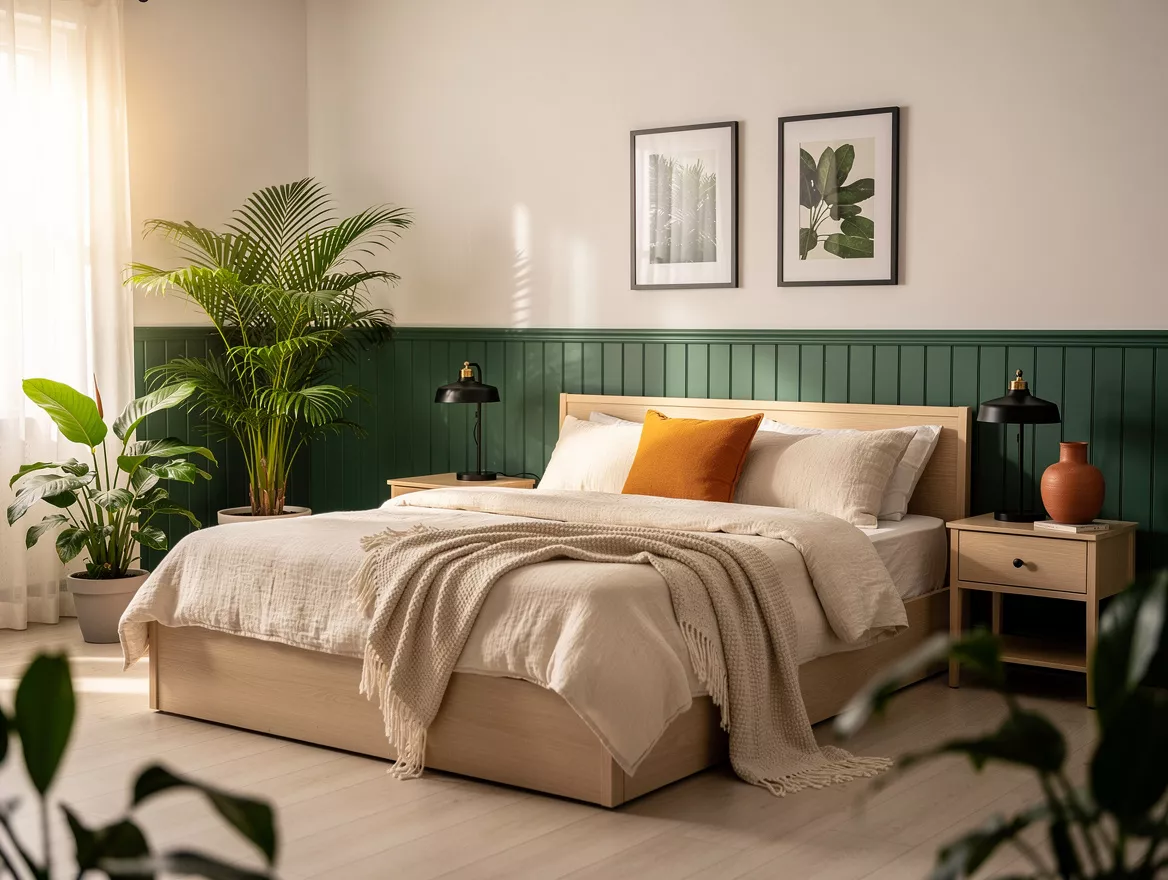
Plain paint gets the job done, but sage wainscoting gives an oak bedroom the tailored texture that makes it look considered. Run simple vertical panels behind the bed, stopping around chair-rail height for an approachable DIY scale.
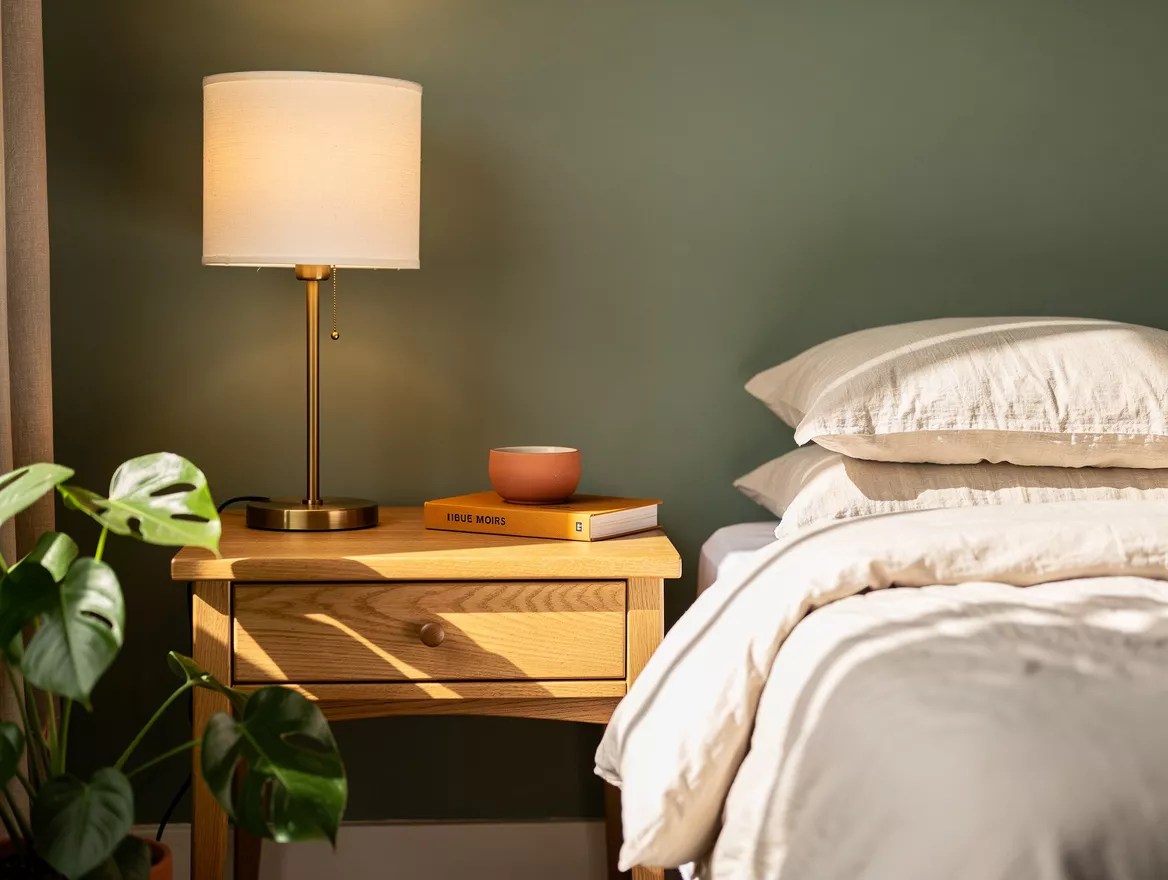
Pair that wall with oak nightstands and leave their tops mostly clear. One brass reading lamp and a framed print are enough, while a crowded ledge turns a polished treatment into visual noise.
Lighten the Bed With Cream Textiles
Oak and sage need a soft buffer, and cream cotton bedding does that better than bright white sheets. It picks up the warmth in the wood and lets the green stay restful rather than clinical.
Start with a cream duvet, then add one sage quilt or lumbar pillow instead of covering every surface in green. A washable neutral duvet cover from Target is a practical choice for renters who want the look without repainting.

Choose One Warm Metal Accent
A single aged brass lamp makes sage and oak feel richer, especially beside a pale wood bed. Brass brings a little glow at night without changing the room’s calm character.
Keep the metal decision disciplined: brass knobs and one lamp work, while every finish competing at once does not. If your existing hardware is matte black, repeat it in a narrow picture frame or curtain rod and stop there.
Plan Storage Around Real Clearance
Furniture that fits on a product page can still choke a bedroom in real life. A slim tallboy roughly 17 inches deep, 20 inches wide, and 46 inches high is a smart scale for a tight wall, leaving room to open drawers and walk past the bed.
For a larger dresser, measure the route from door to bed before ordering a solid-oak dresser from Lowe’s or Amazon. The typical sage-and-oak bedroom budget rises quickly once storage is added, so buy the piece that solves a daily need first.
Begin with the surface behind the bed: test a sage sample there, then bring home one oak finish before committing to storage. That small comparison will tell you whether the room needs lighter textiles, warmer hardware, or a simpler plan.
Mia Carter writes about small-space living and budget home makeovers. She has restyled three rentals and tests most ideas in her own 45 sqm flat.