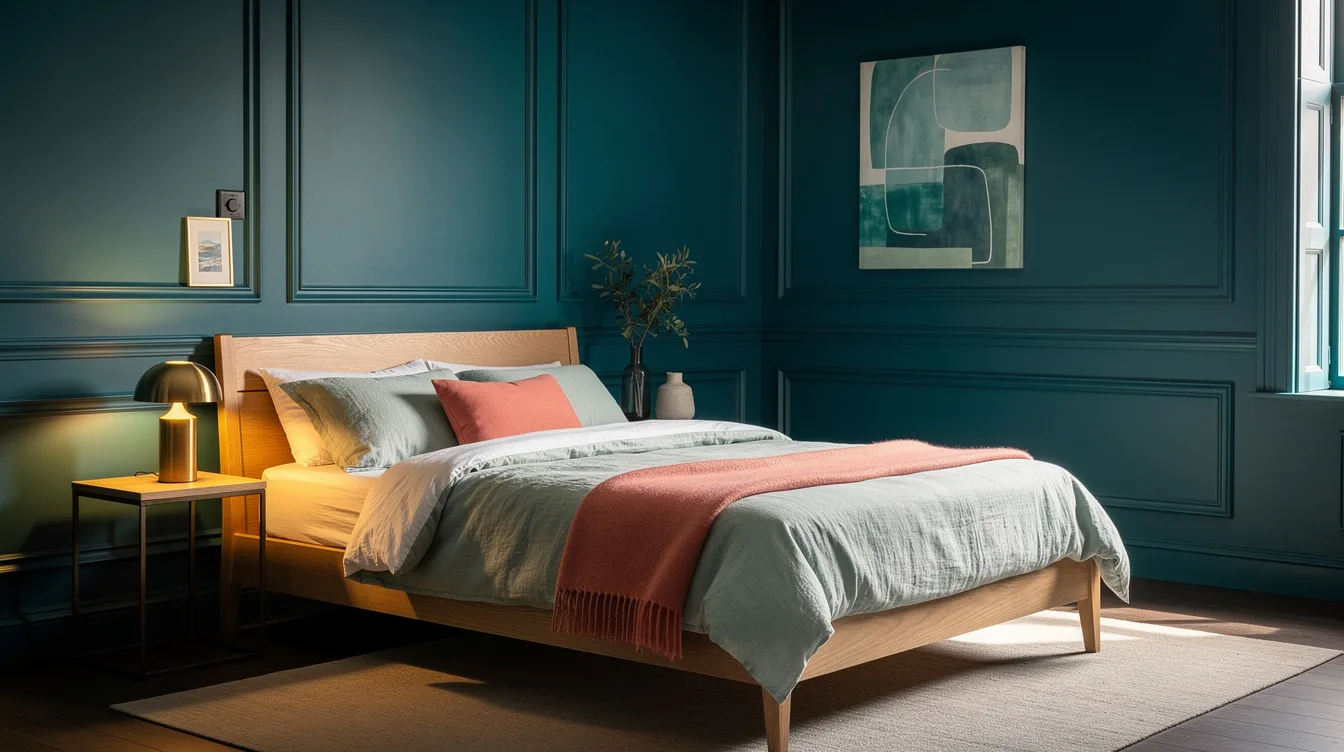
I repainted my bedroom three times chasing one feeling, a room that made my shoulders drop the second I walked in.
The room is a modest 12-by-14-foot space with one east-facing window, so light was never the real problem.
What worked wasn’t a brighter blue. It was a duller, greener one, paired with warm wood and about half the furniture I started with.
Start With a Muted Blue Instead of a Cool One
My first attempt was a crisp sky blue straight from the sample pot, and it read cold and clinical by four in the afternoon.
I swapped it for a desaturated, blue-green shade at the paint counter, closer to sea glass than sky.
A gallon runs about $38 at Home Depot and covered my walls in two coats with a little left over.
Mid-tone, blue-green paint reads as calm rather than sterile once the sun starts going down. It also hides scuffs better than a pale baby blue ever did in a room with two cats.
Layer In Warm Wood So the Room Doesn’t Feel Cold
Blue alone can feel like standing inside a swimming pool, so wood is doing half the work in my room now.
I found a light oak bed frame at IKEA for around $349 and kept the nightstands the same tone.
One warm material family keeps a blue room from tipping into a waiting-room mood.
If your budget is tighter, a single oak shelf from Target does a smaller version of the same job, and a $60 rattan bench at the foot of the bed does more than another blue accent would.

Paint the Trim the Same Color as the Walls
I used to paint trim white by default, and it chopped my small room into pieces.
Running the same blue up the baseboards and door casing let the walls disappear into one calm shell.
Designers sometimes call this color drenching, and it works because your eye stops tracking where one surface ends and the next begins.
It cost me one extra quart of trim paint, about $19 at Ace Hardware. The ceiling stayed off-white on purpose, so the room still reads bright instead of like a cave.
Clear the Room Before You Decorate It
I decorated the first version of this room before I edited it, and it still felt busy under all that blue.
The fix was boring: I donated a bookcase, moved my desk to another room, and kept what was left in a $15 storage bin from Walmart.
A calm palette on a cluttered layout still reads as clutter, no matter the color on the wall.
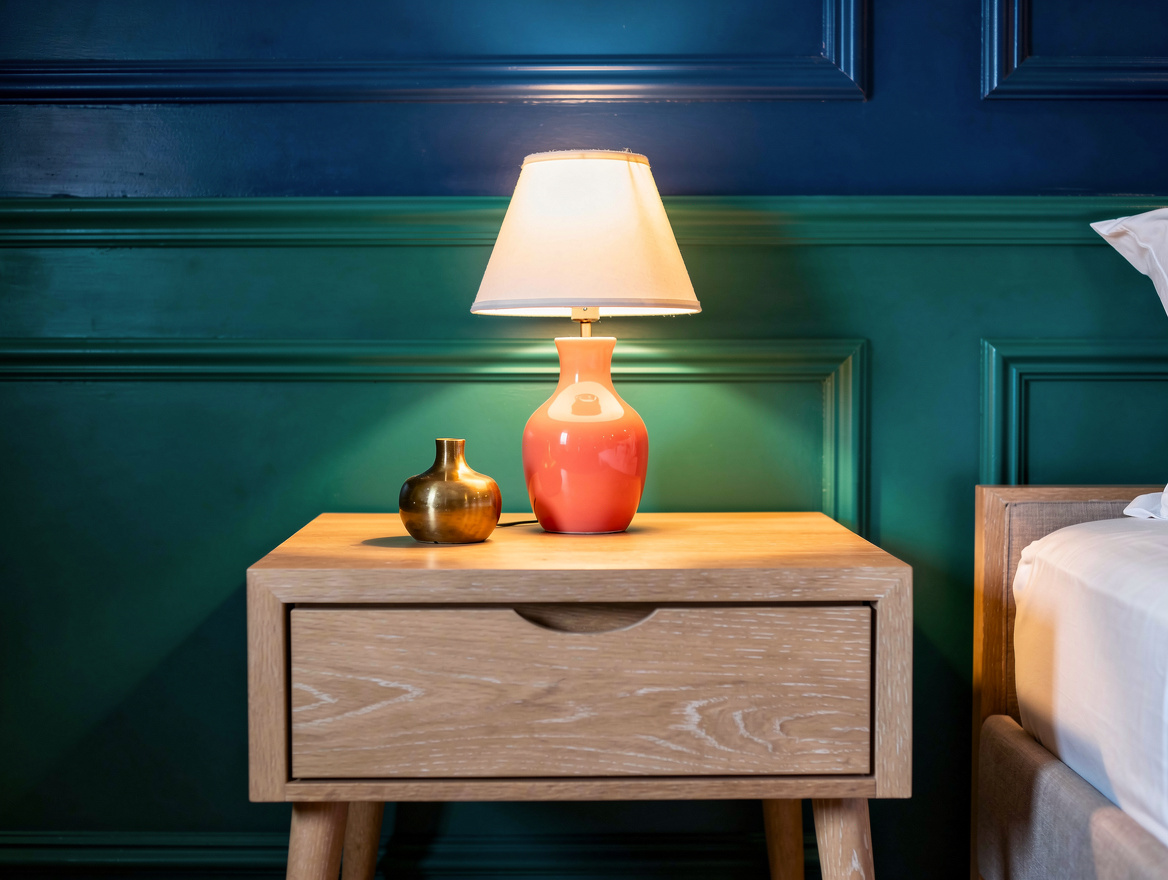
I now keep no more than three objects on any single surface. An empty nightstand, it turns out, is more calming than a styled one.
Choose Textiles You Actually Want to Touch
Cheap polyester bedding photographs fine and feels awful at eleven at night, which defeats the point of a calming room.
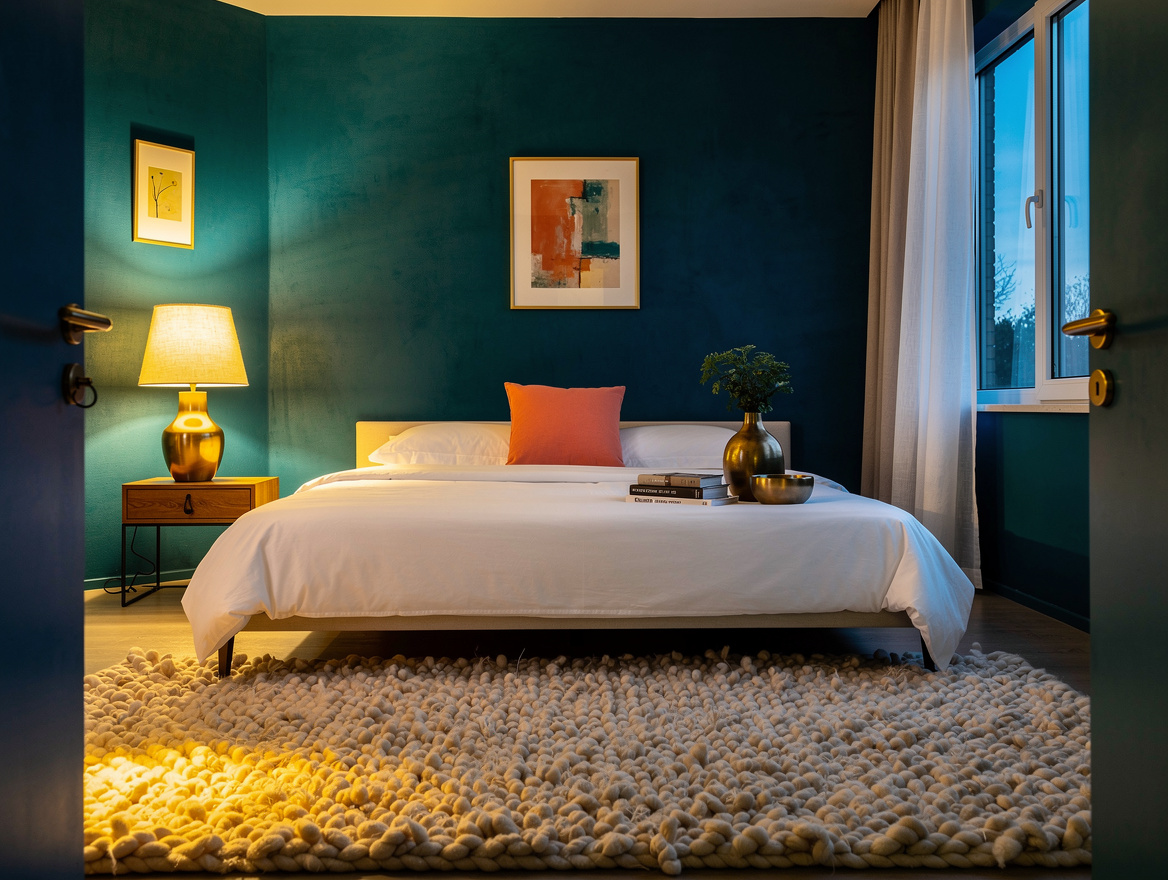
I bought a linen duvet cover from Target‘s Threshold line for about $90 and a wool rug from Wayfair for roughly $220.
Both wrinkle and shed a little, and I would still pick them over a smoother synthetic every time.
A cotton throw folded at the foot of the bed adds another layer without adding more blue. Run your hand across a fabric before you buy it, not just your eyes across a photo.
Keep the Lighting Warm and Dimmable
My overhead fixture originally held a daylight bulb, and it made the blue walls look almost gray after dark.
Switching to a warm 2700K bulb from Amazon, about $12 for a two-pack, fixed it in one evening.
I added a small table lamp from Walmart so the overhead light barely gets used after sunset.
Warm, low light is what turns a blue room into a den instead of a hallway.
Budget the Room in Stages, Not All at Once
A full-room redo like mine typically lands somewhere between $800 and $2,000, depending on how much furniture gets replaced.
Paint and trim were my cheapest line item, under $100 total for both.
The bed frame and rug ate most of the budget, at roughly $570 combined.
I would rather spend on the wood and the rug and skimp on paint, since paint is the cheapest thing to redo later. Small purchases, the lamp and the throw, added up to less than $80 together.
If you are starting from nothing, paint the walls and trim the same muted blue first, then sit in the empty room for a week before buying anything else.
Almost everything I regret in that bedroom was bought in the first three days, before the color had time to tell me what it actually needed. The pieces I still love were the ones I waited for.
Mia Carter writes about small-space living and budget home makeovers. She has restyled three rentals and tests most ideas in her own 45 sqm flat.