
Home music studio room ideas for serious sound don’t have to swallow the whole room, and you can start the look for about $200 to $800 if you focus on paint, textiles, and storage first. I learned that after wasting months trying to cram every piece of gear along one wall. The room looked organized. It sounded boxed in. Once I started treating the layout like furniture, not hardware, everything opened up.
- Angle the desk into the best listening corner
- Mount slatted wood panels behind the monitors
- Frame the setup with floor-to-ceiling curtains
- Angle the desk into the best listening corner
- Mount slatted wood panels behind the monitors
- Frame the setup with floor-to-ceiling curtains
- Float wall shelves for synths and small gear
- Build a moody acoustic panel gallery
- Layer a patterned rug under the recording zone
- Tuck guitars onto a dedicated feature wall
- Wash the ceiling with soft LED strips
- Cable waterfall versus painted wall raceway
- Style record storage beneath the studio desk
- Carve a vocal nook with heavy drapes
- Add a narrow console for pedals and mixers
- What color should you paint behind the monitors?
- The IKEA KALLAX move for albums and speakers
- Hang pendant lights over the mixing desk
- Use pegboard to display headphones and cables
- Zone the room with a low bookshelf divider
- Soften the floor with oversized lounge seating
1Angle the desk into the best listening corner
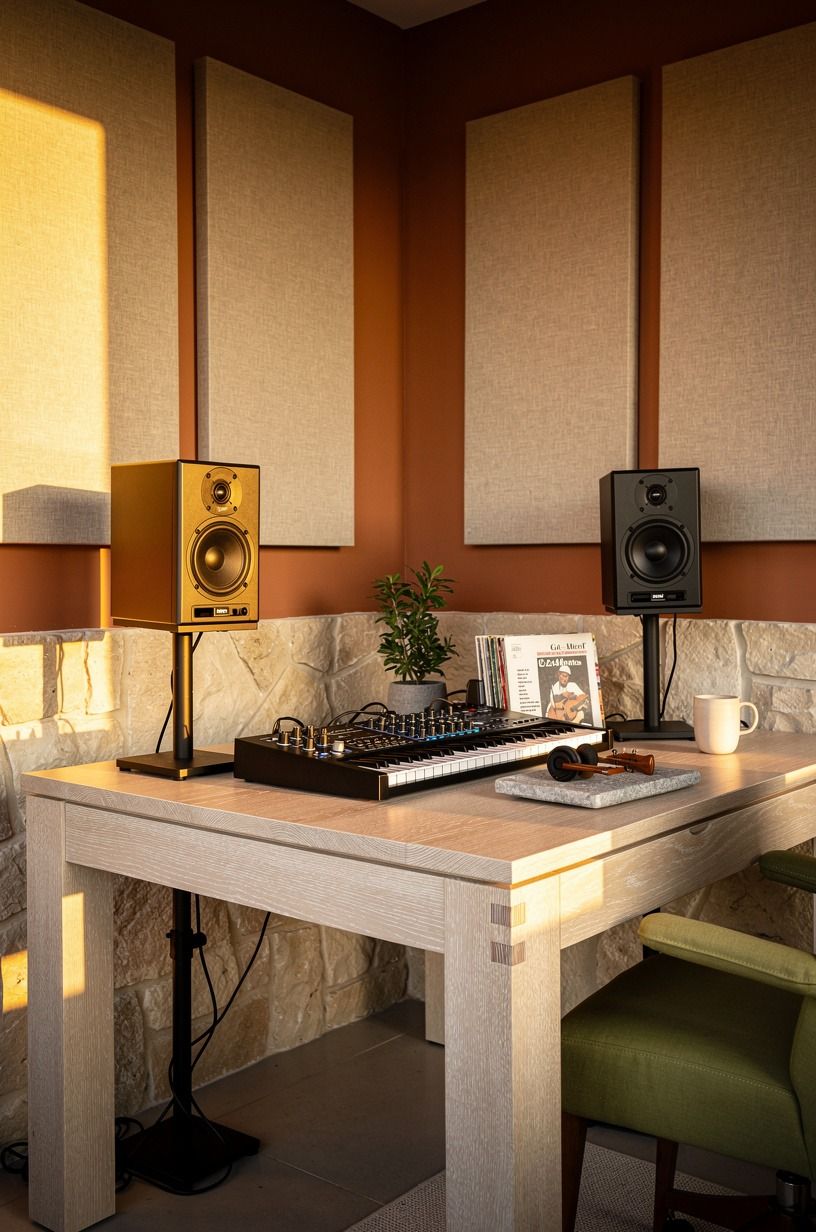
Start with the corner that gives your home studio music setup the cleanest left and right balance, then turn the desk into it instead of pinning it flat to the wall. If your monitors are centered and your chair lands in a simple triangle, you hear panning and reverb tails faster. I made the mistake of mixing from the longest wall once, and the low end smeared every kick.
Use a desk deep enough for the screens and keyboard controller, then keep the nearfield monitors slightly behind the front edge so reflections don’t bounce right back at you. A 3/4-inch solid white oak top keeps the room from reading like office furniture.
If you’re borrowing ideas from a smaller footprint, the layout logic in your small studio apartment layout that feels twice the size applies here too. You want the desk to feel placed, not parked.
Pair the oak top with a steel U-frame in matte black so the legs don’t fight the wood tone, and you’re set.
2Mount slatted wood panels behind the monitors
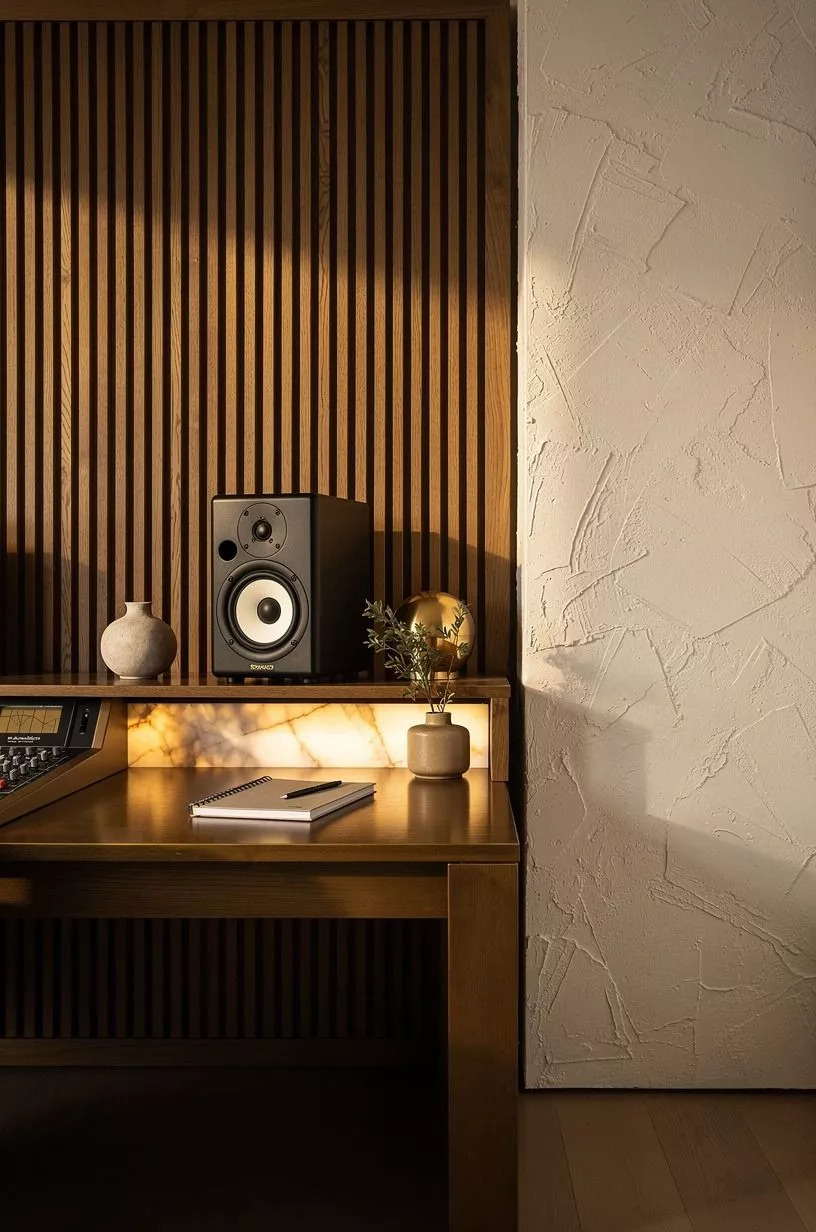
Slatted panels behind the monitors do two jobs at once in a music studio room: they soften the hard wall and they make the mix position look intentional the second you walk in. In a first-person approach shot, those vertical lines matter because your eye reads order before it reads gear. And yes, you’ll hear the difference when the wall isn’t kicking slap back at you.
I’d skip flimsy peel-and-stick strips that stop halfway up the wall. Go for a full field in walnut acoustic slats or oak veneer so the monitors sit against something with rhythm and weight.
If you already like richer, darker rooms, the mood in 21 stylish speakeasy room ideas for your home shows why vertical wood works so well with dim light. Keep the panel run wider than the desk, or it will look stingy.
Total game changer for under $400!
3Frame the setup with floor-to-ceiling curtains
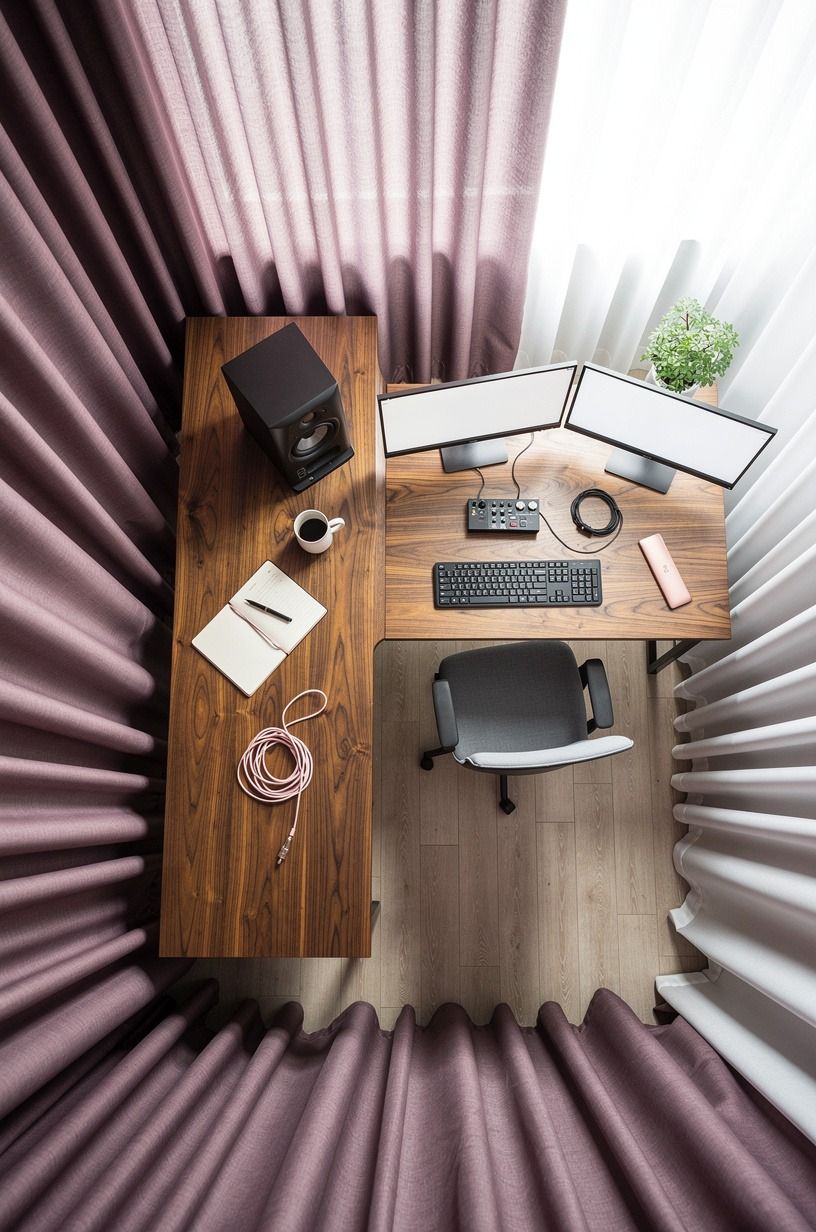
Curtains are one of the fastest ways to make a music studio at home feel less sharp and more finished.
4Float wall shelves for synths and small gear
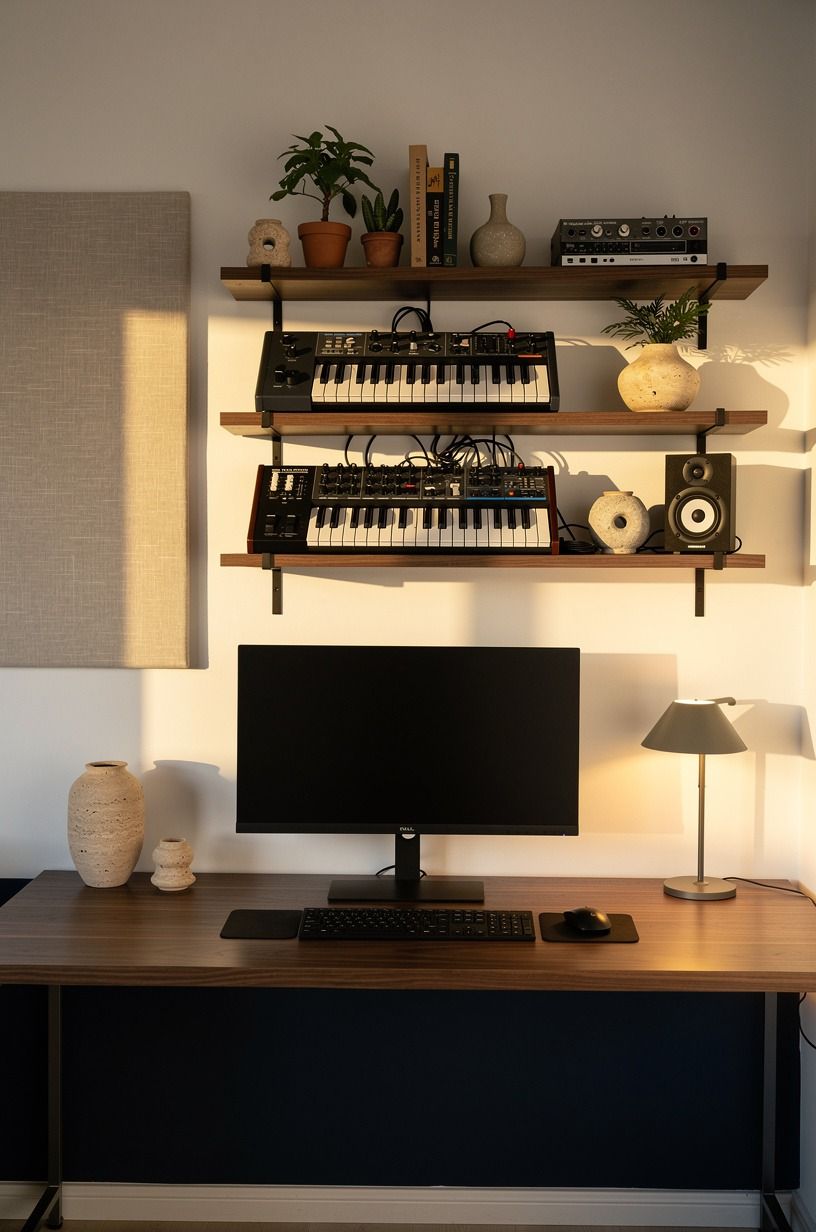
Wall shelves over a clean workstation buy back floor space, but only if you treat them like architecture and not attic storage. In home music studios, the gear you reach for most should sit between shoulder and eye level so you can grab it without breaking flow. That matters more than the shelf count, honestly.
I like a pair of IKEA LACK shelves for lighter boxes and compact synths, then one sturdier solid-wood shelf for anything with real weight. Give the lower shelf breathing room above the monitor line so the room still looks open in a 45-degree editorial view.
If you need more small-space cues, 11 basement studio ideas with real home warmth handles gear plus livability well. Mount them into studs with Everbilt heavy-duty brackets in white so the metal disappears against the wall.
And leave one shelf partly empty. Not every inch should hold a machine.
5Build a moody acoustic panel gallery
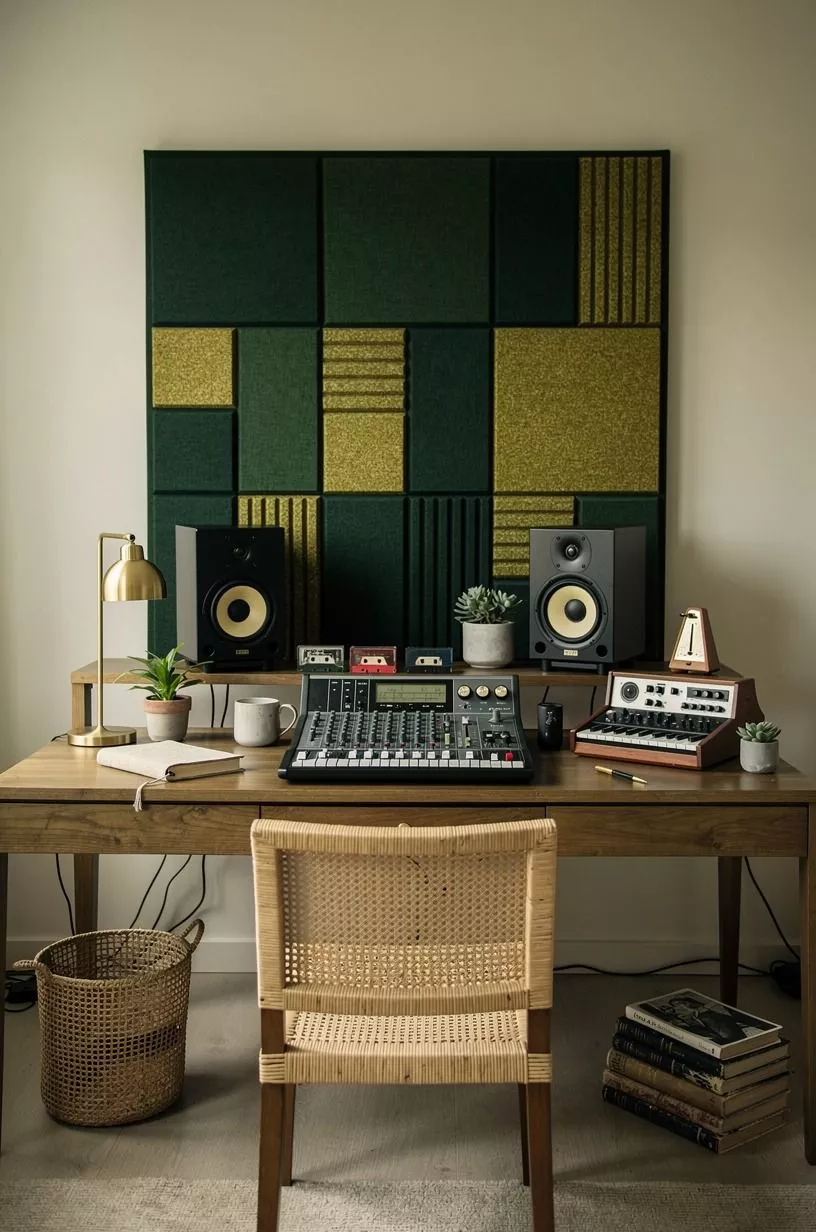
A panel wall can look flat fast, so build it like art instead. The move is mixing absorber sizes, fabrics, and spacing until the wall feels collected, not technical.
In a frontal symmetrical shot, you really see whether the composition has pulse. If every panel matches perfectly, the room goes cold.
Try panels wrapped in charcoal wool felt with one or two in a warmer brown or tobacco tone to break the grid. I’d not do bright primary colors here unless the rest of your music studio room is very spare.
A restrained palette feels more expensive, and it keeps the monitors as the stars. For a good lesson in restraint, the 4 room spring reset that takes 6 hours but changes how your home photographs shows how edited walls photograph better every single time. Worth the read before you mount anything.
Lean on ATS Acoustics 2448 panels if you want measurable absorption, and GIK Acoustics Scatter Plates for the slat-effect side walls. The mix reads as art and behaves like gear.
6Layer a patterned rug under the recording zone
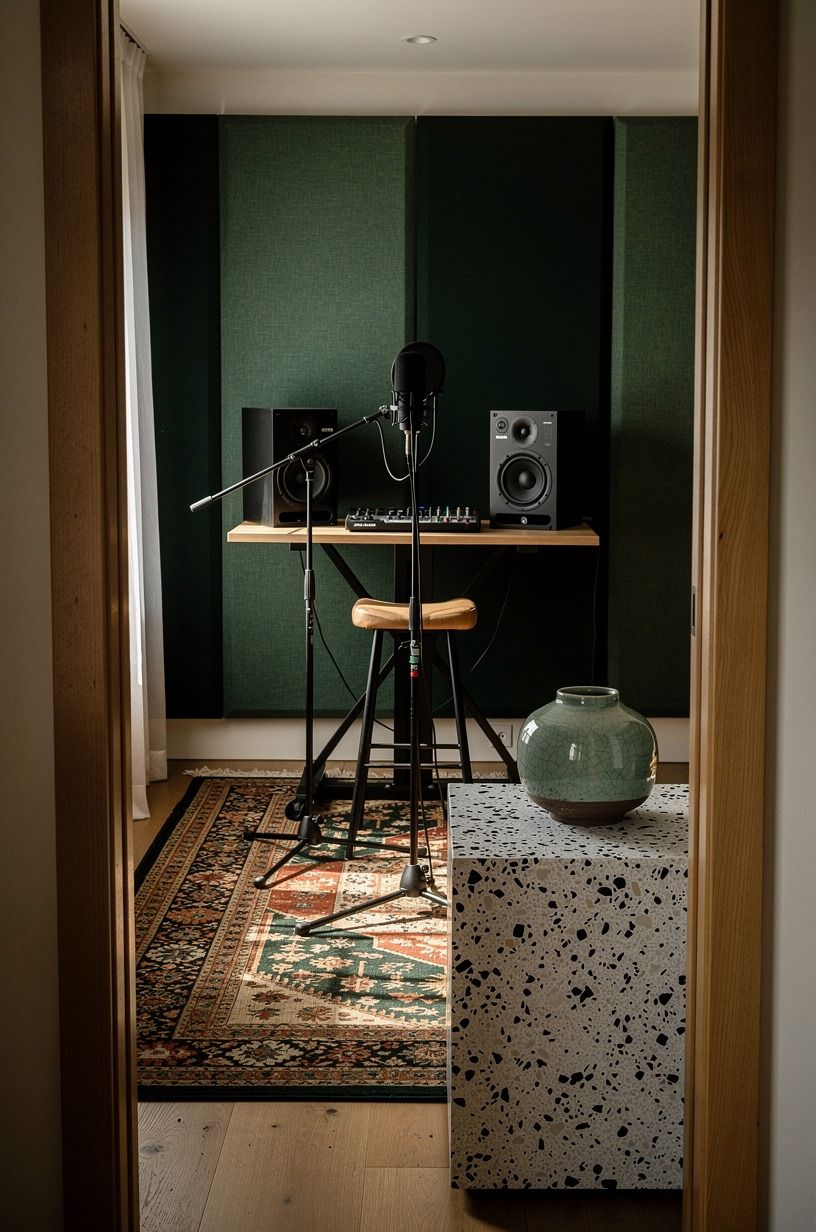
A rug under the recording zone gives you more than softness. It tells the room where performance happens. Seen through a doorway, that boundary helps the whole music studio at home feel intentional before you notice the mic stand or the cables.
And if the furniture overlaps the rug edge, the zone looks anchored instead of dropped in.
Go big enough that the chair, stand, and at least one side table touch it. I like a wool pattern because it hides wear and keeps the floor from sounding bright. The table below is a useful reality check if you’re planning your spend:
A wool rug usually lands around $400 to $1,500, so I’d buy that before a trendy accent chair. If you want more warmth without crowding the floor, 23 earthy dorm room ideas that feel like home has smart layering ideas that work surprisingly well in a studio.
Try the Loloi Layla collection in tobacco and cream, or Rugs USA Anastasia wool if you want the antique Persian look without the four-figure price. A 9×12 wool rug will eat more of the room than you expect, so go bigger than your gut says.
7Tuck guitars onto a dedicated feature wall
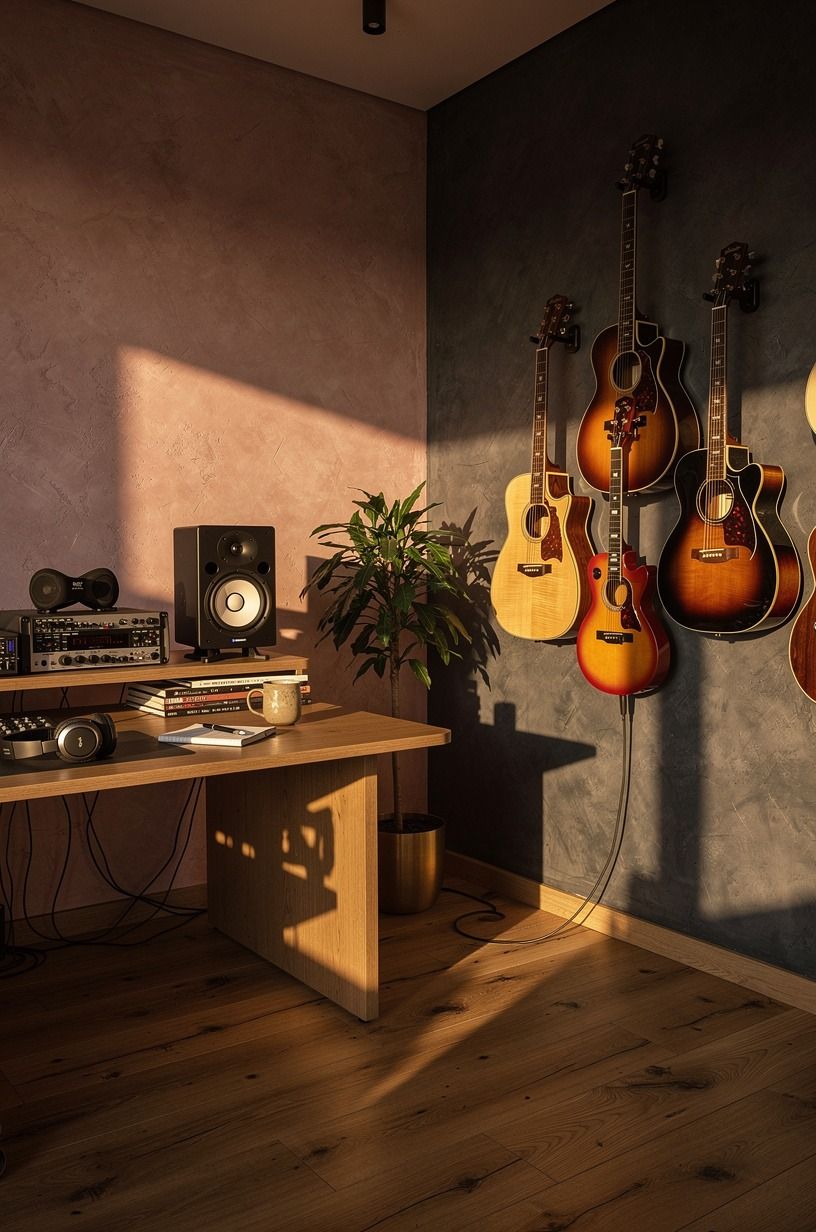
Guitars deserve their own wall because they already read as sculpture when the rest of the room is quiet. Put them beside the recording desk, not scattered across every corner, and your home music studio room suddenly looks edited.
That wide corner-to-corner view needs one clear hero. Let the instruments be it.
I prefer a run of matching wall hangers on a painted field instead of three unrelated stands on the floor. String Swing hardwood hangers keep the line tidy and pull the wood tones forward. If the room has warm neutrals elsewhere, the guitar bodies do half the decorating for you.
You can see the same idea of one strong feature zone in music room ideas to turn any space into a creative haven.
But don’t overpack it. Three to five guitars look considered.
Nine looks like storage! Honest mistake I made my first year.

8Wash the ceiling with soft LED strips
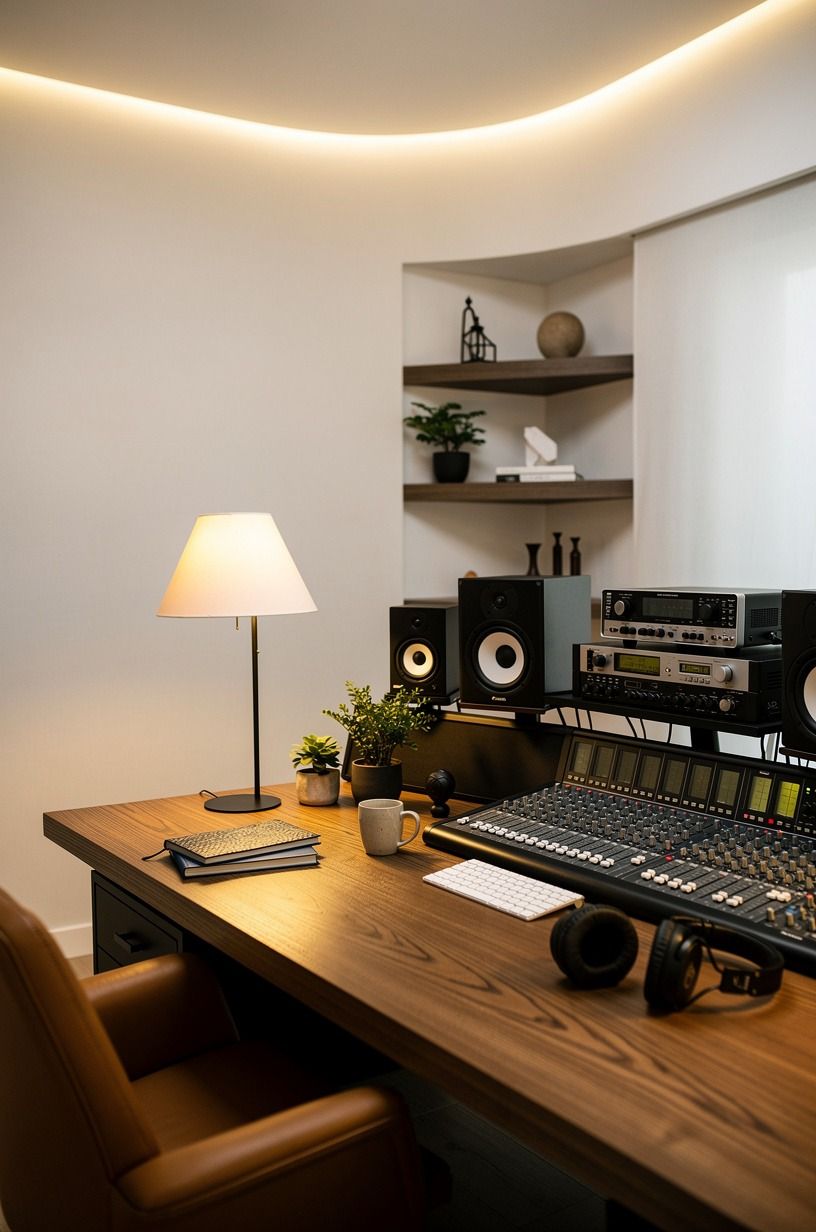
Ceiling glow is one of those moves people underestimate because they think about the strip, not the light it throws.
9Cable waterfall versus painted wall raceway
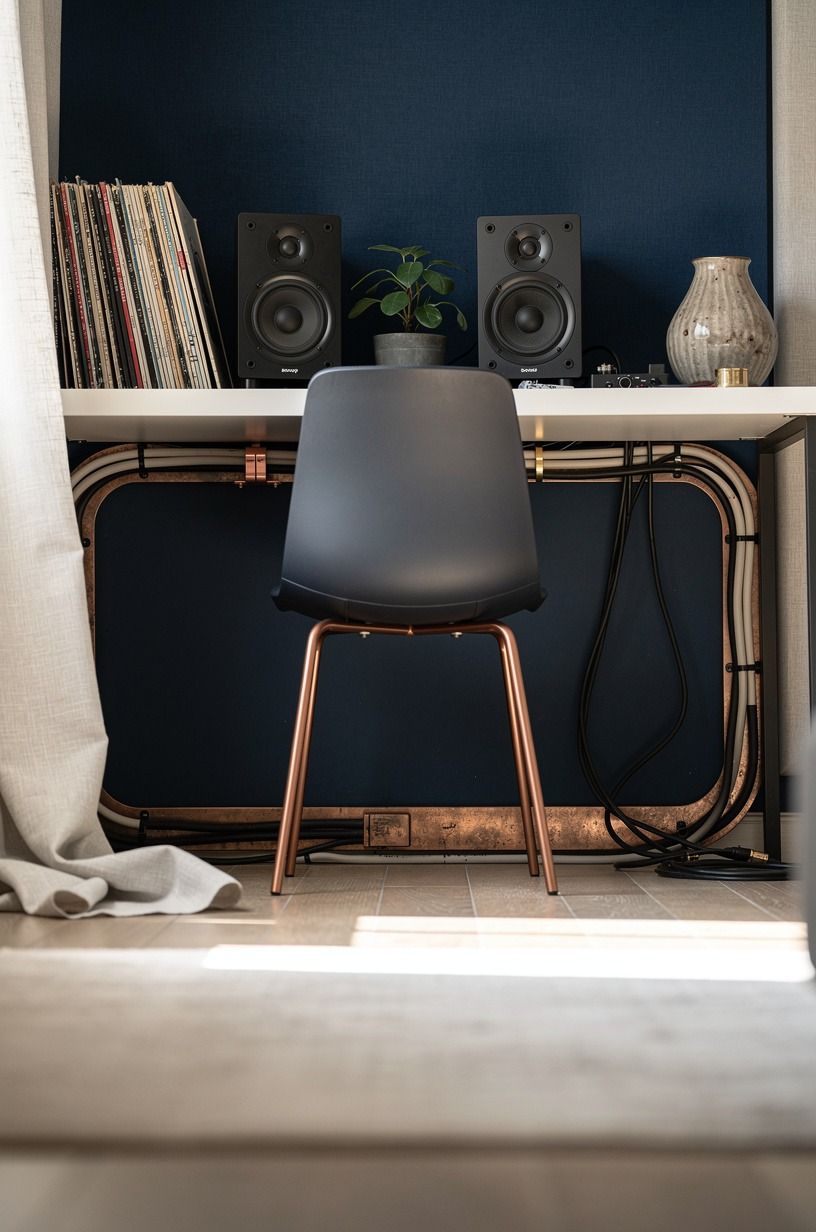
Nothing kills a polished music studio room faster than a cable waterfall under the desk. A painted raceway solves that with almost no visual drama, and from a low floor-level angle you can really see why it matters.
The floor looks wider. The desk looks lighter.
Your eye stops snagging.
Paint the channel to match the wall, not the trim, so it fades back. Legrand CordMate is a renter-friendly place to start, and it takes paint well if you prep it. I’d run only the unavoidable lines there and keep power bricks off the floor on an underside tray.
If you’re decluttering the whole house in stages, the 4 room spring reset that takes 6 hours but changes how your home photographs reinforces the same truth: hidden mess changes the photo before it changes your mood.
10Style record storage beneath the studio desk
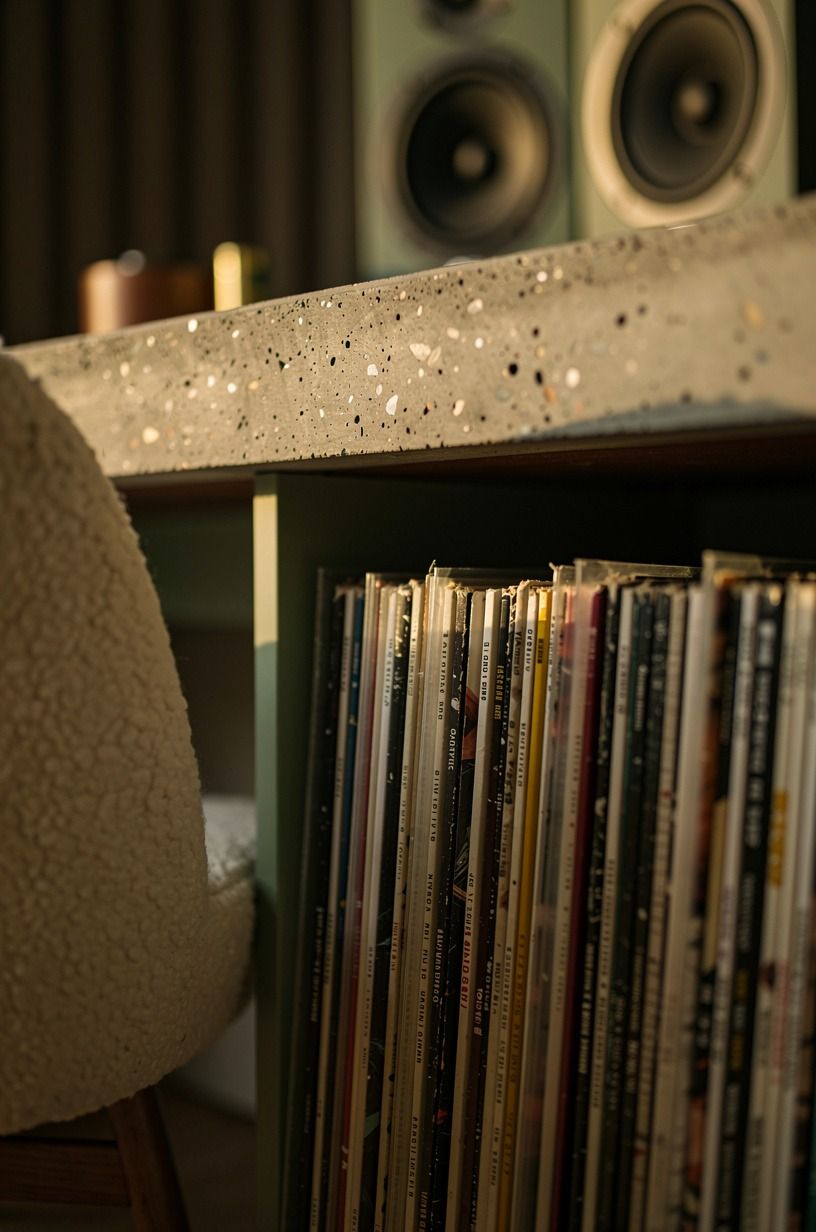
Under-desk record storage works best when it looks like furniture first and media second. In a macro hero detail, labels, sleeves, wood grain, and little shadows carry the whole shot.
That means you can’t shove a plastic bin under there and hope the room reads rich. It won’t.
I like cubes or low crates that keep the sleeves upright and easy to flip through while you’re waiting for a bounce. IKEA KALLAX birch-effect is still hard to beat because the proportions are calm and the finish doesn’t fight every other wood tone. Add a slim stop so the records sit forward cleanly.
For more examples of small storage doing big visual work, your small studio layout ideas for tighter rooms is worth a look. Line the cube interior with flannel sheet to keep the sleeves from sliding when you grab one mid-session.
11Carve a vocal nook with heavy drapes
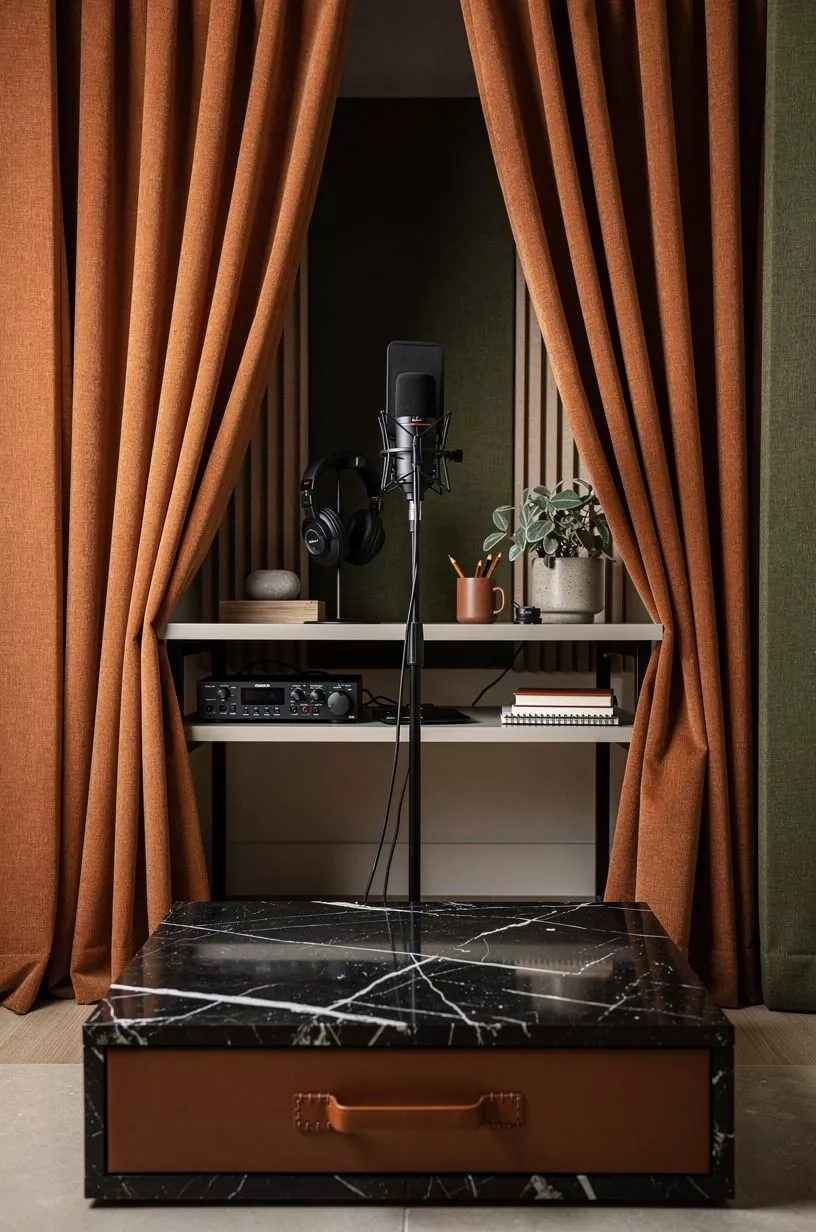
A vocal nook doesn’t need a full booth to feel legitimate. What it needs is separation, softness, and just enough enclosure that you stop hearing the whole room behind the take.
Seen low across the floor, heavy drapes create that cocoon effect right away. Why spend thousands boxing in a corner if fabric can get you most of the way there?
Use thicker panels than you think you need. Blackout velvet drapes or lined theater-style curtains give the nook shape and absorb a surprising amount of splash.
I’d keep the palette dark and the floor plain so the mic stand stays readable. If you’re craving more intimate room mood, 21 stylish speakeasy room ideas for your home proves that heavy fabric can make a room feel hushed without feeling heavy.
IKEA AINA velvet curtains in dark gray are my under-$100 pick, and West Elm Belgian flax linen blackout is the upgrade that actually drapes instead of just hanging. Hang the panels at ceiling height and puddle them on the floor by 3 inches. That little pool is doing half the work.
12Add a narrow console for pedals and mixers
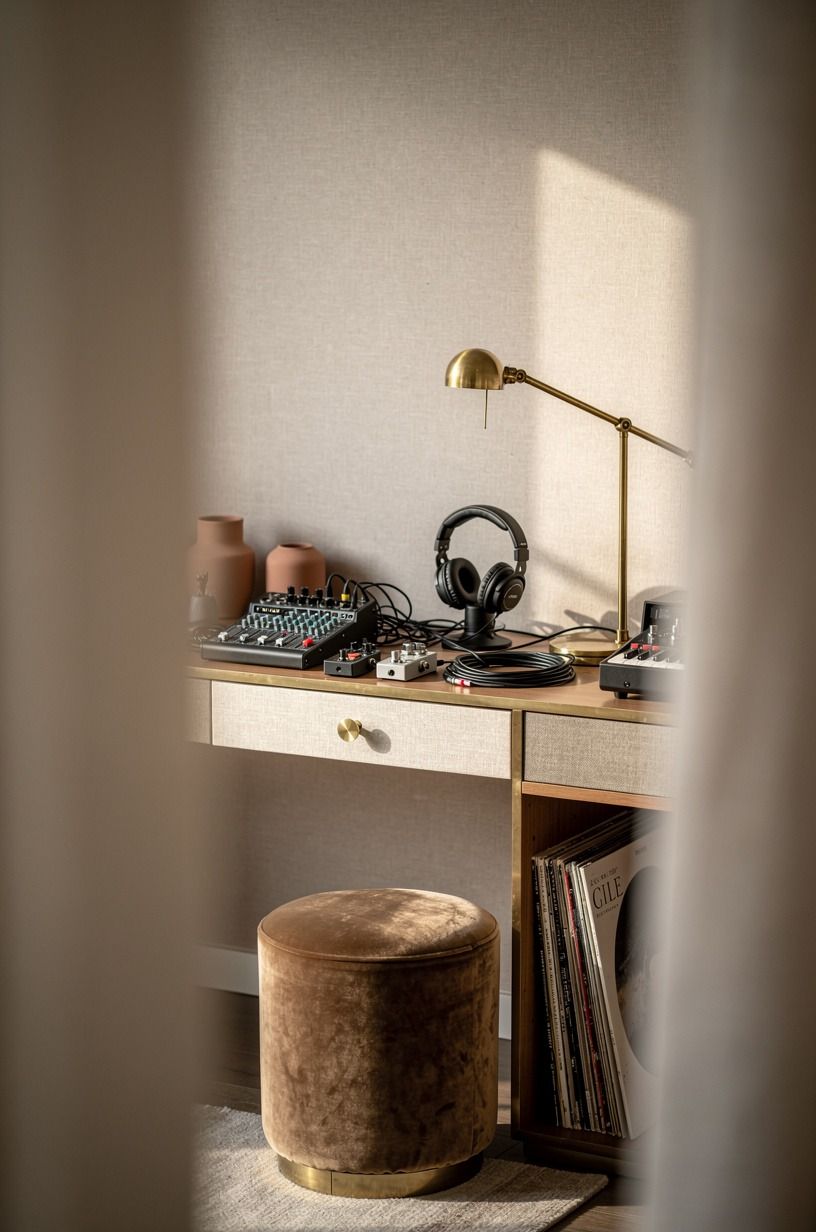
A narrow console is the move when the desk is already doing enough and you still need one more landing spot. Tucked behind foliage or framed through an opening, it gives the room depth and keeps pedals, patch gear, or a small mixer from colonizing the main workstation. That extra surface saves your shoulders too.
Go for a console about 10 to 14 inches deep so it holds gear without stealing the walkway. CB2 Parsons teak console has the slim profile I like, though a simple secondhand piece works if the lines are clean. One tray.
One lamp. One stack of cables, corralled. If you’re trying to make a work corner feel lived in without reading busy, 11 basement studios that feel like real homes uses this side-surface logic well.
A Herman Miller Eames tray in black keeps the cables corralled without looking precious.
And keep the console lower than your desk if you can. The sightline stays calmer.
13What color should you paint behind the monitors?
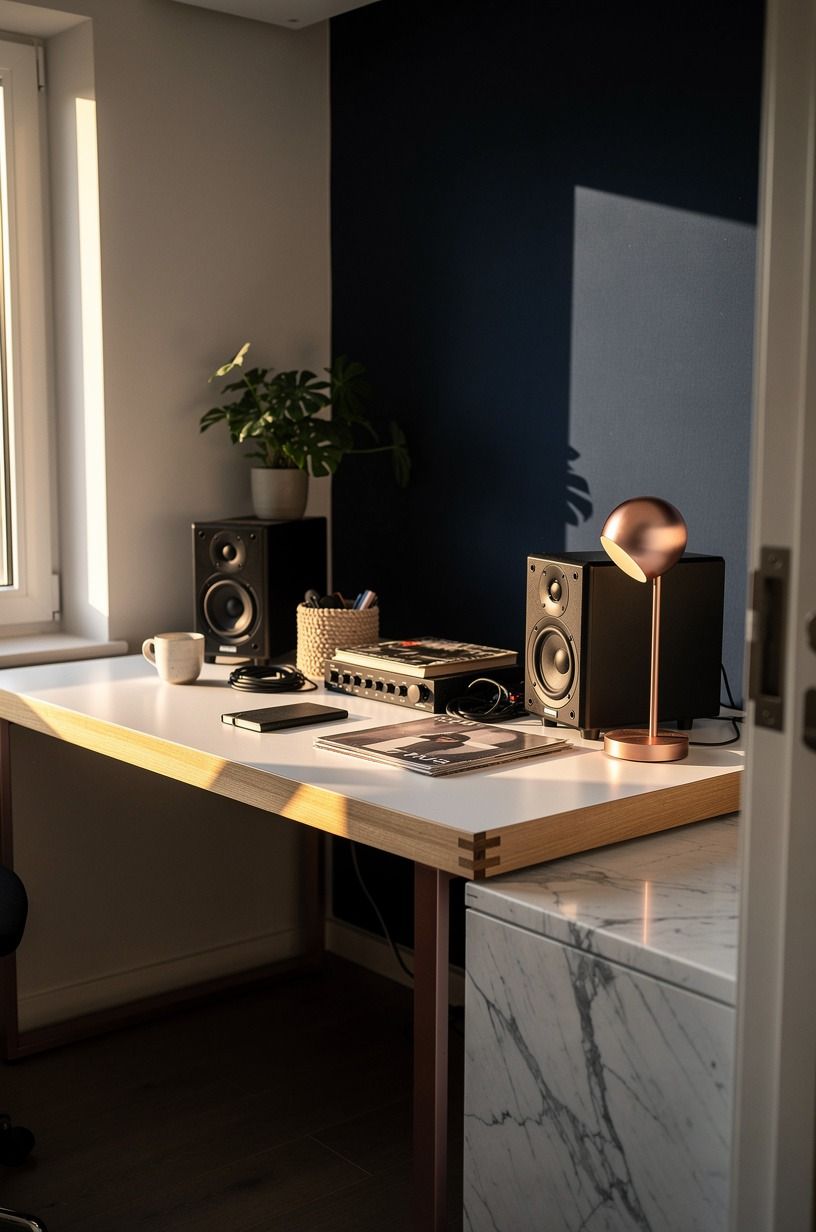
One dark wall behind the monitors gives the room instant depth, and it makes screens, speakers, and wood tones look sharper by contrast.
14The IKEA KALLAX move for albums and speakers
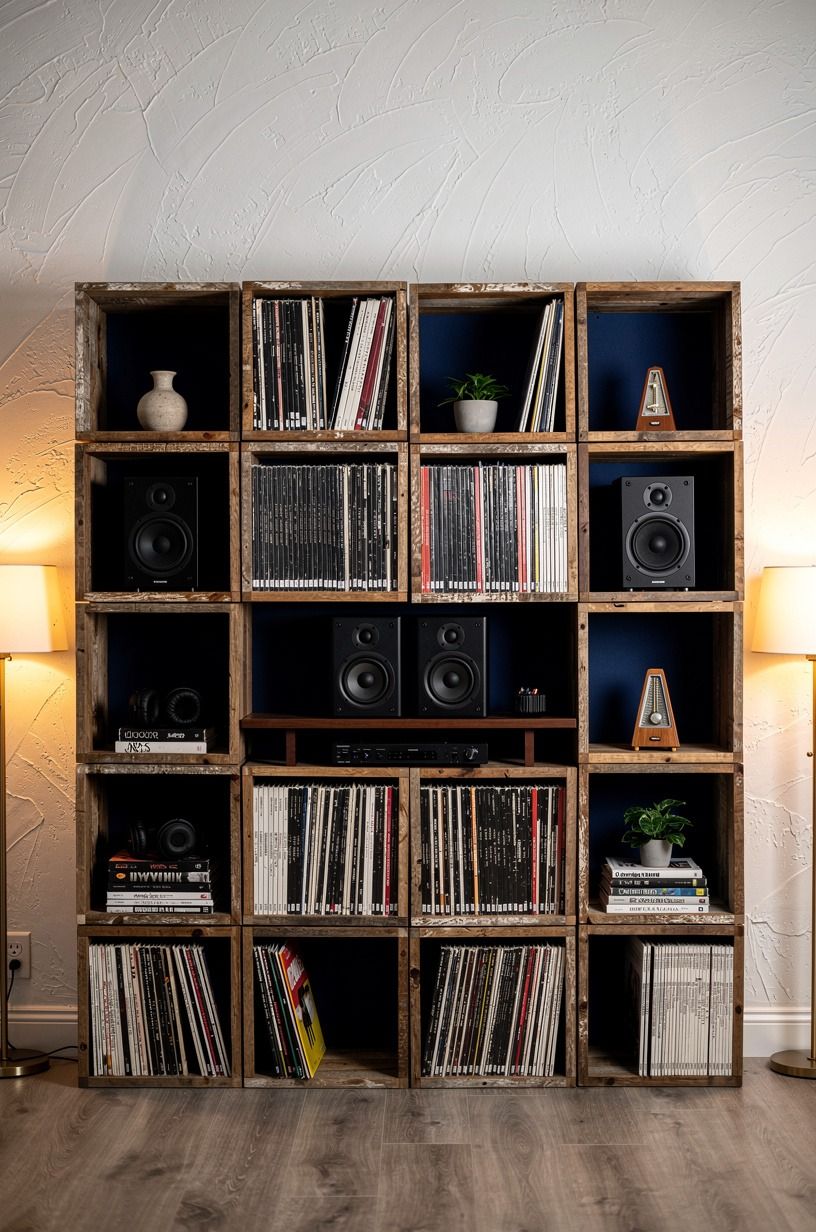
Modular cubes win because they can hold heavy things without looking heavy when the layout is symmetrical. In a first-person walk-up view, that balance feels satisfying in a way random shelving never does. This is The Grid That Calms Rule in my house: when the storage is orderly, the gear can be a little wild and the room still feels composed.
Use cubes for albums below, books or cases in the middle, and smaller speakers or decor higher up so the weight climbs naturally. IKEA KALLAX walnut effect works, and so do cleaner vintage cubes if the openings are generous enough for records.
Do not fill every square. Leave some breathing room. If you love this kind of visual order, 23 earthy dorm room ideas that feel like home has strong examples of open storage staying warm instead of stiff.
CB2 Stash walnut cubes are the cleaner upgrade if you hate the birch finish, and Article Mali walnut cube is the softer read with rounder edges. Worth every dollar.
15Hang pendant lights over the mixing desk
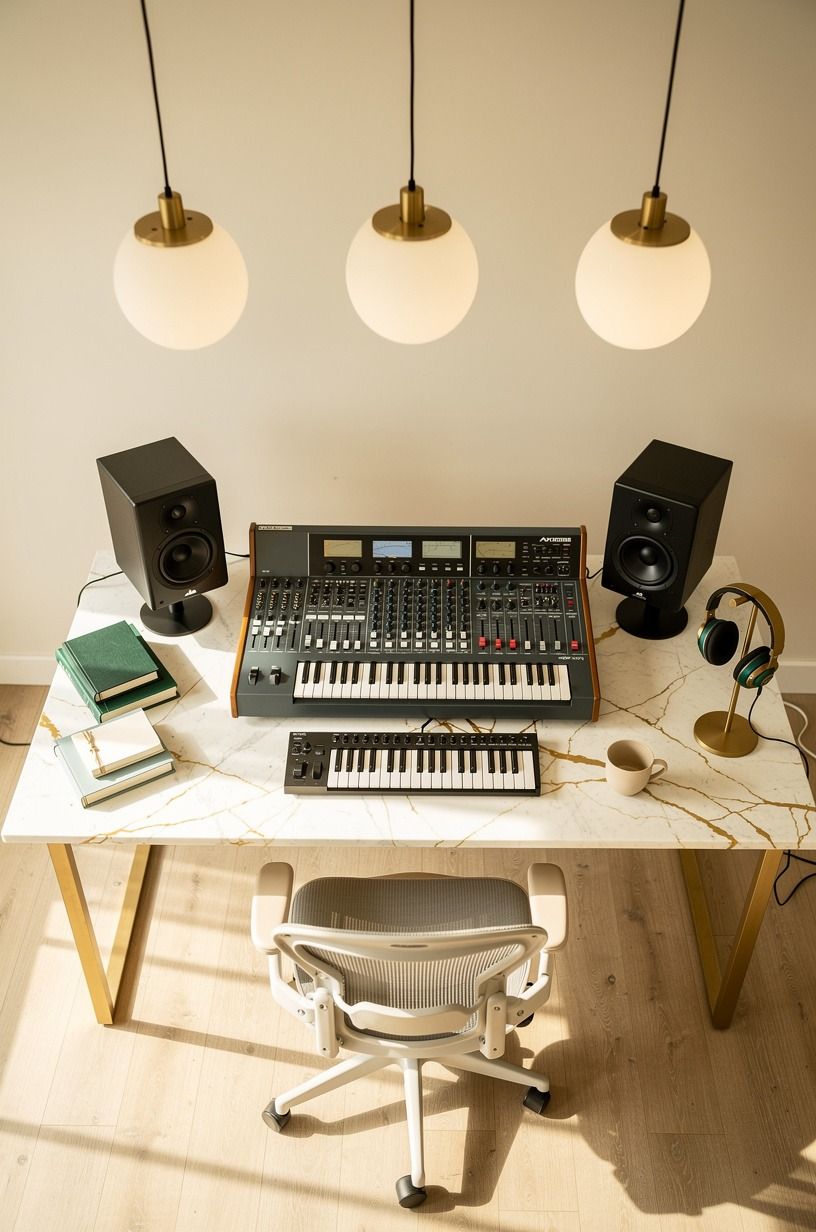
Pendant lights over the mixing desk make the work zone feel permanent, which is a bigger psychological boost than people admit. In an overhead flat-lay, the pendants frame the keyboard, monitors, and notes like the center of the room matters.
Because it does. Once the light is placed well, you stop feeling like you’re making do.
I like a pair hung high enough to clear sightlines but low enough to define the desk. Aim for warm bulbs and shades that glow downward, not everywhere.
Schoolhouse Luna pendants or a simple opal-glass shape work because they look architectural, not novelty. The lighting guideposts in i tried anthropologies under 50 home section and my living room finally feels finished translate well here too.
Soft pools beat bright floods. West Elm Rejuvenation Otto pendants in aged brass are the splurge if you want the cord to disappear into the hardware, and IKEA HEKTAR at $25 each is the cheap move that still looks intentional. Go dimmable.
Always dimmable!
16Use pegboard to display headphones and cables
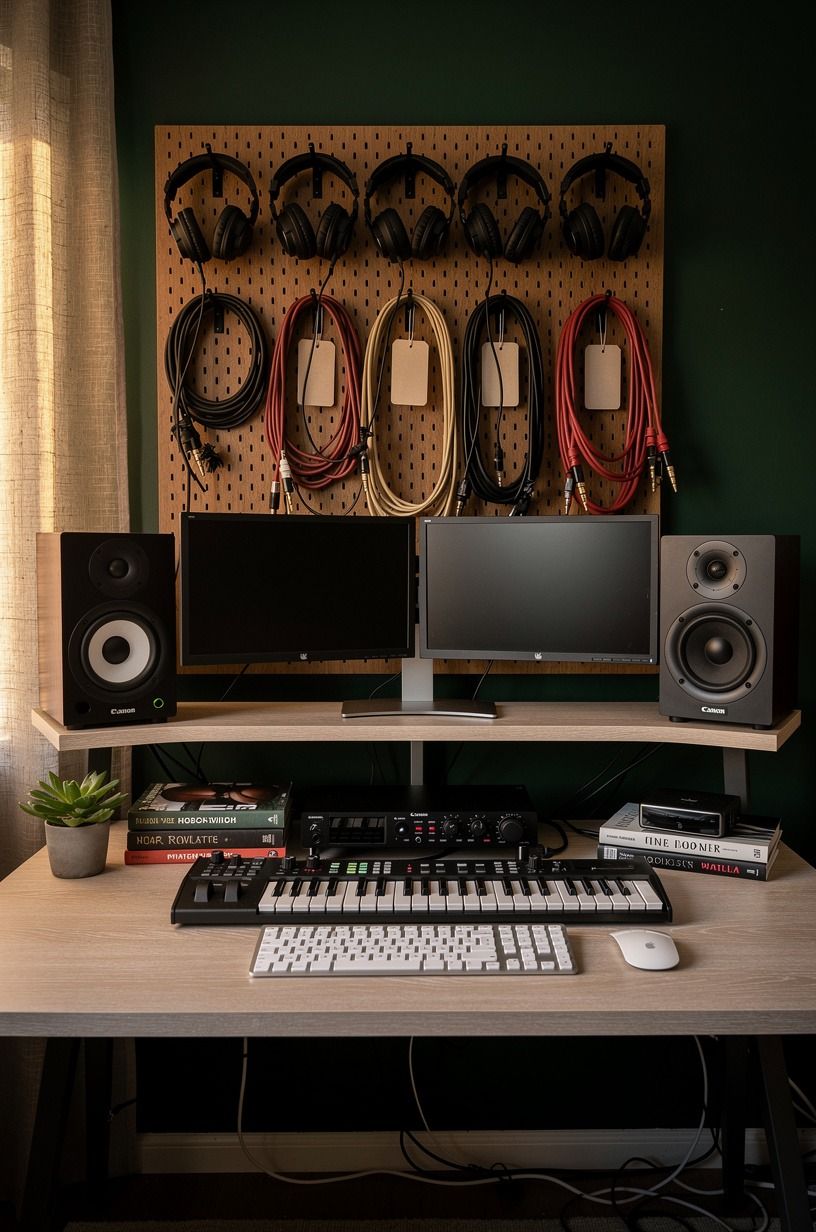
Pegboard is best when it reads like a tool wall with manners. That means editing what goes on it and spacing pieces so the display feels intentional beside the workstation. In a 45-degree magazine view, you can tell right away whether the board is helping or whether it has become a dumping ground.
I’ve done both.
Paint the board to match the wall or go one shade deeper so the hooks stand out just enough. Benjamin Moore White Dove OC-17 is a great soft backdrop if the room is already dark elsewhere, while Sherwin-Williams Agreeable Gray SW 7029 keeps it quiet in brighter rooms. Hang the headphones where your hand lands naturally and loop only the cables you use weekly.
For another tidy-wall idea, your small studio layout ideas for tighter rooms is full of vertical storage moves. Sauder Wood pegboard in white with stainless steel hooks keeps the wall reading like a tool wall, not a hardware dump.
17Zone the room with a low bookshelf divider
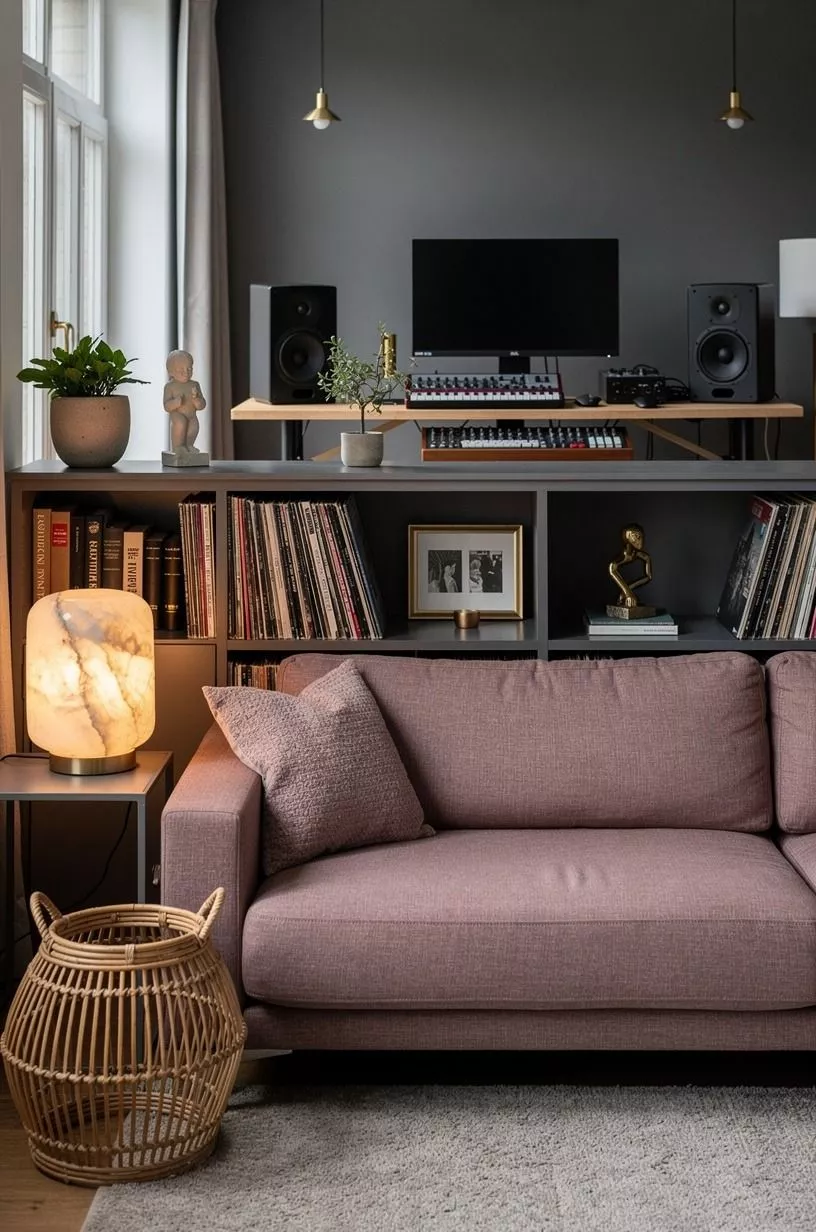
A low divider is the difference between one crowded room and two purposeful zones. Put the mixing setup on one side and a lounge or listening corner on the other, and your home music studios layout starts to feel generous even when it’s not large. That frontal symmetrical shot loves a waist-high barrier because you can still see through it.
Choose something around sofa-arm height so the room keeps its lines open. West Elm Mid-Century Bookshelf works if you want walnut warmth, while a simpler open cube unit’s fine on a tighter budget.
Center art at about 57 to 60 inches from the floor on the lounge side so the divider wall still feels composed. If you’re trying to create more than one function in a compact footprint, 11 basement guest bedrooms with real room energy makes that case well.
Article Sena walnut bookcase is the budget pick around $329 that still reads grown-up.
18Soften the floor with oversized lounge seating
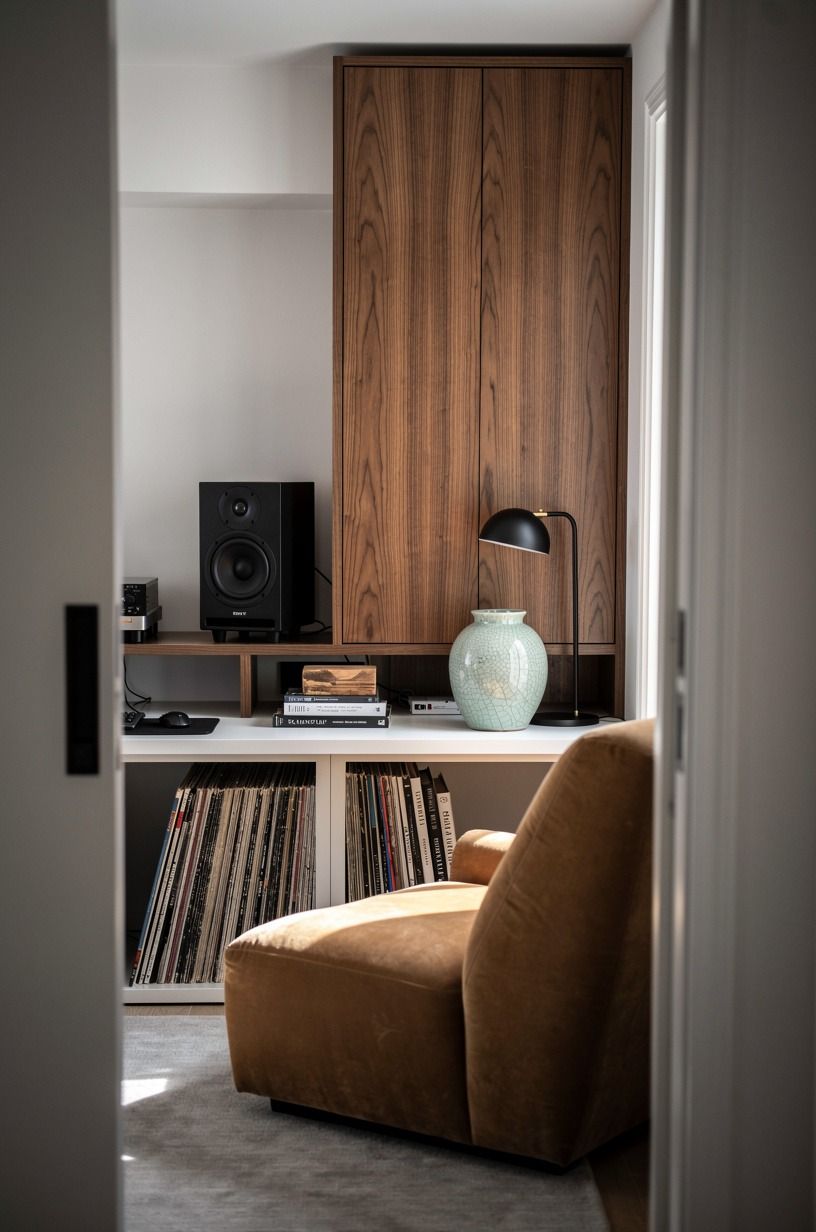
A little lounge seat goes missing in a studio. An oversized one changes the whole read of the room. Through a doorway, that low, generous shape tells you this is a place to listen, not just edit.
And that matters if you want the space to feel like part of the home instead of a technical annex.
Look for one chair or floor-hugging loveseat with a forgiving silhouette and nubby texture. Article Sven ivory bouclé or a deep slipcovered seat gives you that sink-in look without getting too precious.
I’d rather spend on this than on extra decorative accessories because comfort is visible. If you want the room to land with more warmth on first glance, music room ideas to turn any space into a creative haven leans into the same idea beautifully. CB2 Lounge II in cloud boucle is the cheaper cousin, and West Elm Harmony swivel chair in performance boucle is the splurge if you’ll actually sit in it while mixing.
Add a Maharam Mode wool throw across the arm and you’re set for the long sessions.
What I’d get right before buying more gear
The biggest mistake I see in a home music studio room is treating every decision like an audio purchase instead of a room decision. Gear matters, of course. But once you have the basics, the next jump in how the space feels usually comes from layout, light, textiles, and one grounded storage plan.
I learned that the expensive way. I kept upgrading pieces that were already decent, then wondered why the room still felt restless.
Here is the honest framework I use now. First, fix where the desk sits and where your ears land.
That is the one choice that affects both sound and stress. Second, soften the hard surfaces you’re staring at for hours. Curtains, one real rug, and a darker paint field behind the monitors do more visual heavy lifting than another shiny desktop gadget ever will.
Third, give every category a home. Records under the desk.
Headphones on the pegboard. Guitars on one wall. Cables hidden. It sounds obvious, but the rooms that calm you fastest are the ones where nothing feels homeless.
I also think people overspend in the wrong order. A custom desk is lovely, but I’d not make that my first splurge.
I’d pay for the rug, the drapes, and the light before I paid for millwork, because those are the pieces that make a studio feel human at 11 p.m. when you’re still tweaking a mix. The room should support concentration, sure, but it should also support staying.
That is a different standard.
And one more thing. You don’t need every wall to prove you make music. Leave some blank space.
Leave one shelf half empty. Let the room breathe a little (your ears are not the only thing that gets tired).
Serious sound is easier to chase when the room isn’t begging for attention.
The Questions Worth Answering First
What is the best Home Music Studio Room Ideas for Serious Sound for a small home music studio room?
The best move is angling the desk into the strongest corner, then adding wall-mounted shelves instead of more floor furniture. That gives you cleaner sightlines and better function fast.
I’d pair that with one rug and a slim record unit. Your small studio layout ideas for tighter rooms is useful if you’re squeezing this into one room.
Start with IKEA LACK at $19 each and you’ll see how far that takes you.
Where can I buy Home Music Studio Room Ideas for Serious Sound pieces on a budget?
Start with IKEA, Target Threshold, and Wayfair for shelves, lamps, and simple storage. Facebook Marketplace is still the best place to find consoles, cubes, and lounge chairs with better materials for less.
Look for solid wood, lined curtains, and lamps with warm-toned shades. Nothing too fussy.
How much does a Home Music Studio Room Ideas for Serious Sound makeover cost?
A modest refresh usually runs about $200 to $800, especially if you’re painting, adding textiles, and fixing storage first. A fuller mid-range pass with a rug, lighting, and accent furniture can land closer to $1,500 to $5,000. The free part is always editing the layout before you buy another thing.
Can I create a Home Music Studio Room Ideas for Serious Sound on a budget?
Yes, and you should start there. Cheap changes show up fast in a studio.
Move the desk into the best corner. Hide cables. Hang curtains higher.
Use one thrifted console and one good rug instead of five little fillers. The 4 room spring reset that takes 6 hours but changes how your home photographs is helpful for that edit-first mindset.
Is a Home Music Studio Room Ideas for Serious Sound worth it in a small space?
Yes, because a small room often forces better choices. Less space means less drift between zones, so your desk, vocal nook, and listening chair can all support each other. Keep the storage vertical, the divider low, and the rug large enough that the furniture overlaps it.
Is Home Music Studio Room Ideas for Serious Sound a good idea for a rental?
Yes, especially if you stick to reversible layers. Renters can still get the mood with tension-rod curtains, plug-in pendants, peel-and-paintable cable raceways, and freestanding shelves.
I’d focus on drapes, rugs, lighting, and movable storage before I touched anything permanent. 11 basement studios with real home energy has the same flexible spirit.
Try IKEA HILLEBORG plant pots as cable covers. Ten bucks each and zero landlord drama.
Where I’d Start First
If I had to pick one, I’d start with angling the desk into the best listening corner. Bad placement makes every lamp, rug, and panel work harder than it should. Pin that layout for later.